

Moroccan Cuisine: Traditional Flavors That Blend History and Culture
The aromatic waft of cinnamon and cumin dancing through narrow medina alleyways, the gentle bubbling of a tagine slow-cooking over glowing coals, the rhythmic pounding of spices in ancient stone mortars — Moroccan cuisine is a sensory symphony that tells the story of North Africa’s rich cultural tapestry. This extraordinary culinary tradition represents far more than mere sustenance; it embodies centuries of cross-cultural exchange, historical migration, and the passionate preservation of ancestral cooking techniques that have been passed down through generations.
Moroccan food culture stands as one of the world’s most sophisticated and diverse culinary landscapes, where traditional Moroccan dishes serve as edible monuments to the country’s complex heritage. From the bustling souks of Marrakech to the imperial kitchens of Fez, from the coastal influences of Casablanca to the nomadic traditions of the Sahara desert, each region contributes its own distinctive flavors to Morocco’s gastronomic identity.
“If you would like to explore Morocco in greater depth, I recommend checking out this [digital guide about Morocco] https://payhip.com/MoroccoTravelGuide. Please note that this is an affiliate link, which means I may earn a small commission at no extra cost to you.”
A Culinary Journey Through Time: Historical Foundations
The roots of Moroccan culinary traditions stretch deep into antiquity, shaped by waves of cultural influences that have swept across the Maghreb for millennia. The indigenous Berber people, Morocco’s original inhabitants, established the foundational elements of what would become modern Moroccan cuisine. These early culinary pioneers introduced essential ingredients like argan oil, preserved lemons, and wild herbs, along with traditional cooking methods that remain central to authentic Moroccan cooking today.
The Arab conquest of the 7th century brought transformative changes to North African cuisine, introducing new spices, cooking techniques, and the Islamic dietary laws that continue to influence Moroccan food culture. The Arabs contributed crucial elements including saffron, rose water, and the complex spice blends that define Moroccan flavors. They also brought sophisticated preservation techniques and the art of combining sweet and savory elements that characterizes many traditional Moroccan dishes.
The Andalusian influence arrived with Muslim refugees fleeing the Christian Reconquista of Spain, bringing refined culinary techniques and ingredients that elevated Moroccan cuisine to new heights of sophistication. These skilled cooks introduced pastilla, intricate pastries, and advanced methods of layering flavors that remain hallmarks of Moroccan gastronomy.
French colonial influence, while more recent and controversial, also left its mark on modern Moroccan cuisine, particularly in urban areas, introducing new vegetables, baking techniques, and presentation styles that have been seamlessly integrated into traditional preparations.
The Spice Route Legacy: Essential Moroccan Ingredients

At the heart of every authentic Moroccan dish lies a carefully orchestrated blend of spices and ingredients that transform simple components into extraordinary culinary experiences. Moroccan spices form the backbone of the country’s flavor profile, with ras el hanout — literally meaning “head of the shop” — representing the pinnacle of spice blending artistry. This complex mixture can contain up to thirty different spices, including cardamom, cinnamon, turmeric, ginger, and rose petals, creating a unique signature blend that varies from spice merchant to spice merchant.
Saffron, often called “red gold,” holds special significance in Moroccan cooking, imparting its distinctive golden color and delicate floral notes to rice dishes, tagines, and special occasion preparations. Preserved lemons, another cornerstone ingredient, undergo a traditional fermentation process that concentrates their flavors while adding a distinctive salty-sour complexity that brightens countless Moroccan recipes.
Moroccan olives, cultivated in the Atlas Mountain foothills and coastal plains, provide both oil and fruit that enhance everything from simple bread accompaniments to elaborate feast preparations. Argan oil, unique to Morocco’s southwestern regions, offers a nutty richness that elevates both culinary preparations and cosmetic applications, representing one of Morocco’s most prized indigenous ingredients.
Fresh herbs like cilantro, parsley, and mint play crucial roles in Moroccan cuisine, often used in generous quantities to create vibrant color contrasts and fresh flavor notes that balance the warming spices. Harissa, the fiery chili paste, adds heat and depth to numerous dishes while reflecting Morocco’s connection to broader North African culinary traditions.
Iconic Traditional Moroccan Dishes: Culinary Treasures

Tagine: The Crown Jewel of Moroccan Cooking
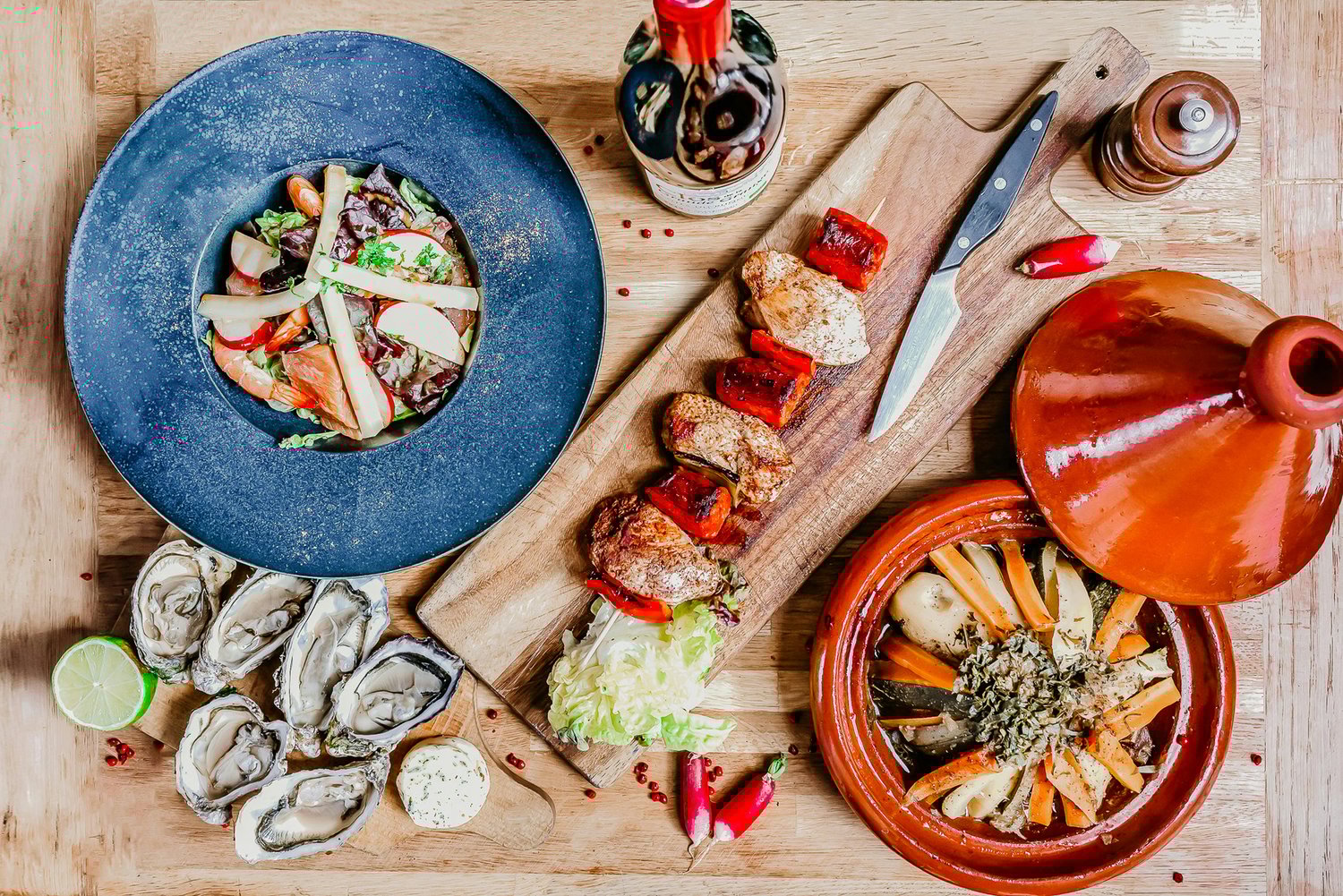
The tagine, both cooking vessel and dish name, represents perhaps the most recognizable symbol of Moroccan cuisine worldwide. This conical-lidded earthenware pot creates a unique steam-circulation system that allows ingredients to cook slowly in their own juices, concentrating flavors while maintaining incredible tenderness. Traditional tagine recipes vary enormously, from lamb with prunes and almonds to chicken with preserved lemons and olives, each combination telling its own story of regional preferences and seasonal availability.
The cooking technique behind tagine preparation embodies Moroccan culinary philosophy: patience, respect for ingredients, and the understanding that great flavors develop through time and careful attention. Master cooks season their tagine vessels through years of use, creating natural non-stick surfaces that enhance every subsequent preparation.
Couscous: The Heart of Moroccan Family Life
Couscous, often called the national dish of Morocco, represents far more than a simple grain preparation. This hand-rolled semolina serves as the centerpiece of Friday family gatherings, religious celebrations, and important social occasions throughout Moroccan society. Traditional couscous preparation involves steaming the grains multiple times in a special pot called a couscoussier, creating light, fluffy textures that perfectly absorb the accompanying broths and sauces.
Regional variations of couscous reflect local ingredients and preferences: coastal areas might feature seafood couscous with fresh fish and shellfish, while inland regions prefer lamb or beef versions with seasonal vegetables. The seven-vegetable couscous of Fez represents one of the most elaborate preparations, showcasing the culinary sophistication of Morocco’s spiritual capital.
Harira: Comfort in a Bowl
Harira, Morocco’s beloved tomato-based soup, holds special significance during Ramadan as the traditional dish for breaking the fast. This hearty preparation combines lentils, chickpeas, tomatoes, and aromatic herbs with small pasta or rice, creating a nutritionally complete and deeply satisfying meal. Each family guards their harira recipe jealously, with variations passed down through generations and adapted to personal tastes and regional preferences.
The preparation of harira involves careful timing and technique to achieve the perfect balance of textures and flavors. Traditional cooks add a mixture called “tedouira” — flour mixed with water and herbs — to thicken the soup and create its characteristic consistency.
Pastilla: Where Sweet Meets Savory
Pastilla represents the pinnacle of Moroccan culinary artistry, combining paper-thin pastry layers with spiced meat or seafood fillings, finished with a dusting of powdered sugar and cinnamon. This extraordinary dish demonstrates the Andalusian influence on Moroccan cuisine, requiring exceptional skill to create the delicate pastry sheets and balance the complex flavor combinations.
Traditional pigeon pastilla, served at weddings and special celebrations, showcases the Moroccan mastery of combining unexpected flavors — the rich, spiced meat contrasts beautifully with the sweet finishing touches, creating a dish that surprises and delights even experienced food enthusiasts.
Regional Variations: A Culinary Map of Morocco
Morocco’s diverse geography and cultural regions have created distinct culinary identities that reflect local ingredients, historical influences, and cultural preferences. Each major city and region contributes unique elements to the broader Moroccan culinary landscape.
Fez, Morocco’s spiritual and intellectual capital, is renowned for its sophisticated palace cuisine and elaborate preparations that reflect centuries of royal patronage. Fassi cooking emphasizes complex spice combinations, intricate presentation, and time-intensive preparation methods that create dishes of extraordinary refinement. The city’s couscous preparations and pastries represent benchmarks of Moroccan culinary excellence.
Marrakech, the “Red City,” offers a more robust, earthier approach to Moroccan cuisine, influenced by its position as a crossroads between the Sahara, Atlas Mountains, and Atlantic coast. Marrakech’s famous Djemaa el-Fna square showcases street food traditions that have remained largely unchanged for centuries, while the city’s riads serve refined versions of traditional recipes.
Casablanca, Morocco’s economic capital, represents a more modern interpretation of Moroccan cuisine, where traditional recipes meet contemporary presentation and international influences. The city’s coastal location ensures exceptional seafood preparations that blend Moroccan spices with fresh Atlantic catches.
The Sahara regions contribute nomadic cooking traditions that emphasize preservation techniques, portable preparations, and the ingenious use of limited ingredients to create satisfying meals. Desert cooking methods, including sand-oven techniques and preserved foods, have influenced broader Moroccan culinary practices.
Cooking Techniques: Time-Honored Methods
Traditional Moroccan cooking techniques emphasize patience, layering of flavors, and respect for seasonal ingredients. The slow-cooking methods that characterize many Moroccan dishes allow tough cuts of meat to become incredibly tender while developing complex flavor profiles impossible to achieve through quick cooking methods.
The technique of “building” flavors through sequential addition of ingredients represents a fundamental principle of Moroccan cooking. Onions are typically cooked until golden and sweet, spices are bloomed to release their essential oils, and ingredients are added in specific orders to maximize flavor development and texture contrasts.
Traditional preservation methods, including the preparation of preserved lemons, dried fruits, and spice blends, ensure that intense flavors remain available throughout the year while connecting contemporary cooks to ancestral traditions.
Cultural Significance and Social Traditions
Moroccan cuisine extends far beyond nutrition to encompass social bonding, religious observance, and cultural identity preservation. The act of sharing meals from communal dishes reinforces family bonds and social hierarchies while demonstrating hospitality values central to Moroccan culture.
Tea culture, centered around the elaborate preparation and serving of mint tea, represents another crucial element of Moroccan social traditions. The ceremony of tea preparation and serving follows specific protocols that demonstrate respect, hospitality, and social awareness.
Religious dietary laws and seasonal eating patterns influence Moroccan cooking throughout the year, with special preparations for Ramadan, Eid celebrations, and religious holidays that strengthen community bonds while preserving cultural traditions.
Conclusion: The Enduring Legacy of Moroccan Culinary Heritage
Moroccan cuisine stands as a testament to the power of food to preserve history, bridge cultures, and create lasting connections between people and place. Through its complex spice blends, time-honored cooking techniques, and deep cultural significance, traditional Moroccan food continues to evolve while maintaining its essential character and identity.
The extraordinary diversity of Moroccan culinary traditions — from the refined palace cuisine of Fez to the rustic preparations of mountain villages, from elaborate celebration dishes to simple daily meals — demonstrates how food serves as both sustenance and cultural expression. Each dish carries within it the stories of the people who created it, the ingredients that define the landscape, and the historical forces that shaped the nation.
As global interest in authentic, sustainable, and culturally significant cuisine continues to grow, Moroccan food traditions offer valuable lessons about the importance of preserving culinary heritage while embracing thoughtful innovation. The careful balance of flavors, emphasis on fresh ingredients, and celebration of communal dining that characterize Moroccan cuisine provide models for meaningful food experiences that nourish both body and soul.
Through its aromatic tagines, perfectly steamed couscous, soul-warming harira, and countless other preparations, Moroccan cuisine continues to invite food lovers on a journey through history, culture, and sensory delight that connects the ancient world to contemporary dining experiences. In every spice blend, every slow-simmered sauce, and every shared meal, the rich tapestry of Moroccan culinary heritage continues to unfold, offering endless discoveries for those willing to explore its remarkable depths.
“If you would like to explore Morocco in greater depth, I recommend checking out this [digital guide about Morocco] https://payhip.com/MoroccoTravelGuide. Please note that this is an affiliate link, which means I may earn a small commission at no extra cost to you.”