

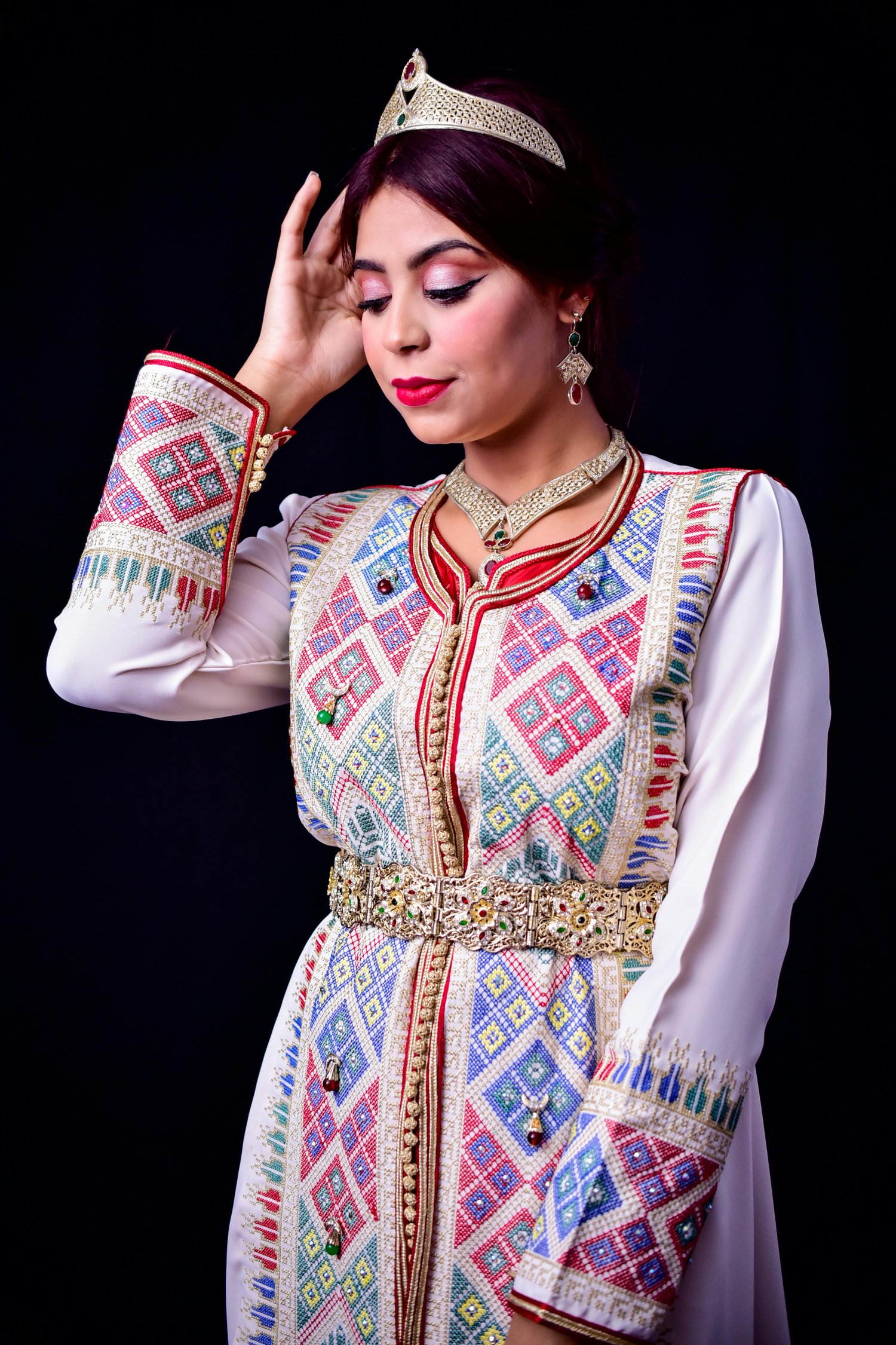
The Cultural Tapestry: A Complete Guide to Traditional Moroccan Clothing

Introduction: The Woven Heritage of Morocco
Step into the vibrant world of traditional Moroccan clothing, where every stitch tells a story and each garment is a masterpiece of cultural expression. Morocco’s textile heritage represents one of the most visually striking and historically rich clothing traditions in the world, blending influences from Berber, Arab, Andalusian, and Mediterranean cultures into a uniquely Moroccan aesthetic.
Drawing on extensive research and cultural insights from local artisans and textile historians, this comprehensive guide will take you through the intricate world of Morocco’s traditional garments. From the practical yet elegant djellaba worn in daily life to the sumptuous kaftans reserved for celebrations, and the diverse Berber attire that varies dramatically across regions — Moroccan clothing represents both cultural identity and artistic expression.
As you journey through this article, you’ll discover not only the distinctive characteristics of traditional Moroccan clothing but also understand their cultural significance, the craftsmanship behind them, and how these time-honored garments continue to influence contemporary fashion both in Morocco and worldwide.
“If you would like to explore Morocco in greater depth, I recommend checking out this [digital guide about Morocco] https://payhip.com/MoroccoTravelGuide. Please note that this is an affiliate link, which means I may earn a small commission at no extra cost to you.”
Te Heart of Moroccan Attire: Core Garments
The Djellaba: Morocco’s Iconic Robe
What is a Djellaba?
The djellaba (also spelled jellaba) is perhaps the most recognizable garment in traditional Moroccan clothing. This long, loose-fitting outer robe with full sleeves has become emblematic of Moroccan cultural identity and practical adaptation to the country’s climate. Designed to provide protection from both sun and cold, the djellaba represents the perfect marriage of functionality and cultural expression.
History and Origins
The djellaba’s origins can be traced back several centuries, evolving from the need for practical clothing that accommodated Morocco’s variable climate while adhering to Islamic modest dress principles. The garment has Amazigh (Berber) roots but has been adopted and adapted throughout Moroccan society, becoming a national garment that transcends regional and social boundaries.
Originally worn primarily by men, the djellaba has evolved over time to become a staple for both men and women, with distinct variations developing for each gender. Its enduring popularity speaks to both its practicality and its deep cultural resonance.
Key Features
The djellaba’s most distinctive feature is undoubtedly its pointed hood, known as the “qob” (قب) or “koubbah.” This hood serves multiple practical purposes:
- Protection from sun during hot days
- Warmth during cool evenings and winter months
- A makeshift basket for carrying small items like bread from the market
- Additional privacy for women when needed
Other defining characteristics include:
- Full-length cut that typically reaches the ankles
- Loose, flowing silhouette that allows air circulation
- Wide sleeves that narrow at the wrists
- Traditional side slits or pockets
- Front opening with button or tie closures
Variations: The Diverse World of Djellabas

Modern adaptations have introduced subtle variations while maintaining the garment’s essential character. Young Moroccans often opt for lighter fabrics, slimmer cuts, and contemporary colors, while still honoring the traditional silhouette.
Fabrics & Materials
The fabric choice for a djellaba traditionally varies by season, purpose, and regional availability:
- Wool: Traditional winter djellabas, especially in mountain regions, are crafted from wool for warmth and durability. The quality of the wool often indicates the garment’s value.
- Cotton: Lightweight cotton djellabas are popular for summer wear, providing breathability in hot weather.
- Synthetic Blends: Modern djellabas sometimes incorporate synthetic fibers for improved durability, easier care, and lower cost.
- Silk or Silk Blends: For special occasions, more luxurious materials may be used, particularly for women’s ceremonial djellabas.
The quality of a djellaba is often judged by the fineness of its fabric, the precision of its stitching (particularly around the neckline and qob), and the intricacy of any embellishments.
Cultural Significance & When It’s Worn
The djellaba transcends mere clothing to become a symbol of Moroccan identity. It represents the country’s values of modesty, practicality, and cultural continuity. Different contexts call for different types of djellabas:
- Daily Life: Simple, durable djellabas in neutral colors are common for everyday activities.
- Friday Prayers: Men often wear their finest white djellabas for Jumu’ah (Friday prayers).
- Celebrations: More elaborate djellabas appear during Eid celebrations, weddings, and other special occasions.
- Regional Identity: Subtle variations in cut, color, and embellishment can signal a person’s region of origin.
What’s particularly fascinating about the djellaba is how young Moroccans continue to embrace this traditional garment while adapting it to contemporary sensibilities. Urban youth might pair a modern djellaba with jeans or choose one with subtle designer elements, creating a unique fusion of tradition and modernity that honors their heritage while expressing individual style.
The Kaftan (Caftan): Royal Elegance
What is a Kaftan?
The Moroccan kaftan is a magnificent single-piece robe characterized by its sumptuous fabrics, intricate embroidery, and rich cultural significance. While kaftans exist in many cultures across the Middle East, Central Asia, and Eastern Europe, the Moroccan kaftan has developed its own distinctive style and cultural context that sets it apart from its Turkish or Persian counterparts.
In Morocco, the kaftan represents the pinnacle of traditional formalwear, especially for women, and is closely associated with celebrations, ceremonies, and displays of cultural pride. It embodies centuries of artistic tradition and skilled craftsmanship that have been passed down through generations.
History and Royal Connections
The kaftan’s history in Morocco dates back to at least the 13th century, though similar garments likely existed earlier. The kaftan gained particular prominence during the Marinid dynasty (13th-15th centuries) when it became associated with royal courts. Historical accounts describe magnificent kaftans worn by sultans and nobles, often given as diplomatic gifts.
The kaftan’s association with royalty continues to this day. At Moroccan royal weddings and ceremonies, elaborate kaftans are prominently featured, and the royal family has played a significant role in preserving and promoting this cultural treasure. The late King Hassan II and his daughter Princess Lalla Meryem have been particularly noted for their patronage of traditional kaftan artisans and designers.
Key Features
The Moroccan kaftan is distinguished by several characteristic elements:
- Loose, flowing silhouette: Creating an elegant drape that flatters all body types
- Full-length cut: Traditionally reaching the ankles or floor
- Ornate embroidery: Often featuring geometric patterns, floral motifs, or Arabic calligraphy
- Mdamma (مضمة): The decorative belt or sash that cinches the kaftan at the waist, often made of silk cord or metal threads and sometimes adorned with precious stones
- Wide, flowing sleeves: Either full-length or three-quarter length
- V-neck or round neckline: Often elaborately embellished

Distinguishing Kaftan vs. Takchita
A crucial distinction in Moroccan formal wear is between the kaftan and the takchita — terms that are sometimes confused by outsiders but represent different garments with distinct characteristics:
Kaftan: A single-piece robe, worn for various formal occasions.
Takchita: A two-piece ensemble consisting of:
- Tahtiya: The under-dress, often made of fine silk or similar luxurious fabric
- Fouqia/Dfina: The over-dress, which is typically more ornate and can be left open to reveal the tahtiya beneath
The takchita is generally considered more formal than the kaftan and is particularly associated with weddings. A bride might wear multiple takchitas throughout her wedding celebrations, with the most elaborate reserved for the main ceremony.
Types of Kaftans
Moroccan kaftans vary significantly by region, with distinctive styles that reflect local aesthetics and traditions:
- Rbati Kaftan: Originating from Rabat, known for precise embroidery and refined elegance
- Fassi Kaftan: From Fez, characterized by rich, complex embroidery and traditional techniques
- Tetouan Kaftan: Notable for its Andalusian influences and distinctive color palette
- Marrakchi Kaftan: Often featuring bolder colors and patterns reflective of the vibrant culture of Marrakech
Beyond regional variations, kaftans are also categorized by occasion:
- Bridal Kaftans: The most elaborate, often in white, cream, or pastels with extensive gold work
- Ceremony Kaftans: For formal family celebrations like engagements or circumcisions
- Evening Kaftans: Slightly less formal but still ornate, for dinner parties and gatherings
Fabrics & Embellishments
The luxury of a kaftan begins with its base fabric, traditionally:
- Brocade: Heavy fabric woven with raised patterns, often incorporating metallic threads
- Silk: Especially silk velvet (qatifa) for winter kaftans
- Muslin: Lightweight cotton for summer kaftans
- Chiffon: For more contemporary, lighter kaftans
What truly distinguishes a fine kaftan is its embellishment, which may include:
- Sfifa: Ornamental braiding, often in gold or silver thread, applied to edges
- Aakad: Decorative buttons and fastenings, sometimes made from precious metals
- Embroidery Styles:
- Terz Fassi: Meticulous embroidery characteristic of Fez
- Terz Rbati: The distinct style from Rabat
- Terz Tetouan: Influenced by Andalusian patterns

- Sequins, beads, and crystals: For additional sparkle and luxury
The creation of a traditional high-end kaftan can take hundreds of hours of skilled handwork, with master artisans specializing in specific elements like embroidery or button-making. This extensive craftsmanship explains why fine kaftans are considered valuable heirlooms, often passed down through generations.
When It’s Worn
The kaftan holds a special place in Moroccan celebrations:
- Weddings: The bride typically wears multiple kaftans or takchitas throughout her wedding celebrations
- Religious Holidays: Special kaftans are worn for Eid celebrations
- Family Celebrations: Including engagements, baby naming ceremonies, and circumcisions
- Formal Dinners: Especially during Ramadan evening gatherings
- Cultural Events: Fashion shows, cultural festivals, and diplomatic functions
In recent decades, the Moroccan kaftan has gained international recognition through events like the annual Caftan Show in Marrakech, which showcases both traditional designs and modern interpretations by contemporary Moroccan designers. These events have helped elevate the kaftan from a traditional garment to a recognized element of global fashion, with international celebrities and fashion icons occasionally appearing in Moroccan-inspired designs on red carpets worldwide.
Berber (Amazigh) Attire: The Indigenous Heritage

Acknowledging Diversity
When discussing Berber or Amazigh clothing, it’s essential to recognize that the term “Berber” encompasses numerous distinct cultural groups spread across North Africa, each with their own unique textile traditions and garment styles. The Amazigh people — Morocco’s indigenous population — comprise various tribes with distinctive dialects, customs, and clothing traditions that have evolved over thousands of years.
Rather than a single “Berber style,” there exists a rich tapestry of regional variations, with each community developing clothing adapted to their specific environment, lifestyle, and aesthetic sensibilities. From the high Atlas Mountains to the Rif region, from the Middle Atlas to the southern oases, Amazigh clothing represents one of Morocco’s most diverse cultural expressions.
Key Elements of Amazigh Attire
Despite this diversity, certain elements are commonly found across different Amazigh communities:
- Women’s Handira: These magnificent wedding blankets or capes from the Middle Atlas are adorned with sequins, metallic threads, and sometimes small mirrors that catch the light. Traditionally made by female relatives for a bride, they serve as both dowry items and ceremonial wear.
- Distinctive Headwear: Various forms of head coverings, including:
- Tahendit: A wrapped headscarf common among rural women
- Tagrtilt: An ornate headdress worn in some regions for celebrations
- Men’s turbans or tagelmust: Particularly in desert regions
- Jewelry: Not merely decorative but culturally significant, Amazigh jewelry often features:
- Silver filigree work
- Amber, coral, and semi-precious stones
- Geometric symbols with protective meanings
- Fibula pins used both functionally and decoratively
- Woven Textiles: Featuring geometric patterns that often contain symbolic meanings related to fertility, protection, and natural elements.
Regional Examples
The diversity of Amazigh clothing is best understood through specific regional examples:
Ait Haddidou (Central High Atlas)
- Women wear distinctive red and white striped woolen garments
- Elaborate headdresses for married women with coral and amber beads
- Heavy silver jewelry including large fibula pins and layered necklaces
Zemmour (Middle Atlas)
- Known for their distinctive handiras with complex geometric patterns
- Women’s dresses feature vibrant embroidery on darker backgrounds
- Men traditionally wear undyed wool djellabas with distinctive weaving patterns
Rif Region
- Women’s clothing often incorporates vibrant color blocks and stripes
- Distinctive cone-shaped hats for women on special occasions
- Embroidery featuring floral motifs showing Andalusian influence
Southern Regions (including Souss Valley)
- Indigo-dyed textiles are common
- Women’s garments often layer multiple pieces with elaborate belts
- Distinctive silver jewelry with geometric designs and amber
Symbolism in Patterns and Colors
Amazigh textiles are rich in symbolic language, with patterns that have been passed down through generations. Common motifs include:
- Diamond shapes: Often representing the female form or fertility
- Zigzag lines: Symbolizing water or rivers
- Triangle patterns: Representing protection from evil
- Cross-like shapes: Usually not religious but protective symbols
- Color symbolism:
- Red: Strength and protection
- Blue: Water and life
- Green: Fertility and paradise
- Yellow: Eternity and the sun
These symbols are not merely decorative but convey cultural values, tribal affiliations, personal status, and sometimes even specific messages that can be “read” by those familiar with the tradition.
Materials and Production
Traditional Amazigh garments are typically made from local materials:
- Wool: The primary material, often hand-spun and naturally dyed
- Cotton: Increasingly incorporated over the centuries
- Natural dyes: Derived from plants, minerals, and insects:
- Indigo for blues
- Henna for oranges and reds
- Saffron for yellows
- Walnut husks for browns
The production of traditional Amazigh textiles remains largely women’s work in many communities, with techniques passed down from mother to daughter through practical apprenticeship rather than formal instruction. Each region has developed specific weaving techniques, from the flat weaves of the Middle Atlas to the pile weaves of the High Atlas.
What makes these textiles particularly remarkable is that many traditional weavers work without written patterns, creating complex designs from memory and generations of practice. This represents an extraordinary form of cultural memory and artistic expression that has persisted despite numerous historical challenges.
Other Notable Moroccan Garments
Beyond the iconic djellaba, kaftan, and Berber attire, Morocco’s traditional wardrobe includes several other distinctive garments that deserve recognition. These pieces complement the core garments and are essential to understanding the complete picture of Moroccan traditional dress.
Gandoura
The gandoura shares similarities with the djellaba but has distinct characteristics:
- Design: Like a simplified djellaba without a hood
- Sleeve variations: Often sleeveless or with short sleeves
- Length: Typically knee-length to ankle-length
- Occasion: Commonly worn as casual daily wear, particularly in warmer weather
- Gender: Worn by both men and women, with gendered variations in cut and decoration
The gandoura’s simpler design makes it particularly practical for daily activities and work. In rural areas, it’s often the garment of choice for agricultural labor, while urban dwellers might wear it as comfortable home attire.
Jabador
The jabador (also spelled jebador) is a two-piece outfit consisting of a tunic and matching trousers:
- Components:
- A collarless shirt/tunic with buttons down the front
- Matching trousers, typically loose-fitting
- Embellishment: Often features subtle embroidery around the neckline and cuffs
- Modern adaptations: Contemporary versions sometimes include side pockets or streamlined cuts
- Occasion: Semi-formal wear, particularly popular for younger men during religious holidays and family celebrations
The jabador strikes a balance between traditional style and modern practicality, making it increasingly popular among younger generations who seek to honor their heritage while adopting more contemporary silhouettes.
Selham / Burnous
The selham (also known as burnous in some regions) is a traditional hooded cloak:
- Design: Cape-like garment without sleeves
- Material: Traditionally made from fine wool
- Distinguishing feature: Dramatic draping and elegant silhouette
- Historical significance: Associated with nobility and leadership
- Modern context: Now primarily worn for ceremonial occasions or by older men in rural areas
The selham carries particular cultural significance as a symbol of dignity and respect. In traditional contexts, it was often given as an honorary gift to community leaders or distinguished guests.
Balgha & Cherbil (Traditional Footwear)
No discussion of Moroccan traditional clothing would be complete without mentioning the distinctive footwear:
- Balgha (Babouche): Pointed, heelless leather slippers
- Men’s style: Often yellow or brown, with simple design
- Women’s style: Available in vibrant colors with embroidery or metallic embellishments
- Production: Handcrafted by specialized artisans, particularly in Fez
- Cherbil: A variant of the balgha with a slightly different cut
- Design: Rounder toe, sometimes more elaborate decoration
- Occasion: Often worn for special events
Both styles are traditionally made from soft leather that molds to the wearer’s feet over time. The most prized examples come from Fez, where tanneries dating back centuries continue to produce leather using traditional methods.
Tarbouche / Fez
The tarbouche (known internationally as the “fez”) is a distinctive cylindrical hat:

- Design: Cylindrical, brimless, typically red felt with a black tassel
- Historical context: Became particularly significant during the Ottoman era
- Modern usage: Now primarily worn for ceremonial occasions or as part of traditional musical ensembles
- Regional variations: Slight differences in height and shape exist between regions
Named internationally after the city of Fez, though ironically most production eventually moved to Turkey, the tarbouche became a symbol of modernization in the Ottoman Empire before later being associated with traditional values and national identity.
Context & Culture: The Social Language of Clothing
Role of Clothing in Moroccan Society
In Morocco, traditional clothing is far more than functional covering — it serves as a visual language that communicates multiple aspects of identity:
- Regional Identity: Subtle variations in cut, color, and embellishment often identify a person’s region of origin
- Social Status: The quality of materials, intricacy of craftsmanship, and specific accessories historically indicated one’s position in society
- Life Stage: Certain garments or styles mark important transitions, from childhood to marriage to elderhood
- Religious Observance: While Moroccan dress is influenced by Islamic modesty principles, it expresses these values through unique cultural forms rather than imported styles
- Cultural Preservation: In an era of globalization, traditional garments have taken on additional significance as symbols of cultural continuity and national identity
What makes Moroccan clothing particularly fascinating is how it balances clear cultural identity with remarkable regional diversity, creating a national costume that is simultaneously unified and varied.
Occasions and Dress Code
Moroccan traditional clothing follows unwritten but widely understood codes regarding appropriate attire for different contexts:
Religious Holidays
- Eid al-Fitr and Eid al-Adha: New clothing is traditionally purchased, with men often wearing white djellabas for prayers and women wearing kaftans for family celebrations
- Ramadan: Evening gatherings often call for semi-formal traditional attire, particularly for visiting family
Life Cycle Celebrations
- Weddings: Multiple costume changes for the bride (up to seven different takchitas or kaftans), with specific colors and styles for different ceremony phases
- Engagement Ceremonies: Less elaborate than wedding attire but still formal, often featuring kaftans for women and formal djellabas for men
- Baby Celebrations: New mothers often receive special kaftans for the seventh-day naming ceremony (sebou’)
Everyday Contexts
- Urban Daily Wear: While Western clothing is common in cities, traditional garments remain popular for comfort and cultural connection
- Rural Settings: Traditional clothing often predominates, with practical adaptations for work and daily activities
- Friday Prayers: Men typically wear their best traditional clothing, often white or light-colored djellabas
Modern Formal Events
- Cultural Festivals: Traditional garments are showcased and celebrated
- Diplomatic Functions: Traditional clothing serves as an expression of national pride
- High-Society Gatherings: Contemporary designers often present modern interpretations of traditional forms
Materials, Textiles, and Craftsmanship
The creation of traditional Moroccan garments involves numerous specialized crafts, many of which are protected through Morocco’s guild system (known as corporations) and recognized by UNESCO as intangible cultural heritage:
Textile Production
- Weaving: Different regions have distinct weaving traditions, from the pile weaves of the High Atlas to the flat weaves of the Middle Atlas
- Natural Dyeing: Traditional methods use plant materials (indigo, saffron, pomegranate), insects (cochineal), and minerals to create vibrant, long-lasting colors
- Silk Production: Particularly important in Fez, with specific techniques for creating luxurious fabrics for kaftans
Embellishment Techniques
- Embroidery: Distinct regional styles include:
- Fez embroidery: Meticulously precise, often using silk threads
- Rabat style: Known for gold thread work on velvet
- Tetouan technique: Showing clear Andalusian influence
- Passementerie: The creation of decorative trimmings, buttons, and fastenings
- Zardozi: Metal thread embroidery, creating raised designs with gold or silver threads
The Guild System
Many of these crafts are organized through Morocco’s historic guild system, which:
- Maintains quality standards through structured apprenticeship
- Preserves techniques through generational knowledge transfer
- Creates economic structures that support artisanal production
This system faces challenges in the modern era, including competition from mass-produced garments, but efforts are underway through organizations like the Moroccan Handicrafts Corporation to preserve these vital cultural practices.
Modern Moroccan Fashion: Tradition Meets Trend
Contemporary Moroccan fashion represents a fascinating dialogue between heritage and innovation:
Leading Designers
A new generation of Moroccan designers has emerged, creating garments that honor traditional techniques while incorporating contemporary elements:
- Meriem Belkhayat: Known for modernizing the kaftan with streamlined silhouettes
- Zhor Raïs: Famous for luxurious embroidery that updates traditional patterns
- Noureddine Amir: Creating sculptural pieces based on traditional Moroccan forms, exhibited in prestigious venues including the Fondation Pierre Bergé-Yves Saint Laurent
International Influence
Moroccan traditional clothing has influenced global fashion in multiple ways:
- Yves Saint Laurent’s Moroccan-inspired collections: Following the designer’s purchase of Majorelle Garden in Marrakech
- “Moroccan” as a recurring theme in international fashion: Particularly visible in resort collections
- The global popularity of “babouche” slippers: Adapted by numerous international designers
Fusion Approaches
Many young Moroccans create their own fusion styles:
- Pairing traditional tops with jeans
- Incorporating traditional embroidery techniques on Western-style garments
- Creating “occasion wear” that blends traditional silhouettes with contemporary fabrics
These approaches allow for cultural expression while adapting to modern lifestyles, demonstrating how traditional clothing continues to evolve rather than remaining static.
Practical Guide for Visitors/Enthusiasts
Tips for Buying Authentic Garments
For those interested in purchasing traditional Moroccan clothing, understanding what to look for ensures both authenticity and quality:
Where to Shop
- Medina markets: Traditional shopping districts in cities like Fez, Marrakech, and Rabat remain excellent sources for authentic garments
- Ensemble Artisanal: Government-sponsored artisan centers in major cities offer fixed prices and guaranteed authenticity
- Designer boutiques: For contemporary interpretations, cities like Casablanca and Marrakech offer high-end options
- Women’s cooperatives: Particularly in rural areas, these offer direct support to artisans while providing authentic pieces
Evaluating Quality

Bargaining Etiquette
Bargaining is an expected part of the shopping experience in traditional markets:
- Begin by establishing a relationship — greet the seller properly and perhaps accept tea if offered
- Ask the price without showing too much initial interest
- Counter with approximately 40–50% of the asking price
- Expect to settle somewhere in the middle
- Maintain a friendly, respectful tone throughout — bargaining is a social exchange, not a conflict
- Be prepared to walk away if you can’t reach an agreeable price
- Once a price is agreed upon, conclude the sale graciously
Remember that fair pricing supports traditional crafts and the artisans who create them — extremely low prices often indicate exploitation somewhere in the production chain.
Wearing Traditional Clothing Respectfully as a Tourist
Visitors interested in wearing traditional Moroccan garments should consider:
- Context appropriateness: A djellaba for wandering the medina or visiting a casual cafe is generally acceptable; wearing a ceremonial kaftan to a tourist site would be unusual
- Modesty considerations: Traditional garments are designed with modesty in mind — maintain this principle when wearing them
- Acknowledging the source: Appreciate the cultural significance and craftsmanship rather than treating garments as costumes
- Gender-specific norms: Some garments have strong gender associations in Moroccan culture
Generally, Moroccans appreciate respectful interest in their clothing traditions and are often flattered when visitors adopt elements of local dress with appropriate understanding and context.
Basic Care Instructions
Traditional Moroccan garments often require specific care to maintain their beauty:
For Djellabas and Daily Wear
- Hand washing is ideal, particularly for wool
- Dry flat to maintain shape
- Use mild detergents free of bleach or optical brighteners
- Store with cedar blocks to deter moths (for wool)
For Embroidered Items and Kaftans
- Professional dry cleaning for heavily embellished pieces
- Spot cleaning for minor stains
- Storage with acid-free tissue to prevent metal thread tarnishing
- Hanging storage to prevent creasing of delicate fabrics
For Leather Items
- Regular conditioning with appropriate leather products
- Stuffing babouches with paper when not in use to maintain shape
- Keeping leather items away from direct sunlight to prevent fading
With proper care, many traditional Moroccan garments can last for decades or even generations, making them not just purchases but potential heirlooms.
Conclusion: The Living Heritage of Moroccan Clothing
The story of traditional Moroccan clothing is one of remarkable continuity and creative adaptation. From the practical djellaba to the sumptuous kaftan, from the culturally rich Amazigh textiles to the distinctive accessories that complete traditional ensembles, Morocco’s clothing traditions represent a living heritage that continues to evolve while maintaining its essential character.
What makes Moroccan traditional clothing particularly notable in the modern world is its continued relevance. Unlike the traditional dress of many nations, which has been relegated to museums and special occasions, Morocco’s traditional garments remain part of daily life. On any street in Morocco, you’ll see traditional garments alongside Western clothing, worn not as costumes or throwbacks but as practical, beloved everyday attire.
This living tradition speaks to the depth of cultural connection that Moroccans maintain with their heritage, and to the inherent practicality and beauty of these garments. The djellaba isn’t preserved simply out of tradition but because it remains perfectly suited to Morocco’s climate and lifestyle. The kaftan continues to evolve because it represents an unmatched pinnacle of celebratory dress. Amazigh textiles persist because they carry cultural memory and identity in their very threads.
As we’ve explored throughout this article, traditional Moroccan clothing represents far more than fabric and thread — it embodies cultural values, historical connections, artistic expression, and practical adaptation to environment. In a world increasingly dominated by mass-produced fast fashion, Morocco’s clothing traditions offer an inspiring alternative: garments made with skill and intention, designed to last, and connecting wearers to a rich cultural heritage.
Whether you’re planning to visit Morocco, interested in adding elements of Moroccan style to your wardrobe, or simply appreciating the remarkable artistry of these traditions, we hope this exploration has deepened your understanding of the cultural tapestry that is traditional Moroccan clothing.
“For those interested in learning more about Morocco’s hidden gems, I have included a digital guide below. It’s an affiliate link, and any support is greatly appreciated!”
https://payhip.com/MoroccoTravelGuide