

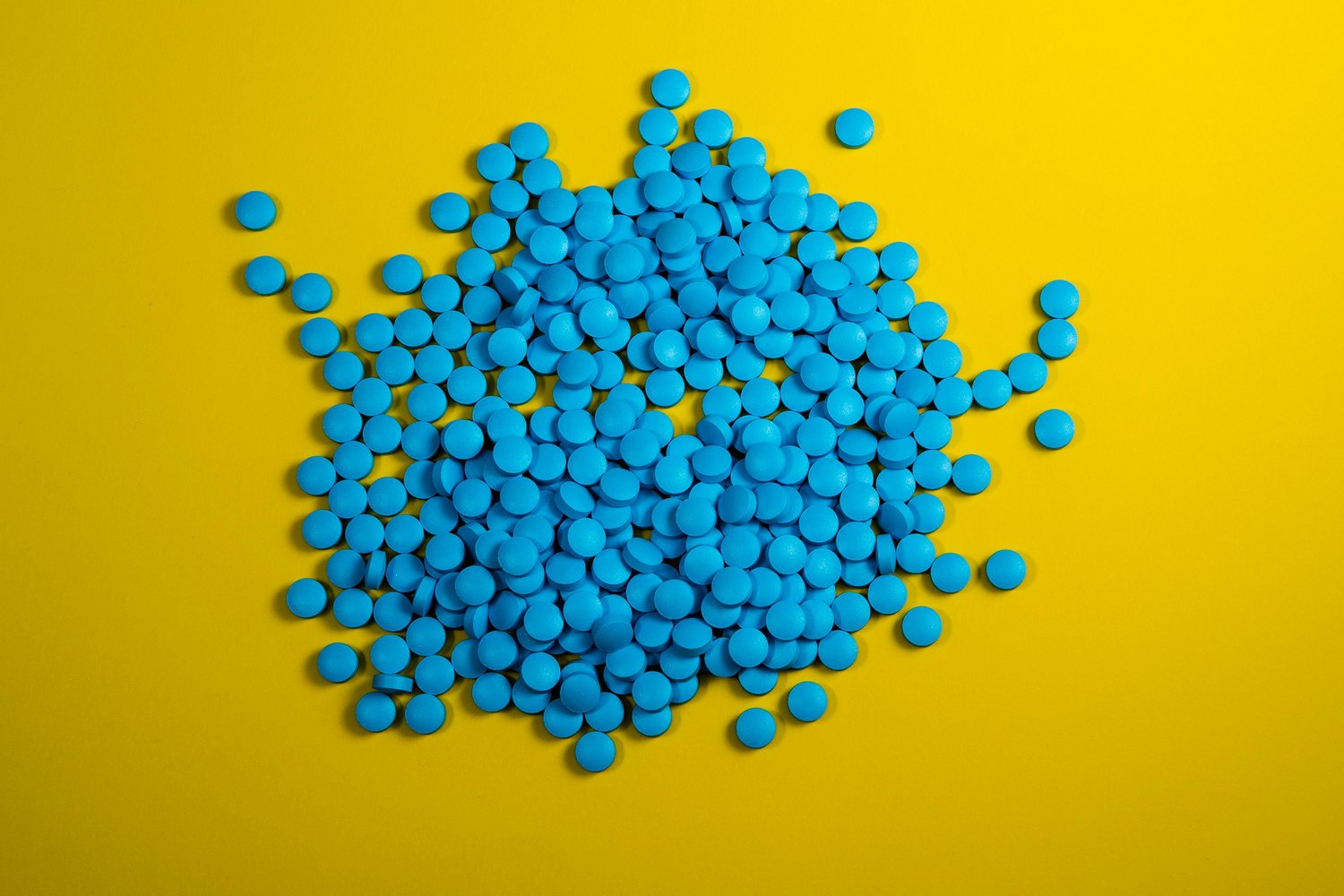
Imagine being handed a sugar pill — no active ingredient, no chemical compound, no pharmacological magic — and yet watching your pain diminish, your anxiety quiet, or your symptoms retreat. This is not fantasy. This happens in laboratories, hospitals, and clinics around the world every single day. It is called the placebo effect, and it may be the most underestimated proof of human potential ever documented by modern science.
Far from a curiosity or a statistical footnote, the placebo effect is a window into something profound: the mind's extraordinary ability to orchestrate real, measurable, physical change in the body. And for practitioners and students of Neuro-Linguistic Programming, that window opens onto the very landscape we have been navigating all along.
01 — The Science
What Is the Placebo Effect, Really?
The word "placebo" comes from Latin — it means "I shall please." It entered medical vocabulary as a polite term for inert treatments given to satisfy patients. But what science has revealed since then is anything but dismissive.
When a person believes they are receiving an effective treatment, the brain does not simply wait for a chemical to arrive. It begins producing its own. Studies on placebo pain relief have demonstrated that the brain releases endogenous opioids — the body's natural painkillers — in response to the expectation of relief. Remove that expectation, and the opioid release stops. This was confirmed in elegant experiments where subjects received naloxone, a drug that blocks opioid receptors, and the placebo effect vanished with it. The brain had genuinely been dispensing its own medication.
The effect goes deeper still. Placebo treatments have been shown to trigger measurable changes in dopamine production in Parkinson's patients, reduce inflammation markers in arthritis sufferers, lower blood pressure, accelerate wound healing, and even influence tumour-related symptoms in cancer care. Researchers at Harvard Medical School have documented cases in which patients showed clinical improvement on placebos even after being told explicitly that what they were taking contained no active ingredient — the so-called "open-label placebo." Belief, it turns out, is not even required for the body to respond. Ritual, expectation, and context are enough.
"The placebo effect is not about being fooled. It is about the nervous system responding to meaning — and meaning is something the mind constructs entirely."
02 — The Mechanism
How the Mind Talks to the Body
To understand why the placebo effect works, we need to appreciate the architecture of the mind-body relationship. The brain is not a passenger in a biological vehicle. It is the vehicle's operating system, continuously sending electrochemical signals that regulate immunity, hormone production, circulation, inflammation, and cellular repair. When the brain registers safety, certainty, and expectation of healing, it shifts the body's resources toward regeneration. When it registers threat, uncertainty, or fear, it shifts resources toward defence — a state in which healing is literally deprioritised.
This is why the quality of a doctor's communication, the aesthetics of a clinic, the confidence in a practitioner's voice, and the ceremony of taking a pill all contribute to outcomes. They are not fluff. They are data that the nervous system processes and acts upon. The brain translates perception into physiology with remarkable fidelity.
Key insight: The body does not distinguish between a real chemical signal and a vividly expected one produced by the brain itself. In both cases, the downstream biological effects can be identical. This is not metaphor — it is neuroscience.
03 — The NLP Connection
Language, Belief, and the Neurology of Change
Neuro-Linguistic Programming was built on a foundational observation: that the language we use — both externally with others and internally with ourselves — directly shapes neurological states. NLP's founders, studying the work of hypnotherapist Milton Erickson and therapists Virginia Satir and Fritz Perls, recognised that skilled communicators were doing something systematic when they produced rapid, sometimes inexplicable change in their clients. They were restructuring belief, reframing meaning, and altering the internal representations through which people experienced their reality.
The placebo effect is, at its core, the same mechanism in action. When a person receives a placebo, the treatment works because their internal representation — their expectation, their belief about what is happening — activates genuine neurological and physiological responses. NLP works for precisely the same reason. When we use techniques like anchoring, reframing, timeline work, or submodality shifts, we are not performing tricks. We are intervening in the process by which the mind constructs meaning — and that process directly governs what the body does next.
Consider the NLP presupposition: "The mind and body are one system." The placebo effect does not merely support this idea — it proves it with clinical rigour. Every controlled trial that documents a placebo response is, in effect, a controlled trial demonstrating that thought produces biology.
Similarly, NLP's attention to internal language — the words we use to describe pain, illness, limitation, and potential — maps directly onto what placebo researchers call "expectancy." What you expect, your nervous system prepares for. NLP coaching, at its most fundamental level, is the art of reshaping expectancy. We help clients move from "I can't recover" to "recovery is already underway" — and that shift in internal narrative is not merely psychological comfort. It is a change in the instructions being sent to the body.
04 — The Evidence
Proof That the Mind Can Physically Heal
The case for the mind's healing capacity is no longer speculative. It is one of the most replicated findings in modern medicine. Beyond placebo studies, the broader field of psychoneuroimmunology has established that psychological states — stress, grief, optimism, connection — produce measurable changes in immune function. Chronic stress demonstrably suppresses the immune system's ability to fight infection and repair tissue. Conversely, positive emotional states have been associated with faster recovery from surgery, greater resistance to illness, and longer lifespan.
Perhaps most striking are studies involving visualisation. Elite athletes have long used mental rehearsal, but researchers have documented that visualising physical movements activates the same motor cortex regions as actually performing them. In one remarkable study, participants who mentally rehearsed piano exercises showed measurable cortical changes comparable to those who physically practised — without touching the keyboard. The brain had physically reorganised itself in response to imagination alone.
For those of us in the NLP space, this is not a peripheral curiosity. It is the bedrock of what we do. We work with imagination, with internal narrative, with the structure of belief — and we do so knowing that these invisible processes have very visible, physical consequences.
05 — The Invitation
What This Means for You
The placebo effect does not mean illness is imaginary or that willpower alone cures disease. What it means is that the mind is an active participant in every healing process — and that participant can be coached. The internal environment you inhabit, shaped by your beliefs, your language, your expectations, and your sense of agency, is not separate from your physical health. It is upstream of it.
This is why NLP coaching is not a soft supplement to "real" treatment. It is an intervention in the most powerful system in the body: the brain. When we help a client shift from helplessness to agency, from fear to curiosity, from "this is permanent" to "this is changing" — we are working at the level where physiology begins.
Every belief you hold about your body is a message your body is already acting on. The question is not whether your mind influences your health — it does. The question is whether you are directing that influence consciously.
The placebo effect is not a glitch in the data. It is the data telling us something extraordinary: that the body is listening, always, to the mind. And the mind can be changed.