
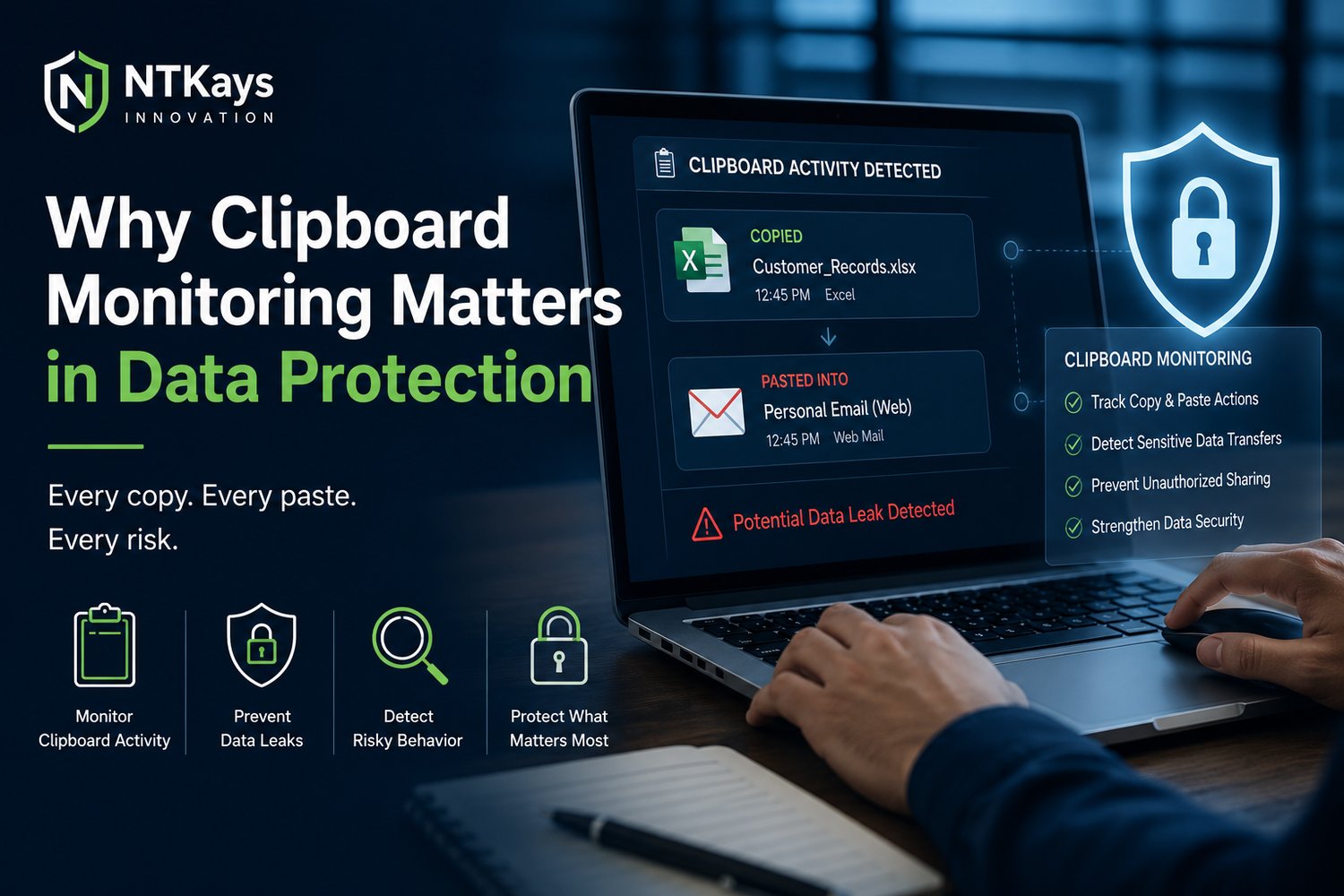
In modern workplaces, data moves faster than ever.
Employees copy and paste information between applications, emails, cloud platforms, messaging tools, spreadsheets, and remote systems countless times each day. Most of these actions are harmless and necessary for productivity.
But hidden within these routine actions is one of the most overlooked areas of organizational risk:
The clipboard.
Clipboard activity may appear simple, but it can become a powerful channel for sensitive data exposure when left unmonitored.
As organizations focus on insider threats, remote work, and data protection, clipboard monitoring has become an increasingly important layer of modern cybersecurity strategy.
What Is Clipboard Monitoring?
Clipboard monitoring refers to tracking and controlling copy-and-paste activity across systems and applications.
It helps organizations understand:
- what information is being copied
- where the data is being transferred
- whether sensitive content is leaving controlled environments
- how users interact with confidential information
This visibility helps security teams detect risky behavior that traditional tools often miss.
Why Clipboard Activity Creates Risk
Copy-and-paste actions happen instantly and quietly.
Unlike large file transfers or downloads, clipboard activity can move sensitive information in small amounts that are difficult to detect without proper monitoring.
Examples include:
- copying customer records into personal email
- moving financial data into unauthorized applications
- transferring confidential information into messaging platforms
- copying intellectual property into external systems
Because these actions often involve authorized users, they can bypass many traditional security controls.
The Rise of Remote Work and Clipboard Risk
Remote and hybrid work environments have significantly increased clipboard-related exposure.
Employees now work across:
- personal devices
- cloud platforms
- collaboration tools
- remote desktops
- virtual environments
This creates more opportunities for sensitive information to move outside protected systems.
A simple copy-and-paste action can transfer valuable business data from a secure environment into an uncontrolled one within seconds.
What Security Teams Should Monitor
Effective clipboard monitoring helps identify high-risk behavior patterns such as:
1. Copying Sensitive Information
Organizations should monitor when users copy:
- financial records
- customer information
- legal documents
- passwords or credentials
- intellectual property
This helps detect potential data exposure early.
2. Transfers Between Secure and Unsecure Applications
One of the biggest risks occurs when sensitive data moves from approved systems into unapproved platforms.
Examples include:
- copying information from internal systems into personal webmail
- pasting confidential content into chat applications
- moving protected data into external cloud services
These actions can lead to accidental or intentional data leaks.
3. Repeated Clipboard Activity
Unusually frequent copy-and-paste behavior may indicate:
- data collection activity
- information harvesting
- preparation for unauthorized transfer
Patterns matter more than isolated actions.
4. Clipboard Use During Unusual Hours
Timing often provides important context.
Clipboard activity occurring:
- late at night
- during weekends
- outside normal working hours
may require additional review.
Why Traditional Security Often Misses Clipboard Threats
Most traditional security solutions focus on:
- file transfers
- downloads
- network activity
- login authentication
Clipboard activity is often overlooked because it appears small and routine.
However, insider threats frequently exploit exactly these kinds of unnoticed actions.
Without clipboard visibility, organizations lose insight into one of the fastest methods of moving sensitive information internally and externally.
Clipboard Monitoring and Insider Threat Prevention
Clipboard monitoring plays a critical role in detecting insider risk because it reveals intent through behavior.
For example:
- repeated copying of confidential records
- moving sensitive information into personal applications
- unusual data handling patterns
These signals often appear before larger security incidents occur.
Monitoring clipboard activity helps organizations detect these behaviors early and respond proactively.
Balancing Monitoring With Privacy and Trust
Clipboard monitoring must be implemented responsibly.
Organizations should:
- clearly communicate monitoring policies
- focus on protecting sensitive data
- avoid unnecessary personal intrusion
- ensure compliance with privacy regulations
Transparency helps maintain employee trust while strengthening organizational security.
The Business Value of Clipboard Visibility
Strong clipboard monitoring provides:
- improved data protection
- reduced insider threat exposure
- better compliance support
- stronger incident investigations
- increased visibility into data movement
It transforms a hidden blind spot into actionable security intelligence.
Final Thought
Some of the biggest security risks begin with the smallest actions.
A single copy-and-paste event can move highly sensitive information beyond organizational control in seconds.
Understanding clipboard activity gives organizations deeper visibility into how data truly moves inside the business.
At NTKays Innovation, we help organizations implement intelligent monitoring solutions that provide visibility into user behavior, strengthen insider threat prevention, and protect sensitive information across modern digital workplaces.
Because in modern cybersecurity, protecting data means monitoring not only where information is stored, but also how it moves.