
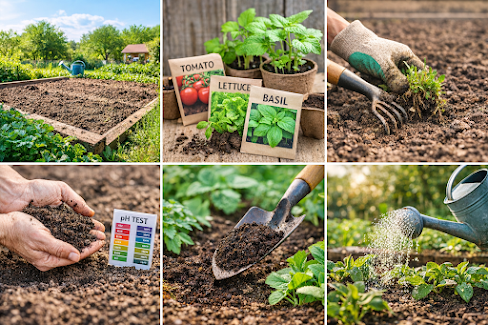

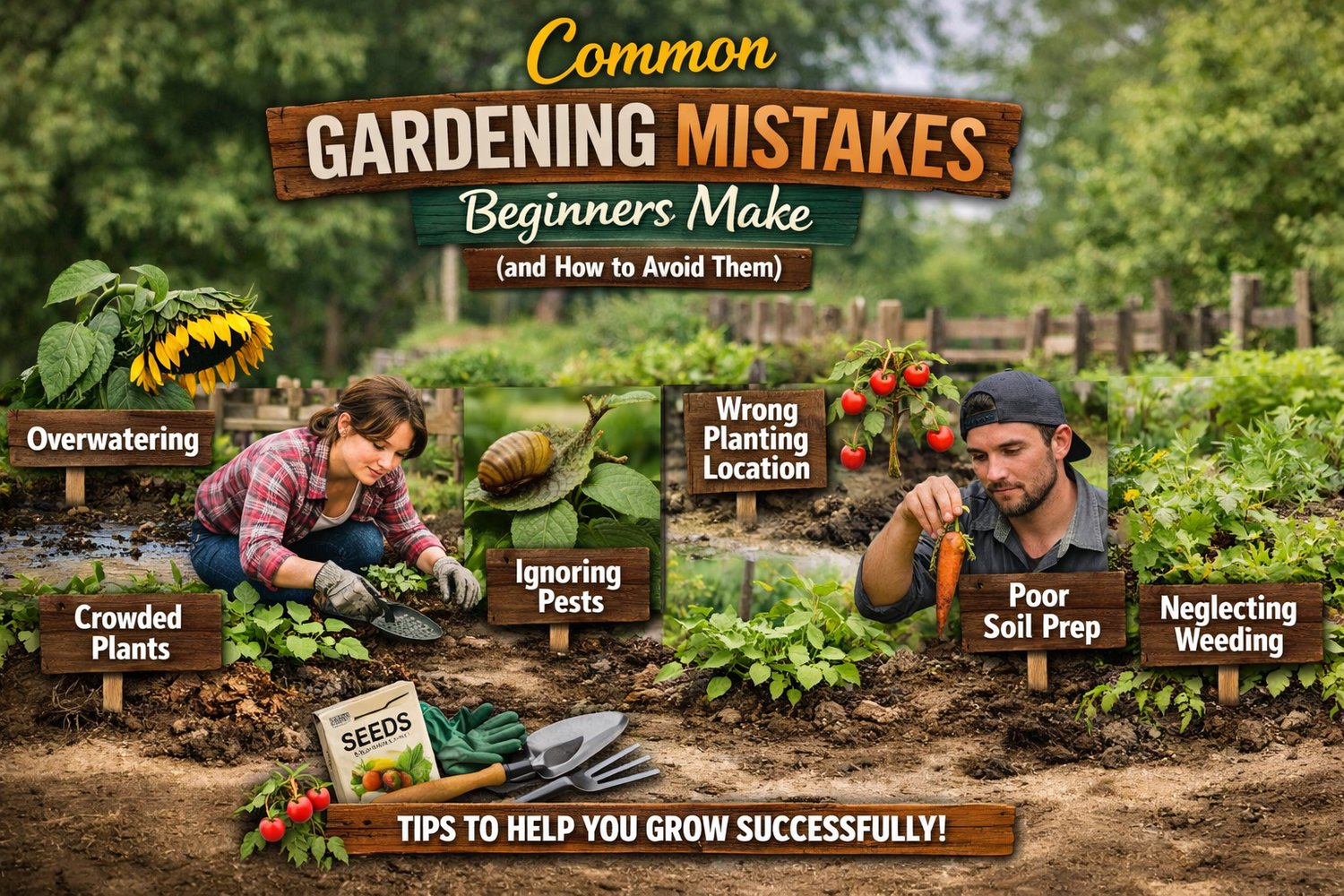
Starting a garden feels simple until plants begin to struggle. Most beginner mistakes are not about effort, but about timing, observation, and technique. The good news is that once you understand these mistakes, your results improve quickly.
Below is a practical breakdown of what goes wrong and exactly how to fix it.
1. Overwatering Plants
What beginners do:
Water every day or follow a fixed schedule without checking the soil.
What happens:
• Roots sit in water and lack oxygen
• Leaves turn yellow
• Growth becomes slow or weak
Step-by-step fix:
- Insert your finger 5–7 cm into the soil
- If it feels moist, do not water
- If dry, water slowly at the base
- Let water soak deeply (not just the surface)
- Repeat only when soil dries again
Practical tip:
Containers dry faster than garden beds, so check them more often.
2. Underwatering Plants
What beginners do:
Water lightly or forget during hot days.
What happens:
• Soil becomes hard and dry
• Leaves wilt or curl
• Plant stops growing
Step-by-step fix:
- Water slowly until soil is deeply soaked
- Ensure water reaches root depth
- Increase watering frequency during hot weather
- Add mulch to retain moisture
3. Planting in the Wrong Location
What beginners do:
Plant everything in one spot without considering sunlight.
What happens:
• Plants stretch, weaken, or stop producing
• Some burn under too much sun
Step-by-step fix:
- Observe your space for a full day
- Identify areas with full sun (6–8 hours)
- Place sun-loving plants there
- Use shaded areas for herbs like mint or parsley
- Move containers if needed
4. Poor Soil Preparation
What beginners do:
Plant directly into hard or nutrient-poor soil.
What happens:
• Roots struggle to spread
• Water drains poorly or too quickly
• Weak plant growth
Step-by-step fix:
- Loosen soil to about 20–30 cm depth
- Remove stones and debris
- Mix in compost or organic matter
- Ensure soil feels loose and crumbly
- Water lightly before planting
5. Ignoring Proper Spacing
What beginners do:
Plant too close to “save space”.
What happens:
• Poor airflow
• Higher disease risk
• Competition for nutrients
Step-by-step fix:
- Read spacing guidelines for each plant
- Measure distance before planting
- Thin seedlings if they grow too close
- Allow room for full mature size
6. Not Checking for Pests Early
What beginners do:
Only notice pests after visible damage.
What happens:
• Infestation spreads quickly
• Leaves and crops get damaged
Step-by-step fix:
- Inspect plants once a week
- Check under leaves and along stems
- Look for holes, spots, or sticky residue
- Remove affected leaves immediately
- Wash off small pests with water
7. Overusing Fertilizer
What beginners do:
Add too much fertilizer hoping for faster growth.
What happens:
• Roots burn
• Leaves turn brown or dry
• Growth becomes uneven
Step-by-step fix:
- Start with small amounts
- Apply fertilizer every few weeks, not daily
- Water after applying
- Prefer compost for steady nutrients
8. Not Harvesting on Time
What beginners do:
Leave vegetables and herbs too long.
What happens:
• Plants slow production
• Herbs become woody or bitter
Step-by-step fix:
- Harvest herbs weekly
- Pick vegetables when ripe
- Remove damaged produce
- Use clean scissors for cutting
9. Using Containers Without Drainage
What beginners do:
Use decorative pots without holes.
What happens:
• Water collects at the bottom
• Roots rot
Step-by-step fix:
- Always choose pots with drainage holes
- Add small stones at the base if needed
- Empty excess water from trays
- Use well-draining soil mix
10. Giving Up Too Early
What beginners do:
Stop gardening after small failures.
What happens:
• Miss the learning phase
• Lose progress
Step-by-step fix:
- Track what works and what doesn’t
- Adjust watering, sunlight, or soil
- Start with easy plants like herbs
- Improve gradually, not all at once
Final Thought
Gardening is less about perfection and more about observation. Plants constantly give signals. The more you notice, the better your decisions become.
Every mistake is simply feedback from your garden
Comments ()