
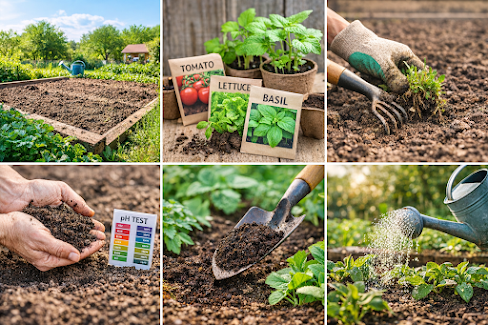

A productive garden does not stay healthy by chance. Plants constantly respond to weather, soil conditions, pests, watering habits, and seasonal changes. Even when everything looks green on the surface, hidden problems can begin below the soil or under leaves.
That is why regular garden maintenance matters. Small weekly actions prevent larger problems, while monthly tasks strengthen the garden for long-term growth.
A garden cared for consistently becomes easier to manage, more productive, and more enjoyable over time.
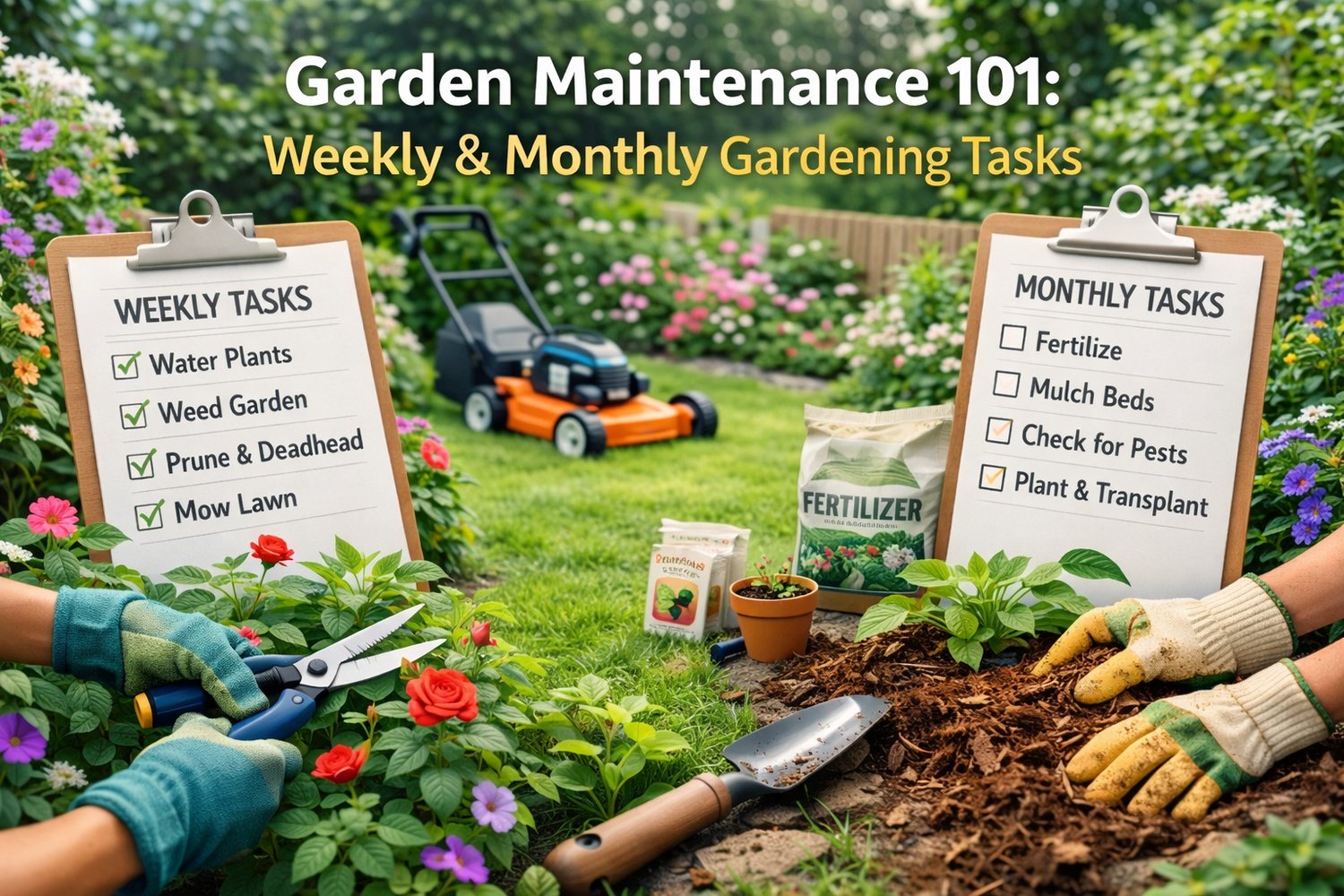
Weekly Gardening Tasks
Weekly tasks are the backbone of garden health. These are the practical checks that help you catch problems early.
1. Check Soil Moisture Properly Before Watering
Many gardeners water by habit instead of checking whether plants actually need water.
Step by step:
• Push your finger 5 to 7 centimeters into the soil near the base of the plant
• If the soil feels dry at that depth, watering is needed
• If it still feels cool and moist, wait another day
• For container plants, check daily because pots dry faster than ground soil
How to water correctly:
• Water slowly at the base of the plant
• Allow water to soak deeply instead of running off
• Continue until the soil is moist below root level
• Avoid wetting leaves unnecessarily
Practical weekly target:
Most garden plants need deep watering two or three times a week depending on weather.
Early morning remains the best time because less water is lost to evaporation.
2. Remove Weeds Before They Become Established
Weeds steal nutrients, water, and sunlight very quickly.
Step by step:
• Walk through the garden once a week with a small hand fork or hoe
• Pull weeds when soil is slightly moist because roots come out more easily
• Remove the entire root, not just the top growth
• Place removed weeds away from the garden if they contain seeds
Practical tip:
Focus especially around young seedlings because weeds compete hardest there.
A few minutes weekly prevents hours of work later.
3. Inspect Plants Carefully for Pests and Early Disease
Pests often begin in small hidden areas before visible damage appears.
Step by step:
• Turn over leaves and inspect undersides
• Check young shoots first because pests prefer tender growth
• Look closely along stems and flower buds
• Watch for tiny holes, sticky surfaces, curling leaves, or unusual spots
Common signs to notice:
• Small insects gathering under leaves
• Yellow spots
• Powdery surfaces
• Chewed edges
Practical response:
Remove damaged leaves immediately.
If only a few pests appear, wash them off with water before stronger action is needed.
4. Harvest Crops and Herbs Regularly
Leaving mature produce too long can slow future growth.
Step by step:
• Harvest herbs weekly by cutting above a leaf node
• Pick ripe vegetables as soon as they mature
• Remove damaged fruit immediately
• Use clean scissors for delicate stems
Why this matters:
Regular harvesting signals the plant to continue producing.
Basil, mint, spinach, beans, and tomatoes all respond well to frequent picking.
5. Remove Dead Leaves, Flowers, and Weak Growth
Dead material can attract pests and disease.
Step by step:
• Cut yellow leaves near the stem base
• Remove faded flowers from flowering plants
• Trim weak branches that block airflow
• Clear fallen plant material from soil surface
Practical result:
Better airflow reduces fungal problems.
Plants also direct energy toward healthy growth.
6. Check Supports and Plant Positioning
As plants grow, support systems often need adjustment.
Step by step:
• Inspect stakes, ties, and trellises
• Loosen ties that are too tight
• Add support before stems bend too far
• Guide climbing plants gently upward
Important:
Never tie stems tightly because growth continues weekly.
Monthly Gardening Tasks
Monthly work focuses on deeper garden strength.
1. Feed the Soil with Compost or Organic Matter
Plants constantly use nutrients from the soil.
Step by step:
• Spread a thin layer of compost around plants
• Keep compost slightly away from direct stem contact
• Lightly mix into topsoil without disturbing roots
• Water after applying
Practical amount:
Two to three centimeters around beds is often enough.
2. Trim and Shape Overgrown Plants
Some plants need structure correction every month.
Step by step:
• Remove crossing branches
• Cut overcrowded inner growth
• Shorten overly tall stems
• Keep open space between branches
Why this matters:
Light reaches lower leaves better.
Air circulation improves.
3. Refresh Mulch for Moisture Control
Mulch slowly breaks down and needs renewal.
Step by step:
• Check mulch thickness
• Add fresh dry grass, bark, straw, or compost
• Maintain about 5 centimeters depth
• Keep mulch away from plant stems
Benefits:
• Slower evaporation
• Fewer weeds
• Better soil temperature control
4. Examine Soil Condition Closely
Soil changes gradually.
Step by step:
• Look for hard crust forming on top
• Break compacted areas gently
• Check whether water drains too quickly or too slowly
• Add compost where needed
Practical clue:
Healthy soil should feel loose, dark, and slightly crumbly.
5. Rotate Fast-Growing Crops Where Possible
Growing the same crop repeatedly in one place weakens soil.
Step by step:
• Move leafy vegetables to a different section
• Separate root crops from previous planting spots
• Record what was planted where
Why this matters:
It helps prevent nutrient imbalance and recurring pests.
6. Clean and Maintain Garden Tools
Dirty tools spread disease.
Step by step:
• Wash soil off after monthly heavy use
• Dry tools completely
• Sharpen cutting edges
• Oil metal parts lightly if needed
Practical result:
Clean tools cut better and last longer. You can also find free practical downloadable garden cleaning template to help you keep things on track. Here is the website we found recommended by many.
Final Thought
Gardening becomes easier when maintenance follows a rhythm rather than waiting for problems.
Weekly attention protects the garden.
Monthly care strengthens it.
A few careful minutes each week often produce better results than large occasional effort
Comments ()