

Most plant problems whisper before they shout. If you learn to catch those whispers, you’ll fix issues in minutes instead of losing plants weeks later.
STEP 1: Build a Simple Inspection Routine (Your “Plant Check”)
Do this 2–3 times per week. It takes 5–10 minutes.
How to inspect properly:
Start at the top of the plant
Look at leaf color and shape
Turn leaves over
This is where pests hide
Check new growth (tips and buds)
Problems often start here first
Examine the stem
Look for discoloration, softness, or damage
Check the soil
• Is it dry, wet, or compacted?
• Any mold or insects?
Always inspect in good light, preferably morning.
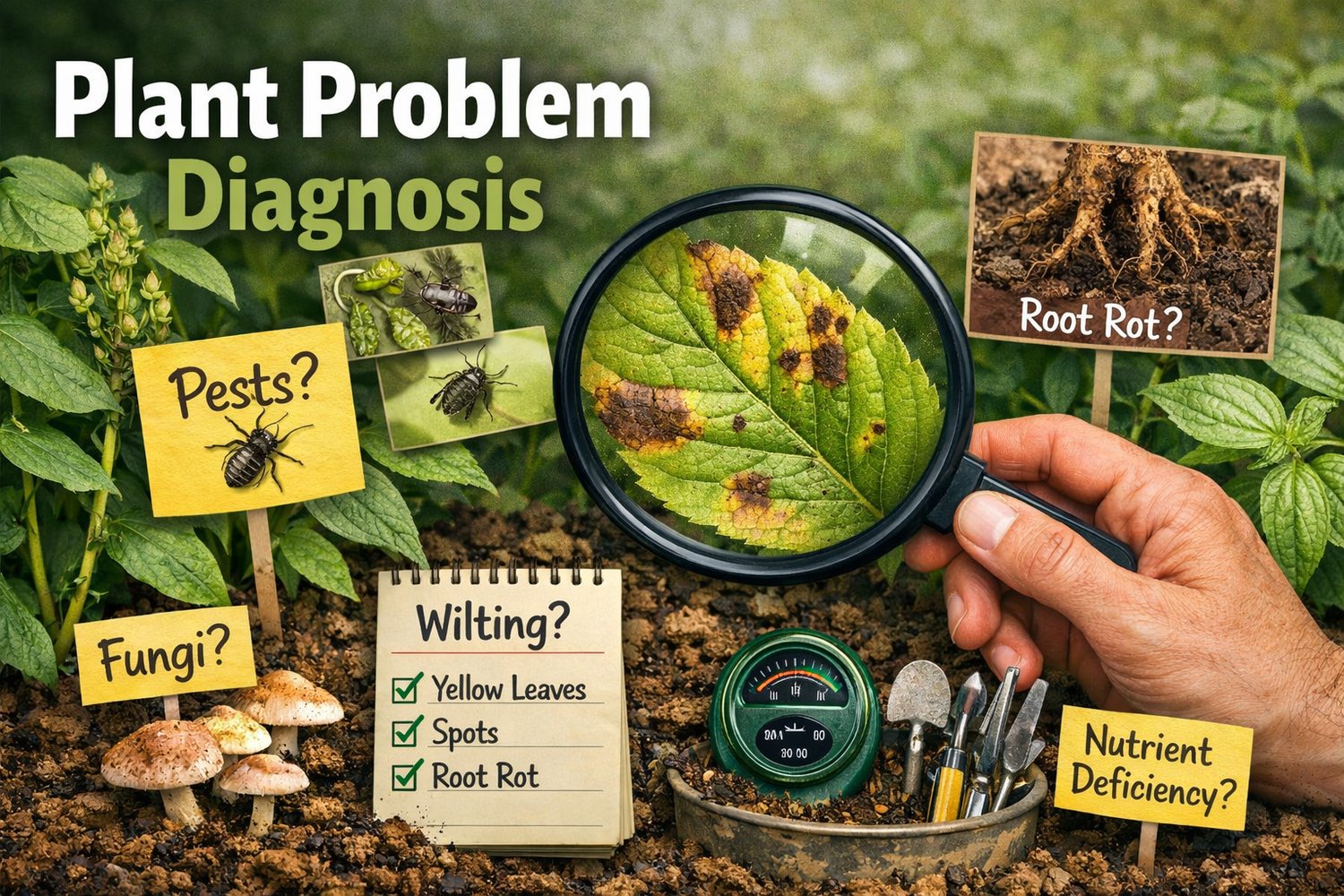
STEP 2: Learn the 4 Main Warning Signals
Your plants will show problems in these key ways:
1. Color Changes
What to look for:
• Yellow leaves
• Pale green leaves
• Brown or burnt edges
• Dark spots
What it usually means:
• Water imbalance
• Nutrient deficiency
• Disease starting
2. Leaf Shape Changes
What to look for:
• Curling leaves
• Drooping or wilting
• Twisting or shrinking
What it usually means:
• Water stress
• Pest activity
• Heat or environmental stress
3. Physical Damage
What to look for:
• Holes in leaves
• Chewed edges
• Torn or uneven leaves
What it usually means:
• Insects feeding on the plant
4. Growth Problems
What to look for:
• Slow growth
• Small leaves
• Weak stems
• No flowering or fruiting
What it usually means:
• Poor soil
• Lack of nutrients
• Wrong environment
STEP 3: Diagnose the Problem (Simple Decision Method)
Use this quick thinking process:
Ask yourself:
- Is the soil too wet or too dry?
- Do I see insects or damage?
- Is the plant getting enough sunlight?
- Is the soil healthy and loose?
Your answer usually points directly to the problem.
STEP 4: Fix Watering Problems (Most Common Issue)
A. Overwatering Fix
Signs:
• Yellow leaves
• Soft stems
• Wet, heavy soil
Step-by-step fix:
- Stop watering immediately
- Let soil dry out naturally
- Check drainage holes (for pots)
- Loosen soil slightly if compacted
- Resume watering only when top soil dries
B. Underwatering Fix
Signs:
• Dry soil
• Drooping leaves
• Brown edges
Step-by-step fix:
- Water slowly and deeply
- Ensure water reaches roots
- Add mulch to retain moisture
- Increase watering during hot weather
STEP 5: Fix Pest Problems Early
Signs:
• Holes in leaves
• Sticky surfaces
• Visible insects
Step-by-step fix:
- Remove badly damaged leaves
- Spray plant with water (especially under leaves)
- Inspect again after 2 days
- If pests remain → use mild soap spray
- Repeat weekly if needed
Early action stops spreading.
STEP 6: Fix Nutrient Deficiencies
Signs:
• Yellowing leaves
• Weak growth
• Small leaves
Step-by-step fix:
- Add compost around the plant
- Lightly mix into topsoil
- Water after adding
- Repeat monthly
Compost is the safest solution for beginners.
STEP 7: Fix Environmental Problems
A. Sunlight Issues
Signs:
• Weak, stretched plants → not enough light
• Burnt leaves → too much sun
Fix:
• Move plants or containers
• Provide shade if needed
B. Poor Airflow
Signs:
• Mold or fungal spots
• Dense, crowded growth
Fix:
- Trim excess leaves
- Space plants properly
C. Poor Soil Structure
Signs:
• Water sits on top OR drains too fast
• Hard, compact soil
Fix:
- Add compost
- Loosen soil
- Improve drainage
STEP 8: Immediate Action Plan (When You Notice a Problem)
Follow this exact order:
- Identify the symptom
- Check soil moisture
- Inspect for pests
- Remove damaged parts
- Apply correct fix
- Monitor for 2–3 days
Do not delay. Small problems grow quickly.
STEP 9: Weekly Prevention Routine
Keep problems from returning.
Weekly:
• Inspect all plants
• Remove weeds
• Check soil moisture
• Look for pests
Monthly:
• Add compost
• Trim overgrowth
• Refresh mulch
STEP 10: Learn to Read Your Plants Quickly
Quick Cheat Guide:
• Yellow leaves → water or nutrients
• Brown edges → dryness or heat
• Holes → pests
• Drooping → watering issue
• Slow growth → soil problem
These signals become easier with practice.
Final Thought
Plants do not suddenly fail. They communicate early through small changes.
When you learn to notice those changes and act quickly, gardening becomes easier, more predictable, and far more rewarding.
Your garden is always speaking. Your job is to listen and respond
Comments ()