
Planting seeds or seedlings may look simple—dig a hole, drop it in, and cover it with soil. But the truth is, proper spacing, planting depth, and timing can make the difference between a thriving garden and a disappointing one.
For beginner gardeners especially, understanding these three basics can dramatically improve plant health, growth, and harvest yields. Let’s break them down so you can plant with confidence.
1. Why Proper Plant Spacing Matters
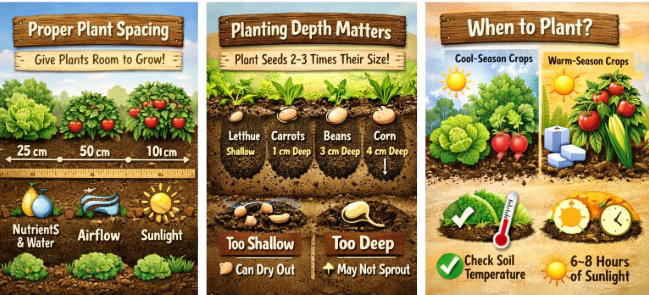
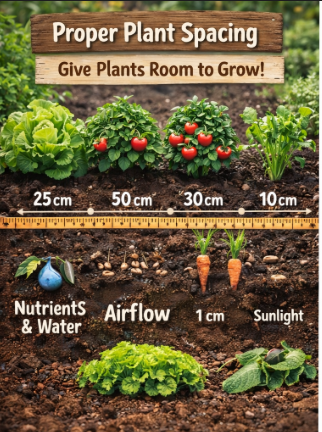
Spacing refers to the distance between plants in your garden. While it may be tempting to plant crops close together to save space, overcrowding causes several problems.
Problems Caused by Overcrowding
- Plants compete for nutrients and water
- Poor airflow can increase plant diseases
- Limited sunlight reaches lower leaves
- Roots become restricted and weak
Benefits of Proper Spacing
When plants have enough room, they can:
- Grow stronger root systems
- Absorb nutrients efficiently
- Receive adequate sunlight
- Produce higher yields
Example Spacing Guide for Beginners
Plant Recommended Spacing
Lettuce 20–30 cm apart
Tomatoes 45–60 cm apart
Carrots 5–8 cm apart
Cucumbers 90–120 cm apart
Tip: Always check the spacing instructions on the seed packet or plant label.
2. Planting Depth: How Deep Should Seeds Go?
Planting depth determines how easily seeds can germinate and reach sunlight.
The Golden Rule of Planting Depth
A good general rule is:
Plant seeds at a depth about 2–3 times their size.
Examples
Seed Type Recommended Depth
Lettuce Surface or very shallow
Carrots 0.5 – 1 cm
Beans 2 – 3 cm
Corn 3 – 5 cm
Why Depth Matters
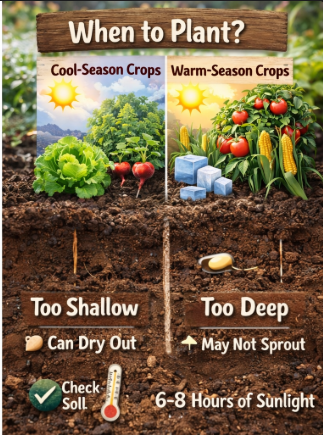
If seeds are planted too shallow, they may:
- Dry out quickly
- Be eaten by birds
- Wash away during watering
If planted too deep, they may:
- Struggle to reach sunlight
- Rot before germinating
Proper depth gives seedlings the best chance to emerge strong and healthy.
3. Timing: When Should You Plant?
Timing is just as important as spacing and depth. Planting too early or too late can affect germination and plant growth.
Key Timing Factors
1. Temperature
Different plants prefer different soil temperatures.
Crop Type Best Planting Time
Cool-season crops (lettuce, spinach) Early spring or autumn
Warm-season crops (tomatoes, cucumbers) After the last frost
2. Growing Season
Some plants grow quickly, while others take months.
Examples:
- Radishes: about 25–30 days
- Lettuce: 30–60 days
- Tomatoes: 60–90 days
Knowing the growth cycle helps you plan harvest times better.
3. Sunlight
Most vegetables require 6–8 hours of sunlight daily. Planting at the right time of year ensures plants get the sunlight they need.
4. Common Beginner Planting Mistakes
Avoid these mistakes that many new gardeners make:
- Planting seeds too deep
- Overcrowding plants
- Ignoring seasonal planting times
- Watering too much immediately after planting
- Not checking soil temperature
Small adjustments can significantly improve your garden’s success.
5. Quick Planting Checklist for Beginners
Before planting, ask yourself:
- Is the spacing correct for this plant?
- Am I planting at the right depth?
- Is it the right season to plant?
- Will the plant get enough sunlight?
- Is the soil moist but not waterlogged?
If the answer is yes to all of these, your plants are off to a great start.
Final Thoughts
Successful gardening starts with the basics. By paying attention to spacing, planting depth, and timing, you give your plants the best environment to grow strong and produce abundant harvests.
Remember: gardening is a learning process. Even experienced gardeners experiment each season to discover what works best.
Start small, plant carefully, and enjoy watching your garden grow.
Comments ()