
A Step-by-Step Guide
Pests are not a sign of failure. They are part of every garden. The goal is not to eliminate all insects, but to control harmful ones while protecting helpful ones.
With the right approach, you can manage pests naturally without chemicals.
Step 1: Learn to Spot Problems Early
Before you fix anything, you need to know what to look for.
What to check (twice a week):
- Look at the top of leaves
- Turn leaves over and check underneath
- Check stems and new growth (this is where pests start)
- Look at the soil surface near the plant
Signs of pests:
• Small holes in leaves
• Yellow or brown spots
• Sticky or shiny leaves
• Leaves curling or folding
• Tiny insects moving or clustered
What to do immediately:
• Remove badly damaged leaves using scissors
• Drop them into a bag (do not leave them in the garden)
Think of this as your “garden inspection routine”
Just 5 minutes can prevent a major problem.
Step 2: Start with Plain Water (Your First Line of Defense)
Before using anything else, try water.
What you need:
• A hose or spray bottle
Step-by-step:
- Spray the plant gently but firmly
- Focus under leaves (this is where pests hide)
- Spray early morning or late afternoon
- Repeat every 2–3 days if needed
Why it works:
Many pests like aphids cannot hold on and get washed away.
This is the safest and simplest method. Always start here.
Step 3: Remove Pests by Hand (Yes, Really)
It may sound simple, but it is very effective.
What to do:
- Wear gloves
- Inspect leaves closely
- Pick off visible insects
- Drop them into soapy water
When to use:
• When pests are few
• When infestation is just starting
Think of it as removing weeds, but for insects.
Step 4: Use a Simple Soap Spray (Beginner-Friendly Recipe)
If water alone is not enough, move to a mild spray.
What you need:
• 1 liter water
• 1 teaspoon mild liquid soap (not strong detergent)
Step-by-step:
- Mix gently
- Spray on affected leaves (top and bottom)
- Do this in the evening (not in hot sun)
- Wait 24 hours and check results
- Repeat 1–2 times per week if needed
Important:
• Test on one leaf first
• Do not spray every day
This works well for soft-bodied pests like aphids.
Step 5: Keep Your Garden Clean (Prevention Step)
Pests love messy spaces.
Weekly cleaning routine:
- Remove fallen leaves from soil
- Cut off dead or yellow leaves
- Pull out weeds
- Keep space around plants clear
Why this matters:
Dead plant material becomes a hiding place for pests.
A clean garden is harder for pests to live in.
Step 6: Use Companion Plants to Repel Pests
Some plants naturally protect others.
Easy combinations:
• Basil near tomatoes
• Mint near vegetables (in pots, it spreads fast)
• Marigolds around garden beds
How to apply:
- Plant these around your main crops
- Mix them into your garden, not separate
Think of them as natural bodyguards for your plants.
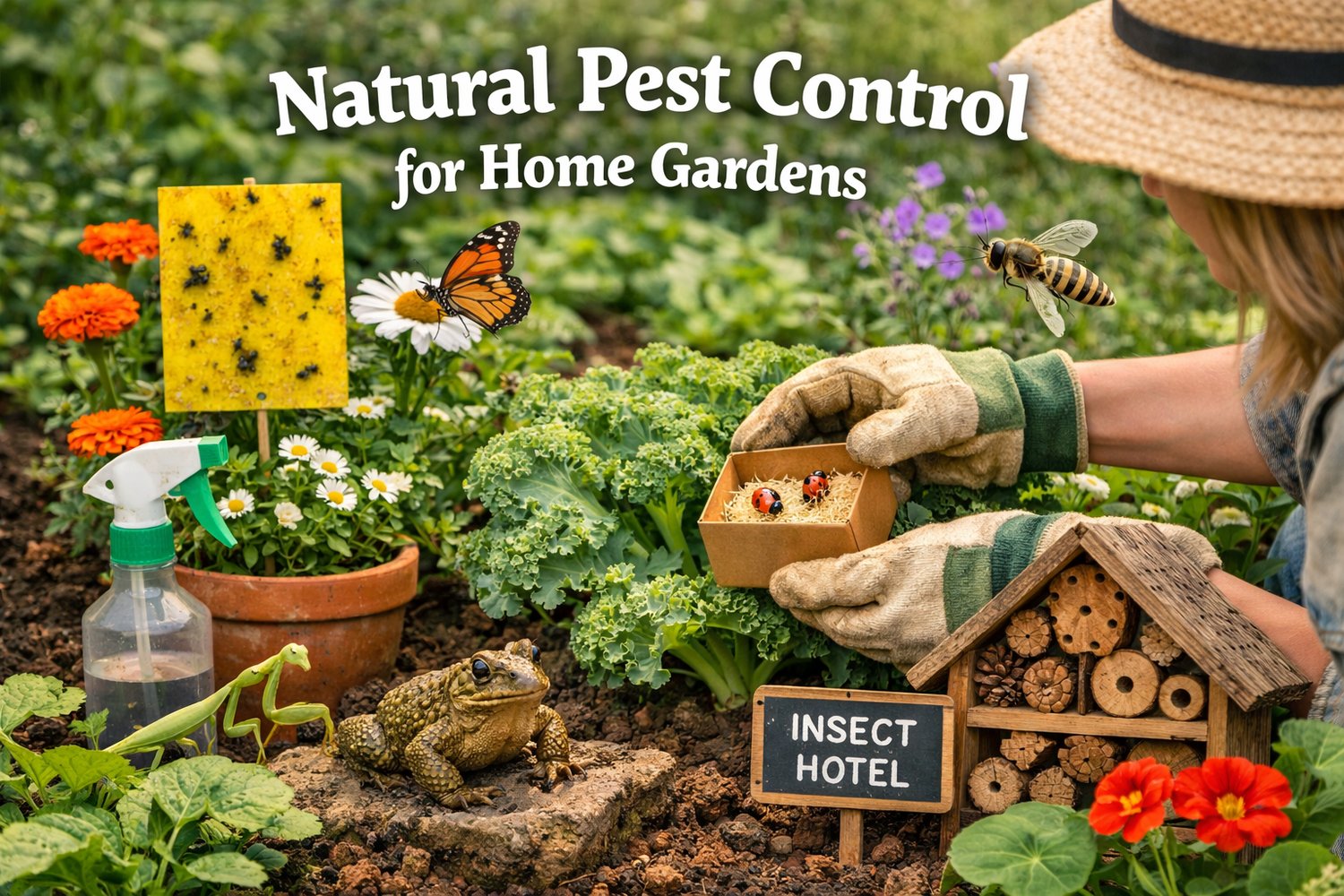
Step 7: Protect Helpful Insects
Not all insects are enemies.
Helpful insects include:
• Ladybugs (eat aphids)
• Bees (help pollination)
• Lacewings
What to do:
- Avoid chemical sprays
- Grow flowering plants
- Do not kill insects unless you know they are harmful
A balanced garden often controls itself.
Step 8: Strengthen Your Plants (Healthy Plants Resist Pests)
Weak plants attract pests more easily.
What to do:
- Add compost once a month
- Water correctly (not too much, not too little)
- Ensure plants get enough sunlight
- Avoid overcrowding plants
Strong plants are like healthy people, they resist problems better.
Step 9: Use Physical Barriers for Extra Protection
This prevents pests from reaching plants.
What to use:
• Netting
• Mesh covers
• Row covers
Step-by-step:
- Place cover over plants
- Secure edges so insects cannot enter
- Remove when plants need pollination
This is especially useful for young plants and seedlings.
Step 10: Use Homemade Natural Sprays (Safe & Effective Remedies)
Natural sprays help control pests when water alone is not enough. The key is to use mild, targeted solutions, not heavy or daily spraying.
Before You Start (Important Rules)
Follow these every time:
- Always test spray on one leaf first
- Wait 24 hours to check for damage
- Spray in the evening (avoid hot sun)
- Do not spray every day
- Focus only on affected areas
1. Soap Spray (Best Beginner Solution)
Works on:
Aphids, whiteflies, spider mites
What you need:
• 1 liter water
• 1 teaspoon mild liquid soap (not strong detergent)
Step-by-step:
- Mix gently in a spray bottle
- Spray directly on pests
- Cover underside of leaves well
- Leave for a few hours
- Rinse lightly with clean water (optional)
How often:
Use once or twice per week
This is your go-to first spray after water.
2. Garlic Spray (Strong Natural Repellent)
Works on:
Aphids, beetles, caterpillars
What you need:
• 2–3 garlic cloves
• 1 liter water
Step-by-step:
- Crush or blend garlic
- Mix with water and let sit for a few hours
- Strain into spray bottle
- Spray lightly on leaves
Tip:
Has a strong smell that repels many insects.
3. Chili (Pepper) Spray
Works on:
Chewing insects like caterpillars and beetles
What you need:
• 1 teaspoon chili powder or fresh chili
• 1 liter water
Step-by-step:
- Mix and let sit
- Strain before use
- Spray lightly on affected plants
Warning:
Avoid touching eyes after handling.
4. Neem Oil Spray (Very Effective Natural Option)
Works on:
A wide range of pests including aphids, mites, and whiteflies
What you need:
• Neem oil
• Water
• A few drops of mild soap (to mix oil and water)
Step-by-step:
- Mix according to product instructions
- Shake well
- Spray on leaves (top and bottom)
How often:
Once every 7–10 days
This is one of the most powerful natural pest controls.
5. Baking Soda Spray (For Fungal Issues)
Works on:
Powdery mildew and fungal problems
What you need:
• 1 liter water
• ½ teaspoon baking soda
• A few drops of soap
Step-by-step:
- Mix well
- Spray lightly on affected leaves
- Repeat weekly if needed
6. Vinegar Spray (Use Carefully)
Works on:
Weeds, not directly on plants
What you need:
• White vinegar
Step-by-step:
- Spray directly on weeds
- Avoid contact with garden plants
This is for weed control, not plant care.
7. Onion Spray (Mild Alternative to Garlic)
Works on:
General insect repellent
What you need:
• 1 onion
• Water
Step-by-step:
- Blend onion with water
- Strain
- Spray lightly on plants
Simple Spray Routine for Beginners
If you are just starting, follow this order:
- Inspect plants
- Use water spray first
- If pests remain → use soap spray
- If problem continues → use garlic or neem spray
- Maintain weekly checks
Common Mistakes to Avoid with Sprays
• Spraying in direct sunlight (can burn leaves)
• Using too strong mixtures
• Spraying too often
• Not testing first
• Spraying healthy plants unnecessarily
Final Thought
Natural pest control is not about reacting once things go wrong. It is about small, consistent actions that prevent problems before they grow. Natural sprays are most effective when used early and lightly, not as a last resort. You can find free downloadable Cheat Sheet and Planners at NTKaybookworld website.
Think of them as support tools, not the main solution.
Healthy plants, clean gardens, and regular checks always come first
Start simple:
Check your plants
Use water first
Keep your garden clean
With time, you will understand your garden better, and pest control will feel easy and natural
Comments ()