
A Practical Step-by-Step Guide to Protecting Plants During Hot Weather
Summer brings longer days, faster growth, and productive gardens, but extreme heat can also stress plants quickly. Without preparation, high temperatures can dry out soil, damage leaves, weaken roots, and reduce harvests.
The good news is that with a few simple adjustments, you can help your garden survive and even thrive during hot weather.
This guide explains exactly how to prepare your garden for summer heat in a simple, beginner-friendly way.
Why Summer Heat Becomes Dangerous for Plants
During hot weather:
• Soil loses moisture faster
• Plants use more water
• Leaves can burn under strong sun
• Roots become stressed in dry soil
Heat stress often leads to:
• Wilting
• Yellow leaves
• Slow growth
• Smaller harvests
Prevention is much easier than trying to rescue badly stressed plants.
Step 1: Water the Right Way
Watering correctly becomes critical during summer.
Best Time to Water
Early Morning (Best Option)
Water between sunrise and early morning.
Why:
• Cooler temperatures reduce evaporation
• Plants absorb water before midday heat
• Leaves dry faster, reducing disease risk
Avoid Midday Watering
Why:
• Water evaporates quickly
• Wet leaves may scorch in strong sunlight
How to Water Properly
Step-by-step:
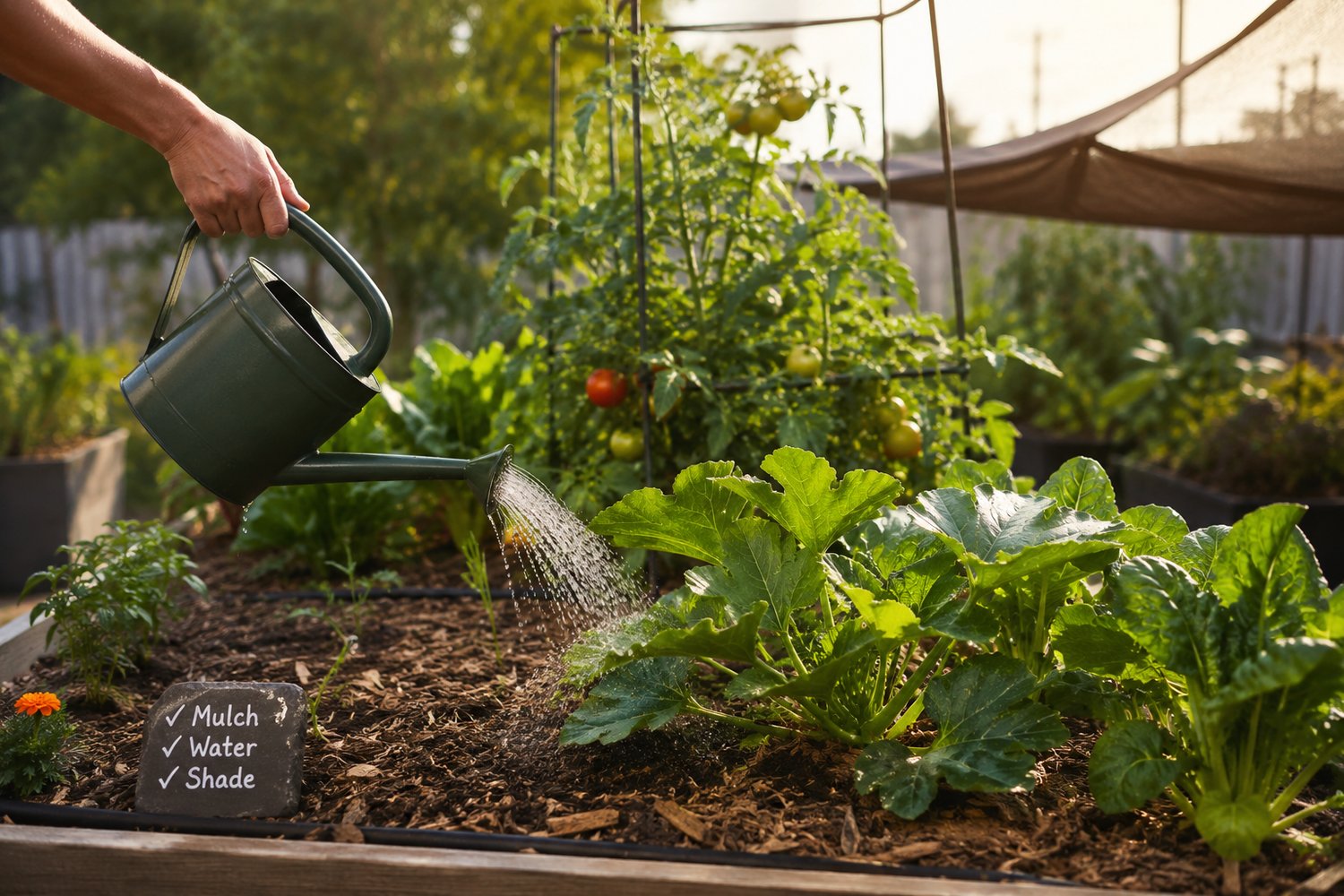
- Water slowly at the base of the plant
- Allow water to soak deeply into the soil
- Avoid shallow surface watering
- Focus on roots, not leaves
Goal:
Encourage deeper root growth so plants tolerate heat better.
Step 2: Add Mulch to Protect Soil
Mulch acts like a protective blanket for your garden.
Benefits:
• Slows moisture loss
• Keeps roots cooler
• Reduces weeds
• Improves soil over time
Types of Mulch
You can use:
• Dry grass
• Straw
• Bark chips
• Compost
• Leaves
How to Apply Mulch
Step-by-step:
- Remove weeds first
- Spread mulch around plants
- Keep mulch 3–5 cm away from stems
- Maintain about 5 cm thickness
Too much mulch against stems can trap moisture and cause rot.
Step 3: Protect Plants from Extreme Sunlight
Not all plants handle direct heat equally.
Signs of Sun Stress
• Burnt leaf edges
• Drooping during hottest hours
• Dry patches on leaves
Ways to Provide Shade
Option 1: Shade Cloth
Use lightweight shade fabric over sensitive plants.
Option 2: Temporary Covers
Use:
• Old sheets
• Garden netting
• Light fabric
Option 3: Container Movement
Move pots into partial shade during extreme heat.
Step 4: Improve Soil Moisture Retention
Healthy soil holds water longer.
How to improve soil:
Add Compost
Compost helps soil:
• Hold moisture better
• Stay loose
• Support roots
Avoid Compacted Soil
Hard soil prevents water from reaching roots properly.
Step 5: Reduce Heat Stress on Plants
Plants need less stress during summer.
What to avoid:
• Heavy pruning during extreme heat
• Over-fertilizing
• Constant transplanting
Heat-stressed plants recover more slowly.
Step 6: Watch for Heat Stress Daily
Summer problems develop quickly.
Signs to monitor:
• Wilting
• Yellowing leaves
• Dry soil
• Slow growth
• Curling leaves
Important Tip:
Some plants wilt slightly during midday heat but recover later.
This is normal temporary stress.
Warning sign:
If plants remain wilted in the evening, they likely need water.
Step 7: Prioritize Vulnerable Plants
Some plants need extra protection.
Most vulnerable:
• Seedlings
• Newly planted crops
• Leafy greens
• Container plants
Why:
Their roots dry out faster.
Step 8: Care for Container Gardens Carefully
Containers heat up faster than ground soil.
Summer container routine:
- Check soil daily
- Water more frequently
- Ensure drainage holes remain open
- Move containers if surfaces become too hot
Dark-colored pots absorb more heat.
Step 9: Harvest Regularly During Summer
Frequent harvesting helps plants stay productive.
What to harvest often:
• Herbs
• Tomatoes
• Beans
• Cucumbers
Why:
Overripe produce slows new growth.
Step 10: Prepare Before Heat Waves Arrive
Do not wait until plants start struggling.
Before extremely hot days:
- Water deeply
- Add fresh mulch
- Provide temporary shade
- Inspect soil moisture early morning
Preparation reduces shock.
Common Summer Gardening Mistakes
Overwatering Daily
Too much water weakens roots.
Watering Leaves Instead of Soil
Most water evaporates before reaching roots.
Ignoring Mulch
Bare soil dries much faster.
Planting New Seedlings During Extreme Heat
Young plants struggle in harsh temperatures.
Simple Summer Garden Routine
Daily:
• Check soil moisture
• Inspect vulnerable plants
Weekly:
• Remove weeds
• Refresh mulch if needed
• Harvest mature crops
Monthly:
• Add compost
• Check plant supports
• Monitor soil condition
Final Thought
Summer gardening is not just about watering more. It is about helping plants manage heat stress through smart preparation and consistent care.
Healthy soil, proper watering, mulch, and observation make the biggest difference.
When your garden is prepared for heat, plants stay stronger, greener, and more productive even during the hottest days.
Comments ()