
If you have more than one debt, the hardest part often isn't finding the money. It's deciding where each extra dollar should go. Two methods answer that question: the debt snowball and the debt avalanche. Both work. They just pick a different debt to attack first.
Prefer video? Watch the step-by-step walkthrough: How to Become Debt-Free in 2027: Snowball vs Avalanche — https://youtu.be/KdzlPeeyAV0
Prefer video? Watch the 5-minute walkthrough of the free Debt Snowball spreadsheet: https://youtu.be/AV33Rr1QWB8
Want to try it first for free? Grab the free Debt Snowball Lite spreadsheet here: https://payhip.com/b/XYQxV
The part both methods share
Start with a list of every debt: the balance, the interest rate (APR) and the minimum payment. Your statements show all three. Then decide on one total amount you'll put toward debt every month: all the minimums plus an extra amount you can afford, even if it's small.
The key rule: that total stays the same until you're debt-free. Every debt gets its minimum. Everything left over goes to one target debt. When the target is paid off, its whole payment rolls onto the next debt on the list. That roll-over is what makes the payments grow over time without you finding new money.
The debt snowball: smallest balance first
List your debts from the smallest balance to the largest, ignoring interest rates. Put your extra on the smallest one.
Why people like it: you clear your first debt fast, often within a few months, and you have one fewer bill to think about. Those quick wins keep a lot of people going, and a plan you stick with beats a perfect plan you abandon.
The downside: if a big balance also has a high interest rate, it sits there growing while you clear the small ones, so you usually pay a bit more interest overall.
The debt avalanche: highest interest rate first
List your debts from the highest APR to the lowest. Put your extra on the most expensive one.
Why people like it: it's the maths-first option. Because the costliest debt goes first, you normally pay the least interest and can finish a little sooner.
The downside: if your highest-rate debt is also a large balance, your first win can take a long time, and some people lose steam.
A quick example (made-up numbers)
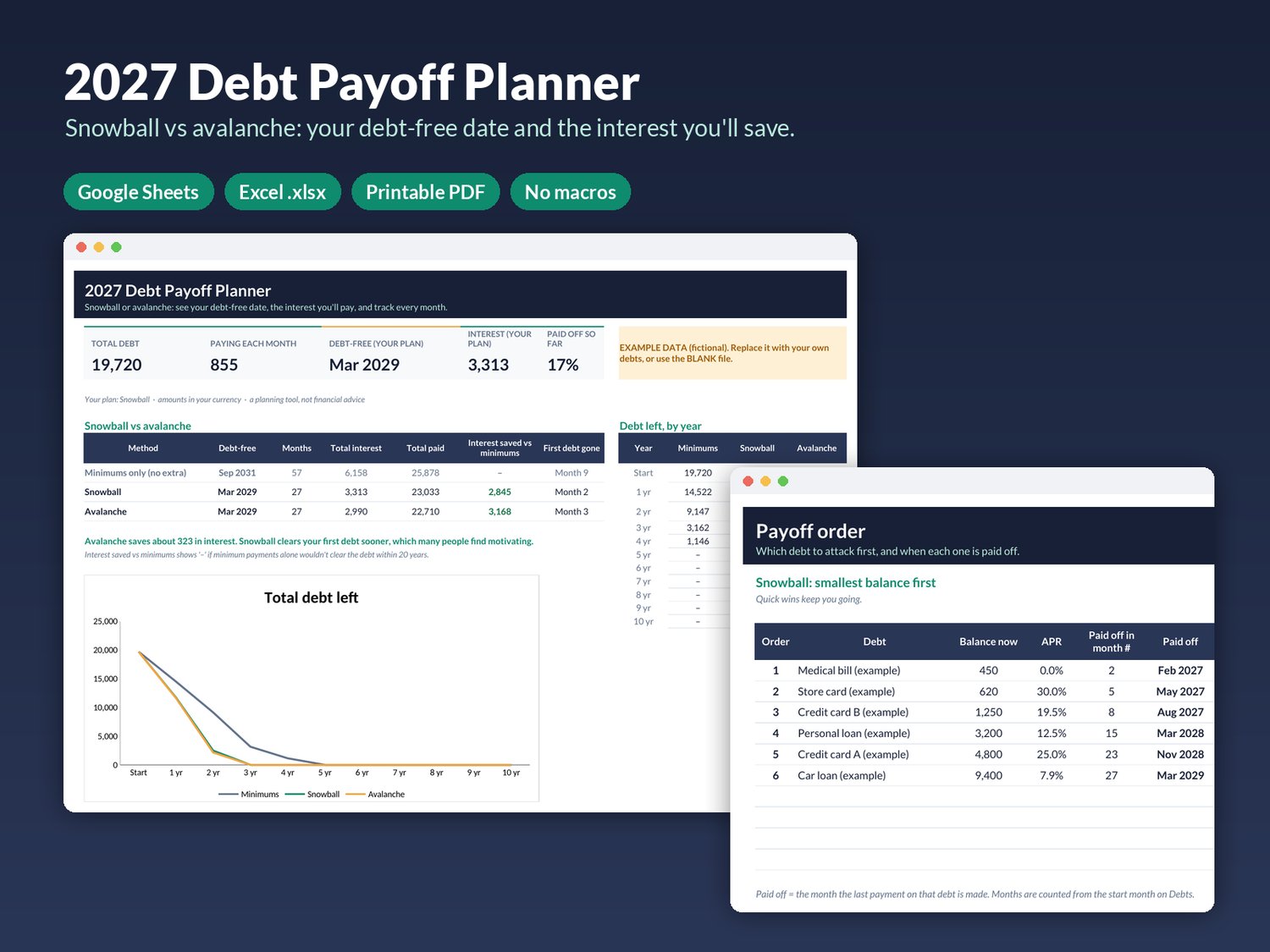
Say you owe on six debts, about 19,700 in total, including two credit cards, a store card, a car loan, a personal loan and a 0% medical bill. Minimums add up to 655 and you can add 200 a month.
- Minimums only: about 57 months and roughly 6,160 in interest.
- Snowball: about 27 months and roughly 3,310 in interest. The first debt is gone in month 2.
- Avalanche: also about 27 months, roughly 2,990 in interest. The first debt is gone in month 3.
Here, avalanche saves around 320 in interest. Snowball gives a quicker first win. Both save thousands compared with paying only the minimums. That's the real lesson: the extra payment and the roll-over matter more than which method you choose.
How to choose
- Pick avalanche if your interest rates are very different and you're motivated by numbers.
- Pick snowball if you've tried before and stalled, or you have several small balances you could clear quickly.
- Not sure? Run both with your own numbers and see how big the difference really is.
Tips that help either method
- Stop adding to the debts you're paying off, or the plan can't keep up.
- Check any debt where the minimum payment barely covers the interest. It needs attention first.
- Put windfalls (tax refunds, bonuses) on the target debt.
- Write down the date each debt is paid off. It's motivating to look back on.
A spreadsheet that does the maths for you
I made a 2027 Debt Payoff Planner for Excel and Google Sheets. You type in up to 10 debts and your extra payment, and it shows snowball and avalanche side by side: debt-free month, total interest, interest saved versus minimums, the payoff order, and a month-by-month schedule for each method. There's a progress tracker for logging what you pay each month, and a 7-page printable PDF if you like working on paper. No macros, no app subscription.
Get it here: https://payhip.com/b/glcpb ($7)
More 2027 planners, including a free habit tracker and a sinking funds tracker for the big bills you know are coming: https://payhip.com/NirWeiss
This post is general information, not financial advice. If you're struggling to make minimum payments, a non-profit credit counselling service can help for free or at low cost.