
Groceries are one of the few big budget lines you can actually change week to week. They're also one of the easiest to lose track of: a few extra shop runs, food that goes off in the fridge, takeaway on the nights nothing was planned. A short weekly routine fixes most of that, and it doesn't need an app.
Here's the routine I'd use for 2027. All numbers below are made-up examples.
1. Set a weekly grocery number
Start with a monthly food budget and divide it into weeks. Example: 520 a month is about 120 a week, with a little left over for the months that have five weekends. Write the weekly number somewhere you'll see it when you plan.
If you don't know what you spend now, look at the last two months of bank or card statements and add up every grocery shop. That's your honest starting point. Adjust from there, not from a number you wish were true.
2. Check what you already have
Before planning anything, look in the fridge, freezer and cupboards. Write down what needs using soon. Building two or three meals around what's already there is the fastest way to waste less and spend less.
3. Plan dinners, not every meal
Most of the money and most of the stress is in dinners. Plan five or six of them for the week and leave one night flexible for leftovers or a simple fallback. Breakfasts and lunches can stay on a short repeat list.
A few habits that help:
- Reuse ingredients across meals (one bag of spinach for two dinners).
- Cook once, eat twice: double a recipe and plan the second night.
- Put the busiest days on the easiest meals.
4. Write the grocery list from the plan
Go through each planned meal and list what you don't already have. Group the list by store section so you're not walking back and forth. If you shop at more than one store, split the list by store.
Add an estimated price next to each item the first few weeks. It feels slow, but it shows you quickly which meals are cheap and which ones quietly blow the budget.
5. Shop once, then log the total
Try to do one main shop a week, plus at most one small top-up. After each shop, write down the total. That's it: one number per shop.
6. Do a two-minute check at the end of the week
Compare what you spent to your weekly number. Under? Move the difference to savings or next week. Over? Look at the list and spot the one or two items that pushed it up. Don't try to fix everything at once; change one thing next week.
7. Review monthly
Once a month, add up the weekly totals and compare to the monthly budget. Keep a short list of meals that were cheap, quick and liked, so planning gets faster over time. By spring you'll have a rotation that mostly plans itself.
Want a printable to do this with?
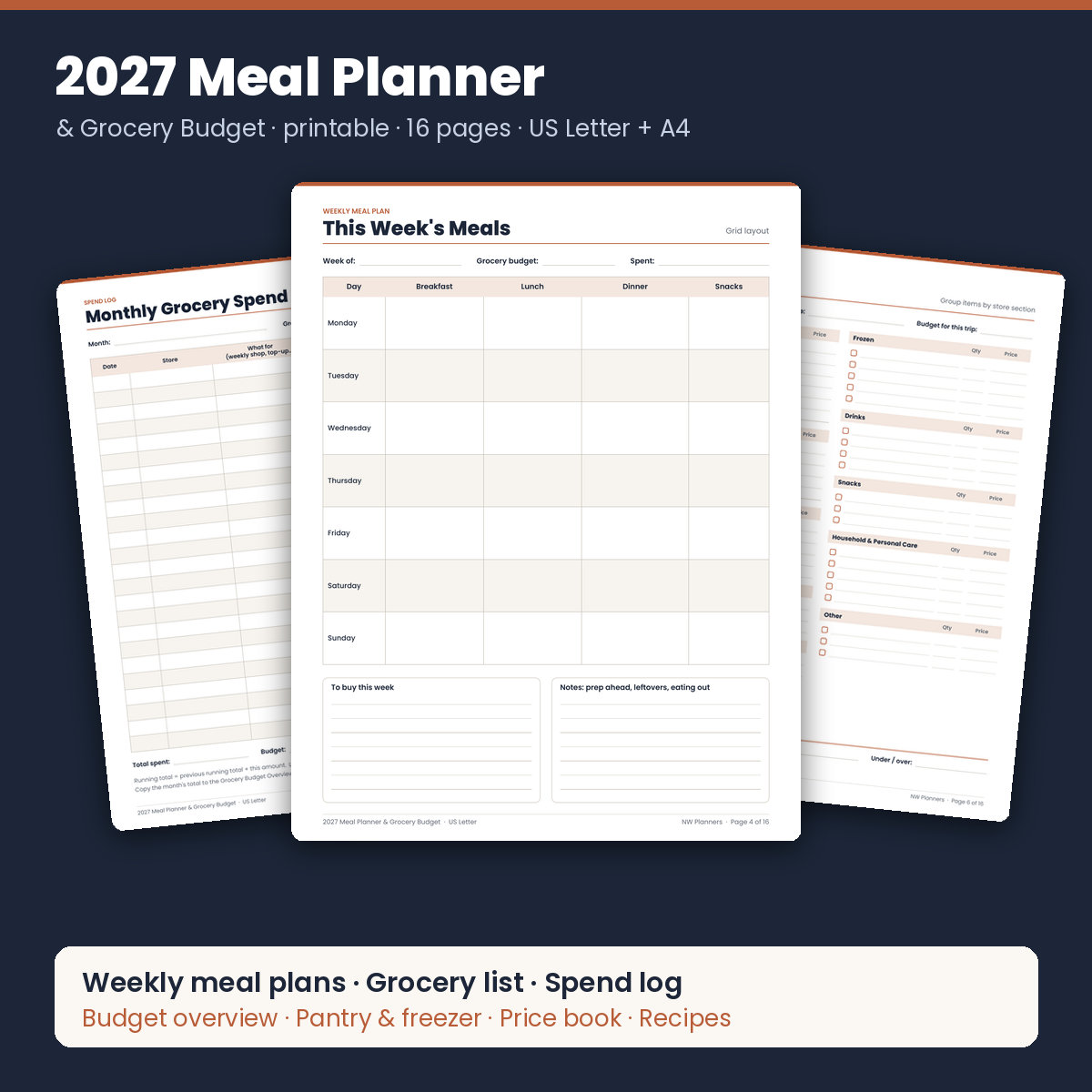
You can do all of this on a blank sheet of paper. If you'd like a ready layout, I made the 2027 Meal Planner & Grocery Budget, a printable PDF with weekly meal plans, a grocery list by store section, a grocery spend log, a pantry list and a price book, in US Letter and A4, $4: https://payhip.com/b/NmFEM
If you're tracking the rest of your household money too, the 2027 Bill Payment Tracker ($4) keeps every bill and due date on one page: https://payhip.com/b/NAOKr
Or browse all NW Planners templates: https://payhip.com/NirWeiss
Free download: the weekly meal plan and grocery list pages from this guide are available as a free printable: https://payhip.com/b/cgX6W
General information, not financial advice. Disclosure: I make and sell the NW Planners products linked above. This post was written with AI assistance and edited by me.