
Many systems for kids look good on paper but fall apart in daily life.
Helper Hands was designed differently, to work in real homes, with real routines, and real levels of attention and energy throughout the day.
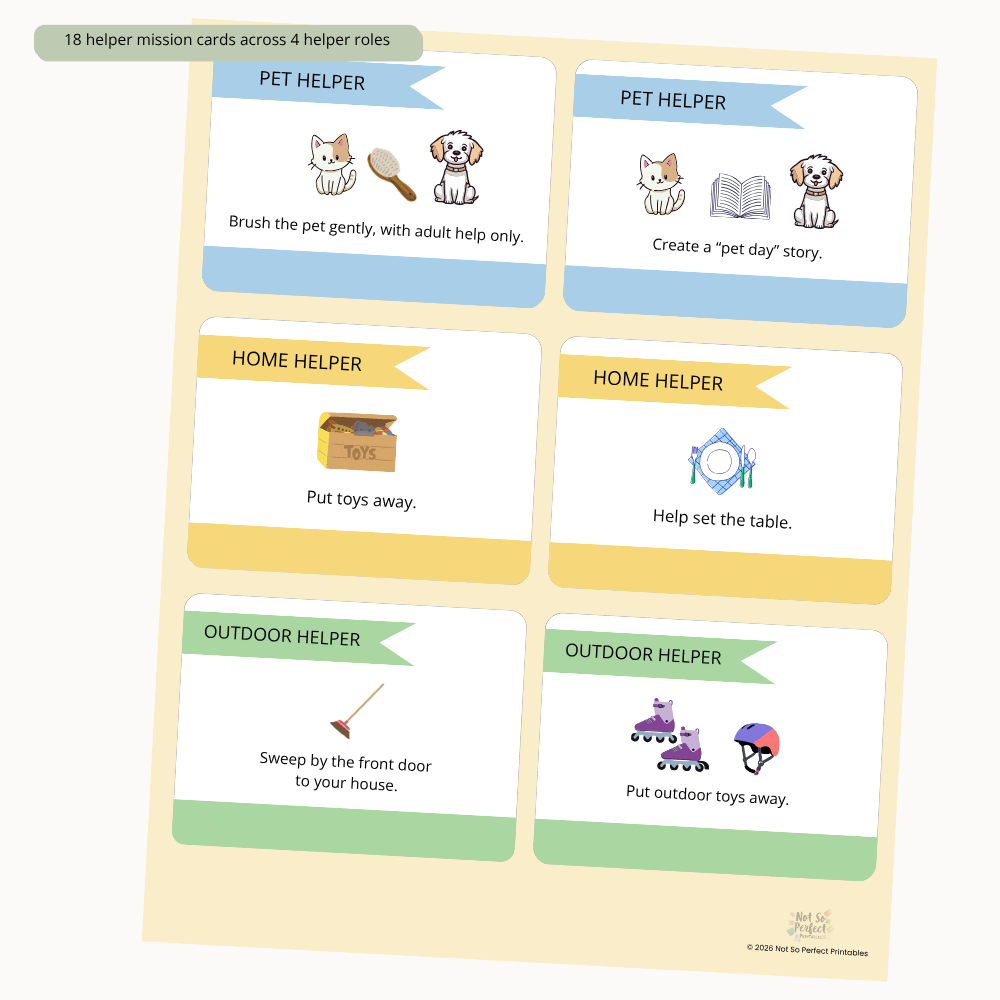
It doesn’t require long explanations, complicated setup, or constant supervision. Instead, it gives children a clear, visual way to understand what they are responsible for and what comes next.
It Starts Small
Most families begin by choosing just a few cards that match simple, familiar responsibilities.
These might include things like:
- getting ready in the morning
- tidying up a space
- helping with a small daily routine
The goal is not to introduce everything at once, but to build consistency through a few clear starting points.
You can start with the free “Today I’m a Helper” starter page here.
The System Replaces Repetition with Structure
Instead of repeatedly reminding children what to do, the cards act as a reminder.
A child can see:
- what their responsibility is
- when it needs to happen
- what “done” looks like in simple terms
This reduces back-and-forth prompting and helps children begin to recognize patterns in their day.
Independence Builds Gradually
At first, children may still need guidance. That's expected.
Over time, the structure helps them begin to:
- anticipate their responsibilities
- complete tasks with fewer reminders
- take ownership of parts of their daily routine
The shift is not instant. It develops through repetition and familiarity.
It Fits Into Existing Routines
Helper Hands is not meant to replace how a home already functions.
It is designed to sit inside existing routines and support them.
Families use it during:
- morning routines
- after-school transitions
- evening wind-down time
It becomes a quiet support system rather than an additional task list.
Explore the full Helper Hands Experience Cards system here.
It Grows With the Child
The system is flexible by design.
Some families use just a few cards consistently, while others expand over time as their child becomes more confident and independent.
There is no required “correct way” to use it, only what works for the child and the rhythm of the home.
The Goal is Simple
Helper Hands is not about perfection, compliance, or rigid structure.
The goal is:
helping children move from being reminded… to following through on their own.
That shift is what builds confidence, independence, and smoother daily routines over time.
If You’re Just Getting Started
Most families begin with the free “Today I’m a Helper” starter page before moving into the full Helper Hands Experience Cards system.
This allows you to see how the structure works in practice before expanding into the full set of routines.
Comments ()