
This didn’t start as a “system.”
It started with noticing a very common pattern in families:
Children often understand what they’re supposed to do… but still need repeated reminders to actually do it.
Not because they aren’t capable, but because everyday routines can feel like a constant cycle of prompting, correcting, and repeating instructions.
Over time, I became interested in a simple question:
What would it look like to give children clearer ownership of their daily responsibilities, without constant verbal reminders?
That question became the foundation for Helper Hands.
Helper Hands was designed as a simple, visual experience system that helps children understand what they are responsible for in a way they can follow independently.
Instead of relying on repeated instructions, children are guided by clear prompts they can see, understand, and act on.
The goal is not perfection or rigid structure.
The goal is independence through clarity, helping children build confidence by recognizing and completing small responsibilities on their own.
As the system developed, it became less about individual tasks and more about something bigger:
Helping children move from being told what to do… to understanding what they can do next.
That shift is small, but meaningful. It supports confidence, routine awareness, and gradual independence in everyday life.
Helper Hands is now part of a larger framework called Helper Path Studio, a collection of structured experience systems designed to help children build real-world skills through simple, guided action.
Each system focuses on reducing friction in learning and increasing independence through clarity, structure, and repetition.
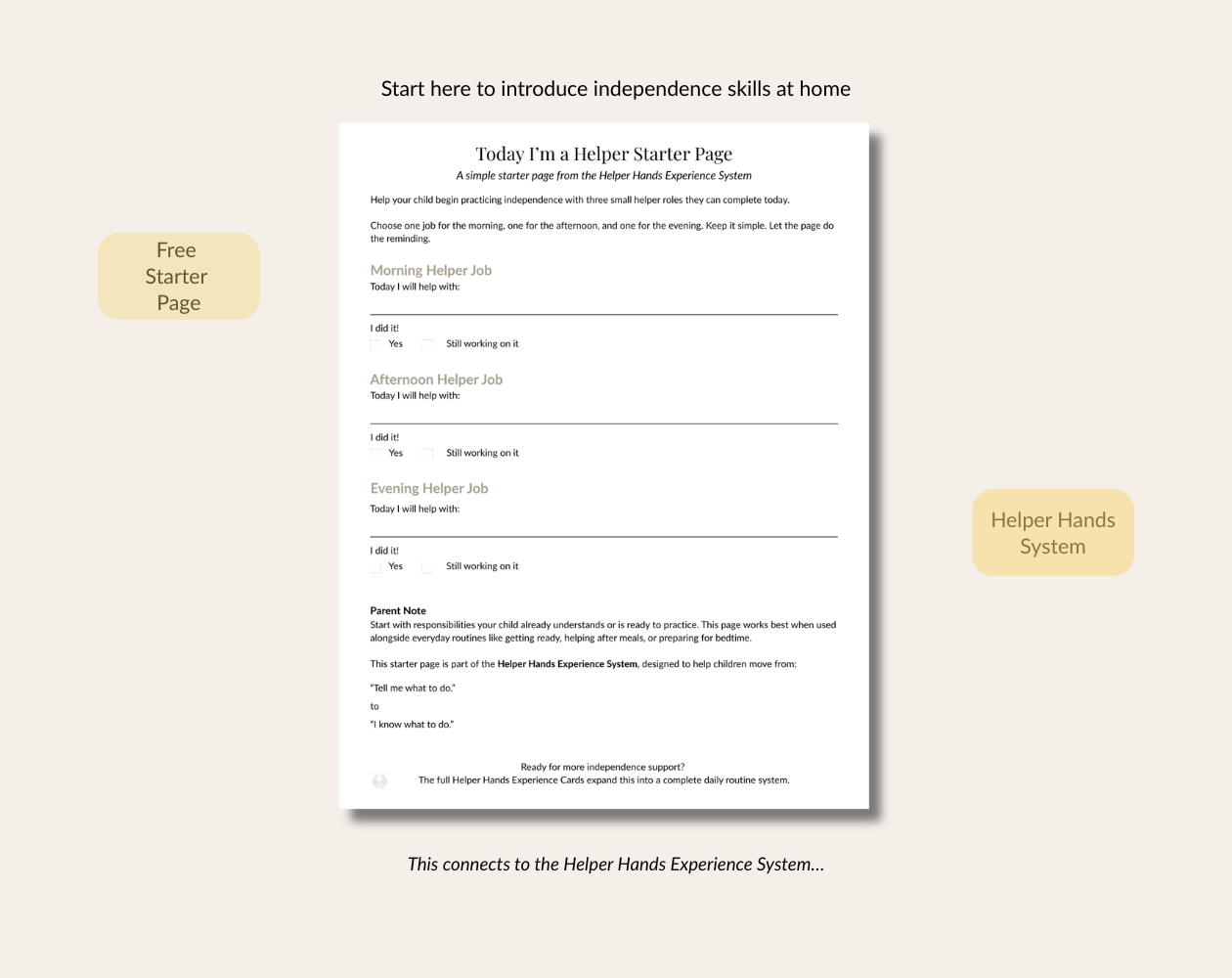
If you’re just discovering this work, you can start with the free “Today I’m a Helper” starter page, or explore the full Helper Hands Experience Cards as the core system.
Comments ()