
One thing I’ve noticed after years of working with kids is that a lot of what looks like “resistance” is actually uncertainty.
Not always.
But often.
Sometimes kids genuinely don’t want to stop what they’re doing.
Sometimes they’re tired.
Sometimes they’re distracted.
But many times, the hesitation starts earlier than that.
It starts with not knowing:
- where to begin
- what counts as helping
- what they’re actually supposed to do next
And when the starting point feels unclear, participation often depends entirely on verbal reminders from adults.
“Go help.”
“Please clean this up.”
“You know what to do.”
“Why do I have to keep reminding you?”
That cycle can become exhausting for everyone.
Not because kids are unwilling to contribute, but because uncertainty creates friction.
And friction slows participation down.
Clearer Starting Points Change Things
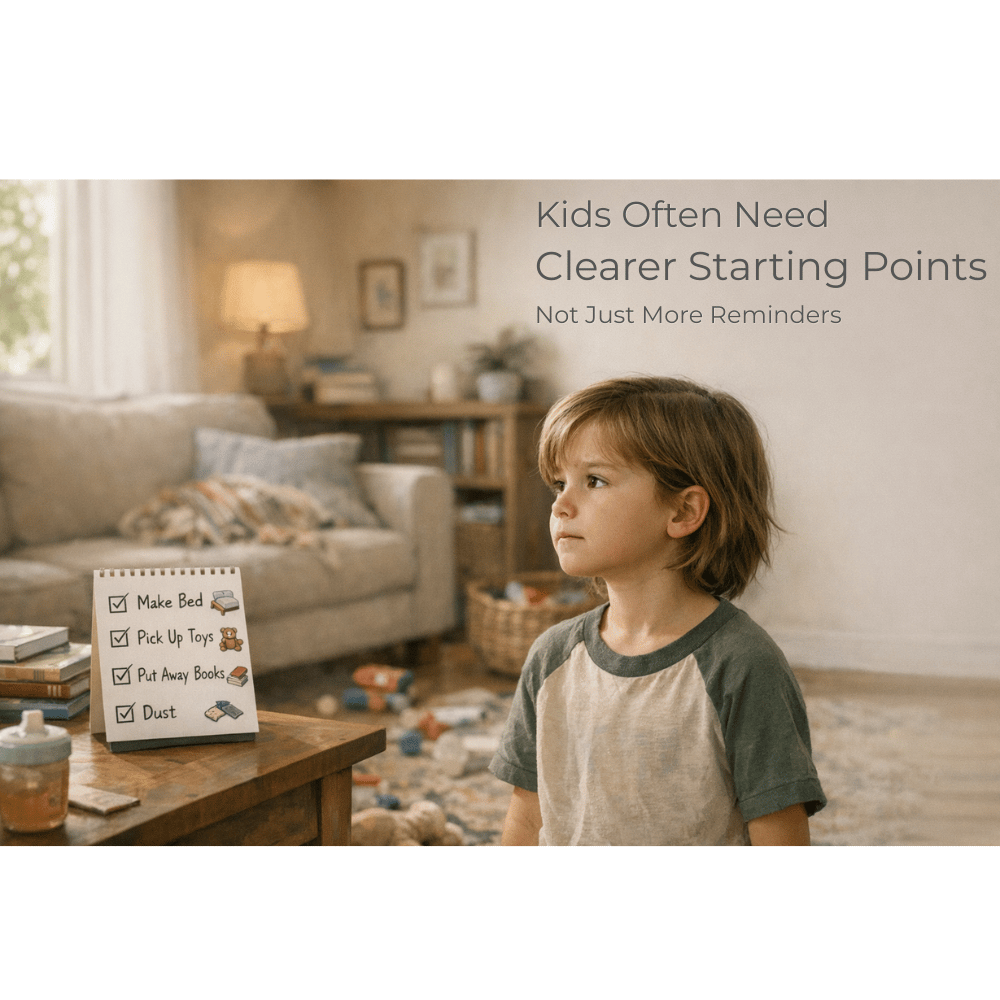
One thing I’ve seen over and over is that kids often participate more naturally when the starting point feels obvious.
Not necessarily easier.
Just clearer.
For example, “Help clean up” can feel vague to a child.
But:
- put the shoes in the basket
- wipe down the table
- check if the outdoor toys need to be picked up
- pack your backpack for tomorrow
…feels concrete.
Specific starting points reduce the mental work required to begin.
And once kids begin, momentum often follows.
That’s usually where confidence starts building too, not before participation, but through participation.
Confidence Usually Grows After Action, Not Before It
A lot of parenting advice talks about helping kids become “more responsible.”
But responsibility is a pretty big concept for children.
What often works better is giving kids repeated opportunities to:
- contribute
- solve small problems
- make manageable decisions
- experience success in everyday life
Not through pressure.
Not through lectures.
And not by turning kids into tiny employees. 😄
Just through real-world participation that feels achievable.
Small moments matter more than we sometimes realize.
Helping carry groceries inside.
Resetting a room.
Checking whether something outside needs attention.
Packing their own backpack.
Choosing a helper task independently.
These moments may look simple on the surface, but over time, they help children begin recognizing:
“I can do this."
That shift matters.
Why I Created the Helper Path Starter Bundle
That idea is really what led me to start organizing different experiences into what I now call Helper Paths.
Instead of creating random activities just to keep kids busy, I wanted to create guided experiences that help children practice:
- initiative
- follow-through
- participation
- problem-solving
- everyday confidence
in ways that feel realistic and manageable for family life.
The Helper Path Starter Bundle brings several of those experiences together into one starting place.
Inside are guided participation experiences designed to help kids:
- contribute more independently
- understand what to do next
- practice real-world responsibility step-by-step
The bundle includes:
- Helper Hands Experience Cards
- beginner business experiences
- outdoor helper ideas
- pet and environment awareness activities
- simple participation tools designed to reduce some of the daily “reminder fatigue” many families experience
Because often, kids don’t need constant correction.
They need clearer ways to participate successfully.
The Goal Isn’t Perfection
The goal isn’t perfectly behaved, children.
Or spotless rooms.
Or kids who never need help.
The goal is to help participation feel more natural, more achievable, and less dependent on constant reminders over time.
That shift usually happens gradually.
One small experience at a time.
And honestly, those small moments often end up building more confidence than we expect.
Comments ()