

Keywords: NCLEX-RN, NGN, endocrine, DKA, HHS, thyroid storm, myxedema coma, adrenal crisis, Addisonian crisis, insulin safety, potassium, clinical judgment, diabetes
Table of Contents
1. Spot the crisis, act in the right order
2. DKA vs HHS: the comparison the exam tests
3. Insulin safety: the potassium rule
4. Thyroid storm vs myxedema coma: opposite priorities
5. Adrenal crisis: recognize it fast
6. Key Numbers to Memorize
7. Inside the Guide
8. Who this guide is for
9. More from Nurse Board Prep Clinical Press
1. Spot the crisis, act in the right order
Endocrine questions on the NCLEX are rarely about naming hormones. They test whether you can spot the crisis, protect the airway and circulation, and act in the right order. Here are the four rules that decide the question.
👉 Get the full guide here: https://payhip.com/b/IStWR
2. DKA vs HHS: the comparison the exam tests
DKA: type 1 diabetes, rapid onset over hours, fruity breath, Kussmaul respirations, glucose over 250, ketones present, pH below 7.30.
HHS: type 2 diabetes, slower onset over days, profound dehydration and altered mental status, glucose over 600, no significant ketosis — and higher mortality.
Both get aggressive IV fluids first, then insulin — and both demand close potassium monitoring, because insulin and fluids shift potassium fast.
3. Insulin safety: the potassium rule
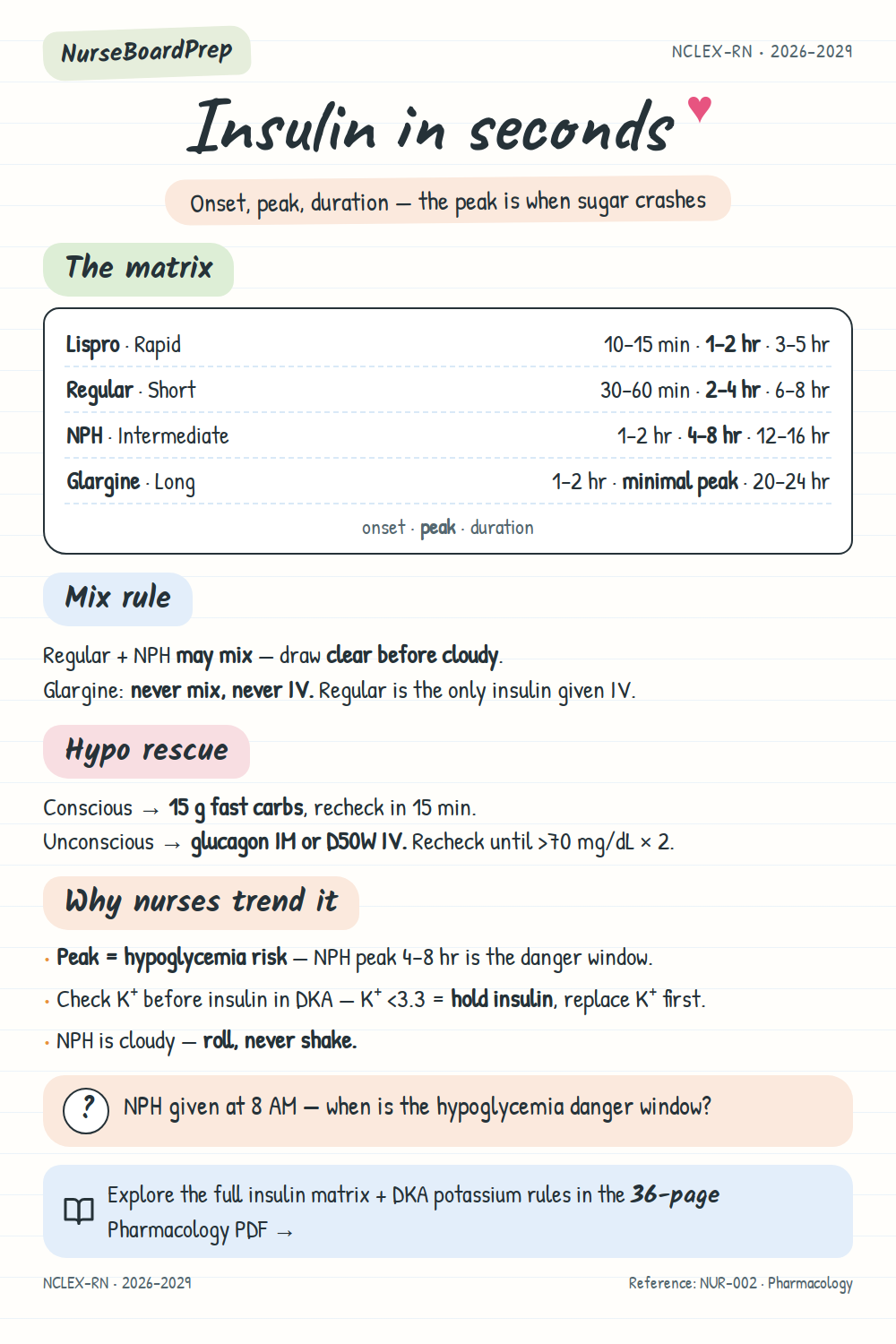
Hold insulin when potassium is below 3.3. Insulin drives potassium into the cells, so giving it during hypokalemia can trigger a fatal arrhythmia.
Replace the potassium first (per orders), recheck the level, then start the insulin infusion. This exact sequence is one of the most tested endocrine traps on the exam.
👉 Get the full guide here: https://payhip.com/b/IStWR
4. Thyroid storm vs myxedema coma: opposite priorities
Thyroid storm is too much thyroid hormone: hyperthermia, tachycardia, agitation and delirium. Cool the patient, control the heart rate per orders, and treat the trigger (often infection).
Myxedema coma is too little: hypothermia, bradycardia, hypoventilation and a deteriorating level of consciousness. Warm gently — never rapid rewarming — protect the airway, and give thyroid hormone replacement per orders.
5. Adrenal crisis: recognize it fast
Think adrenal (Addisonian) crisis with hypotension that does not respond to fluids, plus hyponatremia, hyperkalemia and hypoglycemia — often after sudden steroid withdrawal or an illness without a stress dose.
The answer is steroids fast (hydrocortisone per orders), plus IV fluids and glucose. Do not wait for confirmatory labs when the patient is crashing.
6. Key Numbers to Memorize
DKA: Glucose over 250, ketones present, pH below 7.30, rapid onset over hours.
HHS: Glucose over 600, no significant ketosis, slower onset over days.
Insulin hold: Hold insulin when potassium is below 3.3.
DKA / HHS order: Aggressive IV fluids first, then insulin.
7. Inside the Guide
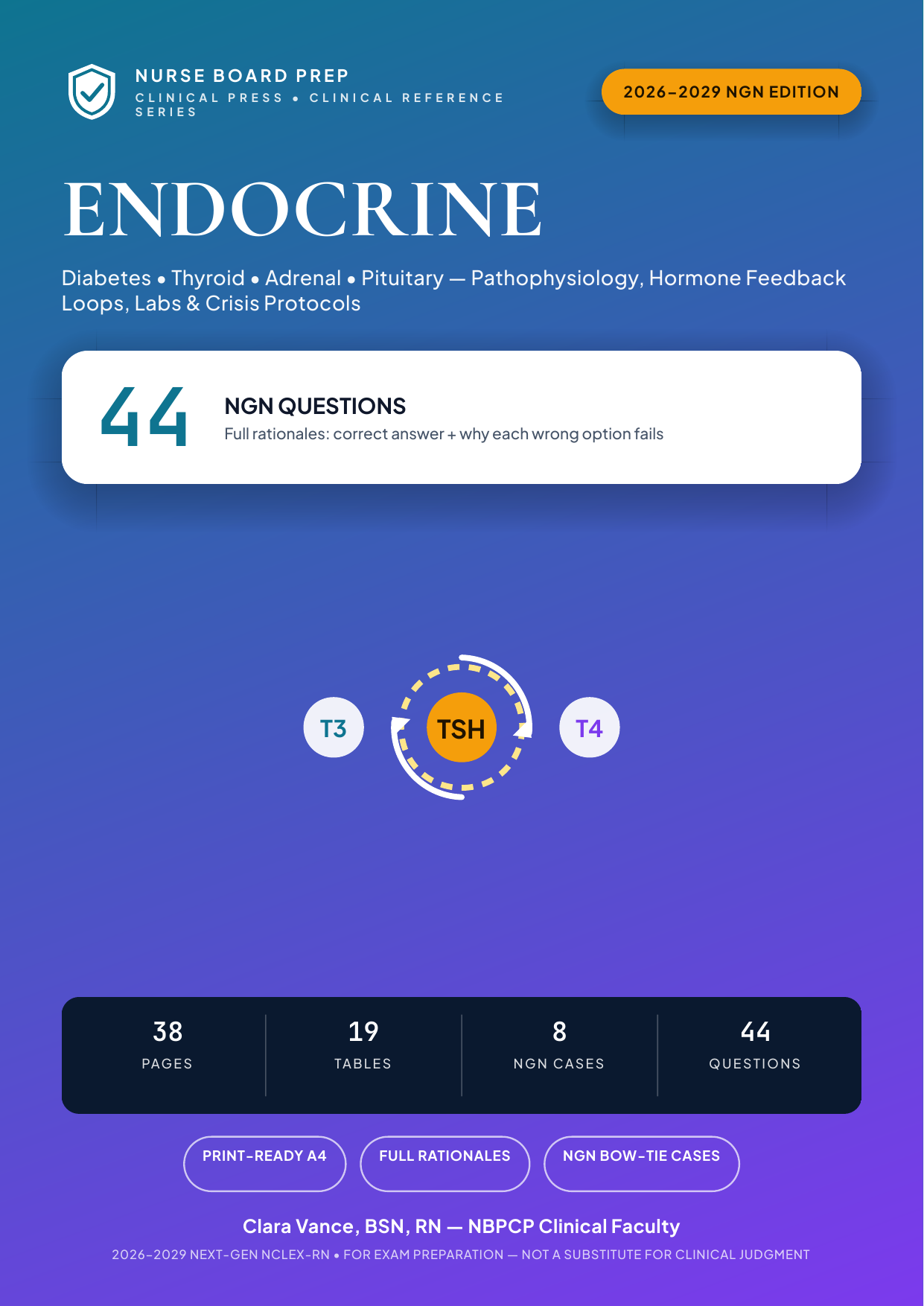
The 2026–2029 NCLEX-RN Endocrine: Diabetes, Thyroid, Adrenal & Pituitary Study Guide from Nurse Board Prep Clinical Press packs 38 full A4 pages: 19 clinical tables including the DKA vs HHS rapid-review table, thyroid and adrenal comparison tables, and endocrine labs at a glance; 8 unfolding NGN clinical cases; and 44 NGN practice questions with full rationales explaining the correct answer and why each wrong option fails.
👉 Get the full guide here: https://payhip.com/b/IStWR
8. Who this guide is for
RN students preparing for the NCLEX-RN, PN students, and med-surg nurses who want a fast, exam-focused endocrine review.
9. More from Nurse Board Prep Clinical Press
Follow us on Pinterest for more endocrine pins: https://www.pinterest.com/NurseBoardPrep/ — Board: "2026–2029 NCLEX-RN, Pharmacology & ICU Guides".
— Nurse Board Prep Clinical Press (NBPCP)