


Keywords: NCLEX-RN, NGN, ATI Predictor, HESI Exit Exam, E2, DKA potassium rule, insulin, fluids, lab values, digoxin, lithium, sepsis MAP, remediation, high-yield
Table of Contents
1. The one DKA rule to memorize
2. Why potassium comes first
3. The DKA order of battle
4. Three more panic cutoffs the Predictor tests
5. Key Numbers to Memorize
6. Inside the Guide
7. More from Nurse Board Prep Clinical Press
1. The one DKA rule to memorize
If you only memorize one DKA rule before your ATI Comprehensive Predictor or HESI Exit Exam (E2), make it this one: never start insulin when potassium is below 3.3.
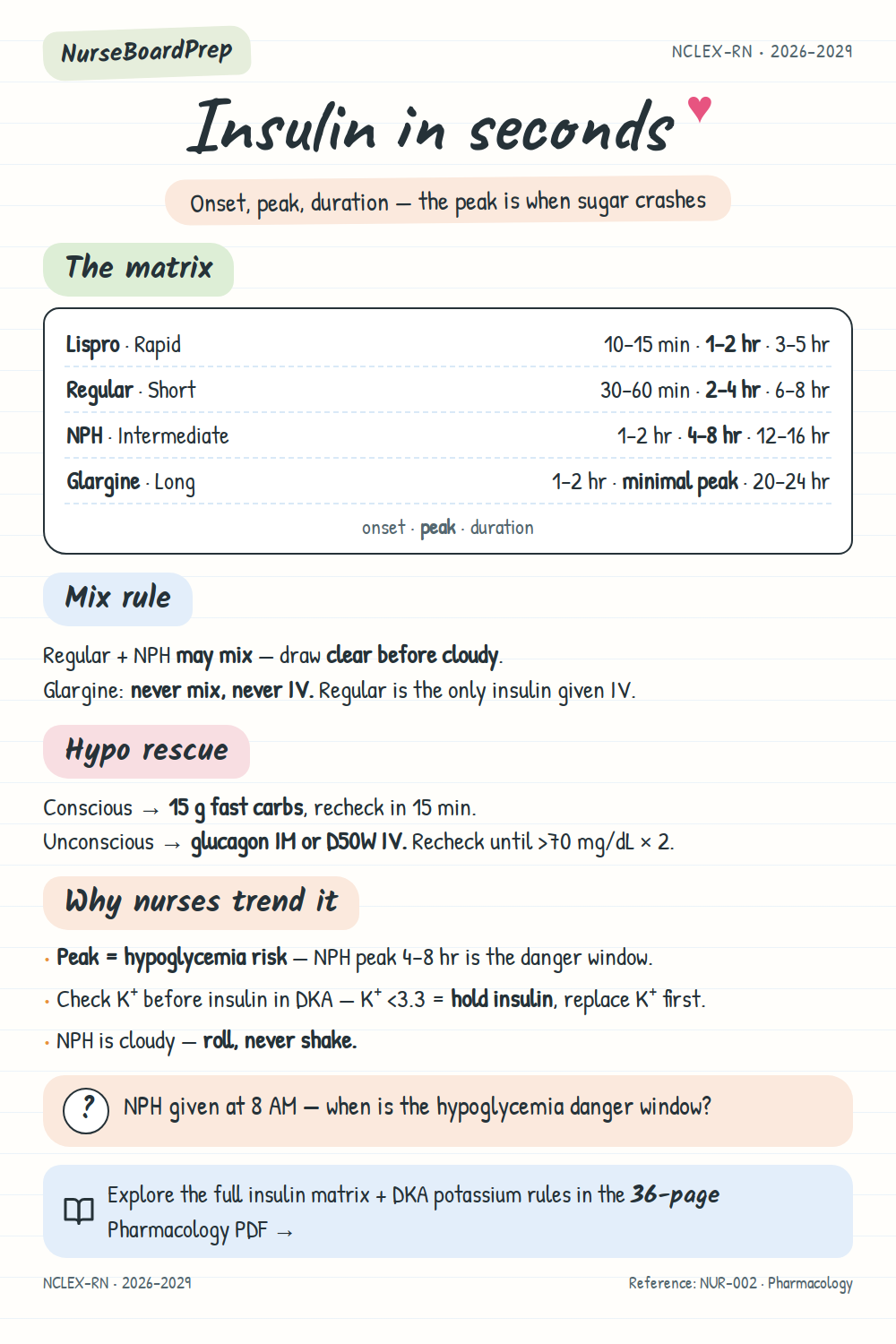
The question the Predictor loves to ask: A client with diabetic ketoacidosis has a glucose of 540, a potassium of 2.9, and a pH of 7.10. The provider orders a regular insulin IV infusion. What does the nurse do first? Most students pick 'start the insulin.' The glucose number looks terrifying, and insulin is the drug that fixes DKA. But the correct answer is to hold the insulin, call the provider, and replace potassium first — because at a potassium of 2.9, insulin can kill faster than the glucose can.
👉 Get the full guide here: https://payhip.com/b/rRsIY
2. Why potassium comes first
Insulin drives potassium from the blood into the cells. In a client whose potassium is already low, starting an insulin infusion crashes it further — and a crashing potassium means lethal cardiac arrhythmias. The glucose can wait. The potassium cannot. That is the whole rule, and the exam tests it in every format: priority questions ('what do you do first?'), SATA traps (any option that starts insulin before potassium is wrong — eliminate it), and Bow-Tie cases where potassium replacement is one of the two actions.
3. The DKA order of battle
Memorize this sequence and it never changes: 1. Fluids. 2. Potassium. 3. Insulin. Fluids restore perfusion, potassium replacement makes insulin safe, and only then does insulin start clearing the glucose and ketones. Any question that scrambles this order is testing whether you know it.
4. Three more panic cutoffs the Predictor tests
Digoxin: hold the dose if the heart rate is below 60 or potassium is below 3.5 (digoxin level 0.8–2.0, toxic above 2.0). Lithium: therapeutic 0.6–1.2, toxic above 1.5 — hold and hydrate. Sepsis: a MAP below 65 means fluids and pressors; MAP 65 or higher is the goal. Ranges earn partial credit. Panic cutoffs earn the question.
👉 Get the full guide here: https://payhip.com/b/rRsIY
5. Key Numbers to Memorize
DKA — start insulin only when: Potassium 3.3 or higher.
DKA question values: Glucose 540, potassium 2.9, pH 7.10.
Digoxin — hold if: Heart rate below 60, or potassium below 3.5.
Digoxin level: 0.8–2.0 therapeutic; above 2.0 toxic.
Lithium: 0.6–1.2 therapeutic; above 1.5 toxic.
Sepsis MAP goal: 65 or higher.
6. Inside the Guide
The ATI Comprehensive Predictor & HESI Exit Exam (E2) High-Yield Remediation & Lab Values Synthesis from Nurse Board Prep Clinical Press packs 36 full A4 pages: 8 chapters, 12 master tables (labs, delegation, triage, isolation, PPE, positioning, CVC, transfusion, drug monitoring, cranial nerves, ABG and electrolytes, maternal-newborn and pediatrics), 8 NGN Bow-Tie unfolding cases, 18 NCLEX Exam Trap boxes, 45 NGN practice questions with full rationales explaining the correct answer and why each wrong option is wrong, and 26 memory strips.
👉 Get the full guide here: https://payhip.com/b/rRsIY
7. More from Nurse Board Prep Clinical Press
Follow us on Pinterest for more ATI Predictor and HESI Exit pins: https://www.pinterest.com/NurseBoardPrep/ — Board: "NGN Case Studies & Bow-Tie".
— Nurse Board Prep Clinical Press (NBPCP)