

Keywords: NCLEX-RN, NGN, pharmacology, digoxin hold rule, digoxin toxicity, high-alert drugs, antidotes, insulin onset peak duration, apical pulse, hypokalemia, narrow therapeutic range
Table of Contents
1. The moment a nurse must STOP a drug
2. Rule 1 — The Digoxin Hold Rule
3. Rule 2 — Know the Antidote Before You Give the Drug
4. Rule 3 — Only One Insulin Goes IV
5. Key Numbers to Memorize
6. NGN Question Breakdown
7. Inside the Guide
8. More from Nurse Board Prep Clinical Press
1. The moment a nurse must STOP a drug
Pharmacology questions on the Next-Gen NCLEX are rarely about a dose you memorized. They are about the moment a nurse must STOP a drug instead of giving it. Three rules decide most of them.
Get the full guide here: https://payhip.com/b/e75ZV
2. Rule 1 — The Digoxin Hold Rule
Hold digoxin and notify the provider when the heart rate is below 60 beats per minute OR the potassium is below 3.5 mEq/L. Digoxin slows the heart and its toxicity rises sharply when potassium is low. The therapeutic level is 0.8–2.0 ng/mL; anything above 2.0 is toxic. A patient with a heart rate of 58 and a potassium of 3.2 meets BOTH hold criteria — giving the dose anyway is the trap.
3. Rule 2 — Know the Antidote Before You Give the Drug
Heparin is reversed by protamine sulfate. Warfarin is reversed by vitamin K. Opioids are reversed by naloxone. Benzodiazepines are reversed by flumazenil. The exam loves the reversal question because it tests whether you understood the drug's mechanism, not just its name.
4. Rule 3 — Only One Insulin Goes IV
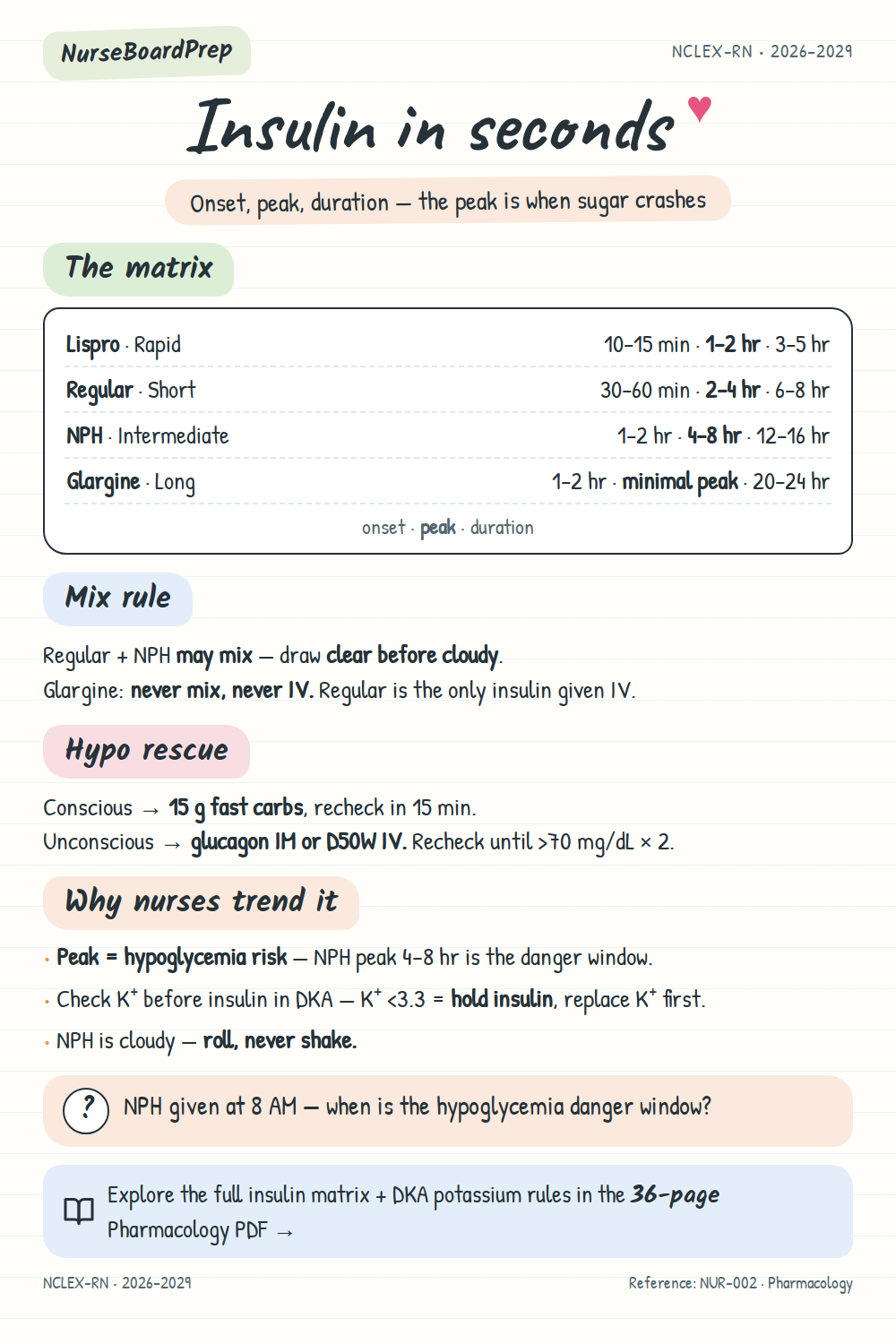
Regular insulin is the ONLY insulin given intravenously. Rapid-acting insulin starts in about 15 minutes, regular insulin in 30–60 minutes, NPH is cloudy with a 4–12 hour peak, and glargine has no peak across roughly 24 hours. Mixing up onset and peak times is how students fail the insulin question — the table, not the guess, is what saves you.
Get the full guide here: https://payhip.com/b/e75ZV
5. Key Numbers to Memorize
Digoxin — heart rate: Hold if below 60 beats per minute.
Digoxin — potassium: Hold if below 3.5 mEq/L.
Digoxin level: Therapeutic 0.8–2.0 ng/mL; above 2.0 is toxic.
Rapid-acting insulin: Starts in about 15 minutes.
Regular insulin: Starts in 30–60 minutes; the ONLY insulin given IV.
NPH insulin: Cloudy; peak 4–12 hours.
Glargine insulin: No peak; lasts roughly 24 hours.
6. NGN Question Breakdown
A patient on digoxin has an apical heart rate of 58 beats per minute and a potassium of 3.2 mEq/L. The next digoxin dose is due. What is the nurse's FIRST action?
A. Administer the digoxin as scheduled.
B. Hold the digoxin and notify the provider.
C. Administer the digoxin with food to reduce nausea.
D. Double the next dose to compensate for the low potassium.
Correct answer: B. Both hold criteria are met — heart rate below 60 and potassium below 3.5 — and giving digoxin now risks toxicity and a dangerous bradycardia. Option A ignores both safety parameters. Option C does nothing about the heart rate or potassium. Option D is unsafe and has no clinical basis.
7. Inside the Guide
These rules, with full rationales for every option, are built into the Clinical Nursing Pharmacology NCLEX-RN, IV Drip Titration, Dosage Calculation & High-Alert Drug Reference Manual (36 pages) — the complete reference for high-alert drugs, drip titration, and dosage calculation.
Get the full guide here: https://payhip.com/b/e75ZV
8. More from Nurse Board Prep Clinical Press
Follow us on Pinterest for more pharmacology and high-alert drug pins: https://www.pinterest.com/NurseBoardPrep/ — Board: "Nursing Pharmacology & Med Math".
— Nurse Board Prep Clinical Press (NBPCP)