

A patient's potassium is 6.4. The ECG shows peaked T waves. What do you do first — and what is the one answer that can end in cardiac arrest?
When potassium is high, the ECG tells the story before the number does. Peaked T waves mean the heart's electrical activity is already disturbed. The priority is never a supplement and never waiting — it is assessing
the cardiac rhythm first and notifying the provider immediately. High potassium disturbs the heart's rhythm in a fixed order: peaked T waves, then a widening QRS, then arrest.
One worked example from the book (Section 1, Lab Q1): A patient's serum potassium is 6.4 mEq/L. What is the nurse's priority action? A) Administer a potassium supplement B) Encourage the patient to eat a banana C) Give the prescribed diuretic and recheck tomorrow D) Assess the cardiac rhythm and notify the provider immediately. Answer: D. A potassium of 6.4 mEq/L is dangerously high and can cause cardiac arrest, so the
rhythm is checked first and the provider is notified.
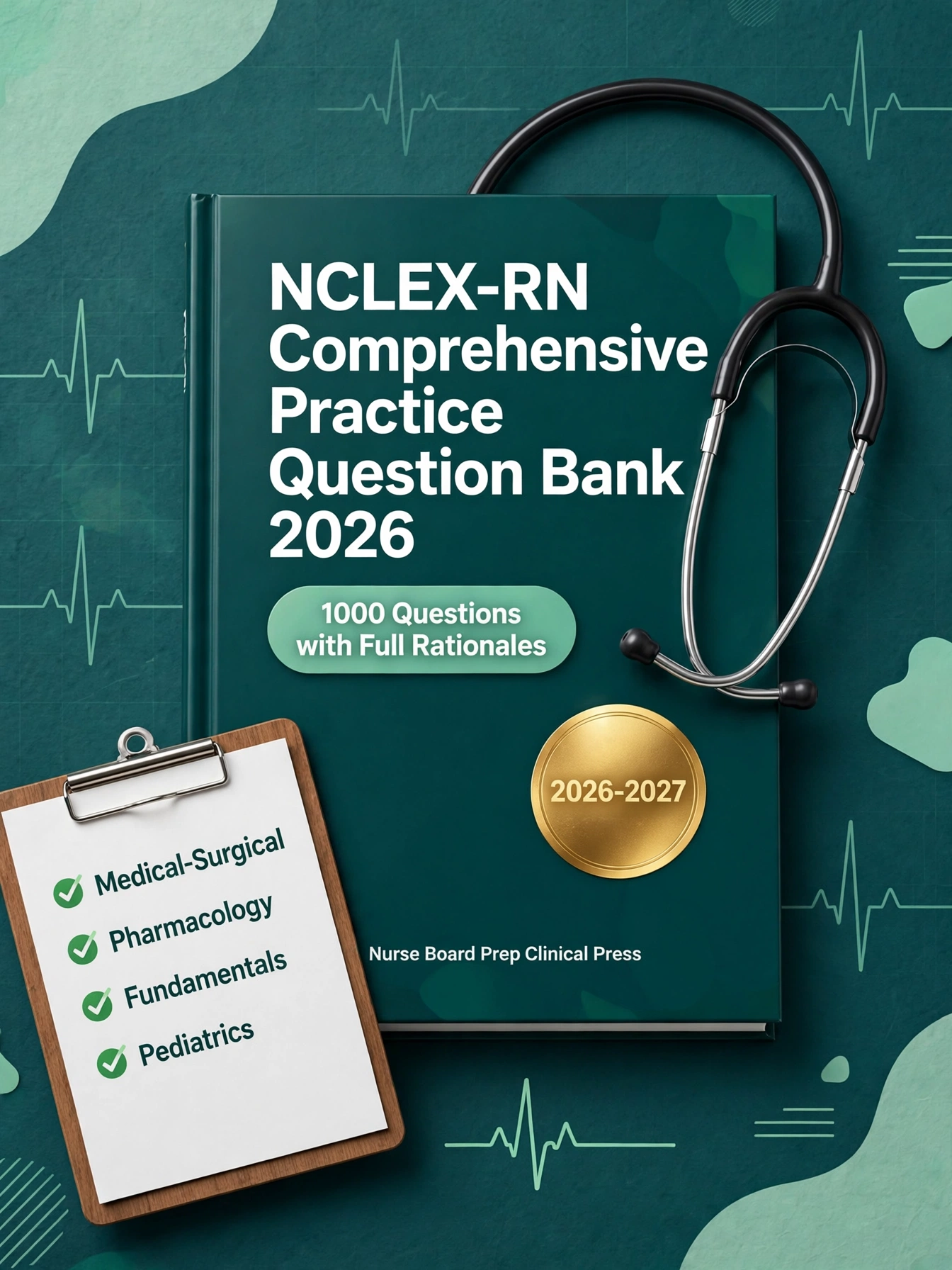
Inside the book: 1000 original practice questions with full rationales — Medical-Surgical 250, Pharmacology 200, Fundamentals & Safety 120, Maternal-Newborn 100, Pediatrics 100, Mental Health 80, Prioritization, Delegation & Leadership 100, and NGN Case Studies 50 (5 unfolding cases, bow-tie, matrix, cloze, and select-all-that-apply). Every question explains why the right answer is right and why the tempting wrong one is wrong. 244 pages, Letter 8.5x11, print-ready PDF. Not affiliated with NCSBN. No pass guarantee. If you find an error, a corrected version is issued free.