
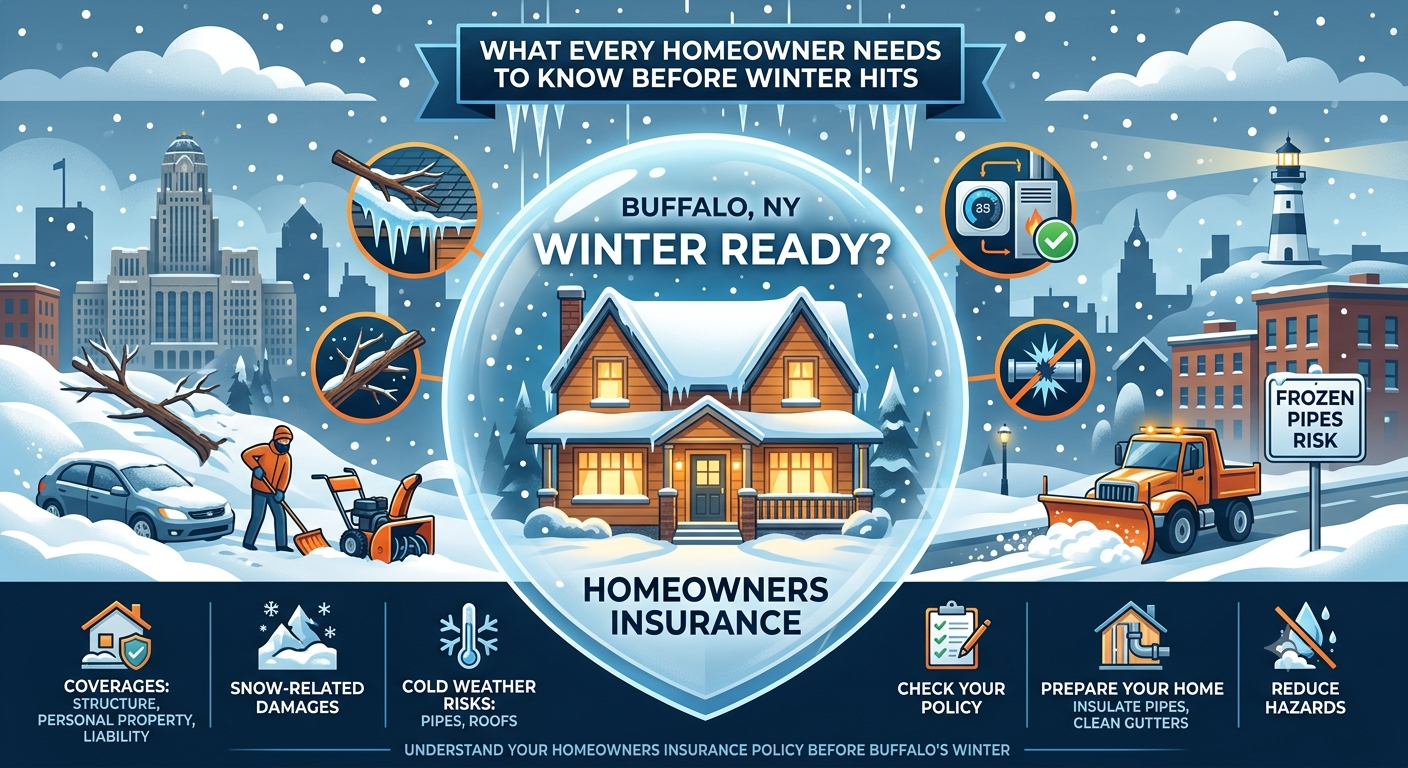
Buffalo doesn't do subtle. Lake-effect snowstorms can bury a driveway in 24 hours, ice dams sneak into attics uninvited, and a single burst pipe in January can turn a finished basement into a swimming pool. If you own a home in Western New York, your insurance policy isn't just paperwork — it's the difference between a stressful week and a financial disaster.
Yet many Buffalo homeowners haven't looked closely at their coverage since the day they signed the mortgage. That's a problem, because the risks facing a home in Buffalo look nothing like the risks facing a home in Phoenix or Miami. If you're shopping for homeowners insurance in Buffalo NY — or just wondering whether your current policy actually protects you — here's what you need to know.
Why Buffalo's Climate Makes Your Policy Different
Homeowners insurance isn't one-size-fits-all, and location is one of the biggest factors insurers weigh when pricing a policy. Buffalo's specific mix of weather and infrastructure creates a few risks that deserve extra attention.
Snow, Ice, and Roof Collapse
Western New York regularly sees some of the heaviest annual snowfall of any major U.S. metro area. Heavy accumulation puts real stress on roofs, and ice dams — ridges of ice that form at the roof's edge and force melting snow back under the shingles — are a leading cause of winter water damage claims in the region. Standard homeowners policies typically cover sudden roof collapse from snow load, but they don't always cover the resulting interior damage the same way, which is why it pays to read the fine print rather than assume.
Frozen and Burst Pipes
A hard freeze followed by a quick thaw is a classic Buffalo pattern, and it's one of the most common triggers for burst-pipe claims. Water damage claims are among the costliest homeowners insurance claims nationally, and unheated spaces — garages, crawl spaces, vacant homes during winter travel — are especially vulnerable.
Wind and Lake-Effect Storms
Buffalo's proximity to Lake Erie means high winds and sudden storm systems are part of the deal. Fallen tree limbs, damaged siding, and downed power lines are common after a strong lake-effect event, and most standard policies do cover wind damage — but coverage limits and deductibles for wind can vary by carrier.
Aging Housing Stock
Buffalo is known for its beautiful older homes, from Elmwood Village bungalows to Victorian-era properties near Delaware Park. Character comes with tradeoffs: older electrical systems, galvanized plumbing, and older roofs can all affect insurability and premiums. Insurers may require updates to wiring or plumbing before offering full coverage, so it's worth knowing your home's systems before you shop for a policy.
What Actually Goes Into Your Premium
According to recent industry data, homeowners insurance in Buffalo tends to run below the national average, with typical annual premiums often landing somewhere in the $1,200–$1,900 range depending on the carrier, coverage limits, and deductible chosen — generally more affordable than New York City rates, though pricing varies significantly from provider to provider and street to street. A few of the biggest levers:
1. Dwelling Coverage Amount
This should reflect what it would actually cost to rebuild your home today — not its market value. Construction costs have risen steadily in recent years, and a policy based on outdated rebuild figures can leave you dangerously underinsured after a total loss.
2. Deductible Choice
A higher deductible lowers your premium but increases your out-of-pocket cost when you file a claim. For a region with frequent minor weather-related damage, it's worth running the numbers on a few deductible levels before deciding.
3. Claims History and Credit Factors
Insurers in New York can factor in prior claims and, in some cases, credit-based insurance scores. A clean claims history and strong credit profile typically translate into better rates.
4. Home Age and Updates
Roof age, updated electrical panels, and modernized plumbing can meaningfully lower your premium — and in some cases determine whether a carrier will write the policy at all.
5. Bundling Opportunities
Combining home and auto insurance with the same carrier is one of the most reliable ways to reduce your total insurance spend, often by a meaningful percentage across both policies.
Common Coverage Gaps Buffalo Homeowners Overlook
Even a solid standard policy has blind spots. Before renewal season, it's worth checking for these:
- Sewer and drain backup. Standard policies typically exclude damage from sewer or sump pump backups — a real risk during rapid snowmelt — unless you add a specific endorsement.
- Flood insurance. Homeowners policies generally don't cover flooding at all. If your property sits near a creek, low-lying area, or floodplain, a separate flood policy may be worth exploring.
- Replacement cost vs. actual cash value. Actual cash value policies factor in depreciation, which can leave you with far less than you need to replace damaged items or structures. Replacement cost coverage costs more but pays out at today's prices.
- Home business coverage. If you run even a small business from home, your personal policy likely won't cover business equipment or liability — you may need a separate endorsement or policy.
- Valuable items. Jewelry, art, and collectibles are often subject to low coverage caps under a standard policy and may need to be scheduled separately.
How to Make Sure Your Coverage Actually Fits Your Home
A little proactive effort goes a long way toward avoiding surprises later. Consider these steps:
Review your policy annually, not just at renewal. Home values, replacement costs, and personal property change year to year. An annual check-in helps catch gaps before they matter.
Photograph and document your home's condition. A simple video walkthrough of your home and belongings, stored somewhere safe, makes the claims process dramatically smoother if you ever need it.
Ask about weather-specific endorsements. Given Buffalo's snow and ice exposure, ask your agent directly about ice dam coverage, sewer backup endorsements, and how roof damage from snow load is handled.
Work with a local, independent agent. National call-center agents can quote a policy, but they rarely understand Buffalo's specific risk profile, the neighborhoods prone to flooding, the older housing stock near the University District, the lake-effect bands that hit harder in some suburbs than others. A local advisor can help match your coverage to your actual home, not a generic template.
The Bottom Line
Homeowners insurance in Buffalo NY isn't something to set and forget. Between lake-effect snow, ice dams, freeze-thaw cycles, and a housing stock full of character (and aging infrastructure), the right policy needs to reflect the realities of living here — not a generic national template. Taking the time to review your dwelling coverage, close common gaps like sewer backup and flood exposure, and work with someone who actually understands Western New York's risks can save you both money and stress the next time a storm rolls in off the lake.