
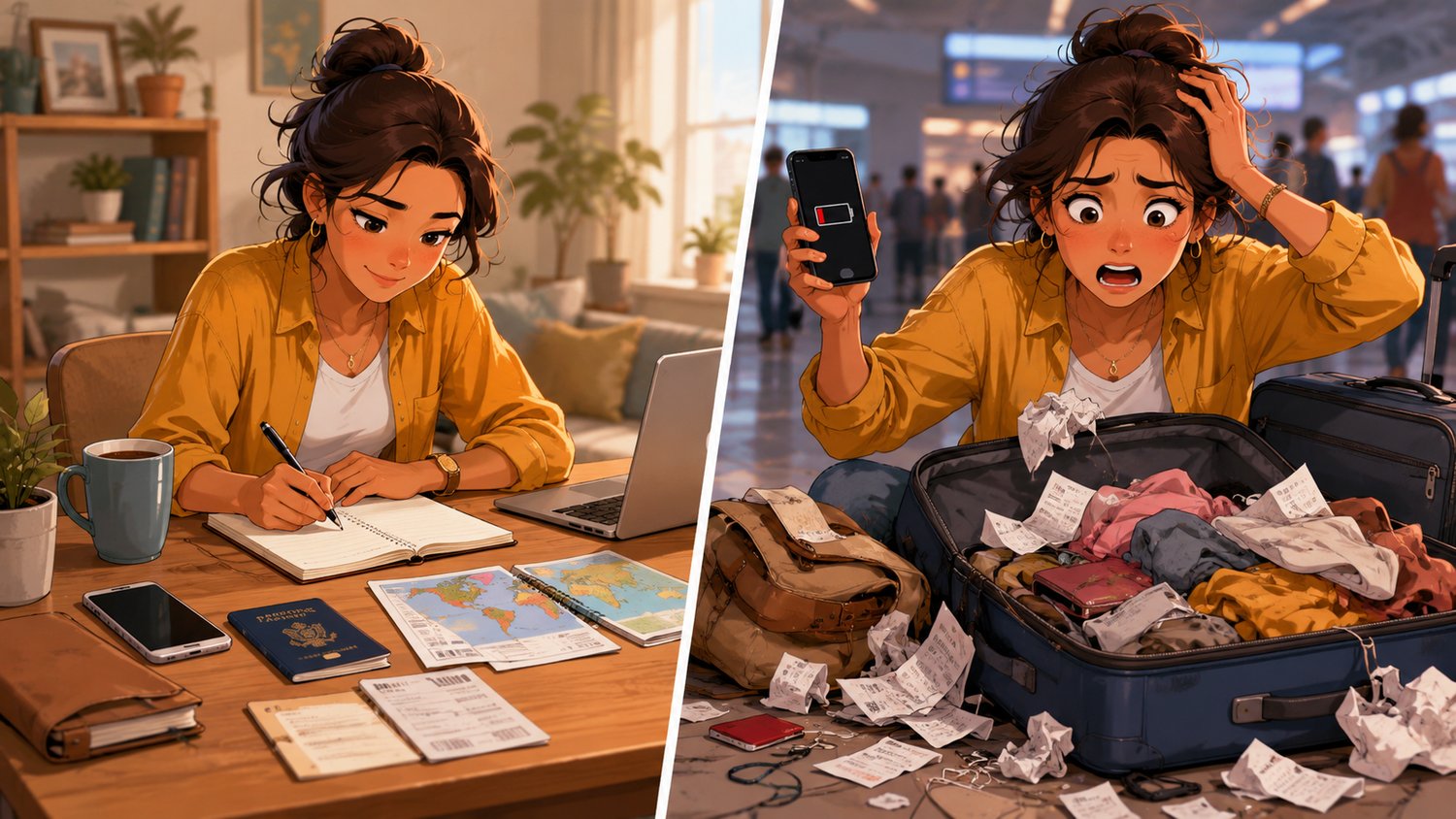
Actually… no. What would I do?
That is the honest answer most travelers would give if they were not trying to sound organized.
Because nobody books a holiday thinking about the moment their passport disappears.
They think about the beach.
The food.
The hotel.
The photos.
The airport outfit.
The little “I deserve this” coffee before boarding.
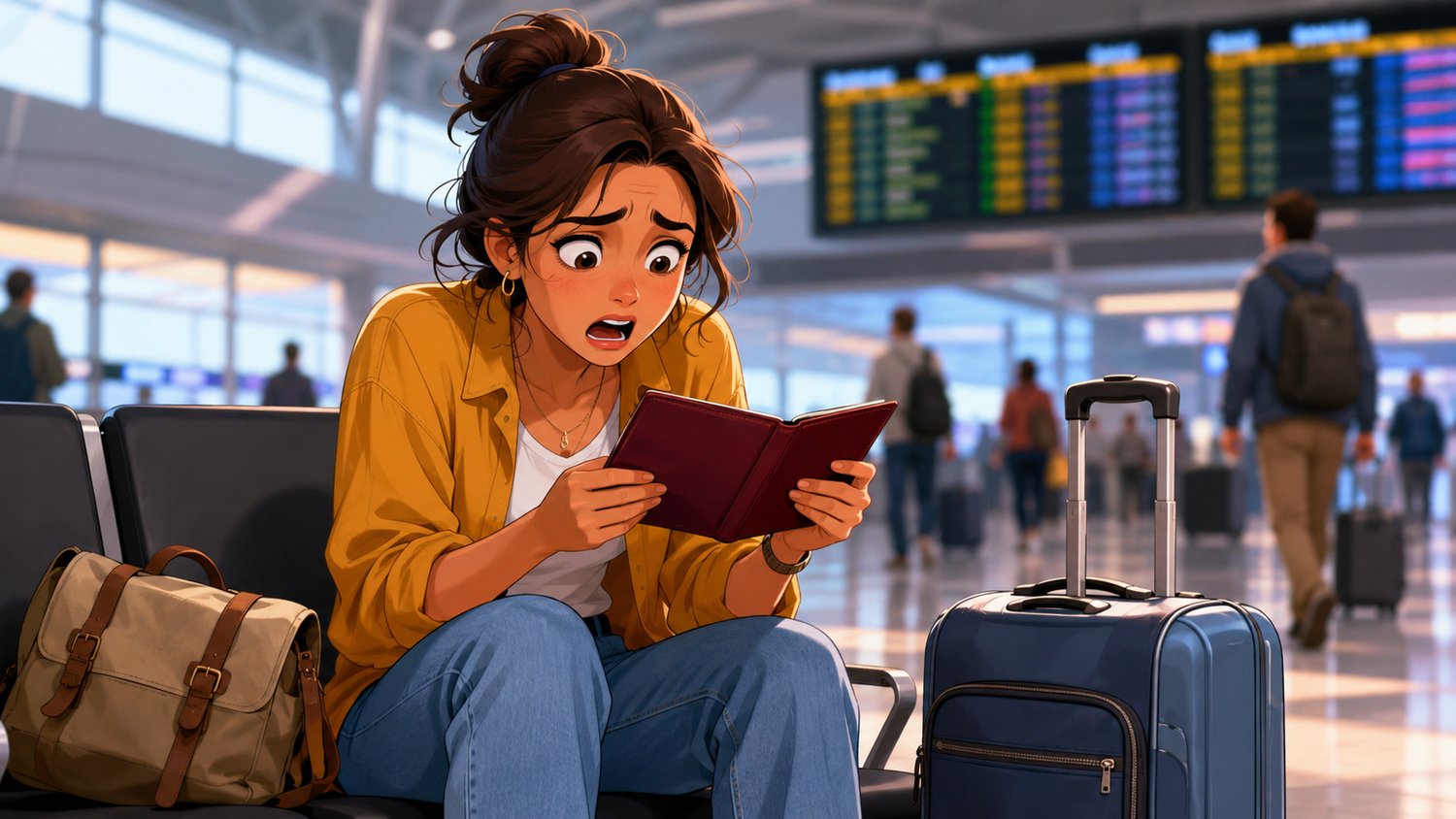
They do not think about standing in a foreign country with a cold stomach, an empty passport pocket, and a brain that has suddenly gone from “holiday mode” to absolute scrambled egg.
But that is exactly why this matters.
A lost passport is not just an inconvenience.
It is not the same as losing your sunglasses, your charger, or that cute hat you bought because you briefly believed you were a different person on holiday.
Your passport is your way through borders.
It is your proof of identity.
It is the little booklet that quietly says, “Yes, this person exists, and yes, they are allowed to move.”
When it vanishes abroad, the whole trip can change in minutes.
Suddenly, you are not asking, “Where should we eat tonight?”
You are asking:
Can I still fly home?
Where is the nearest embassy, consulate, or passport office?
Do I need a police report?
Who do I call first?
Where did I save my passport number?
Do I have a copy?
Does my travel insurance need proof?
Why did I not prepare for this when I had a calm brain and access to Wi-Fi?
And that last question is the one that bites.
Because the worst time to build an emergency plan is when your hands are shaking.
The worst time to look for embassy details is when you are already panicking.
The worst time to realize your passport photo is only stored on the phone that was stolen with your bag is when you are standing in a hotel lobby trying not to swear in public.
This is why the calm version of you needs to help the panic version of you before the trip begins.
Because future-you standing at a police station, embassy, airport counter, or hotel desk does not need a motivational quote.
Future-you needs a plan.
The Passport Nightmare Nobody Wants To Imagine
Let us be honest.
Most travelers are dangerously casual with the one document that controls the entire trip.
They will spend three hours comparing hotels.
They will watch seventeen videos about the best street food market.
They will argue with themselves over whether one suitcase is enough.
They will screenshot restaurants, outfits, beaches, train stations, and “hidden gems” from strangers on the internet.
But passport backup?
Emergency contacts?
Embassy details?
Insurance policy numbers?
Copies of important documents?
That gets shoved into the mental drawer labelled:
“I’ll sort it out later.”
And later, of course, becomes never.
Until something goes wrong.
Your passport can vanish in boring ways.
It can be stolen from a bag.
Left in a taxi.
Forgotten in a hotel safe.
Dropped during a chaotic airport shuffle.
Damaged by water.
Lost with your backpack.
Taken with your phone, cards, and every piece of common sense you thought you packed.
And once it is gone, the fantasy part of travel ends very quickly.
The holiday music stops.
The panic orchestra begins.
First Rule: Do Not Pretend It Is Fine
If your passport is lost or stolen abroad, do not play detective for six hours while whispering, “It must be somewhere.”
Check properly.
Check your bags.
Check the hotel safe.
Check the room.
Check reception.
Check the taxi company, airport desk, restaurant, or last place you remember using it.
But once it is clearly missing, move.
Do not waste the whole day hoping it magically reappears under a towel.
A missing passport is not a “maybe later” problem.
It is a “start the process now” problem.
Especially if you have flights, border crossings, cruises, train routes, visa requirements, hotel check-ins, or onward travel coming up.
The earlier you act, the more options you usually have.
The later you act, the more you hand your trip over to panic, office hours, appointment slots, and paperwork.
And paperwork, Captain, does not care about your feelings.
Step One: Report It If It Was Stolen
If your passport was stolen, you may need to report it to the local police.
This can matter for your replacement document process, travel insurance claim, bank/card issues, and general proof that the incident happened.
Ask for a written report, crime reference number, or official confirmation if available.
Do not assume the process will be the same everywhere.
Some countries are quick.
Some are slow.
Some are confusing.
Some make you feel like you have entered a government maze designed by someone who hates tourists and owns a very squeaky chair.
But get the report if you can.
Write down:
The police station name.
The date and time.
The officer or desk reference, if provided.
The report number.
What was stolen.
Where it happened.
Any important details.
Do not rely on memory.
Panic eats memory for breakfast.
Step Two: Cancel Or Report The Passport Properly
A lost or stolen passport is not just an inconvenience.
It can also become an identity risk.
If someone else has your passport, that document is now out in the world without you attached to it.
That is not cute.
Depending on your country, you may need to officially cancel or report the lost/stolen passport through your government’s passport service.
Once a passport is reported lost or stolen, it may be cancelled and usually cannot simply be used again if it turns up later.
That means you do not want to casually click buttons without understanding what you are doing.
But you also do not want to ignore it.
Follow your government’s official instructions.
Use official websites.
Do not trust random “urgent passport help” ads unless you have checked they are legitimate.
When travel stress hits, scammers smell blood in the water.
Do not feed them.
Step Three: Contact Your Embassy, Consulate, Or Passport Authority
This is where many travelers freeze.
They think an embassy is only for spies, international drama, and people in films who sprint through gates shouting, “I’m a citizen!”
In real life, consular help is often far less dramatic and far more practical.
If your passport is lost or stolen abroad and you need to travel, you may need help getting a replacement passport or emergency travel document.
This may require:
Proof of identity.
Proof of citizenship or nationality.
A passport photo.
Travel itinerary.
Police report or loss report.
Application form.
Payment.
An appointment.
Sometimes in-person collection.
Sometimes extra steps for children.
Sometimes delays.
Sometimes a deep spiritual test of your patience.
This is why preparation matters.
If you already have digital and printed copies of your passport, travel documents, insurance, emergency contacts, and key details, you are not starting from zero.
You are starting from “annoyed but functional.”
That is a much better place to be.
Step Four: Contact Your Airline Or Travel Provider
Do not assume your flight situation will magically sort itself out.
If your passport is gone and you have upcoming travel, contact your airline, tour operator, cruise company, or transport provider as soon as you understand the likely delay.
Ask what they require.
Ask what can be changed.
Ask about fees.
Ask what happens if you miss the flight because of lost documents.
Ask whether your emergency travel document will be accepted for the route you are taking.
Do not wait until you are at the airport counter with a face full of panic and a document nobody expected.
Travel companies love rules.
Airports love rules.
Borders love rules.
Your job is to know which rules are about to punch your itinerary in the teeth.
Step Five: Tell Your Bank And Protect Your Money
If your passport vanished with your wallet, bank cards, phone, or bag, you now have more than one problem.
Cancel or freeze cards.
Check account activity.
Contact your bank.
Contact travel insurance.
Secure your email if your phone was stolen.
Change important passwords if needed.
Use another device if you have to.
Contact someone you trust back home if you need help.
This is where many travelers spiral, because the passport is the big scary headline, but the smaller problems start attacking from the sides.
No card.
No phone.
No hotel access.
No ID.
No transport.
No saved documents.
No idea what the password is because your phone usually remembers it and now your phone is gone, living its new life with a criminal named Trevor.
This is why your emergency plan should not only be about the passport.
It should be about the whole travel panic chain.

What You Should Have Prepared Before You Travel
Here is the simple truth:
You do not need to become a paranoid travel goblin with sixteen laminated folders and a whistle.
But you do need a basic emergency setup.
Before you leave, prepare:
A photocopy of your passport.
A digital copy stored safely somewhere you can access without your phone.
Your passport number and issue/expiry details.
Emergency contact numbers.
Travel insurance policy number and emergency claims number.
Bank lost/stolen card numbers.
Airline booking reference.
Hotel details.
Embassy or consulate details for your destination.
A spare passport photo if required or useful.
A trusted person back home who knows where your backup info is.
A short action checklist for what to do first if documents go missing.
That sounds boring.
Until you need it.
Then it becomes gold.
Not glamorous gold.
Not Instagram gold.
Real-life, save-your-trip-from-catching-fire gold.
The Calm Brain Must Prepare For The Panic Brain
This is the part travelers underestimate.
When something goes wrong abroad, you do not become your smartest self.
You become a weird emergency version of yourself.
You forget obvious things.
You lose your sequence.
You reread the same sentence six times.
You open your email and forget why.
You suddenly cannot remember the name of the hotel you are sleeping in.
You ask yourself questions like:
“Did I leave it in the taxi?”
“Was it in the side pocket?”
“Did I take it out at reception?”
“Why is my mouth dry?”
“Can you get deported for being disorganized?”
And while your brain is doing circus tricks in a burning tent, official processes still expect you to provide information.
That is why a written plan matters.
Not because you are incapable.
Because panic makes capable people stupid for ten minutes.
And those ten minutes can cost money, time, flights, sleep, and sanity.
The Real Travel Luxury Is Not A Better Hotel
Travel marketing loves to sell luxury as soft pillows, ocean views, pool cocktails, and someone placing a tiny chocolate on your bed like you are royalty.
That is nice.
We love a tiny chocolate.
But real travel luxury is also this:
Knowing what to do when something goes wrong.
Having your documents backed up.
Knowing who to call.
Having emergency numbers ready.
Having your insurance details saved.
Having your passport copy available.
Having your next step written down before your brain starts throwing furniture.
Peace of mind is not boring.
Peace of mind is the invisible thing that keeps the trip standing when the pretty bits wobble.
Why “I’ll Just Google It” Is Not A Plan
“I’ll just Google it” sounds fine until the moment you cannot.
Maybe your phone is gone.
Maybe your data does not work.
Maybe the Wi-Fi is terrible.
Maybe you are stressed.
Maybe the official website is hard to understand.
Maybe you are in a different time zone.
Maybe everything is closed.
Maybe your battery is dying.
Maybe you are trying to read government instructions while sitting on the floor next to your suitcase, questioning every life choice that brought you here.
Google is useful.
But Google is not a plan.
A plan is what you make before the emergency.
Google is what you use to confirm details once you already know the shape of what to do.
There is a difference.
Do Not Wait For The Crisis To Become Organized
The strange thing about travel emergencies is that most of the preparation is simple.
Not fun.
Not sexy.
Not the kind of thing people post with a sunset emoji.
But simple.
The hard part is convincing yourself to do it before there is a problem.
Because when everything is fine, emergency planning feels unnecessary.
When everything is not fine, emergency planning feels urgent.
That gap is where holidays get expensive.
That gap is where panic lives.
That gap is where people say:
“I wish I had sorted this before we left.”
And that, Captain, is the sentence we are trying to avoid.
A Lost Passport Does Not Have To Destroy Your Trip
Let us be clear.
Losing a passport abroad is serious.
It can delay you.
It can cost money.
It can change your plans.
It can make you want to sit down dramatically and stare into the middle distance like the main character in a very stressful travel documentary.
But it does not have to destroy everything.
The difference between chaos and control is usually preparation.
The traveler with no copies, no numbers, no insurance details, no clue, and no plan is starting in the mud.
The traveler with a backup system is still annoyed, but they are moving.
They know the first steps.
They know what information they have.
They know who to contact.
They know where the important details are.
They have given panic fewer places to hide.
That is the whole point.
Before You Travel, Build The Boring Safety Net
Nobody wants to think about lost passports.
Nobody wants to imagine stolen bags, cancelled cards, emergency documents, police reports, or embassy appointments.
But ignoring the possibility does not protect you from it.
Preparation does.
Not fear.
Not paranoia.
Preparation.
The kind that sits quietly in the background and says:
“If nothing goes wrong, wonderful.”
“If something does go wrong, we are not starting from zero.”
That is the sweet spot.
That is the travel brain we want.
Hope for the beautiful trip.
Prepare for the ugly five minutes.
Because if your passport ever vanishes abroad, the question should not be:
“What the hell do I do now?”
The question should be:
And your future panicked self will thank you for having one.
Comments ()