
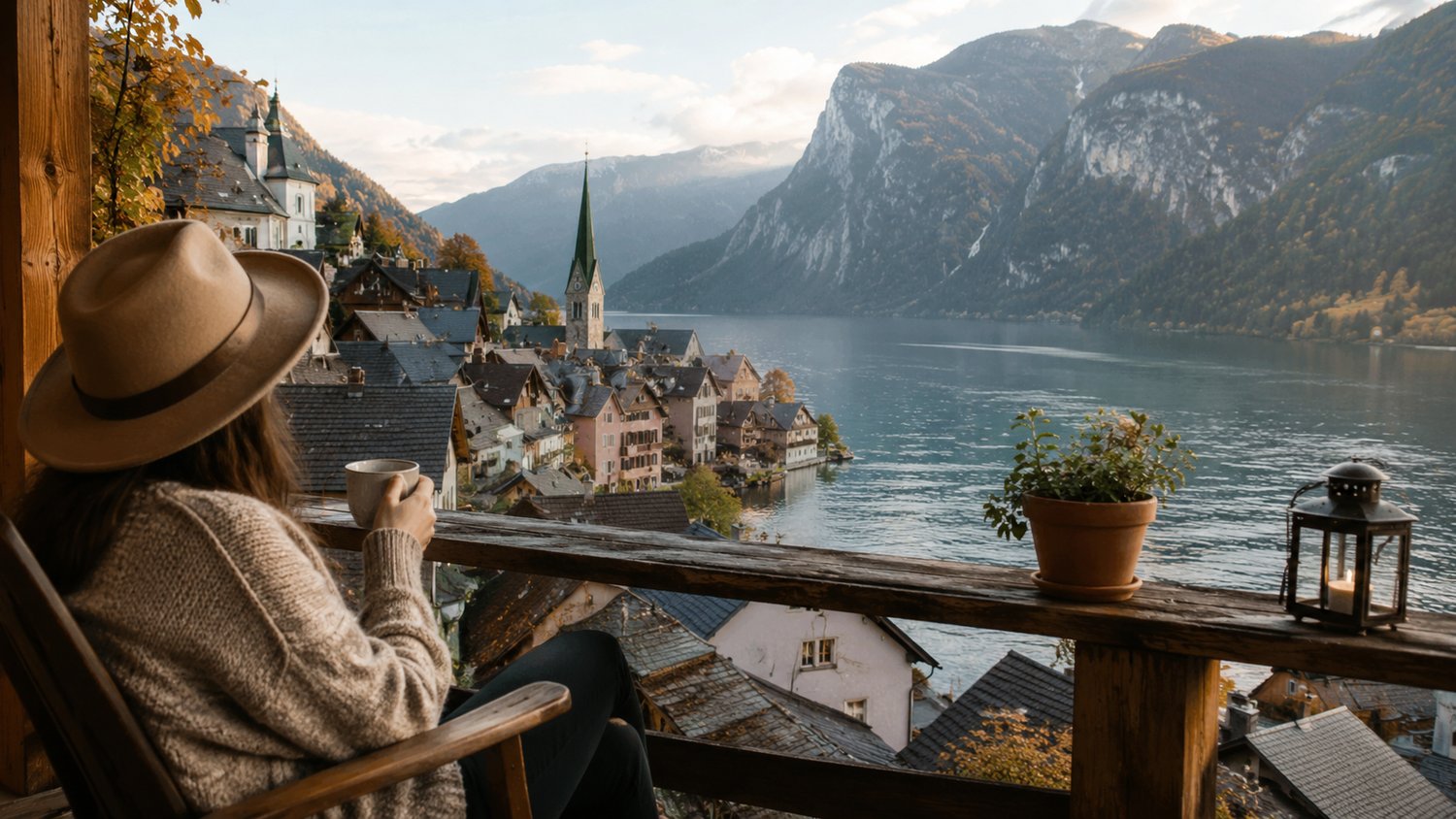
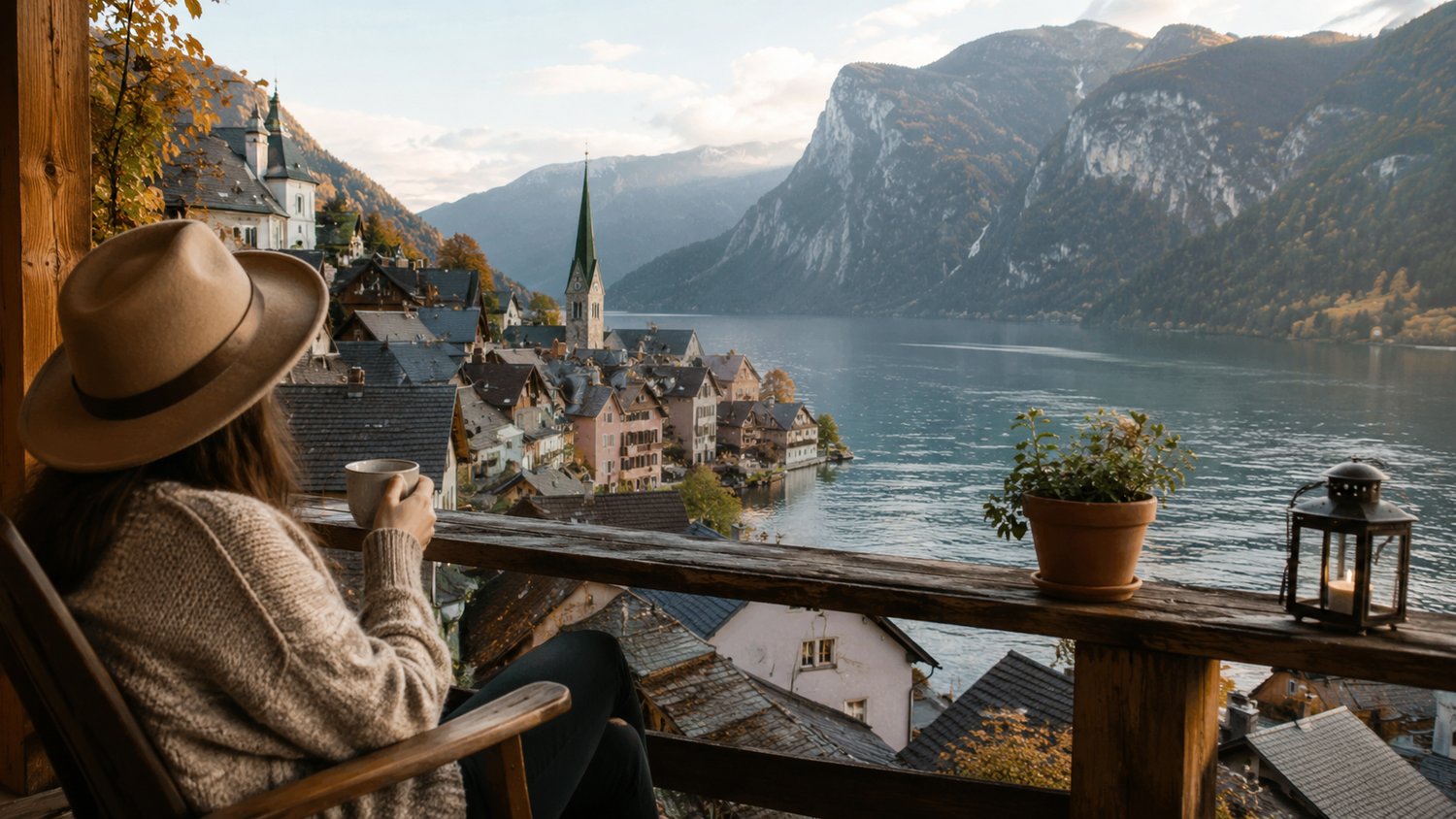
Let’s be honest.
Some travel stories are boring because they are written like someone was forced to describe a holiday for homework.
“We visited the famous landmark. Then we ate food. Then we took photos. Then we went back to the hotel.”
Wonderful. Groundbreaking. Somebody call the tourism board.
The truth is, most people do not dream about travel because they want to stand in a line, sweat through their shirt, take the same photo as 40,000 other people, and then spend the evening trying to remember where they saved the restaurant screenshot.
People dream about travel because they want a story.
They want the little café down a side street. The market they found by accident. The sunset that made them go quiet. The weird snack from a grocery store that somehow became the best thing they ate all week. The old street that felt like a movie scene. The train ride where the view did all the talking.
That is the difference between a trip and a personal travel quest.
A trip is where you go.
A quest is what happens to you while you are there.
And that is where travel gets exciting again.
The Bucket List Is Not Dead, But It Needs Better Shoes
The old way of planning travel was simple.
Pick a country. Search “top 10 things to do.” Save a few landmarks. Book a hotel. Panic later.
That method works, technically. You will probably see the famous places. You will probably take some nice photos. You may even buy a fridge magnet that looks like it was designed during a power outage.
But the problem with checklist travel is that it often turns the whole trip into a race.
See this. Photograph that. Rush over there. Eat wherever is closest. Collapse. Repeat.
By the end, you have technically “done” the destination, but you might not have actually felt it.
Modern travelers are starting to want more than that. They still want the famous sights, of course. Nobody is saying skip the Eiffel Tower if Paris is your dream. But they also want the parts of travel that feel personal.
They want atmosphere.
They want meaning.
They want the trip to match their personality, not just the first page of search results.
That is why the best travel planning question is no longer only:
“Where should I go?”
It is also:
“What kind of story do I want to come home with?”
Travel Like Your Trip Has a Plot
A good trip should have a little plot.
Not a disaster plot. Nobody wants “missing passport at the airport” as character development.
A good travel plot is more like this:
You arrive somewhere new. You have a reason for being there. You follow your curiosity. You find things that feel connected to your interests. You discover something unexpected. You return home with more than photos.
That is a personal travel quest.
For one person, the quest might be food. They want the street markets, bakeries, coffee shops, local snacks, cooking classes, and the tiny restaurant that does not look fancy but changes their life with one bowl of noodles.
For another person, it might be film and books. They want to visit places connected to scenes, stories, authors, old streets, libraries, and cinematic views.
For someone else, it might be nature. Fewer crowds. Longer walks. Misty mornings. Local farms. Mountain villages. Quiet beaches. Places where the soul can finally stop buffering.
And for some people, the quest is simply this:
“I want to feel alive again somewhere beautiful.”
That is valid too.
Actually, that might be the whole point.
Set-Jetting: When Your Screen Starts Booking Your Holiday
One of the most exciting modern travel moods is set-jetting.
That is when people travel because a movie, series, documentary, or book made a place feel irresistible.
A city street from a romantic film. A castle from a fantasy series. A small town from a murder mystery. A beach from a travel show. A train route that looked impossibly beautiful on screen.
People do not just want to watch the world anymore. They want to step inside it.
This is why set-jetting works so well emotionally. It gives the trip a built-in story before it even begins.
You are not just visiting a city.
You are walking into a scene that already lives in your imagination.
And honestly, that is powerful.
The trick is not to turn the whole holiday into a filming-location scavenger hunt unless that is your thing. The better version is to use the screen inspiration as a doorway.
Visit the area. Explore nearby streets. Find the café around the corner. Ask what locals actually like. Turn the famous scene into the start of your own story, not the whole story.
That is how a trip becomes yours.
Food Quests: Because Sometimes Dinner Is the Destination
There are people who choose a destination because of beaches.
There are people who choose a destination because of architecture.
And then there are the honest people who choose a destination because they saw a video of someone eating something crispy, saucy, steaming, golden, spicy, buttery, or suspiciously life-changing.
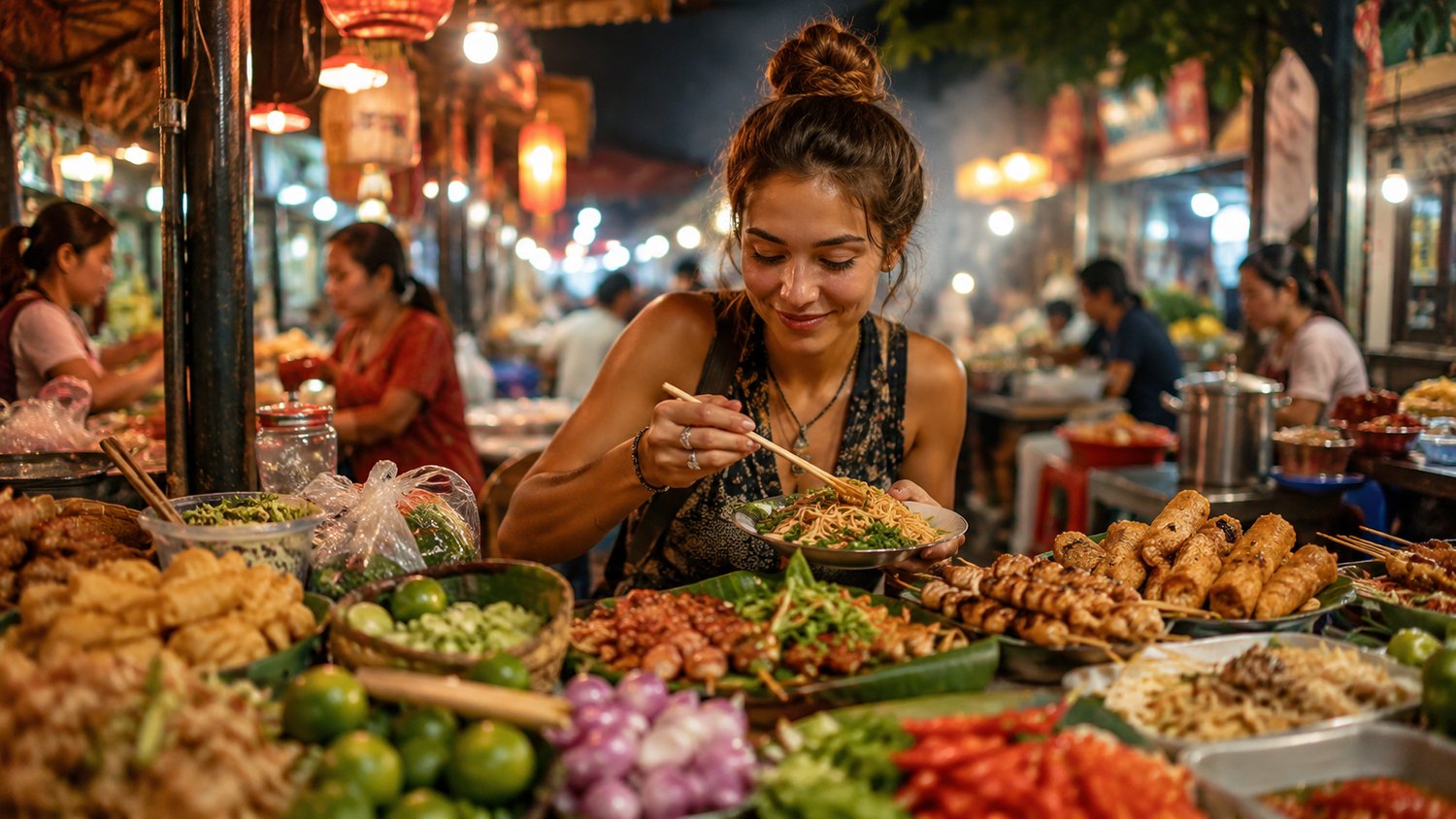
Food travel is not a side activity anymore. For many travelers, food is the trip.
And why not?
Food is culture you can taste.
A local market can teach you more about a place than a polished tourist attraction. A bakery queue can tell you what people love. A coffee shop can show you the rhythm of a neighbourhood. A night market can give you the chaos, smell, noise, laughter, and hunger of a city all at once.
The best part is that food quests do not have to be expensive.
Yes, fine dining exists. Lovely. Very elegant. Very tiny portions. Very “why is there foam on my carrot?”
But some of the best travel food moments happen in simple places:
A corner bakery.
A grocery store snack aisle.
A family-run café.
A street food stall.
A local market.
A tiny restaurant with plastic chairs and food that makes you rethink your personality.
Food gives your trip a mission.
Find the best pastry.
Try the local breakfast.
Taste the weird snack.
Compare coffee shops.
Visit the market before tourists wake up.
Eat something you cannot pronounce and hope for glory.
That is a quest.
A delicious one.
Grocery Store Tourism: Weird, Brilliant, and Surprisingly Addictive
This might sound ridiculous until you do it.
Grocery store tourism is exactly what it sounds like: visiting local supermarkets, convenience stores, food halls, and markets while travelling.
And honestly? It makes sense.
A grocery store is a little museum of everyday life.
You see what people actually buy. What snacks children eat. What drinks are popular. What breakfast looks like. What flavours are normal there but strange to you. What packaging makes absolutely no sense but somehow demands to be purchased.
You do not need a tour guide to learn something from a grocery store.
You need curiosity and maybe a translation app.
In Japan, people rave about convenience stores. In Italy, the pasta aisle can become a religious experience. In South Korea, convenience-store snacks have their own fan base. In France, even a basic supermarket cheese section can make you question all your life choices.
This is the kind of travel detail people remember because it feels real.
Not staged. Not filtered. Not created only for tourists.
Just life, sitting on a shelf, waiting for you to buy the wrong flavour of crisps and tell everyone about it later.
Hidden Season Travel: The Smart Traveler's Secret Weapon
Peak season has its place.
Sometimes you need summer. Sometimes school holidays are the only option. Sometimes the dream is the dream and you take the crowds with the croissants.
But hidden season travel is becoming more attractive for a reason.
Travelling outside the most obvious months can mean fewer crowds, better prices, softer weather, easier bookings, and a more relaxed experience overall.
It can also change the mood of a destination completely.
A famous city in peak summer can feel like a human traffic jam with gelato.
The same city in autumn might feel romantic, calm, golden, and actually walkable.
A beach destination outside peak season may not have perfect postcard weather every second, but it might give you quiet mornings, better deals, and breathing room.
Hidden season travel is not about choosing the “wrong” time.
It is about choosing a smarter time for the kind of experience you actually want.
Because sometimes the best version of a place is not when everyone else is standing in front of it.
Slow Travel: Fewer Places, Better Memories
There is a dangerous travel disease called “trying to do too much.”
Symptoms include:
Opening 73 tabs.
Creating an itinerary that looks like military training.
Believing you can visit five cities in four days and still have a soul.
Scheduling “relaxation time” between two train transfers and a museum.
Crying quietly into airport coffee.
Slow travel is the cure.
Slow travel does not mean doing nothing. It means giving yourself enough time to actually experience where you are.
Instead of racing through seven places, you choose fewer stops and go deeper.
You learn the neighbourhood.
You find a favourite bakery.
You take the longer walk.
You sit in the square without feeling guilty.
You return to the same café twice because the coffee was good and the waiter remembered you.
You stop treating the destination like a checklist and start treating it like a place where people live.
That is when travel becomes richer.
Not because you saw everything.
Because you noticed more.
Build Your Own Travel Quest
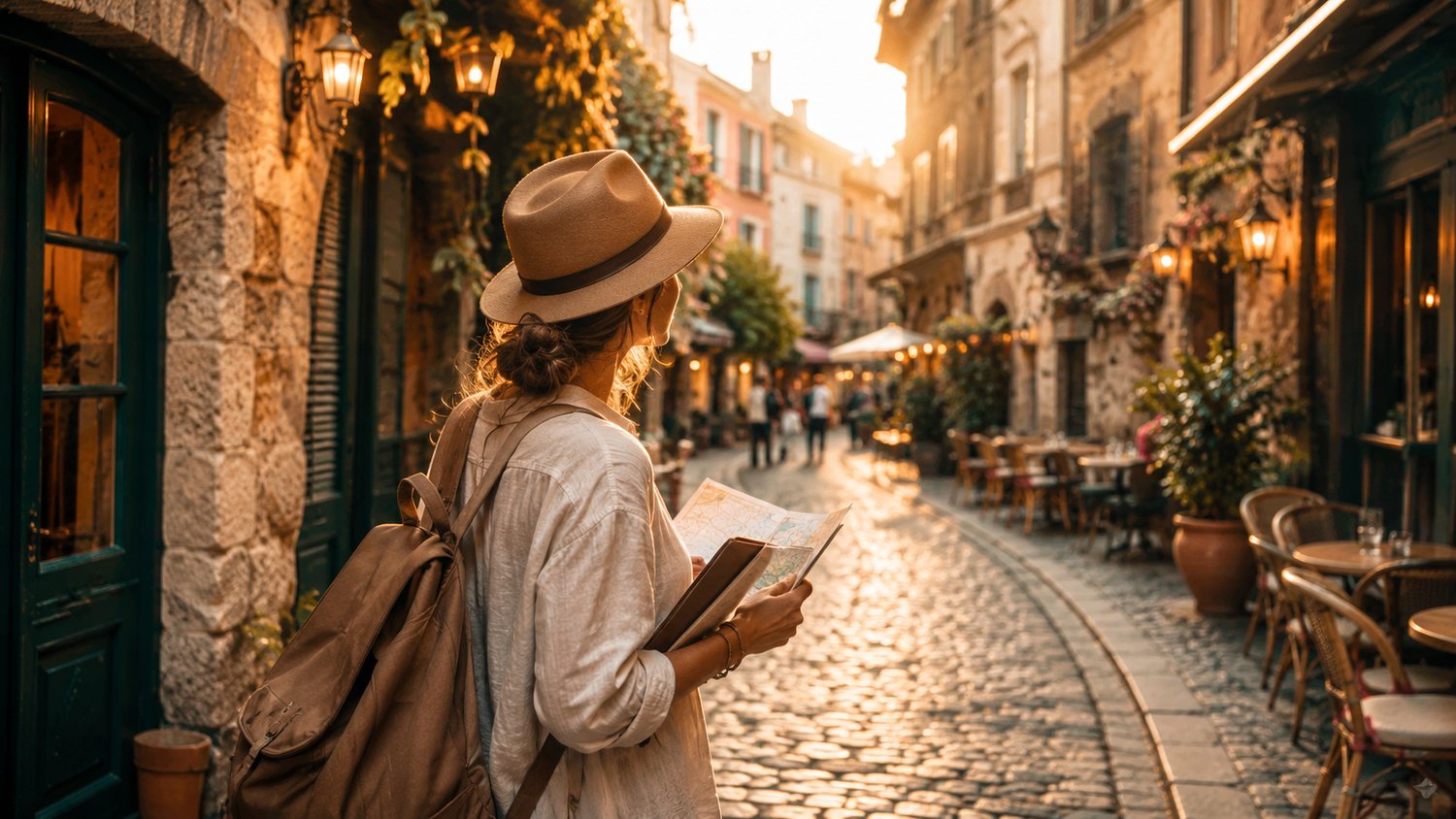
So how do you actually plan a personal travel quest?
Start with the feeling.
Do you want romance?
Adventure?
Rest?
Food?
Culture?
Nature?
A creative reset?
A spiritual recharge?
A family memory?
A solo confidence boost?
A “please let me escape my inbox before I become a warning sign” kind of trip?
Once you know the feeling, build the trip around it.
Here are a few quest ideas.
The Food Hunter Quest: markets, street food, cooking classes, bakeries, coffee shops, local snacks, and one meal you will talk about forever.
The Movie Scene Quest: filming locations, cinematic streets, famous viewpoints, atmospheric hotels, and places that feel like stepping into a story.
The Hidden Corners Quest: lesser-known neighbourhoods, quiet villages, unusual museums, local parks, secret beaches, and small places with big personality.
The Slow Soul Quest: longer stays, fewer transfers, peaceful mornings, nature walks, journaling, spa time, mindful sightseeing, and actual rest.
The Chaos and Neon Quest: night markets, music, nightlife, city lights, rooftop views, late dinners, and the kind of energy that makes sleep feel optional.
The Family Memory Quest: easy routes, flexible plans, safe activities, food options, photo moments, downtime, and backup plans for when everyone suddenly becomes hungry and dramatic.
The point is not to copy someone else’s perfect itinerary.
The point is to design a trip that fits your version of wonder.
The Boring Part Still Matters
Now, here is where we must be adults for a moment.
Not for too long. Nobody panic.
Even the most exciting personal travel quest still needs a plan.
Because “following your curiosity” is beautiful until you realize your hotel confirmation is buried in your email, your airport transfer is unclear, your budget is doing interpretive dance, and nobody knows whether the museum is closed on Mondays.
The magic of travel needs practical support.
You still need to know:
Where you are staying.
How much you are spending.
What needs to be booked early.
What you should pack.
Which food spots you want to try.
Which places are must-see and which are optional.
What documents and confirmations you need.
What your backup plan is if weather, delays, or human nonsense gets involved.
This is where planning does not kill the adventure.
It protects it.
A good travel plan does not trap you. It gives you freedom because you are not constantly trying to remember everything from screenshots, saved posts, random notes, and one message from three weeks ago that said “this place looks nice.”
That is not a system.
That is digital confetti.
Where Passport & Pages Comes In
Passport & Pages was created for travelers who want the dream and the details in one place.
The beautiful part of travel is the adventure.
The stressful part is trying to organize the adventure without losing your mind.
That is why a proper travel planner can make such a difference. Your budget, itinerary, packing list, food ideas, must-visit places, booking notes, and travel details should not be scattered across your phone like a crime scene.
A Passport & Pages travel planner helps you gather the moving pieces before the trip starts, so you can spend less time panicking and more time actually enjoying where you are.
Use it to shape the practical side of your personal quest:
Plan your days.
Track your budget.
Save your food ideas.
List your must-visit places.
Keep packing under control.
Organize important travel details.
Make space for the fun discoveries too.
Because the best trips usually need both things:
A little romance.
And a little spreadsheet sanity.
Your Trip Deserves More Than “Top 10 Things To Do”
The world is too interesting for boring travel.
Your holiday does not need to be a rushed checklist, a copied itinerary, or a blur of famous places you barely had time to enjoy.
It can be a food quest.
A film-inspired escape.
A slow travel reset.
A hidden-season adventure.
A personal story waiting to happen.
You do not need to see everything.
You need to experience the right things deeply enough that they stay with you.
That is the new way to travel.
Less box-ticking.
More story-making.
Less “we went there.”
More “you won’t believe what happened when we found this little place…”
That is the kind of trip worth planning.
And yes, Captain Practical must still come along with confirmations, budgets, and packing lists.
But Captain Practical can sit quietly in the back while the adventure gets the window seat.
Comments ()