
Famous sights are famous for a reason.
Rome did not become Rome by accident. Paris did not become Paris because someone had a slow marketing week. Kyoto, Barcelona, Phuket, Istanbul, Berlin, Dublin — these places earned their place on the dream-trip list.
But here is the part nobody likes to admit:
You can visit a famous country and still only see the version everyone else saw.
You can fly across the world, spend months saving, buy new luggage, take 400 photos, come home exhausted, and still realise later that you somehow missed the place that would have made the whole trip feel personal.
Not because you planned badly.
Not because you were lazy.
But because most travel plans follow the loudest names first.
The famous landmarks shout. The hidden places whisper.
And when you are planning a trip from another country, the shouting usually wins.
What We Mean by Hidden Spots
When we say “Hidden Spots,” we do not always mean places nobody on earth has ever heard of.
That would be ridiculous. If a place is truly unknown to everyone, it is usually either private property, impossible to reach, or guarded by a goat with trust issues.
What we mean is this:
Hidden Spots are the places many ordinary tourists miss because they sit outside the standard checklist.
They may be local favourites. Quiet detours. Lesser-known towns. Strange historic places. Scenic routes. Small museums. Food streets. Ancient ruins. Coastal corners. Viewpoints. Villages people drive past. Places that do not always make it into the basic “first time in this country” itinerary.
They are the places that make you say:
“Why did nobody tell me this was here?”
That is the feeling we are chasing.
Not just travel.
Discovery.
The Problem with the Famous Checklist
The famous checklist is not bad. In fact, it is usually a good starting point.
If you go to Paris, yes, you probably want to see the Eiffel Tower. If you go to Italy, yes, Rome and Florence have earned their place. If you go to Japan, Kyoto is not famous by mistake. If you go to Ireland, the Cliffs of Moher are not exactly hiding under a table.
But the famous checklist can become a trap.
It tells you where everybody goes.
It does not always tell you where the trip begins to feel like yours.
That is why a good travel plan needs two layers:
The places you came all that way to see.
And the places you would have missed if nobody pointed them out.
The first layer gives you the dream.
The second layer gives you the story.
Italy: The Country Behind the Postcard
Italy is the perfect example because most people already have an Italy in their head.
Rome. Venice. Florence. Amalfi. Tuscany. Lake Como. Pizza. Pasta. Dramatic hand gestures. Someone in linen looking expensive near a fountain.
Wonderful.
But Italy has a stranger, deeper, quieter side too.
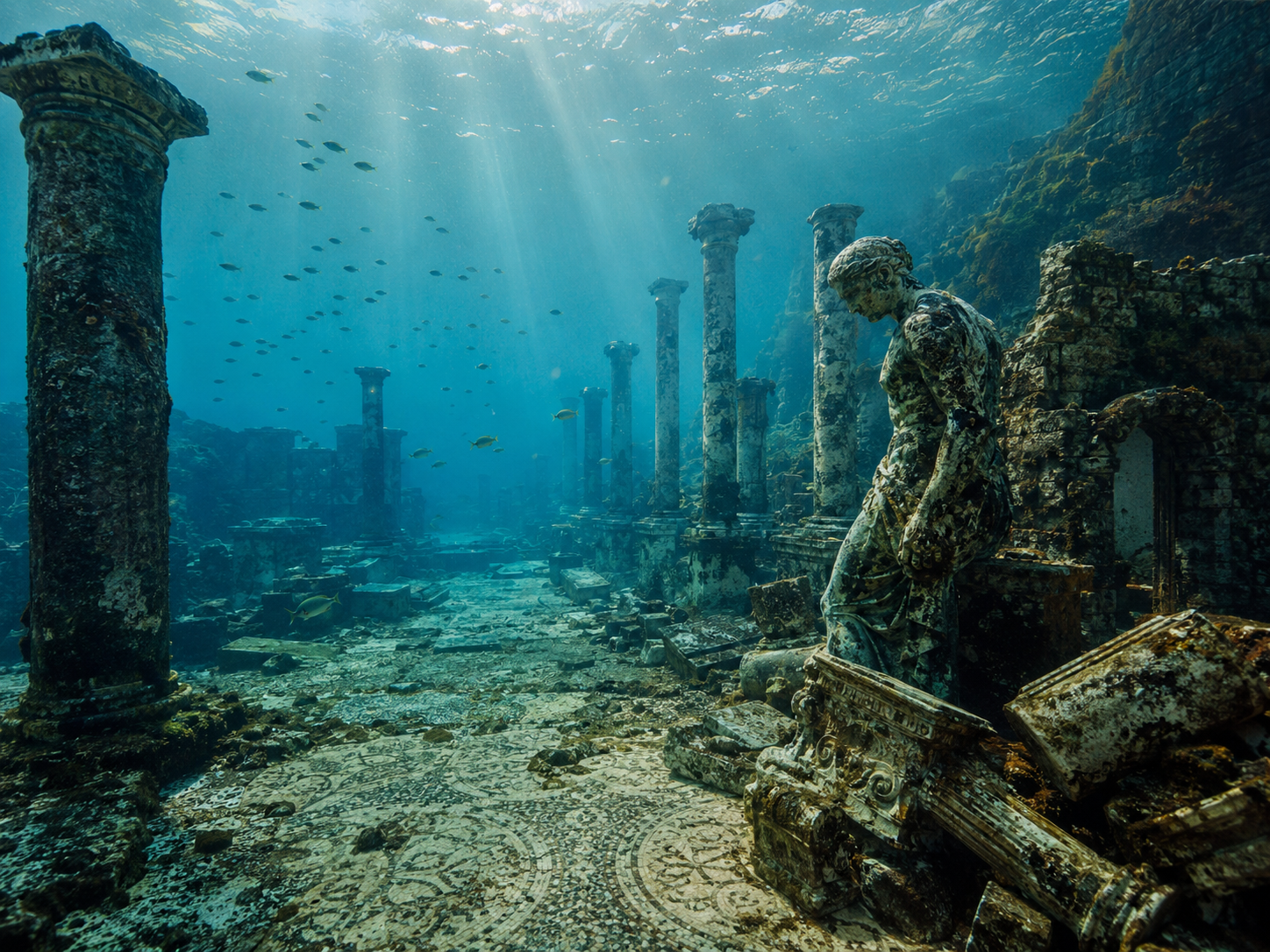
Near Naples, Baia offers one of those travel moments that sounds made up until you start reading about it properly: ancient Roman remains connected to the volcanic landscape of the Campi Flegrei area, with archaeology gradually submerged by the sea over centuries. Italia.it describes Baia’s underwater park as tied to the sinking of ancient Roman remains through bradyseism in the Campi Flegrei area.
That is not your average “nice little viewpoint.”
That is history under the water.
And that is exactly the kind of place many travelers miss because they plan Italy as a straight line between the obvious giants.
Pompeii gets the attention. Rome gets the headlines. Venice gets the postcards. But Italy is full of second doors.
Some open onto lakes quieter than the famous lakes.
Some open onto towns that feel like stage sets nobody remembered to advertise.
Some open onto ancient places hiding just beyond the place everyone already knows.
This is why Italy is one of the strongest countries for hidden-spot planning. The famous trip is already beautiful. The hidden layer makes it feel richer.
And no, we are not putting the whole Italy treasure map here.
Some of the best places belong inside the planner, where they can be used properly instead of being thrown into a blog paragraph and forgotten.
France: Paris Is Not the Whole Spell
Paris is another dangerous one.
Dangerous because it is so famous that people think seeing the obvious places means they have “done Paris.”
Eiffel Tower. Louvre. Notre-Dame area. Montmartre. Seine. Macaron. Blister. Done.
But France has layers.
Paris alone has unusual corners, quieter neighborhoods, smaller museums, covered passages, old streets, gardens, food streets, and places that feel like the city took off its tourist costume for a moment. Paris je t’aime, the official Paris tourism site, even maintains suggestions for unusual places to see in the city, which is a good reminder that Paris is much more than its biggest monuments.
And then there is the rest of France.
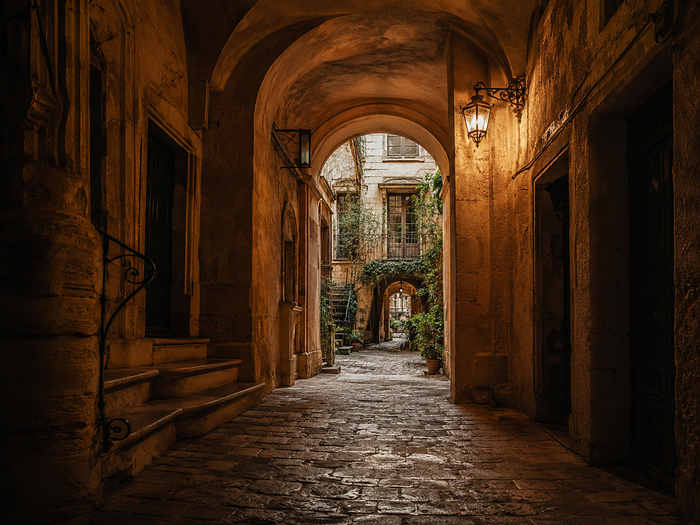
Lyon has its traboules — hidden passageways and courtyards tucked behind ordinary-looking doors, tied to the city’s history and old streets.
That is the kind of France travelers often miss because Paris takes up all the oxygen in the room.
Again, the point is not to skip Paris.
The point is to stop letting one famous image bully the rest of the country into the background.
Japan: Beyond the Golden Route
Japan has one of the most powerful “hidden route” stories in travel.
A lot of first-time visitors build some version of the Golden Route:
Tokyo. Kyoto. Osaka. Maybe Mount Fuji. Maybe Nara.
That route is popular for good reason. It gives you neon, temples, food, trains, history, shopping, and enough “wait, this place is unreal” moments to fill your camera roll until your phone begs for mercy.
But Japan’s official tourism guide also encourages travelers to go beyond the traditional Tokyo-to-Kyoto route, highlighting places such as Kurobe Gorge, Iwate’s coastline, and Tottori’s sand dunes.
That is the real magic of Japan planning.
The famous route gives you the introduction.
The hidden route gives you the silence between the notes.
Mountain villages. Pilgrimage paths. Dunes. Gorges. Forests. Islands. Quiet old streets. Places where the experience feels less like sightseeing and more like entering a different rhythm.
That is why hidden spots matter so much in a Japan planner. Without them, it is too easy to copy the same trip everyone else already posted.
Spain: More Than Barcelona and Beaches
Spain has a similar problem.
The obvious Spain is loud and gorgeous:
Barcelona. Madrid. Ibiza. Seville. Beaches. Tapas. Sangria. Flamenco. Sun. Architecture. Late dinners that make responsible people nervous.
But Spain’s hidden layer is spectacular.
Las Médulas, for example, is a former Roman gold-mining landscape in León, listed by Spain’s official tourism site as a UNESCO World Heritage Site with dramatic red earth formations and history built into the landscape.
Setenil de las Bodegas, in Andalusia, is known for houses built directly into and beneath rock formations. It has received travel attention as a beautiful but underrated town, precisely because it looks almost impossible when you first see it.
Spain is full of these “hold on, what is that?” moments
White villages. Northern coastlines. Mountain towns. Food cities. Roman landscapes. Moorish streets. Places where the country stops being a postcard and starts becoming a discovery.
That is the kind of detail a traveler rarely gets from a basic checklist.
Thailand: The Quiet Places Behind the Tourist Dream
Thailand is one of those countries where the famous version is very powerful.
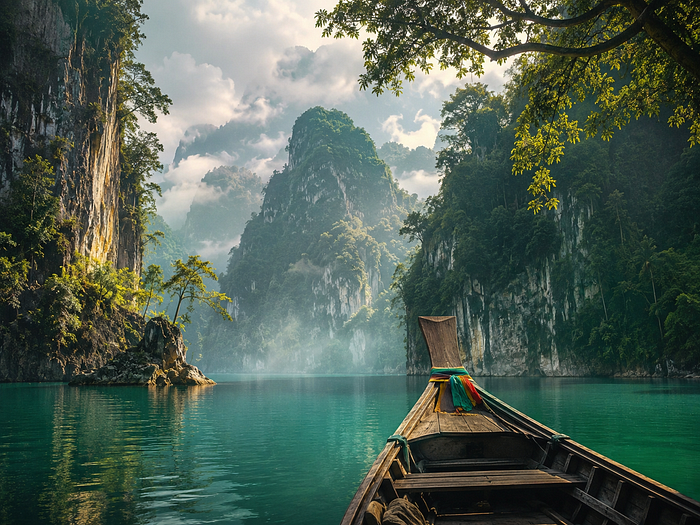
Bangkok. Phuket. Chiang Mai. Krabi. Koh Samui. Phi Phi. Floating markets. Temples. Beaches. Night markets. Mango sticky rice. Someone riding a scooter with impossible confidence.
But Thailand is much bigger than the usual loop.
There are quieter islands, national parks, lake landscapes, lesser-known temple towns, mountain viewpoints, old capitals, and peaceful places that feel far away from the over-photographed version of the trip.
That matters because Thailand can easily become a checklist trip if you let it.
Beach. Temple. Market. Repeat.
A hidden-spots section helps travelers ask better questions:
Where can I slow down?
Where can I see something less crowded?
Where can I find the place that feels like mine for a moment?
That is the difference between “I went to Thailand” and “Thailand surprised me.”
Turkey: The Country with Doors Under the Ground
Turkey might be one of the strongest hidden-spots countries of all.
Most people think first of Istanbul. Then Cappadocia. Then maybe Antalya or the coast.
Again, all worth seeing.
But Turkey has a dramatic hidden layer: ancient ruins, underground worlds, old towns, mountain monasteries, lake islands, sunken places, stone villages, and landscapes that make you feel like history never fully left.
This is the kind of country where a hidden-spots section can be genuinely exciting because the lesser-known places are not just “cute.” Some of them feel cinematic.
Turkey is not only a destination.
It is a series of doors.
And the famous route only opens the first few.
Germany: The Fairytale Side Road
Germany often gets reduced to a few familiar ideas:
Berlin. Munich. Oktoberfest. Castles. Christmas markets. Maybe the Black Forest if someone is feeling poetic.
But Germany’s hidden side is built for travelers who love old towns, forests, rivers, strange bridges, wine villages, medieval streets, national parks, and places that look like a fairytale had a practical German planning department.
Germany’s official tourism site highlights places such as Saxon Switzerland’s Bastei viewpoint, the Spreewald UNESCO Biosphere Reserve, and Bamberg’s old-town charm, all of which point to how much more Germany offers beyond the biggest city stops.
Germany is a country where hidden spots can completely change the mood of a trip.
A traveler who only plans the obvious route may get a good trip.
A traveler who adds the smaller places may get a storybook.
Ireland: Where the Road Hides the Magic
Ireland is almost designed for hidden-spot travel.
The obvious route is powerful:
Dublin. Galway. Cliffs of Moher. Ring of Kerry. Guinness. Green fields. Moody skies. Someone saying the weather is “soft” while you are being attacked by horizontal rain.
But Ireland’s magic often lives in the spaces between the famous names.
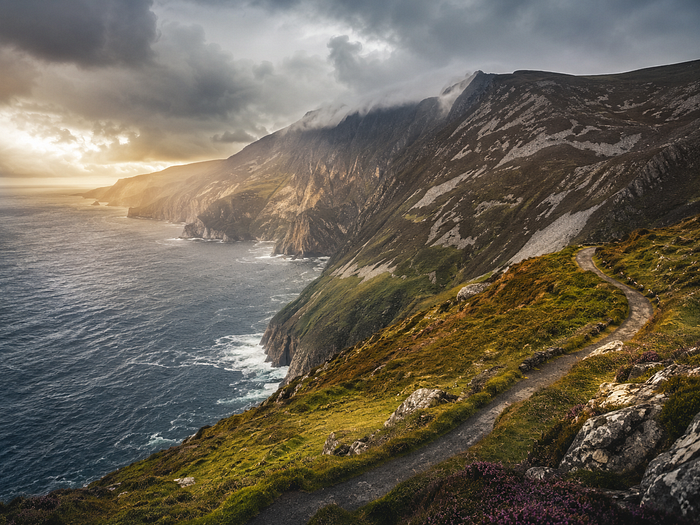
Quiet peninsulas. Ancient forts. Islands. old abbeys. Coastal roads. Waterfalls. national parks. Stone circles. Villages where the landscape feels like it is keeping a secret.
Ireland is not only about arriving at the famous viewpoint.
Sometimes Ireland is about the road before the viewpoint.
The turnoff. The ruin. The sheep with suspicious confidence. The place you did not know to search for because nobody put it on the first page of the itinerary.
That is exactly why hidden spots belong in the plan.
Why Passport & Pages Planners Now Include Hidden Spots
This is where the idea behind Passport & Pages comes in.
Our travel planners are already designed to help travellers plan smarter. They are pre-loaded with the best places to visit, practical travel pages, itinerary sections, budget tools, packing lists, booking notes, food and drink ideas, memory pages, and useful travel links.
But travel is not finished just because the famous places are listed.
So selected Passport & Pages country planners are now being upgraded with a Hidden Spots section.
That means the planner does not only help you remember the big sights. It also gives you room to discover the quieter, stranger, more local-feeling, more surprising places that many travelers never think to add.
The famous places get you there.
The hidden spots make it feel like you found something.
The Best Hidden Spots Are Not Always the Loudest Ones
Here is the truth:
The best hidden spots are not always the most dramatic.
Sometimes they are.
Sometimes they are underwater ruins, mountain villages, ancient passageways, strange landscapes, or cliffside roads that make you question every itinerary you have ever trusted.
But sometimes a hidden spot is simpler.
A market street.
A small museum.
A quiet village.
A lake behind a louder lake.
A local food stop.
A viewpoint at the wrong end of the tourist map.
A place that does not shout, but stays with you anyway.
That is why we define hidden spots carefully.
They are not always secret.
They are often simply missed.
And for travelers, “missed” is the dangerous word.
Because nobody wants to come home and discover that the thing they would have loved most was only thirty minutes away from where they already were.
The New Travel Rule
Plan the famous places.
Of course.
See the icons. Take the photos. Stand under the tower, beside the ruin, in front of the castle, on the bridge, near the sea, inside the old town.
But leave room for the second layer.
The quieter layer.
The stranger layer.
The “why did nobody tell me?” layer.
That is where travel becomes personal.
That is where the trip stops feeling copied.
That is where the story begins.
Final Thought
The world is full of famous places.
But famous sights are only the beginning.
The real magic is often hiding just outside the obvious checklist — in the town most travelers skip, the old road they do not take, the lake they do not search for, the ruin they never hear about, or the quiet corner locals knew was special all along.
That is why Passport & Pages planners are now growing with selected Hidden Spots sections.
Because a good travel plan should help you see the places everyone talks about.
But a great one should also help you find the places they forgot to mention.
Comments ()