
Before You Check In Your Bag, Read This
Most people arrive at the airport thinking about the fun part.
The hotel.
The beach.
The food.
The photos.
The first drink after landing.
The feeling of finally escaping normal life for a while.
Almost nobody stands at the check-in counter thinking:
“What if something happens to my luggage after I hand it over?”
And that is exactly why this matters.
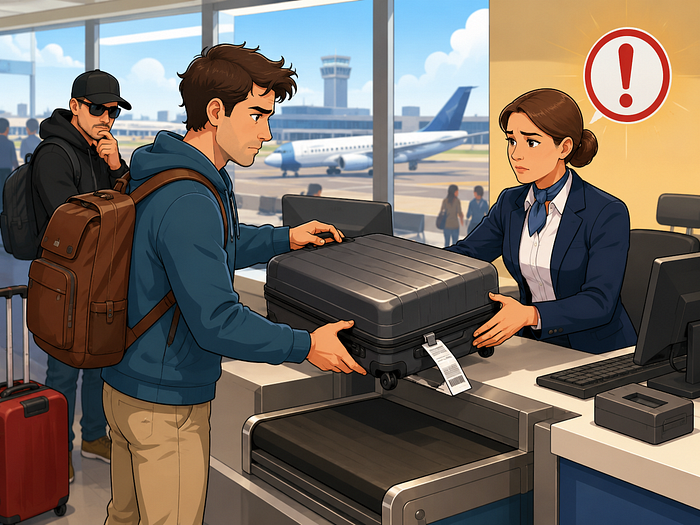
Because the moment your suitcase disappears behind that airport conveyor belt, you lose sight of it. You no longer control who handles it, where it goes, how many times it is moved, or whether anyone has access to it before it reaches the next airport.
Most of the time, everything is fine.
Your bag gets loaded.
You fly.
You land.
You collect it.
You go enjoy your holiday.
But sometimes, things go wrong.
And when checked luggage goes wrong, it can go very wrong.
We are not talking about a missing flip-flop, a broken shampoo bottle, or your suitcase arriving with one wheel missing like it survived a war.
We are talking about the terrifying possibility that something could be placed inside your luggage without your knowledge — and you could be the one standing in front of airport security trying to explain how it got there.
That is not a travel inconvenience.
That is the kind of nightmare that can destroy a holiday before it even begins.
The Part of Travel Nobody Wants to Think About
Travelers are usually warned about pickpockets, fake taxis, hotel scams, card skimming, and overpriced tourist traps.
But checked luggage security does not get nearly enough attention.
Why?
Because we want to believe the airport system is safe. We want to believe that once our bag is tagged and sent away, it is protected. We want to believe that nobody would be stupid enough, desperate enough, or criminal enough to use another person’s luggage for illegal activity.
But criminals do not care about your holiday.
They do not care that you saved for months.
They do not care that your family is waiting for you.
They do not care that you are innocent.
They care about opportunity.
And an unsecured suitcase can be an opportunity.
That is the uncomfortable truth.
Your luggage may be out of your hands, but if something illegal is found inside it, you may still be treated like the person responsible until you can prove otherwise.
That should scare you a little.
Not because you need to travel in panic.
But because you need to travel awake.
Innocent Does Not Always Mean Safe
Here is where many travelers make a dangerous mistake.
They think:
“But I didn’t do anything wrong.”
That is good.
But at an airport, especially in another country, innocence is not always enough in the first few moments of a serious incident.
If something suspicious is found in your suitcase, officials may not immediately know whether you are innocent, careless, involved, tricked, or being used.
They only know one thing:
The item was found in your bag.
Now imagine trying to explain yourself in a foreign airport after a long flight, tired, confused, maybe dealing with a language barrier, surrounded by officials who are not smiling.
You say:
“That is not mine.”
But they may ask:
“Then how did it get into your luggage?”
And that is the question every traveler should think about before they fly.
Can you show that your bag was locked?
Can you show that it was sealed?
Can you show that it was wrapped?
Can you show what condition it was in when you handed it over?
Can you show the weight at check-in?
Can you show that something changed after it left your possession?
Most travelers cannot.
They simply hand over the suitcase and walk away.
No photo.
No video.
No record.
No proof.
That is not smart travel.
That is blind trust.
The Two-Minute Habit That Could Save You
Before you check in your bag, take two minutes.
Not ten.
Not twenty.
Two.
Those two minutes could become very important if something ever goes wrong.
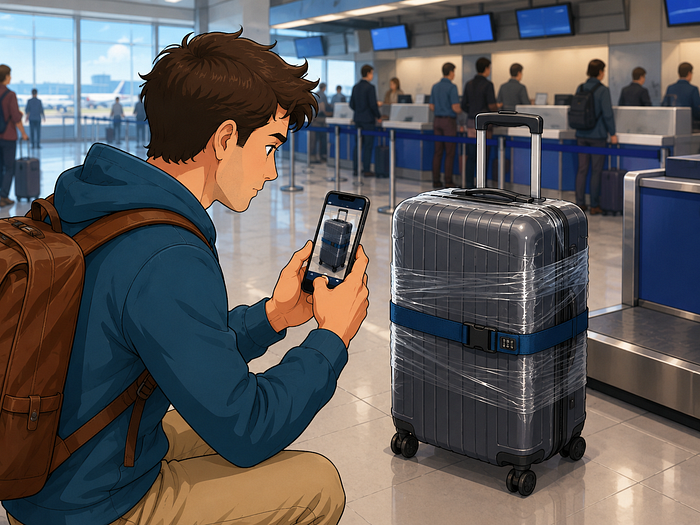
Before handing over your suitcase, take clear photos or a short video of:
your full suitcase,
the zips,
the lock,
the luggage strap,
the plastic wrap if you used it,
the baggage tag,
and the check-in weight if it is visible.
Do this calmly. You do not need to act suspicious or dramatic. You are simply documenting the condition of your luggage before it leaves your hands.
Think of it like taking a photo of a rental car before driving away.
You are not expecting trouble.
You are protecting yourself in case trouble tries to introduce itself.
A photo will not magically solve every problem, but it gives you something valuable: a record.
It shows that you took care.
It shows the bag was secured.
It shows what the suitcase looked like when you handed it over.
And if the bag arrives damaged, opened, cut, unwrapped, unlocked, or heavier than it was before, you have a starting point.
Without that, you are relying only on your word.
And in a serious airport situation, your word may not be enough.
Stop Using Easy-To-Open Luggage
Some suitcases are basically invitations with wheels.
Soft sides.
Weak zips.
Loose outer pockets.
No locks.
No straps.
No seal.
No clear identification.
If your suitcase can be opened, accessed, and closed again without you noticing, that is a problem.
Use a hard-shell suitcase if possible. Choose something with a proper built-in lock or strong zip-locking system. Add a luggage strap around the outside. Use bright colors, stickers, ribbons, or a unique luggage cover so your bag is easy to identify and harder to swap.
Avoid using outer pockets on checked luggage.
In fact, treat outside pockets as danger zones.
Do not put documents there.
Do not put snacks there.
Do not put small items there.
Do not put anything there.
Outer pockets are too easy for someone else to access.
If your suitcase has outside pockets, keep them empty.
The goal is simple: make your bag harder to interfere with and easier to notice if something has changed.
Wrap It, Seal It, Make Tampering Obvious
Airport luggage wrapping is not magic.
It will not turn your suitcase into a bank vault.
But it does something very useful: it makes tampering more obvious.
If your bag is wrapped in plastic and arrives with the wrapping torn, cut, removed, or strangely repaired, you immediately know something may have happened.
That gives you a reason to stop before leaving the airport.
The same goes for luggage straps, zip ties, tamper-evident seals, and distinctive locks.
You are not trying to create an impossible fortress.
You are trying to create visible evidence.
A criminal prefers quiet access.
A careless handler leaves damage.
A tampered bag often tells a story.
Your job is to make sure the story is visible before you walk out of the airport with that suitcase.
Never Carry Anything for Anyone
This is the rule that should be burned into every traveler's brain:
Never carry anything for anyone.
Not a parcel.
Not a gift.
Not medicine.
Not an envelope.
Not a “small favour.”
Not something from someone who seems friendly.
Not something from someone who says their bag is overweight.
Not something from someone who gives you a sad story.
If you did not pack it yourself, do not take it.
And yes, this includes people you know casually.
Someone may say:
“Please just take this for my cousin overseas.”
No.
Someone may say:
“It is just a gift.”
No.
Someone may say:
“You can look inside if you want.”
Still no.
Because looking inside does not always tell you everything. Items can be hidden, altered, packed inside other things, or made to look harmless.
The moment that item goes into your luggage, it becomes your problem.
Customs officers will not care that you were being nice.
Being helpful is not a legal defense you want to test in another country.
Check Your Bag Before You Leave the Airport
This is where many people make another big mistake.
They collect their suitcase from the carousel, throw it onto a trolley, and rush out.
Do not do that.
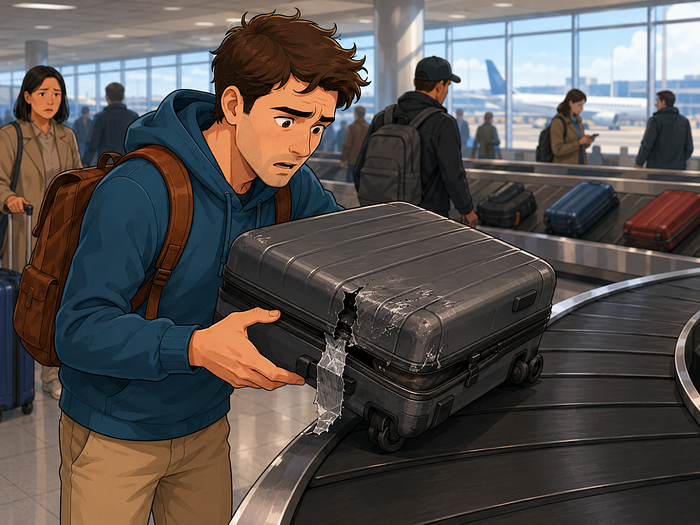
Before leaving the airport, inspect your bag.
Look at the lock.
Look at the zips.
Look at the wrapping.
Look at the straps.
Check for cuts, tears, tape, broken seals, strange bulges, new damage, or anything that looks different.
If your bag looks wrong, do not take it to the hotel and inspect it there.
Do not open it in the bathroom.
Do not open it in the taxi.
Do not open it in a quiet corner.
Do not leave the airport with it like everything is normal.
Stay where there are cameras, officials, airline staff, and witnesses.
Go straight to the airline baggage desk, airport security, or customs and say clearly:
“This bag appears to have been tampered with. I do not want to open it without an official present.”
That sentence is important.
It shows that you noticed something suspicious before taking private possession of the contents. It creates a record. It shows you acted responsibly.
If something is wrong, you want the discovery to happen in the presence of officials, not alone in your hotel room.
Use Technology, But Do Not Rely on It Alone
A tracking device like an AirTag or SmartTag can be useful. It can help show where your bag travelled and whether it ended up somewhere unexpected.
But do not make the mistake of thinking a tracker protects the contents of your bag.
It does not.
A tracker can help with location. It does not stop someone opening your suitcase. It does not prove what was inside. It does not replace locks, wrapping, photos, and careful inspection.
Technology is helpful.
Habits are better.
Use both.
The Holiday Mindset Can Make You Careless
This is the part nobody wants to admit.
People become careless when they are excited.
You are tired.
You are rushing.
You are thinking about boarding.
You are checking your passport.
You are trying to find your gate.
You are arguing with the self-check-in machine.
You are wondering why airport coffee costs the same as a small house.
So luggage safety feels like one more thing to worry about.
But that is exactly why you need a routine.
Not panic, Routine.
Before check-in:
Lock it.
Strap it.
Wrap it if possible.
Photograph it.
Keep the receipt or baggage tag.
Walk away knowing you did what you could.
After landing:
Inspect it.
Check the seals.
Check the zips.
Check the weight and feel of the bag.
Do not leave the airport if something looks wrong.
This is not paranoia.
This is travel discipline.
Press enter or click to view image in full size
What To Do If Something Illegal Is Found
First, stay calm.
That is easier said than done, but panic will not help you.
Do not argue aggressively.
Do not make jokes.
Do not try to grab the bag.
Do not touch suspicious items.
Do not sign documents you do not understand without legal advice.
Say clearly:
“I did not pack this item. I want legal assistance. I want my embassy or consulate contacted.”
If you are in a foreign country, ask for your embassy or consulate immediately.
If there is a language barrier, ask for a translator.
If you documented your bag before check-in, mention that you have photos or video showing the bag’s condition when you handed it over.
This is a serious situation. Treat it seriously from the first second.
Do Not Let Fear Stop You From Travelling
This article is not here to tell you to cancel your holiday.
Travel is still beautiful.
Travel is still worth it.
The world is still full of amazing places, good people, unforgettable food, and moments that make life bigger.
But good travel is not just about planning the fun parts.
It is also about protecting yourself from the parts nobody wants to imagine, because the worst travel problems are often the ones people never prepared for.
Lost passports.
Stolen wallets.
Medical emergencies.
Missed flights.
And yes — luggage that is no longer exactly the way you handed it over.
You do not need to be scared of every airport.
But you do need to stop being casual with your checked luggage.
Final Rule Before You Fly
Before your next holiday, remember this:
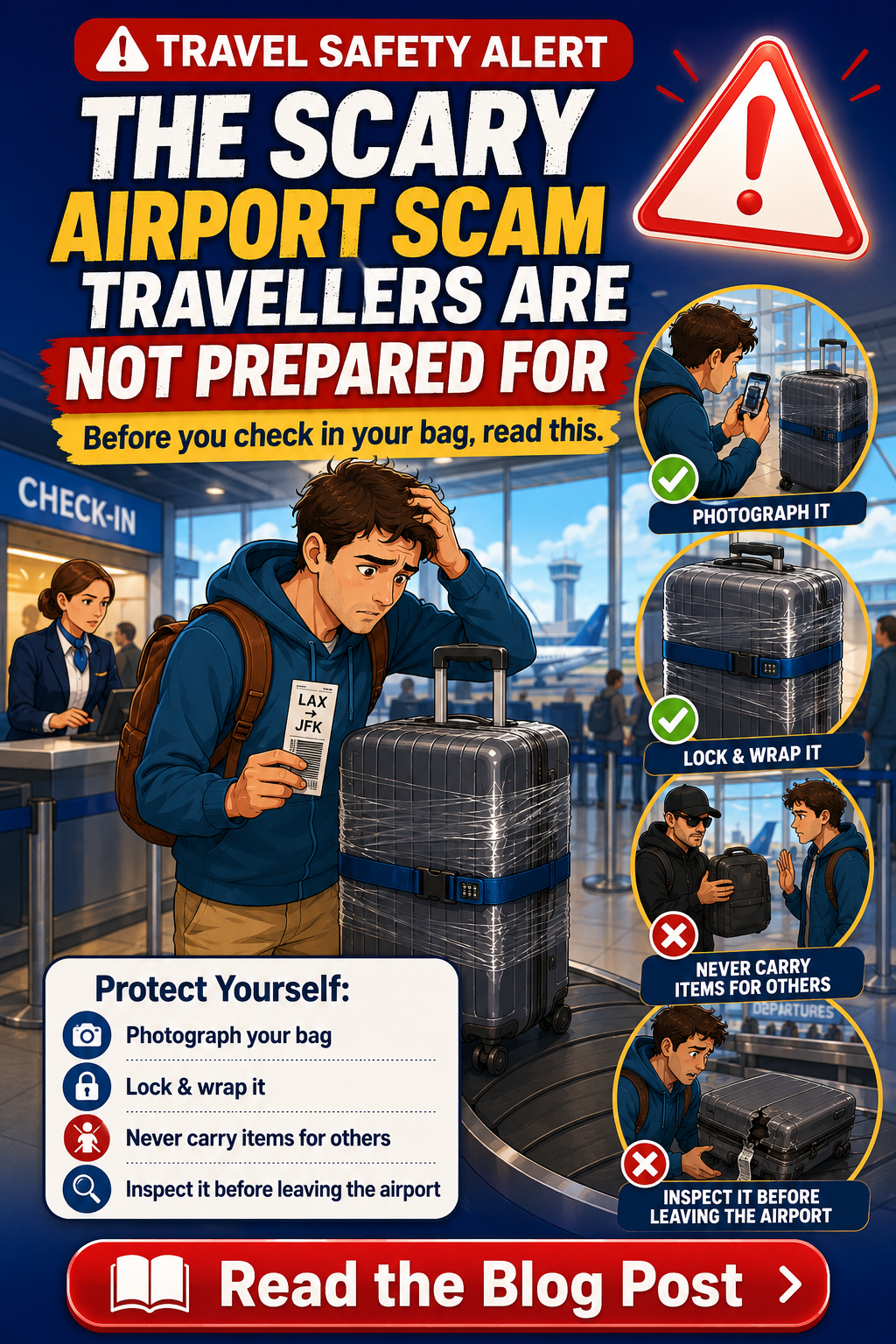
Pack it yourself. Lock it. Seal it. Photograph it. Never carry anything for anyone. Inspect it before leaving the airport.
That one sentence could save you stress, money, legal trouble, and possibly your freedom.
Your holiday does not start when you land.
It starts the moment you hand over your suitcase.
So before you check in your bag, take two minutes and protect yourself.
Because once that suitcase disappears behind the conveyor belt, you want to know you did everything possible to make sure it comes back exactly as you packed it.

Comments ()