
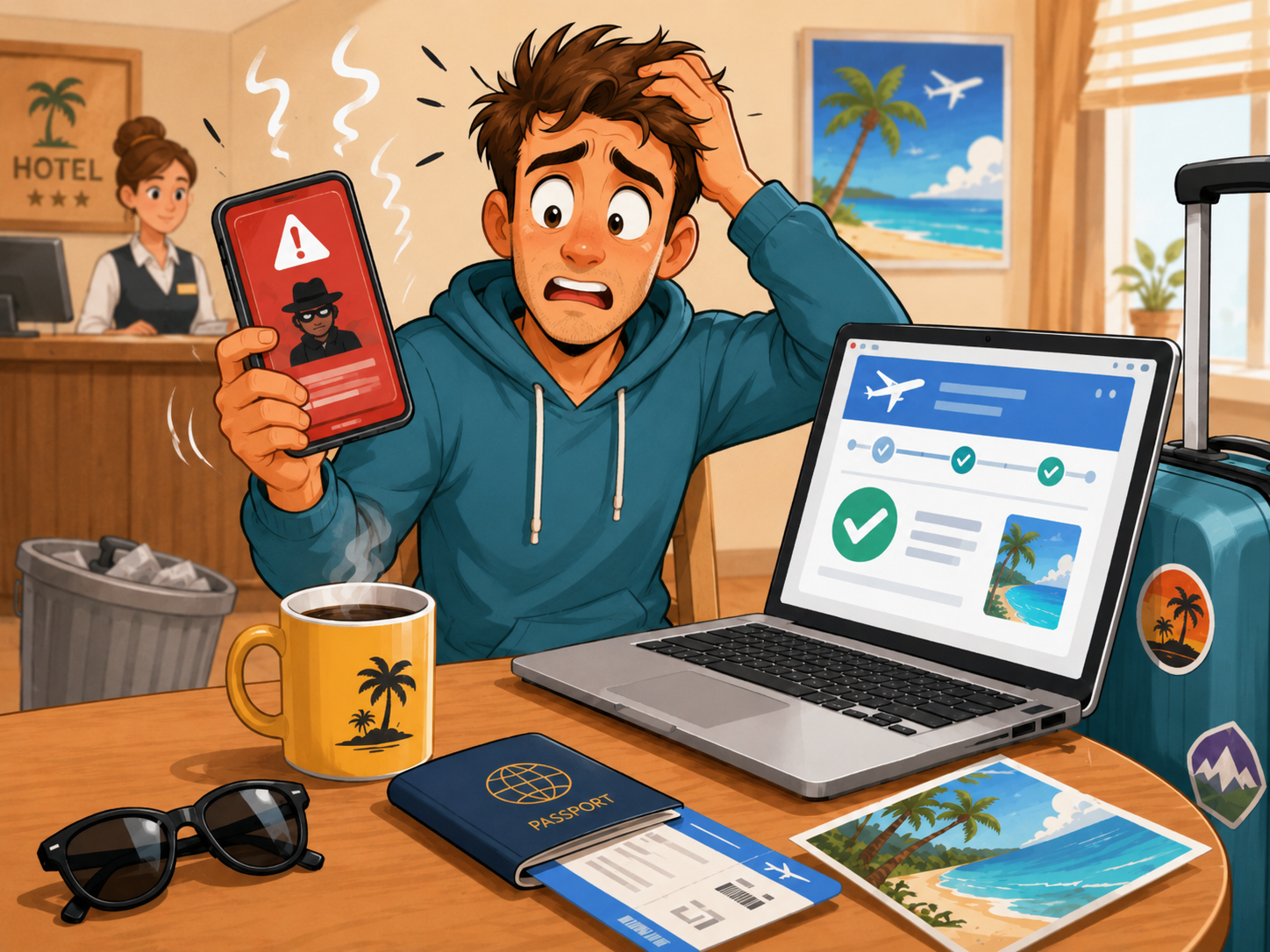
Most travelers know they should watch their bags at the airport.
They know not to flash money in a crowded street.
They know that if a stranger offers a “special taxi price” outside arrivals, there is a good chance the special part is not in their favor.
But there is one travel scam many people are not prepared for because it does not feel like a scam at first.
It feels like admin.
It arrives as a polite message.
A professional email.
A hotel notification.
A booking confirmation problem.
A payment warning.
A “your reservation may be cancelled” alert.
And because it often arrives right before a trip, when your brain is already juggling flights, bags, passports, weather, check-in times, transport, money, and the terrifying thought of forgetting your charger, you react fast.
That is exactly what the scammer wants.
Because sometimes the message that ruins your holiday does not come from a shady person in a dark alley.
Sometimes it lands neatly in your inbox with a logo at the top.
The scam is simple — and that is what makes it dangerous
The travel confirmation scam usually starts with a message that looks like it comes from a hotel, booking platform, airline, rental company, or travel service.
It may say something like:
“Your payment could not be verified.”
“Your booking will be cancelled unless you confirm your card.”
“Your reservation is at risk.”
“Please update your payment details within 12 hours.”
“Your airport transfer needs reconfirmation.”
“Click here to secure your room.”
On its own, that might already make a traveler nervous.
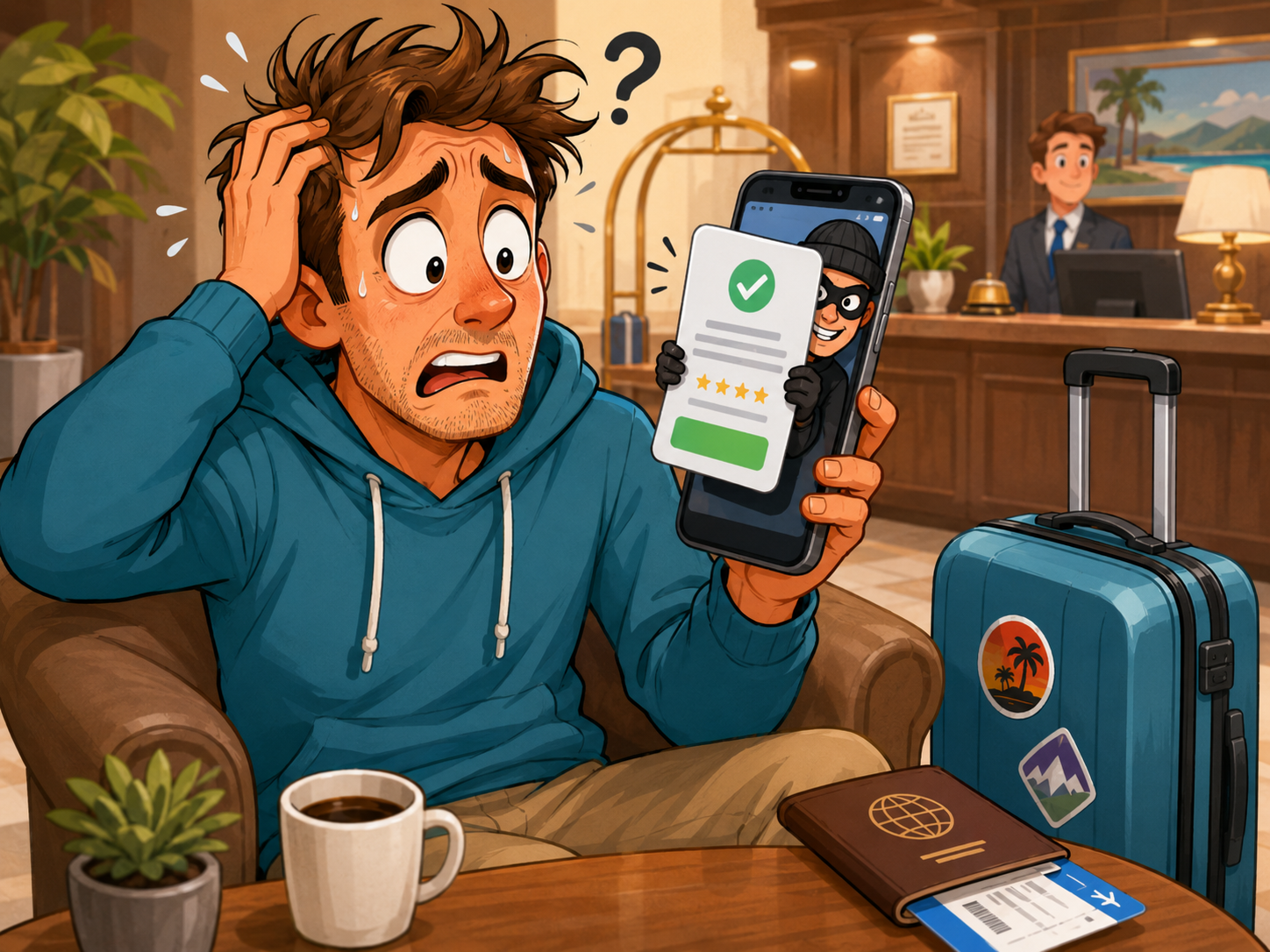
But here is where it gets ugly: some of these messages can include real-looking booking details. Your destination. Your dates. Your accommodation name. Your confirmation number. Even your name.
That is why people fall for it.
It does not always look like some obvious scam written by a keyboard goblin with three spelling mistakes in every sentence. It can look clean. It can look official. It can sound calm. It can even appear to come through a trusted travel channel.
Travel scams are becoming more convincing, and recent warnings have highlighted fake booking confirmations, scam payment requests, fake customer service channels, and phishing messages that pressure travelers into acting quickly. Reports have also warned about fake accommodation messages and scams involving real-looking reservation details, which makes them especially dangerous for people who are already preparing for a trip.
And that is why this scam works.
It does not ask you to be greedy.
It does not tempt you with a ridiculous free luxury villa.
It scares you with the possibility of losing something you already paid for.
Why travelers click before thinking
Travel planning puts people in a strange emotional state.
You are excited, but also slightly stressed. You are counting days, checking emails, watching prices, confirming times, saving addresses, reading reviews, and hoping your accommodation actually looks like the photos.
So when a message says your booking might be cancelled, your brain does not calmly say:
“Let me investigate this with the patience of a cyber-security analyst.”
No.
Your brain says:
“Not today, demon.”
And then your thumb starts moving.
That urgency is the trap.
Scammers know that people are most vulnerable when they believe something important is about to go wrong. A hotel room disappearing before arrival. A flight being cancelled. A transfer not showing up. A card problem blocking check-in.
The scammer does not need you to be stupid.
They need you to be tired, busy, excited, distracted, or scared of losing the trip you have been planning.
That describes almost every traveler at some point.
The fake hotel message
One of the nastiest versions of this scam is the fake hotel payment message.
You book your accommodation. Everything seems fine. Then, days or weeks later, you receive a message saying your card must be verified or your reservation may be cancelled.
The message may include a link.
That link may take you to a page that looks almost identical to a real booking website. Same colors. Same style. Same type of wording. Maybe even the same hotel name.
Then it asks for your card details.
And because you are not “buying” anything new, your guard drops. You think you are just protecting your existing reservation.
That is what makes it so clever.
You are not being sold a scam.
You are being scared into “saving” your booking.
The fake airline support trap
Another version appears when travelers search online for airline help.
Maybe your flight changed. Maybe your baggage allowance looks wrong. Maybe you need to update a seat or confirm a ticket.
You search for customer service, find a number or social media account, and think you are speaking to the airline.
But the person on the other side is not airline support.
They are pretending.
Fake customer service scams have become a serious travel concern, with warnings about fraudulent support accounts, fake phone numbers, and lookalike contact channels designed to steal payment information or personal details from stressed travelers.
The scammer may say there is a fee to fix the booking. Or they may ask for your card. Or they may ask for personal information “to verify your account.”
And because you contacted them, you are more likely to trust them.
That is the dangerous part.
Sometimes the scam does not chase you.
It waits for you to panic and find it.
The fake transfer confirmation
Airport transfers are another perfect target.
A traveler lands tired, confused, and desperate not to be stranded. So if they receive a message before departure saying their transfer must be reconfirmed, they may click without thinking.
The message might say:
“Your driver cannot be assigned until payment is confirmed.”
“Please verify your arrival details.”
“Your transfer will be cancelled if you do not respond.”
Again, it sounds boring. Practical. Normal.
That is why it works.
Nobody expects the dangerous part of travel to look like a small admin task.
The warning signs travelers should not ignore
Not every travel message is fake, obviously. Hotels do contact guests. Airlines do send updates. Booking platforms do send reminders.
But there are warning signs.
The first is urgency.
If a message pushes you to act immediately or lose your booking, slow down. Scammers love deadlines because deadlines shut down clear thinking.
The second is a strange link.
Do not trust a link just because the page looks professional. Lookalike websites can be built to mimic real travel brands.
The third is off-platform payment.
If you booked through a travel platform and someone suddenly wants you to pay somewhere else, that is a giant red flag wearing a flashing hat.
The fourth is emotional pressure.
Scam messages often make you feel cornered. They do not give you time to calmly verify. They want panic, not logic.
The fifth is a request for card details you already gave.
If you already booked and paid, be suspicious of any message asking you to “verify” payment details through a random link.
The sixth is a support number found in a hurry.
Do not trust the first phone number you find online. Scammers can create fake listings, fake social pages, and fake customer service traps.
The seventh is wording that tells you not to contact the official provider.
If a message says only they can fix the issue, or that you must not go through the normal platform, stop immediately.
That is not customer service.
That is a trap closing.
What to do instead
The safest move is simple:
Do not click from the message.
Open the official app yourself.
Type the website address manually.
Log in to your booking account from the real platform.
Check whether the message also appears inside your official account inbox.
Contact the hotel, airline, or travel provider using contact details from the official website, not the suspicious message.
If it is a hotel booking, contact the property through the platform where you booked. If it is an airline issue, go through the airline’s official app or website. If it is a rental or tour, use the contact details from your original confirmed booking.
And if someone asks for payment by wire transfer, gift card, cryptocurrency, or a random payment app, walk away. The FTC specifically warns travelers to avoid travel sellers who insist on hard-to-reverse payment methods like wire transfers, gift cards, and cryptocurrency.
You are not being difficult.
You are protecting your trip.
The rule travelers should remember
Here is the rule:
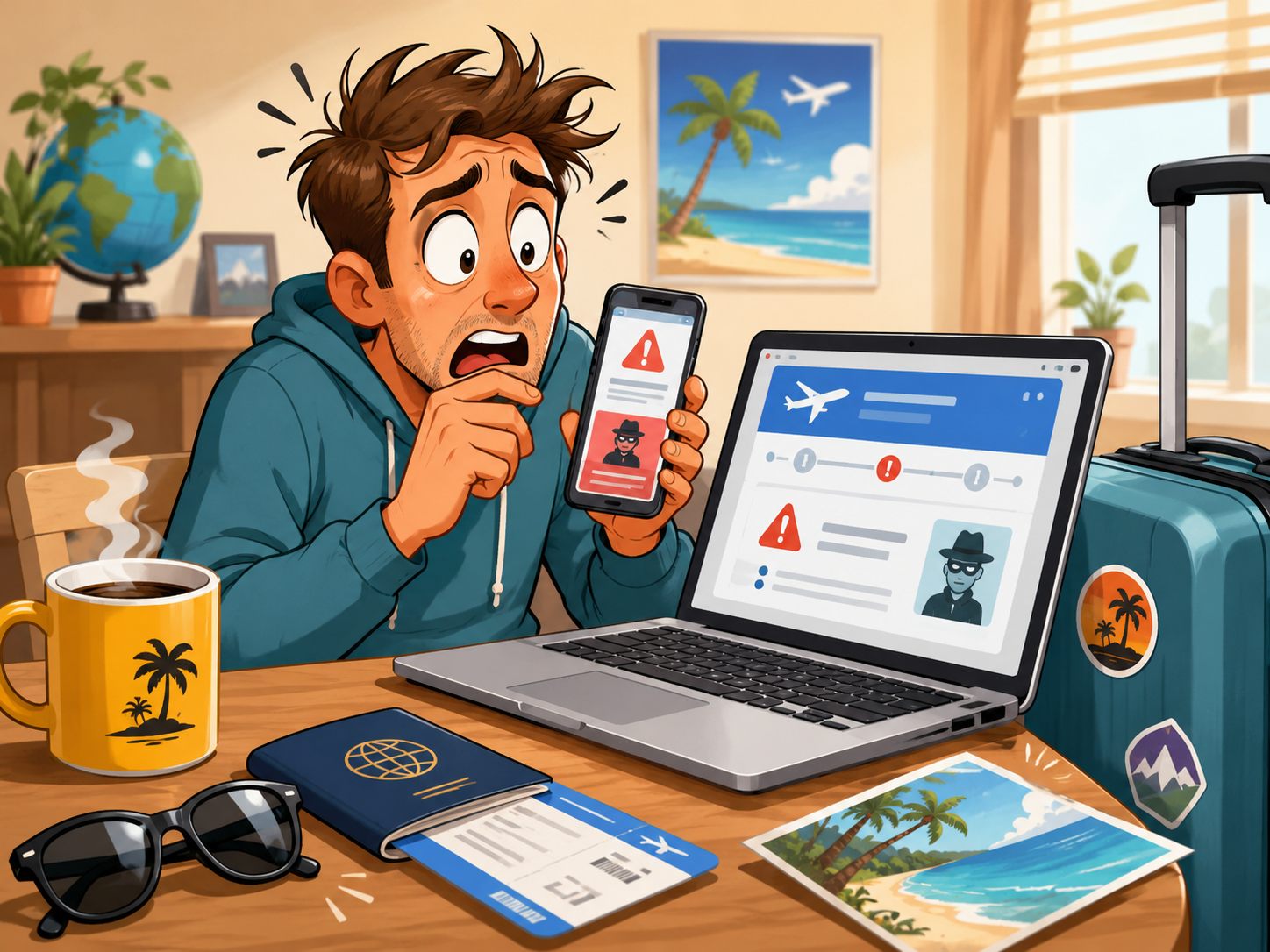
Never solve a booking panic through the link that created the panic.
That sentence alone can save people money.
If a message says your booking is in danger, do not use that message as your doorway.
Go around it.
Use the official app.
Use the official website.
Use the original booking platform.
Use the contact details you already trusted before the scary message arrived.
A real problem will still be there when you check through the official channel.
A scam often disappears the moment you refuse to enter through its door.
Why planning is not just about the fun stuff
Most people think trip planning means picking hotels, choosing restaurants, saving pretty beaches, and arguing with themselves over whether three pairs of shoes is “reasonable.”
That is the fun part.
But smart travel planning also means having your important details organized before the pressure starts.
Your booking names.
Your hotel addresses.
Your flight numbers.
Your transfer details.
Your emergency contacts.
Your backup plans.
Your notes.
Your confirmation references.
Because when something suspicious arrives, the worst time to start digging through old emails is while you are already stressed.
A good travel plan does not just help you enjoy the trip.
It helps you stay calm when something feels wrong.
That is also why a proper itinerary planner can be more useful than people realize. Not because it magically stops scams, but because it gives you one organized place to check what is real, what you booked, where you are going, and who you should contact.
When your trip details are scattered across five inboxes, three screenshots, two apps, and one memory that has not worked properly since 2017, panic wins.
When your details are organized, you think clearer.
And clear thinking is exactly what scammers are trying to steal.
Before you travel, do this
Before your next trip, take a few minutes to protect yourself.
Save your official booking confirmations.
Write down the official hotel contact details.
Save airline and accommodation apps before departure.
Do not rely only on email links.
Keep screenshots of confirmed reservations.
Use strong passwords and two-factor authentication where possible.
Tell yourself in advance: if any message threatens cancellation or demands urgent payment, you will not click first. You will verify first.
That one small habit can stop a big problem.
Final thought
The travel confirmation scam is dangerous because it does not look exciting.
It looks boring.
It looks like routine admin. A payment check. A hotel update. A small problem to fix before leaving.
But that is exactly why travelers need to talk about it.
Because the message that ruins a holiday may not say, “Congratulations, you won a free trip.”
It may say:
“Please confirm your booking.”
And that is why the smartest travelers do not just plan where they are going.
They plan how to stay calm when something unexpected tries to pull them off course.
Comments ()