

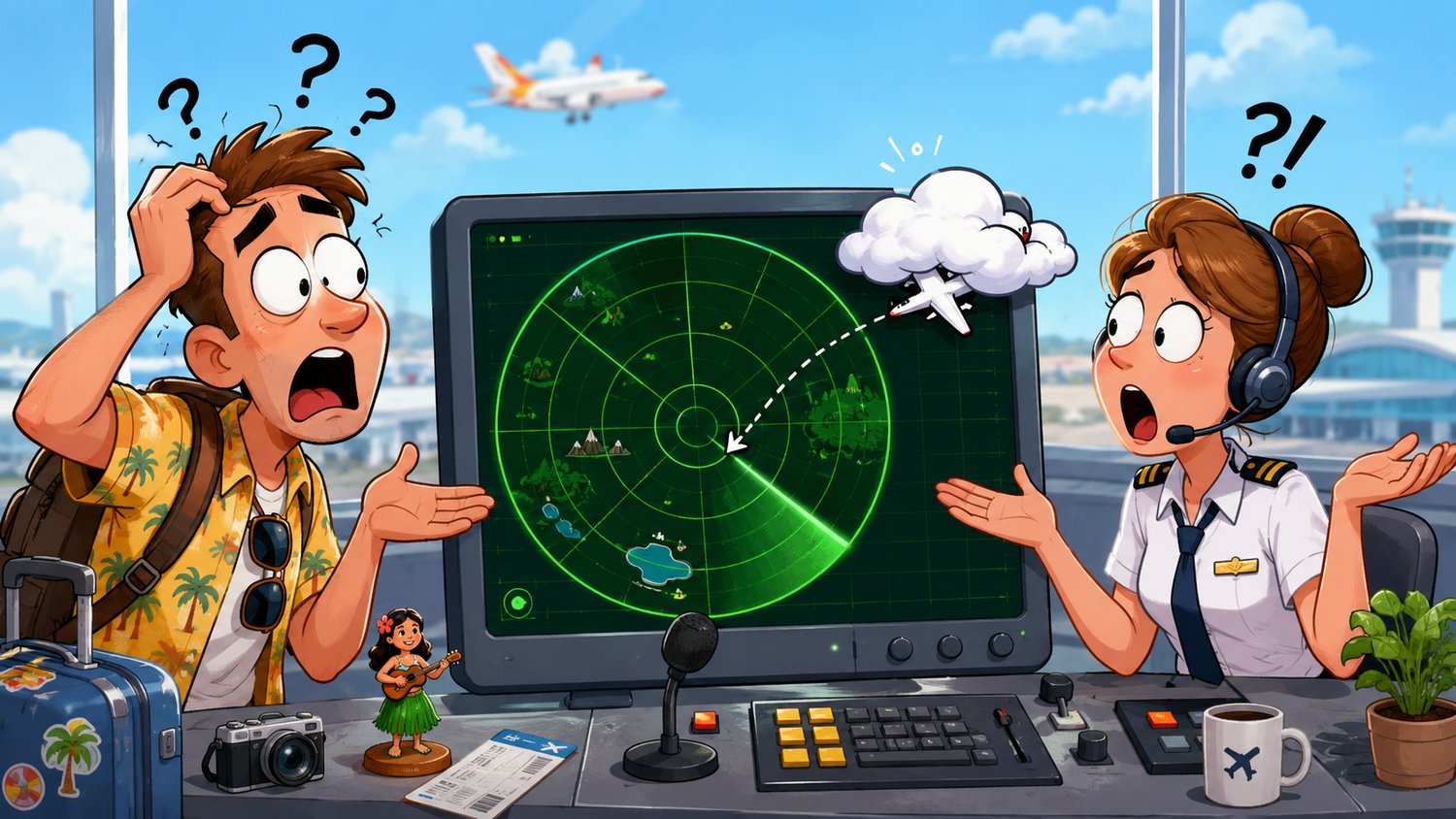
Everything worked out fine in the end.
The destination was reached. The journey continued. The panic was bigger than the problem.
But if you have ever waited at home for a message from someone traveling, you know exactly how long silence can feel.
They say, “I’ll message you when we’re in the air.”
Then nothing.
No WhatsApp.
No airline notification.
No update.
No clear answer.
Suddenly you are typing the flight number into Google, checking flight trackers, refreshing your phone, wondering whether the plane has taken off, whether the app is delayed, whether the traveler forgot to message, or whether you are simply looking in the wrong place.
Most of the time, everything is fine.
But in that quiet gap, your brain does not always behave like a calm travel assistant. It behaves like a drama department with a full orchestra.
That is why knowing how to track a flight properly matters.
Not because you should panic.
Because you should not have to.
First: Get the Right Flight Information
Before anyone travels, make sure you have the basic details written down somewhere easy to find.
You need:
Airline name
Flight number
Travel date
Departure airport
Arrival airport
Scheduled departure time
Scheduled arrival time
Booking reference, if available
The flight number is the magic key.
It usually looks something like:
BA55
EK772
QR1377
SQ606
Do not only search “Singapore to Cape Town flight” or “flight from London today.” That can bring up too many results.
Search the actual flight number with the date.
Example:
SQ606 today
or
EK772 4 June
That gives search engines and flight trackers a much better chance of finding the right plane.
Check Google First
The fastest first step is often simple:
Type the flight number into Google.
If the flight data is available, Google may show a flight card with departure time, arrival time, delay status, and sometimes terminal or gate information.
This is usually the quickest way to get a basic answer.
But Google is not always perfect.
Sometimes the flight does not show clearly. Sometimes the airline code is entered wrong. Sometimes the flight is operated by a partner airline. Sometimes the data is simply delayed.
So if Google does not help, do not assume something is wrong.
Move to the next step.

Check the Airline Website or App
The airline’s own website or app is often the best place for official information.
Search by:
- Flight number
- Route
- Booking reference
- Departure and arrival airports
Airline apps can also show gate changes, boarding updates, baggage information, and delays.
But here is the honest truth: airline communication is not always perfect.
Notifications can arrive late. Apps can lag. Messages can fail. Travelers can forget to send updates because they are rushing through boarding, security, airport Wi-Fi, or immigration.
So again, silence does not automatically mean trouble.
It often just means travel is happening.
Check the Airport Arrivals or Departures Page
If the airline app is not helping, check the airport website.
Use the departure airport if you want to know whether the plane has left.
Use the arrival airport if you want to know whether the plane is expected, delayed, landed, or still in progress.
Airport boards can be especially useful when flight trackers are confusing.
Search for the airport’s official arrivals or departures page, then use the flight number or destination.
This is also useful when someone is landing and you want to know whether you should leave for the airport yet.
Use a Flight Tracker
Flight tracking websites and apps can be helpful when you want more detail.
Popular options include:
FlightRadar24
FlightAware
FlightStats
The airline’s official tracker
The airport’s live flight board
Some trackers show the plane moving on a map. Others focus more on times, status, aircraft details, and airport information.
If one tracker does not show the flight, try another.
Different trackers sometimes receive and display data differently. One may show the flight clearly while another seems useless.
That does not mean the flight vanished into the Bermuda Triangle.
It may simply mean the data is not being displayed in the way you expected.
Why a Flight May Be Hard to Find
There are several ordinary reasons a flight may not appear easily:
The flight number may have been entered incorrectly.
The airline may use a codeshare flight number.
The flight may be operated by a partner airline.
The flight may not have departed yet.
The tracking site may be delayed.
The route may have changed.
The airport board may list the destination differently.
The traveler may be between Wi-Fi, mobile signal, boarding, or immigration.
In other words, a missing update does not automatically mean a serious problem.
It often means travel information is scattered, delayed, or badly communicated.
That is exactly why it helps to prepare before the trip.
The Calm Travel Rule: Do Not Panic — Prepare
Flight tracking is much easier when the important details are already saved before the journey begins.
Do not wait until someone is in the air, unreachable, or rushing through an airport before trying to find the flight number.
Save the details before the trip.
Keep the booking reference somewhere safe.
Know the airline.
Know the route.
Know the airports.
Know where to check.
That one small bit of preparation can turn a stressful silence into a simple check.
Instead of thinking, “Where do I even look?”
You can think, “I know exactly where to check first.”
That is a big difference.
Passport Pages Travel Hub
This is why we created the Passport Pages Travel Hub.
It is a free travel help page designed to give travelers and families quick access to useful travel support in one place.
The Travel Hub includes help for:
Lost passport or luggage situations
Flight problems
Tracking a flight
Knowing where to start when travel gets stressful
It is not there to make travel sound scary.
It is there because real travelers sometimes need real help quickly.
When travel is going smoothly, you may not think about these things.
But when a flight update goes quiet, a bag does not arrive, a passport goes missing, or a booking problem appears, it helps to have somewhere simple to start.
Final Thought
Most travel panic does not come from the problem itself.
It comes from not knowing what to do next.
A quiet phone does not always mean something is wrong.
A missing update does not always mean disaster.
A flight that is hard to track does not always mean the plane is in trouble.
Sometimes the traveler is fine, the flight is fine, and the only thing missing is communication.
So before the next trip, save the details.
Write down the flight number.
Know which airline and airports are involved.
Keep the important information together.
And when travel gets confusing, use the Passport Pages Travel Hub as a calm place to start.
Don’t panic.
Prepare.

Comments ()