

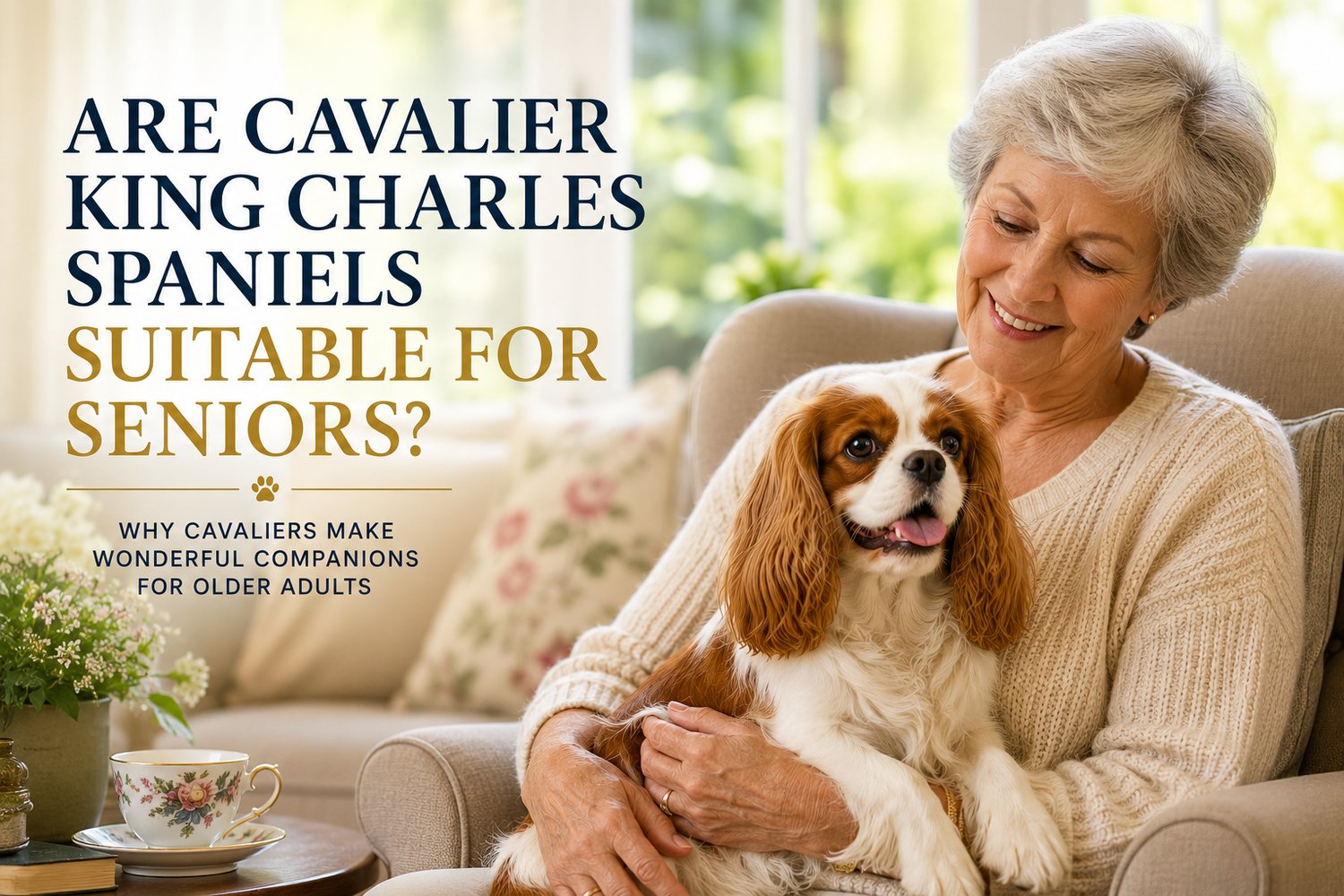
If you're looking for a loyal, affectionate, and easy-going companion, few breeds can rival the Cavalier King Charles Spaniel.
These charming little dogs have won the hearts of dog lovers around the world thanks to their gentle nature, manageable size, and desire to be close to their owners.
But are Cavalier King Charles Spaniels suitable for seniors?
The short answer is yes. In many cases, Cavaliers are one of the best dog breeds for older adults. They are loving, adaptable, relatively easy to care for, and thrive on companionship. However, like any breed, they are not perfect for everyone.
Understanding their needs can help you decide whether a Cavalier is the right match for your lifestyle.
In this guide, we'll explore the advantages and challenges of owning a Cavalier King Charles Spaniel in later life and explain why so many retirees and seniors choose this wonderful breed.
Why Cavaliers Are So Popular With Seniors
The Cavalier King Charles Spaniel was originally bred as a companion dog, and that heritage is still very evident today.
Unlike some breeds that were developed for hunting, guarding, or herding, Cavaliers were designed to spend time with people. Their greatest joy is simply being near their owners.
This makes them especially attractive to seniors who want a loyal friend to share their days with.
Many owners describe their Cavaliers as affectionate shadows that follow them from room to room, happily settling down nearby while they read, watch television, garden, or relax.
Their loving nature often provides comfort, companionship, and emotional support that can be especially valuable during retirement.
A Manageable Size
One of the biggest benefits of the Cavalier King Charles Spaniel is its size.
Most Cavaliers weigh between 13 and 18 pounds (6–8 kg), making them easy to handle for most adults.
Their smaller size means:
- They are easier to lift if necessary.
- They require less space than larger breeds.
- They are less likely to pull strongly on the lead.
- They are easier to transport in a car.
- They can comfortably live in apartments or smaller homes.
For seniors who may have mobility concerns, a giant or powerful breed can sometimes be difficult to manage. Cavaliers provide companionship without the physical challenges that larger dogs can bring.
Gentle Temperament
A good companion dog should be calm, friendly, and predictable.
Fortunately, Cavaliers generally excel in all three areas.
They are known for being:
- Gentle
- Friendly
- Patient
- Sociable
- Affectionate
Most Cavaliers enjoy meeting new people and tend to get along well with visitors, neighbours, grandchildren, and other pets.
This easy-going personality can make everyday life more enjoyable and less stressful.
Unlike some breeds that can be wary of strangers or highly protective, Cavaliers usually greet people with enthusiasm and a wagging tail.
Moderate Exercise Requirements
Many seniors want a dog that enjoys daily walks without demanding hours of intense exercise.
This is another area where Cavaliers shine.
Most healthy adult Cavaliers are happy with:
- One or two daily walks
- Gentle play sessions
- Indoor games
- Opportunities to sniff and explore
Typically, 30 to 60 minutes of exercise per day is enough.
This makes them ideal for active retirees who enjoy regular walks but may not want the demands of a high-energy working breed.
Daily exercise benefits both dog and owner. Many seniors find that having a dog encourages them to stay active, spend more time outdoors, and maintain a healthy routine.
Excellent Companionship
Loneliness can be a challenge for many older adults.
Studies have shown that pet ownership may help reduce feelings of isolation while providing structure and purpose to daily life.
Cavalier King Charles Spaniels are particularly good companions because they genuinely enjoy human interaction.
Many owners find comfort in:
- Having a constant companion
- Sharing daily routines
- Going on walks together
- Talking to their dog
- Receiving unconditional affection
A Cavalier rarely wants to be far from its family, making them wonderful emotional companions.
Are Cavaliers Easy to Train?
Generally speaking, yes.
Cavaliers are intelligent and eager to please, which often makes training straightforward.
They respond particularly well to:
- Positive reinforcement
- Praise
- Treat rewards
- Consistent routines
For seniors who may not want to deal with stubborn or highly independent breeds, Cavaliers are usually a pleasant surprise.
Basic obedience training can often be achieved relatively quickly when started early.
Teaching commands such as sit, stay, come, and loose-lead walking helps create a safer and more enjoyable companion.
Grooming Requirements
While Cavaliers are not difficult to groom, they do require regular maintenance.
Their beautiful silky coat benefits from brushing several times each week.
Regular grooming helps:
- Prevent tangles
- Remove loose hair
- Keep the coat clean
- Reduce shedding around the home
Many owners enjoy grooming sessions as a bonding experience.
However, seniors with arthritis or mobility issues may wish to budget for occasional professional grooming appointments.
Health Considerations
One area prospective owners should understand is health.
Like many pedigree breeds, Cavaliers can be prone to certain inherited conditions.
Common concerns include:
- Mitral Valve Disease (heart disease)
- Syringomyelia
- Ear infections
- Eye conditions
- Weight gain
This does not mean every Cavalier will experience these problems, but responsible ownership includes regular veterinary care and health monitoring.
Choosing a puppy from a reputable breeder who performs health testing can significantly improve the chances of obtaining a healthy dog.
Can Cavaliers Be Left Alone?
This is perhaps the biggest consideration for some owners.
Cavaliers adore people.
Because of this, they may struggle if left alone for long periods.
They are happiest when:
- Someone is home most of the day
- They have regular companionship
- They can participate in family life
For many retirees, this is actually an advantage because they spend more time at home.
However, if you travel frequently or are away for extended periods, additional planning may be required.
Are Cavaliers Good for First-Time Senior Dog Owners?
Absolutely.
Their friendly nature, moderate exercise needs, and willingness to learn make them one of the most beginner-friendly breeds available.
Many seniors who have never owned a dog before find Cavaliers easy to integrate into their daily routine.
They are adaptable enough to suit:
- Apartments
- Bungalows
- Retirement communities
- Family homes
- Rural properties
Provided their exercise and companionship needs are met, they generally fit comfortably into a wide variety of lifestyles.
Potential Challenges
No breed is perfect.
Before choosing a Cavalier, it is important to consider potential drawbacks.
These include:
- Regular grooming requirements
- Potential health costs
- Separation anxiety
- Ongoing veterinary care
- Moderate shedding
Most owners feel the benefits far outweigh these challenges, but it is always wise to make an informed decision.
Final Verdict: Are Cavaliers Suitable for Seniors?
For many seniors, the answer is a resounding yes.
The Cavalier King Charles Spaniel combines affection, companionship, manageable exercise needs, and a gentle personality into one delightful package.
They are small enough to handle comfortably, loving enough to provide genuine companionship, and adaptable enough to thrive in a variety of homes.
While they do require grooming and regular veterinary care, their friendly temperament and desire to be close to their owners make them one of the most rewarding companion breeds available.
If you are looking for a loyal friend to share your retirement years, a Cavalier King Charles Spaniel could be the perfect choice.
Want To Learn More?
If you're considering welcoming a Cavalier into your life, or you already own one and want to provide the very best care possible, our comprehensive guide can help.
Inside you'll discover practical advice on training, health care, grooming, nutrition, exercise, behaviour, and everything else you need to raise a happy, healthy Cavalier.

Your Cavalier deserves the very best—and this guide will help you provide it.
Comments ()