

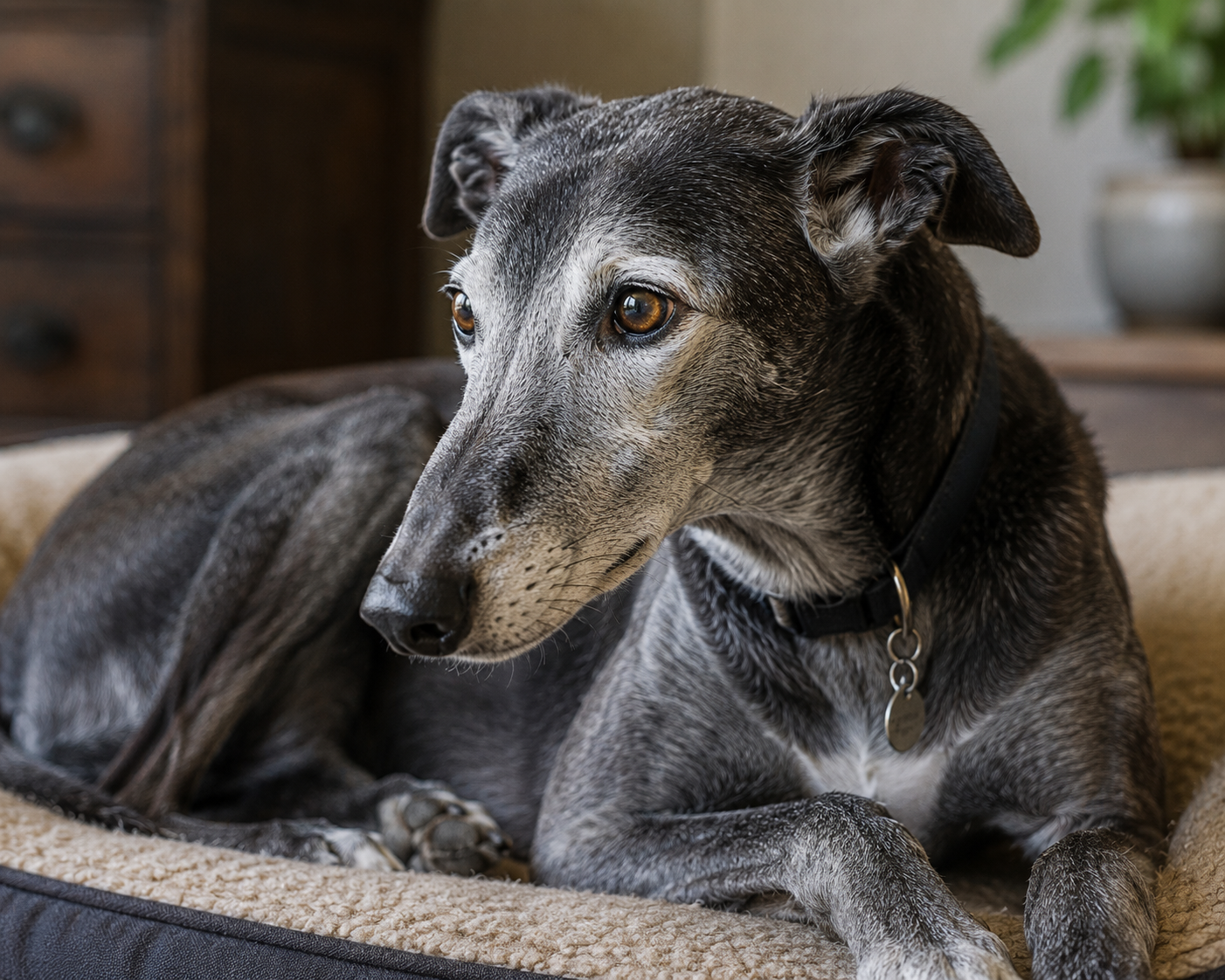
Are Greyhounds Good Family Dogs? A Clear Answer
**Yes**, Greyhounds can be wonderful family dogs for the right home. They're often calm, gentle, affectionate, and much easier to live with than people expect, but they do best with kind handling and a steady routine.
If you're wondering whether one would fit your family, the short answer is this: they usually thrive in peaceful homes with respectful kids, daily walks, and clear boundaries.
If you want extra dog care help after this, check out our great guides on Payhip and our ebook guides on Etsy
Let's get into what life with a Greyhound is really like.
What Makes Greyhounds So Good With Families
A lot of people hear "racing dog" and picture a dog that bounces off the walls. That's not usually how Greyhounds are at home.
They're built for speed, yes, but most of that speed comes in short bursts. After that, many are more than happy to stretch out and snooze.
Their calm, low-key personality at home
Greyhounds are famous for being couch lovers. Many spend a big chunk of the day napping, lounging near their people, or moving from one soft bed to another like tiny royalty in long legs.
The AKC Greyhound breed profile describes them as gentle and sweet-tempered, and that lines up with what many families experience.
They're often quiet in the house, not big barkers, and less frantic indoors than plenty of smaller breeds.
That calm nature is a big reason families fall for them. A Greyhound is often a "walk, sniff, nap, repeat" kind of dog, not a dog who needs nonstop action to stay sane.
Why many families love their gentle nature
Greyhounds usually have a soft side. They tend to bond closely with their people and often enjoy quiet affection, a hand on their shoulder, or simply being nearby. They're not always clingy, but they often like company.
Many retired racers settle into family life better than people expect. Some need a little time at first because home life is new to them, but plenty adjust beautifully.
Their racing history doesn't mean they're wired all day long. It often means they know how to rest.
That said, they can be sensitive. They usually respond best to calm voices, patient training, and homes that aren't pure chaos from breakfast to bedtime.
Learn more by getting our great Greyhound Blueprint Guide TODAY

Are Greyhounds Good Family Dogs Around Children?
Yes, they can be, especially with older children who know how to act around dogs. Greyhounds are often kind and tolerant, but they aren't the best match for rough handling, wild chasing games, or constant noise right in their face.
Younger children should always be supervised. That's not because Greyhounds are bad with kids, but because they're sensitive dogs. A startled or stressed dog of any breed can react if pushed too far.
Best homes for Greyhounds with kids
The best setup is usually a home with calm routines and adults who will guide interactions. Greyhounds often do well with school-age kids and teens who can learn simple dog manners, like giving space, using gentle hands, and leaving the dog alone while sleeping or eating.
Families who expect a Greyhound to act like a rough-and-tumble playmate may be disappointed.
They're more "quiet buddy on the couch" than "human jungle gym." If that sounds like your style, great. If your home is loud, fast, and full of grabby toddler energy, it may be a harder fit.
How to keep kids and Greyhounds safe together
A few house rules go a long way. Kids and Greyhounds can be a lovely mix when everyone knows the boundaries.
- - Supervise play, especially in the early weeks.
- - Teach children to pet the dog's shoulder or chest, not grab the face.
- - Don't allow hugging, climbing, or sudden grabbing.
- - Give the dog a quiet retreat space, and make that space off-limits to kids.
It's also smart to teach children not to run screaming past the dog indoors. Many Greyhounds are calm, but chasing and high-pitched chaos can make them uneasy.
Exercise, Enrichment, and Daily Care for a Happy Greyhound
Greyhounds need exercise, but they usually don't need hours of hard work every day. That's one of the breed's biggest surprises. They're sprinters, not endless endurance dogs.
How much exercise does a Greyhound really need?
Most Greyhounds do well with regular daily walks and a chance to stretch their legs. A couple of decent walks, plus toilet breaks and time to sniff, will suit many adults just fine.
Some enjoy a zoom around a secure fenced area too.
If you want a more detailed look at pace and stamina, here's a useful guide on greyhound exercise requirements
It's a good reminder that more exercise isn't always better for every dog.
Off-leash time needs care. Because Greyhounds are sighthounds, movement can trigger a fast chase response. A fenced field is one thing. An open park is another story.
Simple enrichment that keeps them content
Mental exercise matters too. A bored Greyhound might not wreck your house like some breeds, but simple enrichment still helps them relax and settle.
Easy ideas for busy families include puzzle feeders, sniff walks, scatter feeding in the yard, and short training sessions with treats.
Calm play at home can help as well. A few minutes with tug toys can give both physical and mental outlets without turning the house upside down.
Think simple, not fancy. Five good minutes of sniffing or gentle training often beats 30 minutes of overstimulation.
What to Know Before Bringing a Greyhound Into Your Home
Greyhounds are lovely dogs, but they aren't right for every household. Before you bring one home, it helps to be honest about your setup, your energy level, and your other pets.
Can Greyhounds live with cats or small pets?
Some can, and some absolutely shouldn't. Prey drive is common in Greyhounds, so cats, rabbits, guinea pigs, and other small animals need careful thought.
A dog who is calm with one cat isn't always safe with every small pet.
If you're new to sighthounds, the Greyhound page on Wikipedia gives quick background on the breed's history and body type, which helps explain that chase instinct.
Slow introductions, secure management, and honest assessment matter more than wishful thinking.
Many adoption groups test Greyhounds for cat suitability, which can help. Even then, supervision at the start is a must.
Why a calm routine matters so much
Greyhounds often do best with predictability. Regular mealtimes, familiar walking routes, quiet rest, and gentle training can help a shy or newly adopted dog feel safe much faster.
Harsh corrections usually backfire. These dogs tend to respond better to praise, treats, and patient repetition. Some can be timid at first, especially if they've come from a racing or kennel background and are learning how home life works.
Practical gear matters too. Their slim build means loose collars can be a bad idea, so take a look at safe walking gear for Greyhounds before your first outings.
Good equipment makes everyday walks a lot less stressful.
So, Are Greyhounds the Right Family Dog for You?
This quick snapshot can help you sort out whether a Greyhound suits your household.
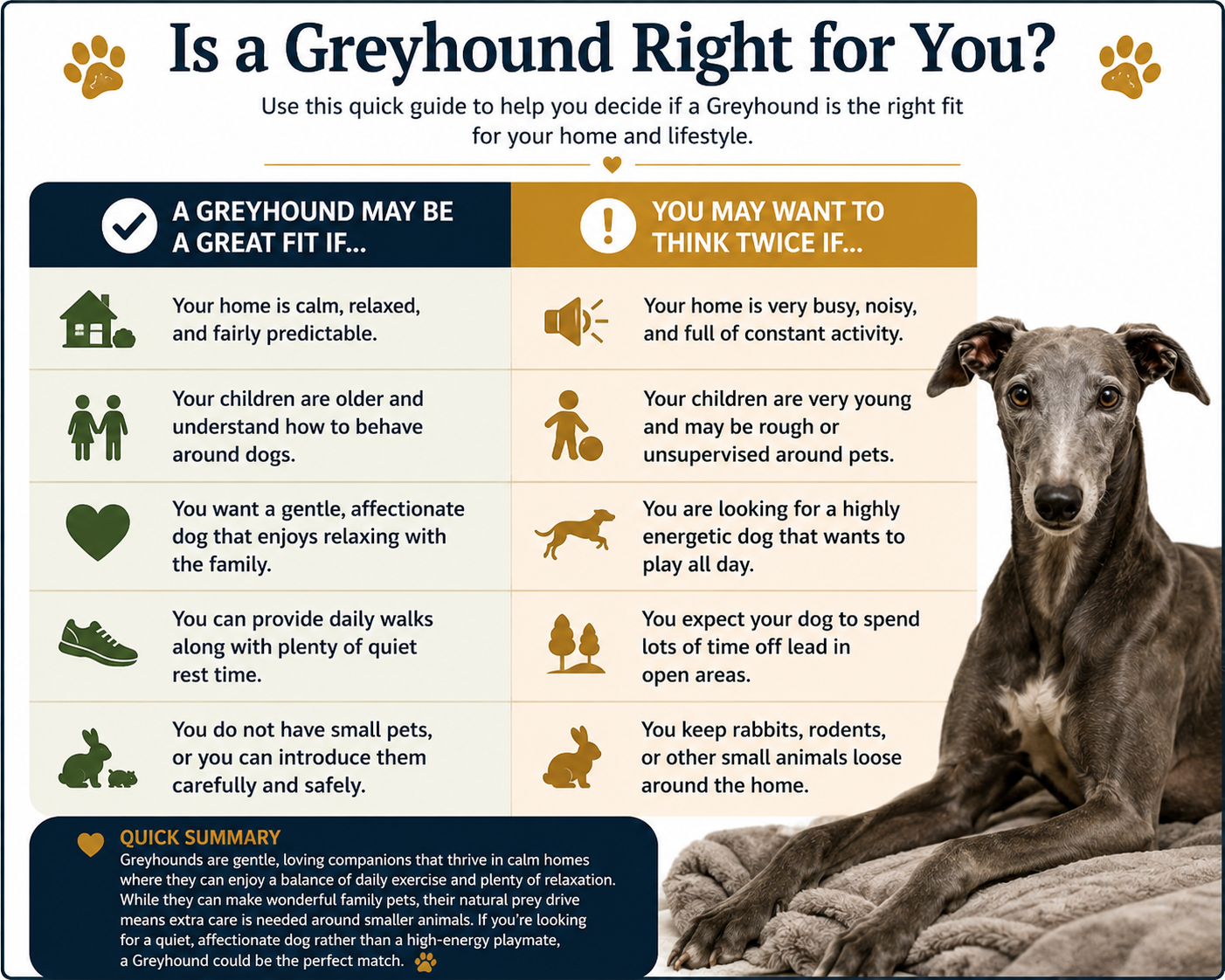
For the right people, Greyhounds are a joy. They're sweet, elegant, funny in their own dry little way, and often much easier to live with than their athletic build suggests.
If you're after a calm dog who likes comfort, routine, and gentle company, a Greyhound may be a great match. If you'd like to hear how owners describe the breed in everyday life, this [Greyhound personality discussion]
Reddit gives a good feel for the naps, quirks, and soft temperament people talk about again and again.
If you want extra dog care help after this, check out our great guides on Payhip and our ebook guides on Etsy
Conclusion
Greyhounds can be **excellent family dogs** when their needs are understood and respected. They usually do best with gentle handling, daily walks, and a home that matches their calm style.
They're often a great fit for families who want an affectionate dog without constant chaos. They're a harder fit for very noisy homes, very young children without close supervision, or households full of small pets.
If you'd like more practical dog advice after this, the paid guides mentioned earlier are a handy next step for day-to-day care, training, and happier walks.
If you want extra dog care help after this, check out our great guides on Payhip and our ebook guides on Etsy
Comments ()