

Boxers Health Issues and how to spot them...
Yes, Boxers do have a few health problems that show up more often than in some other breeds. The big ones are heart disease, cancer, joint trouble, breathing issues, skin problems, and a few fast-moving emergencies like bloat.
That sounds heavy, but don't panic. Boxers are loving, active, funny dogs, and many live happy lives with good care.
If you know what to watch for, you can spot trouble sooner, call the vet faster, and keep your dog more comfortable.
If you like practical dog care help, Check out our great guides on Payhip and Check out our ebook guides on Etsy.
The most common health problems in Boxers
Boxers are athletic, playful, and full of bounce. They also have a few breed-linked weak spots, which is why Boxer dog common health problems come up so often in owner chats and vet visits.
The most common concerns are heart disease, cancer, hip dysplasia, arthritis, skin trouble, seizures, and breathing problems. A published Boxer disorder study also points to cancer and heart disease as major issues in the breed.
Early detection matters because Boxers often keep going when they don't feel great.
Some dogs slow down so gradually that owners think, "Maybe he's just getting older." Sometimes that is true. Sometimes it isn't.
Heart disease, including Boxer cardiomyopathy
Heart trouble is one of the biggest concerns for boxers. Two conditions come up often: arrhythmogenic right ventricular cardiomyopathy, often shortened to ARVC, and dilated cardiomyopathy.
Both can affect how well the heart beats and pumps blood. In plain terms, the heart may beat unevenly, work less efficiently, or both. Some dogs show signs early.
Others look fine until something scary happens.
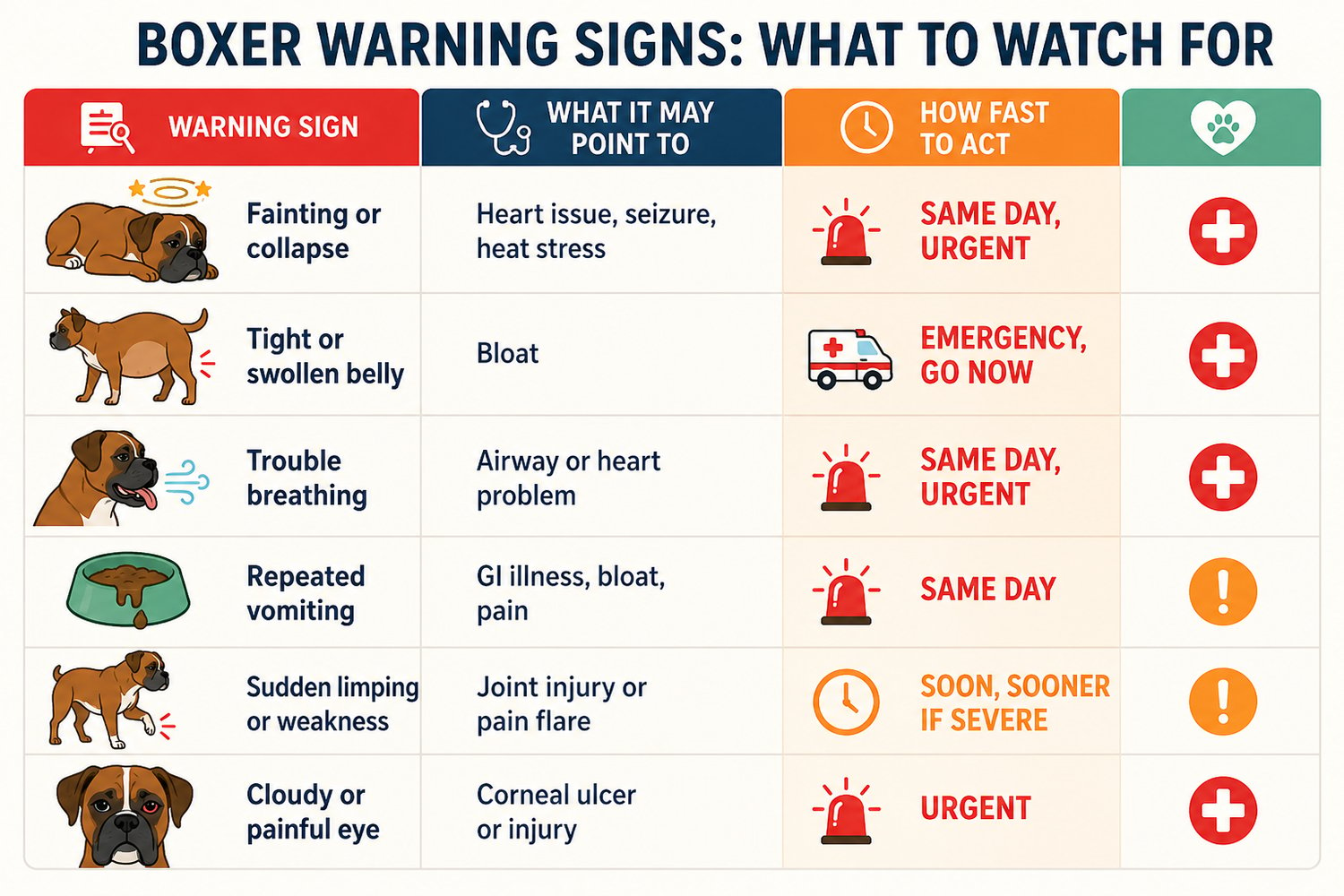
Watch for fainting, sudden weakness, coughing, tiring quickly, fast breathing, or trouble catching breath after light exercise. A Boxer who collapses, even once, needs a vet check fast.
This is one area where routine screenings help a lot. Your vet may suggest listening for changes, running an ECG, or doing other heart tests.
A good Boxer health and care overview can also help you learn the basics before problems show up.
Cancer that Boxers may be more likely to get
Cancer is sadly common in Boxers. Mast cell tumors and lymphoma are two names owners hear a lot, but they are not the only types.
You don't need to become a detective with a magnifying glass. You do need to get used to regular hands-on checks.
Feel for new lumps. Look for skin bumps that change shape, color, or size. Notice weight loss, poor appetite, swollen areas, or a Boxer who seems flat and not quite himself.
Many lumps turn out to be harmless. Some do not. That's the tricky part. A small bump can look boring and still need testing.
A breed-related Boxer disease guide also highlights how often cancer comes up in this breed. If you find a new lump, book the appointment and let the vet decide what it is.
Hip dysplasia, arthritis, and moving stiffly
Not every Boxer with a stiff back end has hip dysplasia, but hip and joint trouble is common enough to watch closely. Poorly formed hip joints can lead to pain, stiffness, and later arthritis.
The signs are usually easy to miss at first. Your dog may hesitate before jumping in the car. He may stand up slowly after a nap, limp after hard play, or avoid stairs like they suddenly became insulting.
Weight control helps more than many people realize. Extra pounds put extra strain on sore joints. Gentle exercise also helps. Long weekends of wild running, followed by lazy weekdays, usually don't.
A steady walking routine, joint support when your vet recommends it, and softer landings at home can all help keep a Boxer moving better for longer.
Breathing, skin, eye, and stomach problems that can sneak up fast
Some Boxer health issues build slowly. Others can go from "he seems a bit off" to "we need the vet now" in a hurry.
That is why daily observation matters. Look at the face, skin, eyes, breathing, and belly. Those small checks often tell you more than you think.
Short-nosed breathing problems and hot weather risks
Boxers have shorter muzzles than many breeds, so some struggle with airway problems. This can fall under brachycephalic airway obstructive syndrome, which is a long name for a simple problem, breathing can be harder than it should be.
Noisy breathing, heavy snoring, exercise trouble, gagging, and heat intolerance are common clues. Some dogs also pant harder than expected or need much longer to recover after play.
Hot weather is when owners need to be extra careful. A Boxer can overheat faster than people expect, especially in humid air. Midday walks, frantic ball games, and stuffy cars are a bad mix.
Keep summer walks shorter and earlier. Offer water often. Pick shade. If your dog starts struggling, stop right away and cool him gently. A Boxer who can't breathe well won't "walk it off."
Skin allergies, folds, and itchy irritation
Boxers are famous for expressive faces. Those cute wrinkles can also trap moisture and dirt. Add allergies, sensitive skin, warts, or skin tags, and you can end up with a dog who scratches like he's trying to file paperwork.
Look for red skin, chewing at paws, face rubbing, sore folds, bad odor, scabs, or constant licking.
Some Boxers get flaky patches. Others get moist, angry skin that seems to appear overnight.
Skin problems are miserable, but they are often manageable once the cause is found. That may mean better cleaning, allergy support, flea control, or changes in food or routine.
Don't ignore smell. Healthy skin should not have a strong odor. If the face folds or ears smell sour, yeasty, or infected, it's time to book a visit.
Comments ()