


How Much Exercise Does a Weimaraner Need Each Day?
Most adult Weimaraners need 1 to 2 hours of exercise a day, plus some brain work. That's the short answer, and for most healthy adults, it's the right one.
These dogs are athletic, bright, and full of opinions. If they don't get enough movement, they often invent their own entertainment, and your couch may not enjoy it.
Let's make the daily plan simple and realistic.
What a healthy daily exercise routine looks like for a Weimaraner
A good day for a Weimaraner usually has more than one outing. Think brisk morning walk, some real activity later, then a calmer evening stroll or play session. One slow lap around the block often won't touch the sides.
That exercise total can come from brisk walks, running beside you, fetch, hiking, or free play in a secure area. The sweet spot is variety. A Weimaraner that gets the same dull walk every day can still end up bored, even if the clock says an hour.
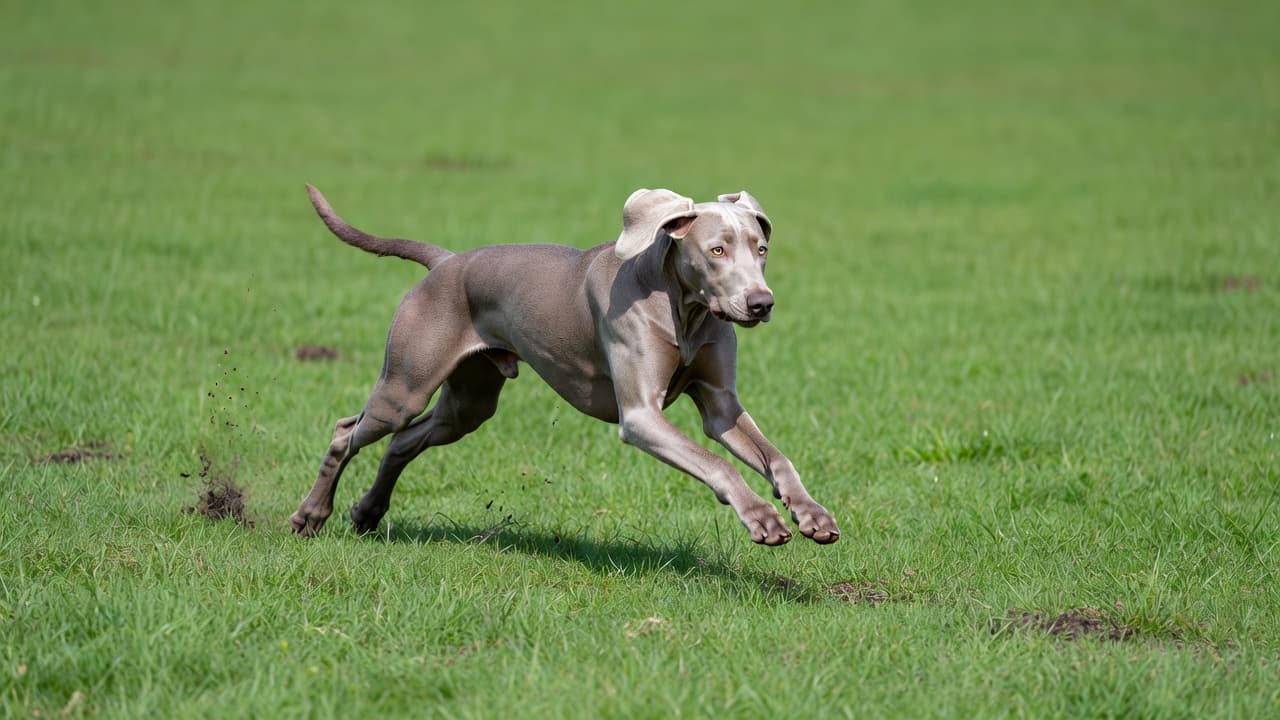
If your schedule is packed, help is fine. Plenty of owners use dog exercise services or a professional dog walker to keep daily dog walks consistent.
Missing the odd day happens. Missing most days is where trouble starts.
Why this breed needs more than a slow stroll
Weimaraners were bred for stamina and hunting. That's a big clue. The Weimaraner breed history helps explain why these dogs don't feel satisfied after a quick sniff and pee break.
They were built to move for long stretches and stay switched on while doing it. So if your dog comes home from a slow walk looking fresh as paint, that isn't stubbornness. That's the breed telling you it needs a proper job.
The one-to-two-hour daily range matches what the Zoom Room Weimaraner guide recommends for healthy adults. In plain English, most need real exercise, not only toilet trips.
Best ways to burn off energy safely
Brisk walks are a solid base. Add a jog if your dog is fit an
d your vet is happy with it. Fetch works well too, especially in a fenced field where turns and speed can happen safely.
Hiking is excellent for many Weimaraners because it works the body and the brain. New smells, uneven ground, and changing pace all help. Controlled off-leash time in a secure area can also be great, but only when recall is reliable.
Mental work makes physical exercise go further. A short training session, scent game, or search-and-find game can take the edge off without adding miles.
The BorrowMyDoggy breed guide makes the same point: movement alone isn't always enough.
How age changes a Weimaraner's exercise needs
Age matters. A puppy, a fit adult, and a senior dog all need movement, but not the same kind or amount. That's where many owners get tripped up.
You want the routine to match the dog in front of you, not the dog in a breed photo.
Puppies need short play, not hard running
Young Weimaraners are busy little rockets, but their bodies are still growing. Short walks, gentle play, and plenty of rest are better than forced running or long road walks.
A few short sessions each day usually work best. Think play in the yard, simple training, and calm exploration. Too much high-impact exercise can be hard on growing joints, so save the long-distance heroics for later.
Adult dogs usually need the most daily work
Healthy adults are the ones most people mean when they ask how much exercise a Weimaraner needs. For that group, 1 to 2 hours each day is a solid target.
It doesn't have to happen all at once. Many dogs do better with two or three sessions. A strong morning walk, a midday play burst, and an evening outing often feels better than one giant march.
If you live with another active breed, you may spot similar patterns.
This article on specialized walking for high-energy breeds shows how consistent structure helps dogs that are always ready for one more lap.
Older dogs still need movement, just in a gentler way
Senior Weimaraners still need daily exercise. They simply need lower-impact options. Shorter walks, sniff-heavy routes, light fetch, and gentle play usually fit better.
Watch for stiffness, slower recovery, limping, or unusual tiredness after activity. If your older dog seems sore the next day, that routine may be too much. Dial it back and keep things steady rather than intense.
Signs your Weimaraner is not getting enough exercise
An under-exercised Weimaraner often looks "naughty," but that's not the full story. More often, the dog is bored, wound up, and looking for an outlet.
Chewing, digging, barking, pacing, and restlessness are common clues. Some dogs get clingy. Others bounce off the furniture like furry pinballs.
If your Weimaraner can't settle, unused energy is often part of the problem.
Common boredom behaviors owners notice first
Many owners first notice chewing. Table legs, cushions, shoes, and door frames can all become "projects." Door scratching is common too, especially if the dog has learned that movement leads to excitement.
Indoor zoomies can show up when the dog hasn't had enough outdoor action. So can barking at every sound, pacing from room to room, or pestering you nonstop for attention. If you read this owner discussion about exercise time, you'll see the same theme again and again: these dogs do best when they have a job.
Mental exercise matters too
A tired body helps, but a tired brain helps even more. Short training games, scent trails in the yard, scatter feeding, and puzzle toys can all take the edge off.
Tug can work well too when the rules are clear. Good tug toys give your dog a fun outlet and help with focus, self-control, and bonding. Five or ten minutes of training after a walk can make the whole day smoother.
How to build a routine that fits real life
Real life is messy. Work runs late. Kids need picking up. It rains sideways. The dog still has energy. That's why simple routines work best.
Try splitting the exercise into chunks. Morning can be the main walk. Midday can be a shorter play session, a sniffy outing, or help from local dog walking support. Evening can be calmer, with another walk and a few minutes of training.
A simple sample day for an adult Weimaraner
A realistic weekday might look like this:
- A 35 to 45-minute brisk walk in the morning.
- A midday fetch session, short run, or one of the local dog walking or group dog walks options available in your area.
- A 20 to 30-minute evening walk, plus a few minutes of recall or scent work.
That kind of split suits a lot of homes. If you're searching for pet walking near me, look for someone who understands strong, sporty breeds, not only tiny lap dogs. Puppy walking services matter too, but puppies need shorter outings and more rest.

Check out our great Weimaraner ebook HERE!
When to ask for extra help from a professional dog walker
Some weeks are a juggle. Long workdays, bad weather, travel, or family stuff can knock routines sideways. That's when a reliable dog walker can be a lifesaver.
If you're comparing dog walking rates, don't look at price alone. Ask how the walker handles pulling, excitement, and secure off-leash time.
Ask whether they offer dog walking services for active breeds, and whether group dog walks are a good fit for your dog's temperament. In East Cornwall, local dog walking help can make daily dog walks much easier to keep up with.
Exercise safety for a strong, high-energy breed
Weimaraners are powerful dogs. They can pull hard, launch fast, and get overexcited in seconds. Safe equipment matters.
Use a well-fitted harness or collar that gives you control without rubbing. Warm up with a few easy minutes before sprinting or ball chasing. Bring water on longer outings, and don't assume enthusiasm means your dog isn't getting tired.
Secure spaces matter too. A dog with a big prey drive can disappear fast if something interesting moves. Fenced fields, long lines, and good handling keep exercise fun rather than stressful.
How to avoid overdoing it in hot or wet weather
Heat can catch these dogs out fast, especially during hard running. Go earlier or later in the day, slow the pace, and bring water. If the sidewalk feels hot to your hand, it's hot for paws too.
Heavy rain, ice, and muddy ground can make slipping more likely. On grim days, trade some outdoor distance for indoor training, scent games, or shorter outings with recovery breaks.
When to slow down and call your vet
Stop and reassess if your dog is limping, lagging badly, or panting hard long after the walk ends. Stiffness, soreness the next day, or sudden reluctance to move also matter.
A fit Weimaraner should recover well from normal exercise. If that stops happening, it's time to check in with your vet.
Final thoughts
Most adult Weimaraners need 1 to 2 hours of daily exercise, plus mental stimulation, to stay happy, settled, and easier to live with. When their body and brain both get used well, the whole dog changes.
You don't need a perfect routine.
You need a steady one. Walks, play, training, and help from dog walking services can turn a chaotic day into a good one.
Our library of useful ebook guides is growing daily, and they're affordable too.
Check out our great guides on Payhip or Check out our ebook guides on Etsy for extra support with life with your dog.
Comments ()