

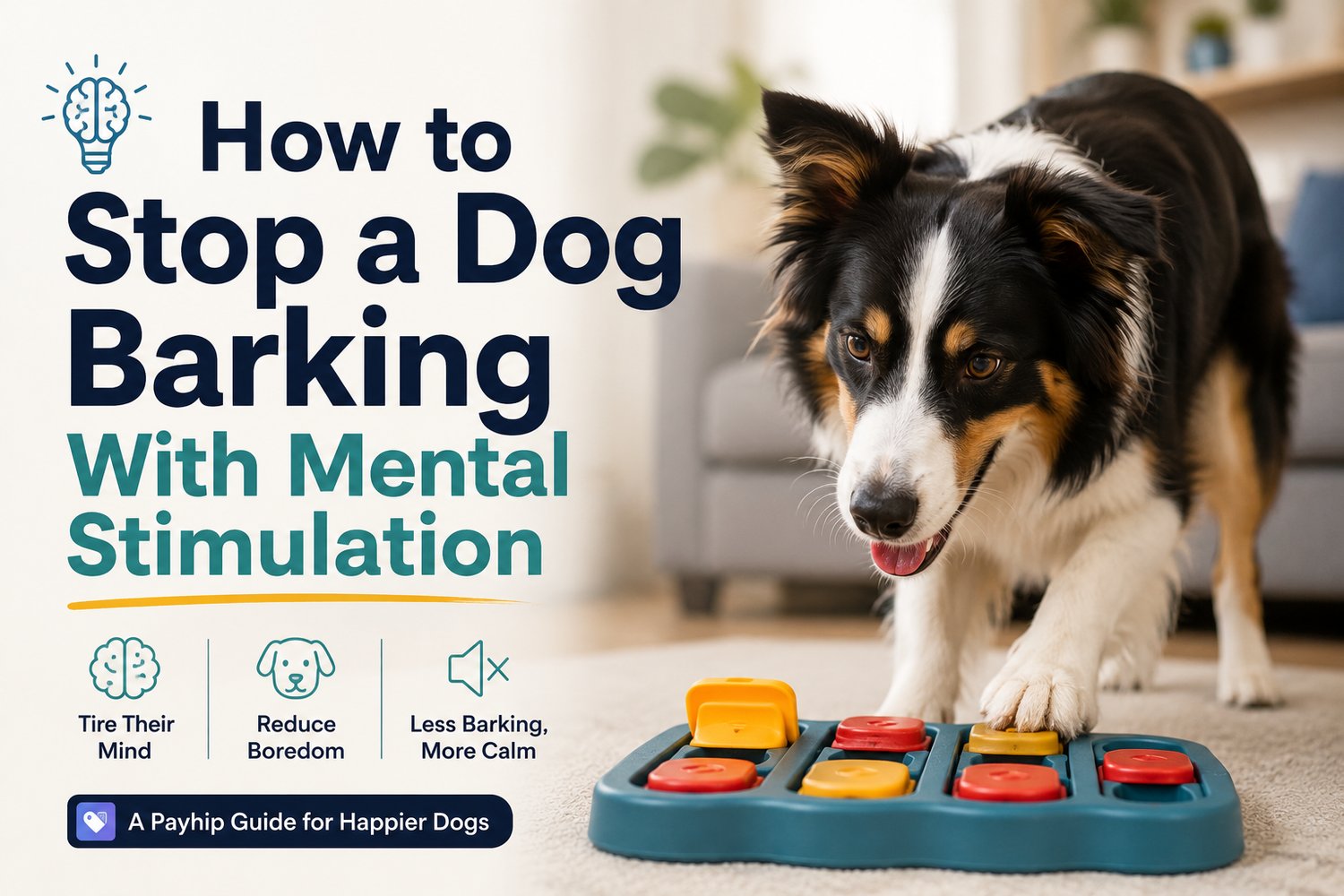
Teach Your Dog to Think Instead of Bark With These Simple Enrichment Ideas
A bored dog is often a noisy dog. If you want less barking, mental work can help because it gives your dog something better to do.
Barking is usually a sign of an unmet need, not a dog being "bad." Brain games, training, and sniffing can lower that noise, especially when you pair them with walks, rest, and smart home management. Once you deal with the cause, the barking often starts to lose steam.
Why do dogs bark when their brains are underused?
Dogs bark because something feels worth talking about. When the brain has nothing useful to do, every passerby, van door, rustling leaf, and squirrel can feel like breaking news.
Mental stimulation helps by changing where your dog's attention goes. A dog that's been sniffing, searching, and learning is less likely to sit on patrol all day.
In normal dog behavior, barking is communication. The goal isn't to silence your dog at all costs. The goal is to meet the need behind the noise.
Common barking triggers that mental work can help with
Boredom barking is the easy one to picture. Your dog wakes up, wanders around, finds nothing interesting, and starts making their own entertainment. Window barking often fits here too.
Alert barking can get louder when a dog has too much unused energy. Attention-seeking barking can grow the same way. If barking makes you talk, move, or hand over a toy, the habit gets stronger.
Frustrated barking is another common pattern. That might be barking at the window, barking when left alone, or barking because your dog can't get to something they want.
Mental stimulation helps most when the barking comes from pent-up energy, low enrichment, or a dog that never gets a proper job.
Check out Brain Training For Dogs

Why exercise alone is not always enough
A long walk helps, but it doesn't always finish the job. Some dogs come home tired in the body and still restless in the brain.
Sniffing, problem-solving, and learning can settle a dog faster than extra mileage. A pilot study on environmental enrichment linked enrichment with lower stress-related behavior in dogs, which matches what many owners see at home.
A dog can be tired and still wound up. A dog that has used both body and brain is usually calmer.
This shows up fast in quick-thinking breeds. If you live with a busy dog, training games for intelligent working dogs can make a bigger difference than another lap around the block.
How to stop a dog barking through mental stimulation at home
The best plan is simple and repeatable. Five or ten minutes each day works better than one big session once a week.
You don't need to turn your house into a doggy escape room. Use meals, toys, sniffing, and short training breaks to give your dog regular mental work.
Use puzzle toys and food games to keep busy paws and busy brains
Start with food. Put part of your dog's meal into a puzzle feeder, snuffle mat, frozen food toy, or treat ball instead of a plain bowl. Now breakfast has a job built into it.
That matters when barking comes from boredom or restless energy. Your dog has to chew, sniff, paw, and think. If you want extra ideas, PetMD has practical mental stimulation ideas that are easy to use at home.
 Interactive play can help too. A short game with tug toys adds engagement and connection, especially before your dog starts hunting for trouble.
Teach short training games that build focus and calm
Training is one of the cleanest ways to drain mental energy. Practice sit, down, stay, leave it, touch, and go to mat. You're teaching skills, but you're also teaching your dog how to pause and think.
"Go to mat" is especially helpful for barking. When the mail drops, the door shuts, or a noise pops outside, the mat becomes your dog's job. That's far better than sprinting to the window and yelling reviews of the neighborhood.
Keep sessions short. Two minutes in the kitchen, a minute by the front door, another minute before dinner. Little pockets of training add up fast.
Try scent work and hide-and-seek for a tired, satisfied dog
A dog's nose is serious equipment. Use it. Start with "find it" by tossing a few treats on the floor and letting your dog hunt them down.
Once they get the idea, hide treats behind chair legs or in another room.
You can also hide a favorite toy and send your dog to search for it.
Many dogs come out of sniffing games more settled than they do after a wild game of fetch. That's one reason why mental enrichment matters for dogs.
Keep it easy at first. If the game is too hard, frustration can bring the barking right back.
Create a daily enrichment routine that matches your dog's needs
Consistency beats perfection. A sniffy morning walk, a puzzle feeder at lunch, a two-minute mat game later on, and a quick "find it" before dinner is enough for many dogs.
Young dogs often need more variety. Seniors may prefer slower sniffing and easier puzzles. High-energy breeds usually need more brain work than laid-back dogs. Watch your own dog and adjust from there.
Set up the environment so barking has fewer chances to start
Mental stimulation works best when your dog isn't rehearsing the barking habit all day. Every sprint to the window is practice, and practice makes barking easier.
Good management isn't cheating. It's how you give new habits a fair chance to stick.
Block the most common barking triggers before they start
If window barking is the problem, close the curtains during busy times or move your dog's bed away from the glass. If hallway sounds set them off, use white noise, a fan, or soft background sound.
You can also limit access to busy sight lines when you're not there to guide your dog. That simple change can cut a lot of barking before it even starts.
If the barking seems tied to nerves, pacing, or clinginess, using enrichment to manage dog anxiety may help alongside better trigger control.
Reward quiet moments so calm behavior grows stronger
Most people react fast when the barking starts. Quiet is easy to miss. That's the part to change.
When your dog is lying calmly, watching a trigger without reacting, or settling on their mat, mark it and reward it. Over time, your dog learns what to do instead of barking.
When barking may need more than enrichment alone
Mental stimulation helps a lot, but it doesn't fix every kind of barking. Sudden barking, intense barking, or barking that comes with other behavior changes needs a closer look.
Pain, fear, separation anxiety, and medical issues can all sit behind the noise. A new barking pattern is information.
Signs the barking may be stress or anxiety, not boredom
Look at the whole dog, not only the sound. Pacing, panting, drooling, destruction, not eating, or barking only when alone can point to stress rather than simple boredom.
Dogs with separation anxiety often need a different plan, not more toys tossed into the room.
When to talk to a vet or qualified trainer
Call your vet if the barking starts suddenly, seems linked to pain, or comes with physical changes. Rule out medical issues first.
If the barking sticks around or seems fear-based, a reward-based trainer can help you build a plan that matches your dog's needs.
Helpful tools and extra resources for calmer dogs
Sometimes the problem isn't knowing what to do. It's staying consistent when life gets busy.
Extra guides and printable help for busy dog owners
If you want more structure, Check out our great guides on Payhip for affordable support. You can also Check out our ebook guides on Etsy if printable help suits you better.
A simple next step for structured brain training
Some owners prefer a more organized system for daily mental work. Brain Training For Dogs can be a helpful option if you want a clear routine that supports better focus and calmer behavior.
Conclusion
Stopping barking with mental stimulation is usually about giving your dog a better job. Puzzles, short training games, scent work, and a calmer setup all pull in the same direction.
Start small, stay steady, and look for patterns.
A few minutes of daily brain work can turn a noisy day into a much quieter one over time.
🐾 The Smart Dog Blueprint: 75 Brain Games, Enrichment Activities & Training Exercises Every Dog Owner Should Know

Looking for fun and effective ways to challenge your dog's mind, improve behaviour, and strengthen your bond?
The Smart Dog Blueprint is a comprehensive digital guide packed with 75 brain games, scent work activities, confidence-building exercises, and training challenges designed to help dogs become calmer, happier, and more engaged.
Whether you have a puppy bursting with energy, an adult dog needing more mental stimulation, or a senior companion who still loves learning, this workbook-style guide provides practical activities that are easy to follow and enjoyable for dogs of all breeds.

Comments ()