


Yorkshire Terriers may be small in size, but they certainly have big personalities. One of the most common complaints from owners is excessive barking. If you've ever wondered why your Yorkie seems determined to alert the entire neighbourhood every time a leaf blows past the window, you're certainly not alone.
The good news is that barking is a natural behaviour, and with the right approach, most Yorkshire Terriers can learn when it's appropriate to bark and when it's time to be quiet.
In this guide, we'll explore why Yorkshire Terriers bark so much, what triggers the behaviour, and practical steps you can take to reduce excessive barking without causing stress or damaging your bond with your dog.
Why Do Yorkshire Terriers Bark So Much?
To stop excessive barking, it helps to understand why your Yorkshire Terrier is barking in the first place.
Yorkies were originally bred to hunt rats and other vermin in textile mills.
Despite their modern reputation as companion dogs, they still possess the alertness, confidence, and determination of a working terrier.
Many Yorkshire Terriers bark because they are:
- Alerting you to something
- Seeking attention
- Feeling bored
- Feeling anxious
- Protecting their territory
- Excited during play
- Reacting to unfamiliar sounds
Because they are naturally vigilant, Yorkshire Terriers often make excellent watchdogs. However, what begins as a useful alert bark can sometimes become excessive.
Is Barking Always a Problem?
Not necessarily.
A Yorkshire Terrier that barks briefly when someone knocks at the door is behaving normally. The problem arises when barking becomes constant, excessive, or difficult to stop.
Some signs that barking may be becoming a problem include:
- Barking at every sound
- Barking for long periods when left alone
- Barking at people passing the house
- Barking at other dogs during walks
- Barking continuously for attention
If this sounds familiar, don't worry. There are several effective strategies you can use.
Rule Out Medical Issues First
Before working on behavioural solutions, it's worth considering whether a medical issue could be contributing.
Dogs sometimes bark more when they are experiencing:
- Pain
- Hearing problems
- Cognitive decline in older dogs
- Anxiety-related conditions
If your Yorkie's barking has suddenly increased or changed dramatically, a veterinary check-up is a sensible first step.
Increase Physical Exercise
A tired dog is often a quieter dog.
Many owners underestimate how much exercise a Yorkshire Terrier needs. While they are small dogs, they still require regular physical activity.
Daily walks help:
- Burn energy
- Reduce frustration
- Provide mental stimulation
- Improve overall behaviour
Aim for at least one or two walks each day, depending on your dog's age and fitness level.
Even a short walk around the neighbourhood can help reduce excess energy that might otherwise be channelled into barking.
Provide More Mental Stimulation
Mental stimulation is often the missing piece of the puzzle.
A bored Yorkshire Terrier will frequently invent their own entertainment, which may include barking at every possible opportunity.
Try introducing:
- Food puzzle toys
- Snuffle mats
- Hide-and-seek games
- Basic obedience sessions
- Scent games
- Interactive toys
Mental exercise can tire a dog just as effectively as physical exercise.
Many owners are surprised by how much calmer their Yorkie becomes once they have regular opportunities to use their brain.
Get Your Copy Of The Yorkshire Terrier Blueprint TODAY
Avoid Rewarding Barking
This is one of the most common mistakes owners make.
Imagine your Yorkie starts barking.
You immediately:
- Pick them up
- Talk to them
- Pet them
- Give them a treat
From your dog's perspective, barking worked perfectly.
Even negative attention can sometimes reinforce barking.
Instead, wait for a brief moment of silence before rewarding calm behaviour.
Your Yorkshire Terrier should learn that being quiet gets attention, not barking.
Teach a "Quiet" Command
One of the most effective training tools is teaching a specific cue for silence.
Start by allowing your dog to bark once or twice.
Then:
- Say "Quiet" calmly.
- Wait for even a second of silence.
- Immediately reward with praise or a small treat.
- Repeat regularly.
Over time, increase the length of silence required before rewarding.
Consistency is the key to success.
Manage Window Barking
Many Yorkshire Terriers love sitting by the window and monitoring the outside world.
Unfortunately, this often leads to barking at:
- Pedestrians
- Delivery drivers
- Other dogs
- Cars
- Wildlife
If window barking is becoming excessive, try:
- Closing curtains during busy periods
- Using privacy film
- Moving furniture away from windows
- Redirecting attention with toys or activities
Reducing visual triggers can dramatically reduce barking.
Address Separation Anxiety
Yorkshire Terriers form incredibly strong bonds with their owners.
While this is one of their most lovable traits, it can sometimes lead to separation anxiety.
Signs include:
- Barking when left alone
- Whining
- Pacing
- Destructive behaviour
If your Yorkie struggles when alone, start building independence gradually.
Practice short departures and returns without making a big fuss.
Leave enrichment activities available while you're away.
For severe cases, professional behavioural guidance may be beneficial.
Stay Calm Yourself
When a dog is barking, it can be tempting to shout.
However, shouting often has the opposite effect.
Many dogs think:
"My owner is barking too. We must both be concerned!"
Instead:
- Stay calm
- Speak quietly
- Redirect attention
- Reward calm behaviour
Your Yorkshire Terrier will often mirror your emotional state.
Socialisation Matters
A well-socialised Yorkshire Terrier is often a more confident Yorkshire Terrier.
Exposure to different:
- People
- Dogs
- Environments
- Sounds
- Situations
helps reduce fear-based barking later in life.
Socialisation should always be positive and controlled.
Confidence often leads to quieter, more relaxed behaviour.
Get Your Copy Of The Yorkshire Terrier Blueprint TODAY
Create a Calm Environment
Yorkshire Terriers can be surprisingly sensitive to household stress.
A busy, noisy, chaotic environment can increase barking.
Try creating a calm space where your Yorkie can relax.
Consider:
- Comfortable bedding
- Consistent routines
- Quiet rest periods
- Background music
- Safe retreat areas
Many dogs naturally become calmer when their environment feels predictable.
Be Consistent
Consistency is perhaps the most important factor of all.
If barking is ignored one day, rewarded the next, and punished the day after that, your dog becomes confused.
Every family member should follow the same rules and training approach.
Clear, predictable responses help dogs learn much more quickly.
When Should You Seek Professional Help?
If your Yorkshire Terrier's barking is severe, persistent, or linked to anxiety, consulting a qualified dog trainer or behaviourist may be worthwhile.
Professional guidance can identify underlying causes and create a tailored training plan.
There's no shame in seeking help if you need it.
Many barking problems improve significantly with expert support.
Final Thoughts
Yorkshire Terriers are intelligent, loyal, and wonderfully entertaining companions. Their tendency to bark is often simply a reflection of their alert terrier heritage.
The key is not to eliminate barking completely. Instead, aim to teach your Yorkie when barking is appropriate and when it's time to relax.
With patience, consistency, exercise, mental stimulation, and positive reinforcement, most Yorkshire Terriers can learn to become calmer and quieter members of the household.
Want to Learn More About Yorkshire Terriers?
If you're looking for a complete guide covering training, behaviour, health, grooming, feeding, and everyday Yorkshire Terrier ownership, take a look at The Yorkshire Terrier Blueprint: The Ultimate Guide to Training, Health and Happiness.
👉 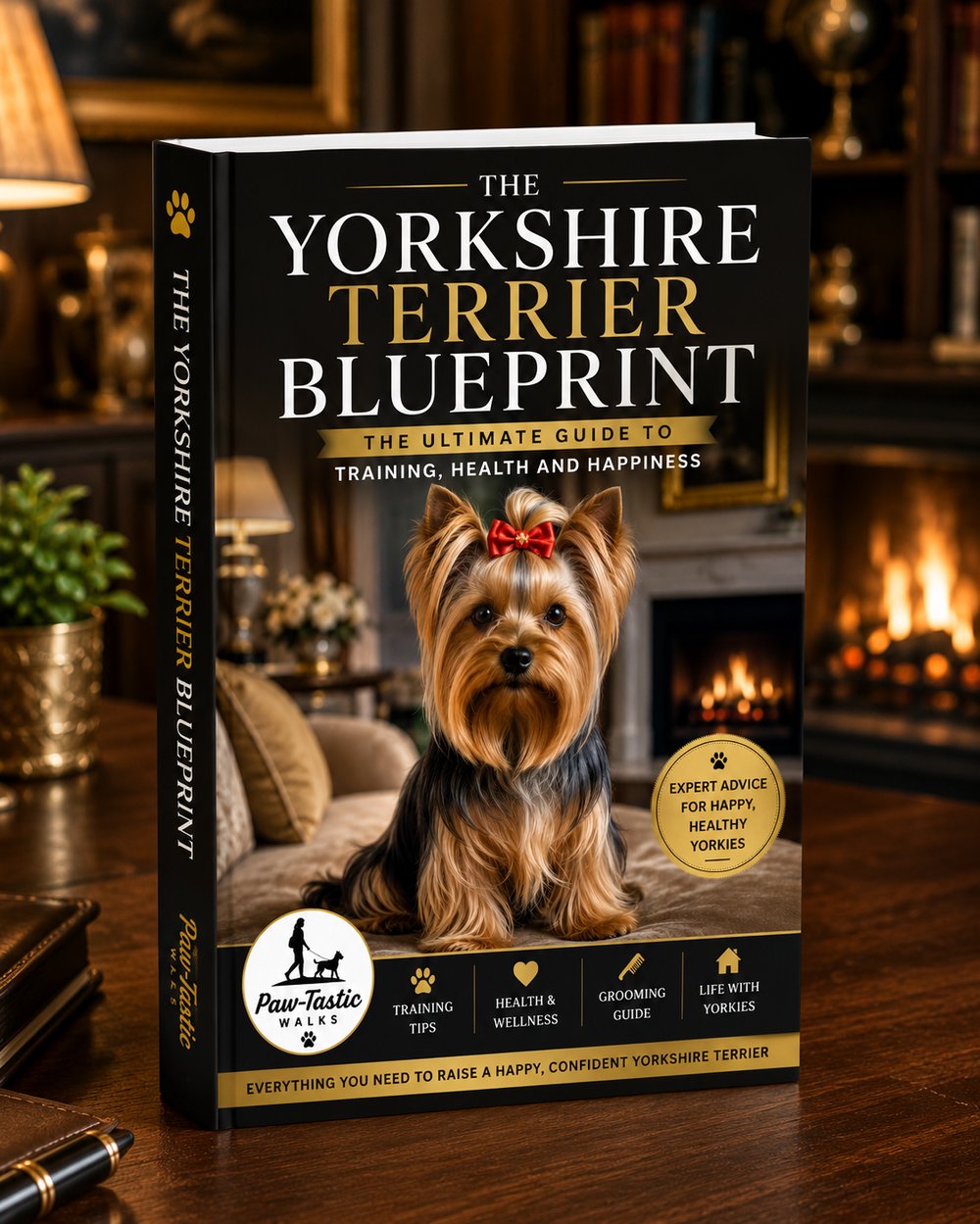
Packed with practical advice and easy-to-follow guidance, it's the perfect companion for both new and experienced Yorkshire Terrier owners.
Comments ()