
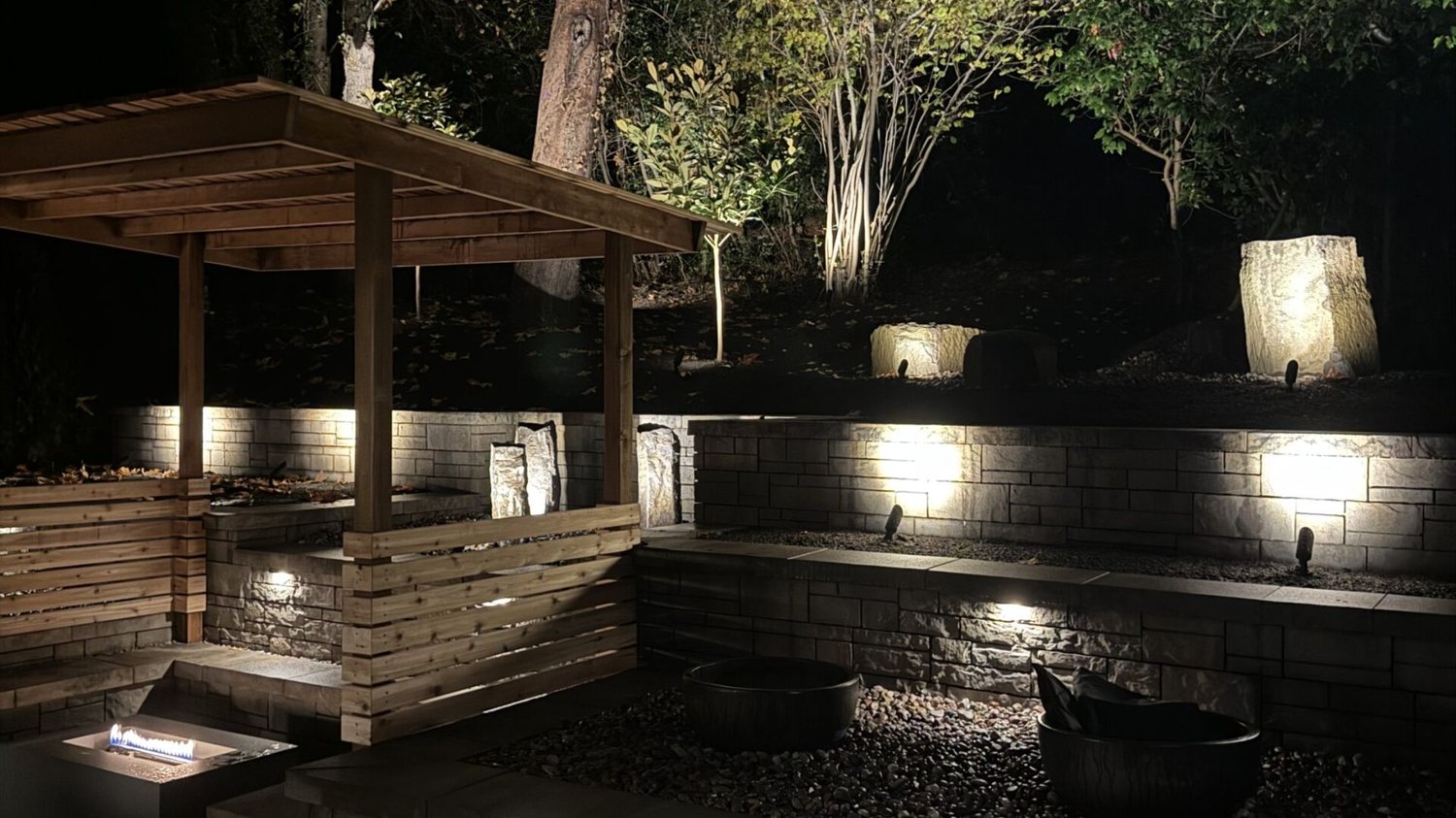
Most commercial properties receive the greatest scrutiny during business hours, yet some of their most important impressions are formed long after the sun goes down. Parking lots, entryways, pathways, outdoor gathering areas, and building façades all communicate something about a property before anyone steps through the front door. That is one reason Commercial Low Voltage Lighting Installation has evolved from a finishing touch into a planning priority. Thoughtfully designed lighting improves visibility and safety, but it also shapes how people navigate a space, how secure they feel, and how a property represents itself every evening.
Many discussions still revolve around brightness. In practice, successful lighting design is rarely about adding more fixtures. It is about placing light precisely where people need confidence, while allowing the rest of the landscape to retain its depth and character. The difference becomes obvious only after experiencing both approaches.
Good Lighting Begins Long Before Fixtures Are Installed
One of the biggest misconceptions surrounding exterior lighting is that installation starts with selecting fixtures. In reality, experienced designers spend far more time understanding how people move through a property.
- Where do visitors naturally hesitate?
- Which corners disappear after sunset?
- How do employees leave the building during winter evenings?
- Where might delivery drivers struggle to identify entrances?
These questions shape far better lighting plans than product catalogs ever could.
Experiences like this reveal something broader about commercial property management. Many upgrades succeed not because they introduce sophisticated technology, but because they solve everyday problems that people have quietly accepted for years.
Small Decisions Create Long-Term Performance
Commercial lighting is expected to operate for thousands of hours every year while remaining visually unobtrusive. Achieving that balance depends on dozens of decisions that rarely receive public attention.
A thoughtful project typically considers:
- Fixture placement rather than fixture quantity
- Beam angles that reduce glare
- Energy consumption across seasons
- Maintenance accessibility
- Future landscape growth
- Drainage around underground wiring
- Expansion possibilities for future phases
Individually, these decisions appear modest. Collectively, they determine whether a lighting system continues performing well five or ten years after installation.
That distinction often separates projects that age gracefully from those requiring constant adjustments.
When Darkness Reveals Design Problems
Interestingly, nighttime often exposes issues that remain invisible during daylight hours.
A walkway may technically meet design standards, yet still feel uncomfortable after sunset. A landscaped entrance can appear inviting at noon but confusing once shadows lengthen. Parking areas may provide adequate capacity while still creating uncertainty because visual cues disappear in low light.
Lighting frequently solves these problems without altering the physical layout.
Professionals often notice that successful projects rely less on increasing illumination than on creating visual rhythm. Gentle transitions between brighter and quieter areas help people understand where they should walk, pause, or enter naturally. The result feels intuitive rather than engineered.
Commercial Low Voltage Lighting Installation in WA Reflects Changing Expectations
Across the Pacific Northwest, expectations around outdoor environments continue to evolve. Businesses increasingly recognize that exterior spaces remain active throughout much of the year, even during shorter winter days.
This makes Commercial Low Voltage Lighting Installation in WA particularly relevant. The region's seasonal weather patterns, extended periods of overcast skies, and earlier sunsets place greater importance on dependable outdoor illumination than in many other parts of the country.
Rather than treating lighting as a decorative upgrade, more property owners are viewing it as operational infrastructure. It supports safety, simplifies navigation, and extends the usefulness of outdoor environments without significantly increasing energy consumption.
Viewed from a broader perspective, this reflects a larger shift in commercial property planning. Investments are increasingly evaluated by how consistently they improve daily experiences rather than by how dramatic they appear on completion day.
Technology Is Becoming Less Visible
The future of commercial lighting is surprisingly subtle.
LED efficiency continues improving. Smart controls allow scheduling adjustments without complicated infrastructure. Motion-sensitive zones reduce unnecessary energy use, while programmable systems adapt to seasonal daylight changes almost automatically.
Yet the most noticeable trend may be the opposite of technological spectacle.
The best systems rarely announce themselves. Visitors simply feel comfortable moving through a property. Employees instinctively know where pathways begin and end. Landscaped features appear balanced instead of overly illuminated.
Technology succeeds precisely because it becomes invisible.
That quiet effectiveness mirrors broader changes across commercial design. Increasingly, the highest-performing environments prioritize ease of use over visual excess.
Build Outdoor Spaces That Continue Working After Sunset
Commercial landscapes never stop influencing how a property performs. Daylight simply changes which elements receive attention.
Well-planned lighting strengthens safety, improves usability, and helps outdoor environments remain functional throughout changing seasons. Those outcomes depend less on the number of fixtures installed than on how carefully each decision supports the broader landscape.
Perhaps that is the most valuable lesson. Exceptional exterior lighting rarely asks people to notice it. Instead, it allows every other part of the property to perform exactly as intended, long after daylight has disappeared.