
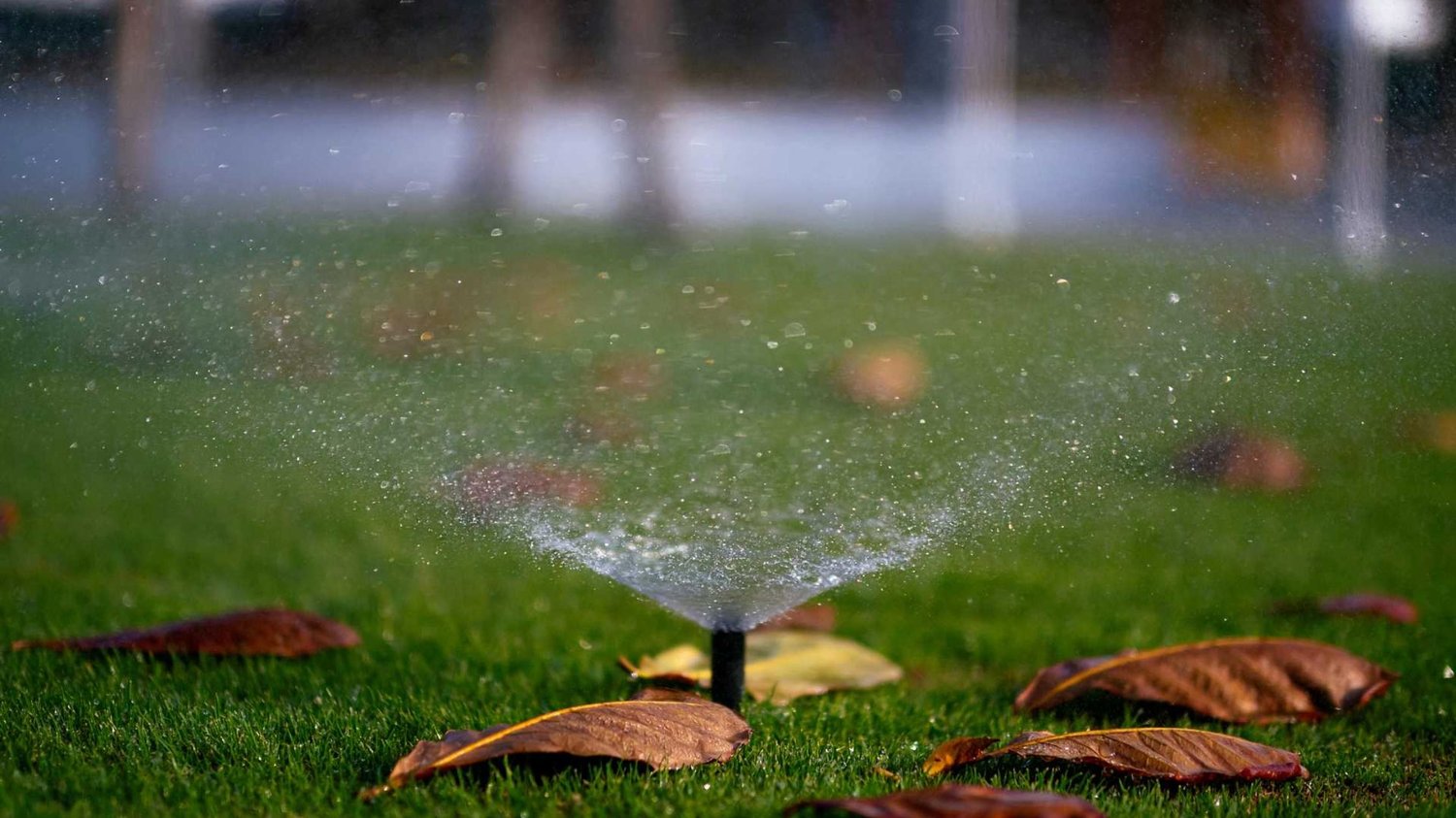
There is a particular kind of damage that commercial irrigation systems sustain each winter that is entirely avoidable and entirely predictable. Water, left in pipes and valves and backflow preventers when temperatures drop below freezing, expands. The components containing it do not. Commercial irrigation winterization services exist to address this before it becomes a February repair conversation. The physics involved are not complicated. The scheduling required to avoid them is also not complicated. What is complicated is explaining to a property owner in March why the backflow preventer failed when it was sitting in exactly the conditions that backflow preventers fail in, every winter, on a reliably approximate schedule.
What the System Is Holding When Winter Arrives
A commercial irrigation system that has been running through summer and into fall is holding water in every lateral line, every valve chamber, and every component between the main supply shutoff and the last head on the farthest zone.
Turning the controller off does not change this. The water remains. It does not drain spontaneously unless the system was specifically engineered with drain valves at every low point, which most commercial systems are not. What happens instead is that the water waits, patient and unhurried, for the ambient temperature to drop below 32 degrees Fahrenheit, at which point it begins its expansion work with the thoroughness of something that has been doing this for a very long time.
The components most reliably damaged are the ones with the least tolerance for internal pressure changes: backflow preventers, which are also the most expensive components in the system, and PVC lateral lines at their fittings, where the material is already under the most stress.
Why the Pacific Northwest Climate Creates a Specific Trap
The Pacific Northwest's mild fall climate produces a false sense of timeline. October days in western Washington are frequently above 50 degrees. The landscape is still green. The irrigation system is still running, or was running recently. The urgency of winterization does not feel urgent because the conditions that require it have not yet arrived.
This is when scheduling a commercial lawn sprinkler winterization service is easiest. Crews have availability. Pricing is standard. The work can be scheduled and completed without any of the complications that develop when every commercial property in the county reaches the same conclusion in the same two-week window in late October.
The first hard freeze in the Snohomish and King County corridor typically arrives between late October and mid-November. Some years it comes earlier. It does not announce itself in advance with sufficient lead time to schedule a winterization service, book a crew, and complete the blowout before the overnight low crosses the threshold. It simply arrives. The systems that were not winterized begin their unscheduled self-assessment.
What a Professional Winterization Actually Does
A compressed air blowout of a commercial irrigation system is more precise than it sounds. The sequence runs from the zone farthest from the compressor connection back toward the supply, moving water through the lateral lines and out through the open heads in the correct direction. Each zone cycles two to three times. One pass is not sufficient to clear a full lateral run.
The compressor must be sized to the system. Commercial rotor zones require a minimum of 50 CFM of airflow. A residential-grade compressor applied to a commercial system with 15 or 20 zones will take three times as long and still leave water in the far ends of the lateral runs. The water that remains is exactly where the freeze will find it.
After the blowout, a complete winterization covers the backflow preventer drain and insulation, the main supply shutoff confirmation, controller programming to off or rain-hold mode, and documentation of any component conditions observed during the process. That documentation is what makes spring startup a continuation rather than a rediscovery.
The Cost Comparison That Resolves the Scheduling Question
The cost of annual professional winterization is predictable and fixed. The cost of a failed backflow preventer is several hundred dollars for the component plus labor plus service call. The cost of split lateral lines under paved surfaces adds excavation. Multiple component failures in a larger system add further. The ratio between proactive winterization and reactive freeze repair is not close.
What makes the calculation interesting is that the reactive cost also comes with a spring installation season scheduling conflict. April is when every irrigation crew in the Pacific Northwest is simultaneously commissioning new systems and starting up existing ones. Emergency repairs during that window compete for the same limited availability. The lead time for parts that shipped in three days in October sometimes extends to two weeks in April.
The argument for early scheduling is not primarily about the service itself. It is about the conditions under which the alternative plays out.
October Is When This Is Straightforward
Every commercial property in western Washington with an irrigation system is going to winterize it. The only variable is whether that happens in October, when it is a scheduled maintenance item with available crews and standard pricing, or in November, when it is an urgent item competing for limited availability, or in March, when it is a damage assessment following a winter that was not particularly unusual.
Professional commercial irrigation winterization services scheduled in October are the version of this that costs the least, takes the least time to arrange, and produces no surprises in spring. The window is open now. It does not stay open indefinitely.