
Get the free 15-Minute Rural Land Listing Triage Card: https://payhip.com/b/cCyx9
A low asking price can make rural land feel urgent. The expensive surprises, however, are often missing from the listing: access that is not legally documented, a use that is not permitted, a long driveway, uncertain water, unsuitable wastewater conditions, or a power connection that changes the budget.
Before you book a long drive, make the listing survive seven fast gates. The goal is not to complete due diligence from your desk. It is to decide whether the property deserves more time, evidence, and professional input.
1. Confirm the parcel and legal access
Ask for the parcel identifier and enough information to locate the exact land in official records. Then separate physical access from legal access. A track, lane, or neighbouring road may reach the property without giving the buyer a documented right to use it.
Request the documents that support access and boundaries. If the seller cannot identify the parcel or explain how access is registered, mark the listing VERIFY or STOP until evidence is available.
2. Check whether your intended use may be allowed
Do not treat a rural address, vacant-lot label, or nearby home as proof that your plan is permitted. Zoning, development rules, setbacks, minimum lot standards, environmental constraints, and subdivision history can all matter.
Write down your intended use in one sentence. Then contact the relevant local or provincial authority and ask what approvals, permits, and site information would be required. Requirements vary by province and municipality.
3. Look for a credible water path
The listing does not need a finished well to survive this gate, but it does need a plausible plan. Ask about existing wells, water records, nearby depths, known water-quality issues, drilling access, and the testing you would need.
Treat an unverified spring, stream, or seller estimate as a lead to investigate, not proof of a dependable supply.
4. Screen wastewater feasibility
An on-site wastewater system needs more than an empty patch of ground. Lot size, slope, soil, setbacks, water features, and the proposed building location can affect the practical path.
Ask which authority regulates the site and what assessment or professional input is needed. If the usable area is tight or wet, move this question forward before spending heavily elsewhere.
5. Check flood, wetland, and drainage signals
Review available floodplain and wetland mapping, but do not rely on a single map as a final answer. Look at terrain, low areas, standing water, drainage routes, culverts, and access-road elevations.
Season matters. A dry viewing day can hide spring or storm conditions, so ask for local history and qualified advice where the risk is material.
6. Price the road, site work, and services
The distance from the road to the building area can affect clearing, grading, drainage, driveway construction, winter maintenance, and utility runs. Also check power, internet, mobile coverage, emergency access, and year-round road responsibility.
Use low, expected, and high estimates instead of one optimistic number. A listing can be affordable while the usable site is not.
7. Build the true acquisition budget
Add the land price to closing costs, taxes, survey or boundary work, driveway, site preparation, water, wastewater, power, insurance, financing, and a contingency. Record each number with its source and confidence level.
If the expected scenario fits but the high scenario does not, identify which unknowns must be priced before you proceed.
Give the listing a fast verdict
Use three simple outcomes:
• PASS: available evidence supports the next step.
• VERIFY: the listing may survive, but an important fact is still missing.
• STOP: a fatal uncertainty or budget mismatch makes further effort hard to justify.
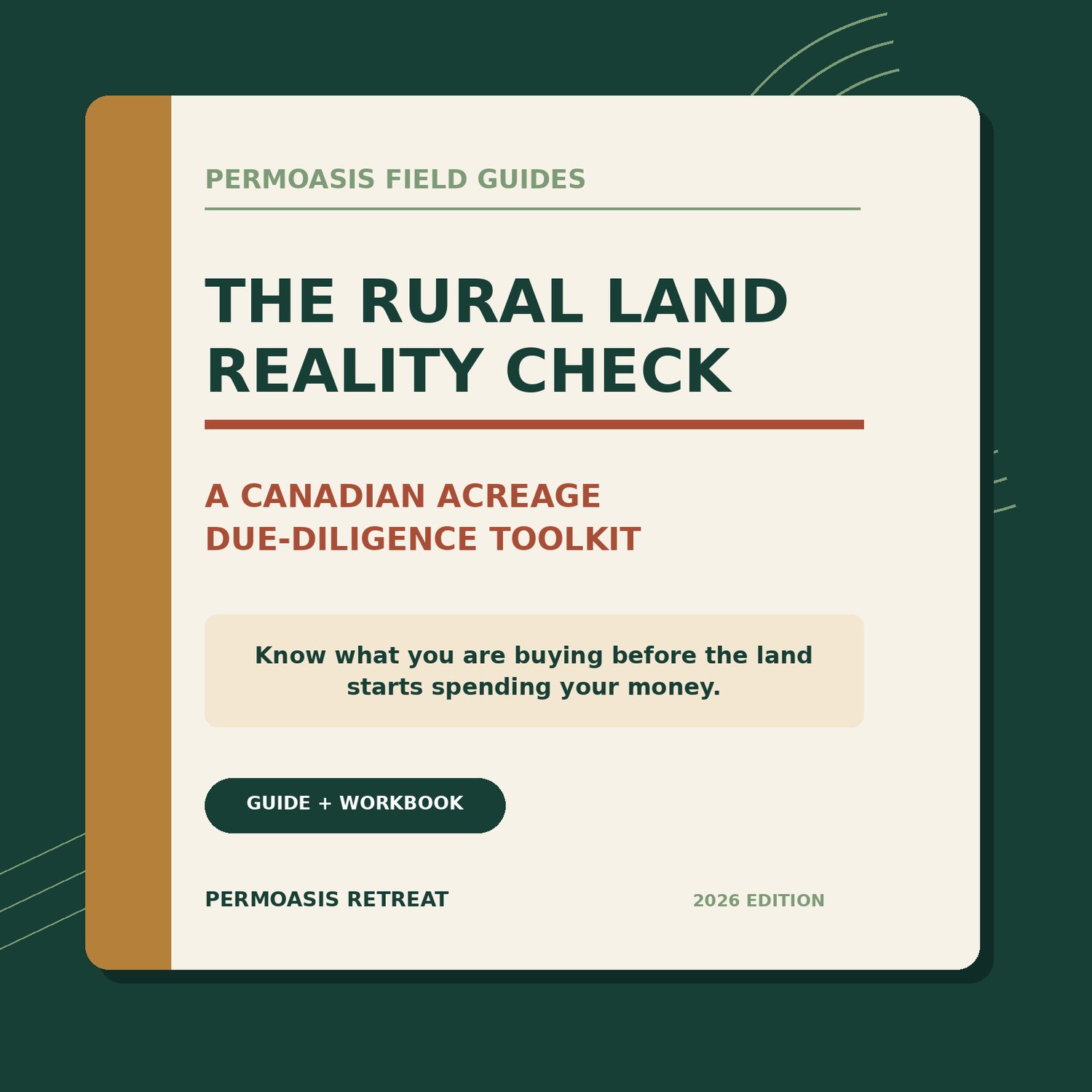
The free 15-Minute Rural Land Listing Triage Card puts all seven gates on one printable page. For a complete, repeatable workflow, The Rural Land Reality Check adds a 29-page guide, eight printable field sheets, and an automated 10-sheet Excel workbook with cost scenarios and a five-property comparison.
Preview the full toolkit at https://payhip.com/b/Q9rwB.
This material is for education and organization. Verify property-specific decisions with the appropriate authorities and qualified legal, land, environmental, construction, water, wastewater, insurance, and finance professionals.