
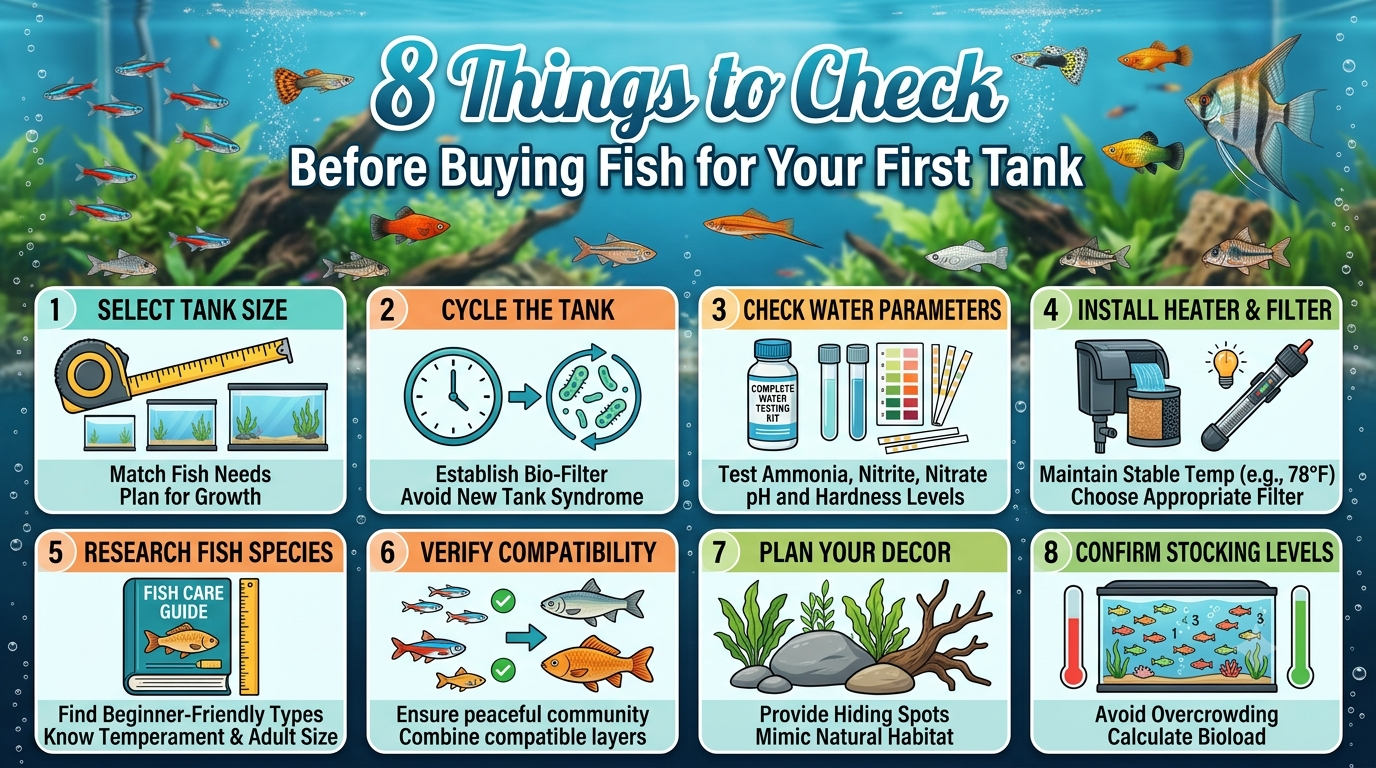
Buying your first aquarium fish is exciting, but choosing the right ones takes a little planning. Those colourful fish at the store might all look like a good fit, yet different species have different space requirements, water preferences, and temperaments. Before bringing any fish home, take time to check a few basics. It can save you money, prevent avoidable problems, and help your aquarium get off to a healthy start.
1. Check the Adult Size
Small fish at the store can grow much larger than expected. Look up the adult size of each species and check whether your aquarium can comfortably support it. A fish that looks tiny today may need much more swimming space later. Planning around adult size helps you avoid overcrowding as your tank matures.
2. Understand the Fish's Temperament
Some fish are peaceful, while others may chase or nip their tank mates. For example, a long fin black skirt tetra for sale may appeal to beginners because of its flowing fins and striking appearance, but black skirt tetras can nip at long-finned fish. Research their behaviour and choose companions carefully. A peaceful-looking fish is not automatically compatible with every community species.
3. Check Water Requirements
Different fish thrive under different water conditions. Before buying, compare their preferred temperature, pH, and water hardness. Species with similar needs are generally easier to keep together than fish that require very different environments. A reliable thermometer and water test kit can help you monitor conditions at home.
4. Make Sure the Tank Is Cycled
A new aquarium needs time to develop beneficial bacteria that process toxic fish waste. This process is called cycling, and adding fish before the tank is ready can expose them to harmful ammonia and nitrite. Test the water before introducing fish rather than relying only on clear-looking water.
5. Choose Fish That Suit Your Experience
Some species are easier for beginners to manage than others. A sunburst platy for sale may be worth researching if you want a colourful livebearer for a suitable community aquarium. Platys are generally hardy, but they still need stable water conditions, enough space, and compatible tank mates. Also, remember that livebearers can reproduce quickly, so consider whether you can manage extra fish.
6. Ask About Feeding Needs
Not every fish eats the same food or feeds in the same part of the tank. Check whether your chosen species needs flakes, pellets, frozen foods, or other suitable options. Feeding the right amount matters too — excess food can break down and affect water quality.
7. Look for Signs of Good Health
Observe the fish before purchasing. Look for steady swimming, clear eyes, intact fins, and normal breathing. Avoid fish that appear unusually lethargic, have visible injuries, or struggle to swim. Ask the seller about recent health concerns if anything seems unusual.
8. Consider the Long-Term Commitment
Some fish live for many years and need more space as they grow. A shubunkin goldfish for sale may catch your eye with its colourful pattern, but this variety grows large and is better suited to a spacious pond or an appropriately sized aquarium than a small starter tank. Research its long-term housing needs before deciding.
Final Thoughts
Starting an aquarium becomes easier when you choose fish based on their needs rather than appearance alone. Take your time, prepare the tank properly, and add compatible species gradually.
Pet Supermarket can be a convenient place to explore aquarium fish supplies, food, filters, and water-care products. Getting the right equipment before bringing fish home helps you build a setup you can maintain with confidence. Get now!