
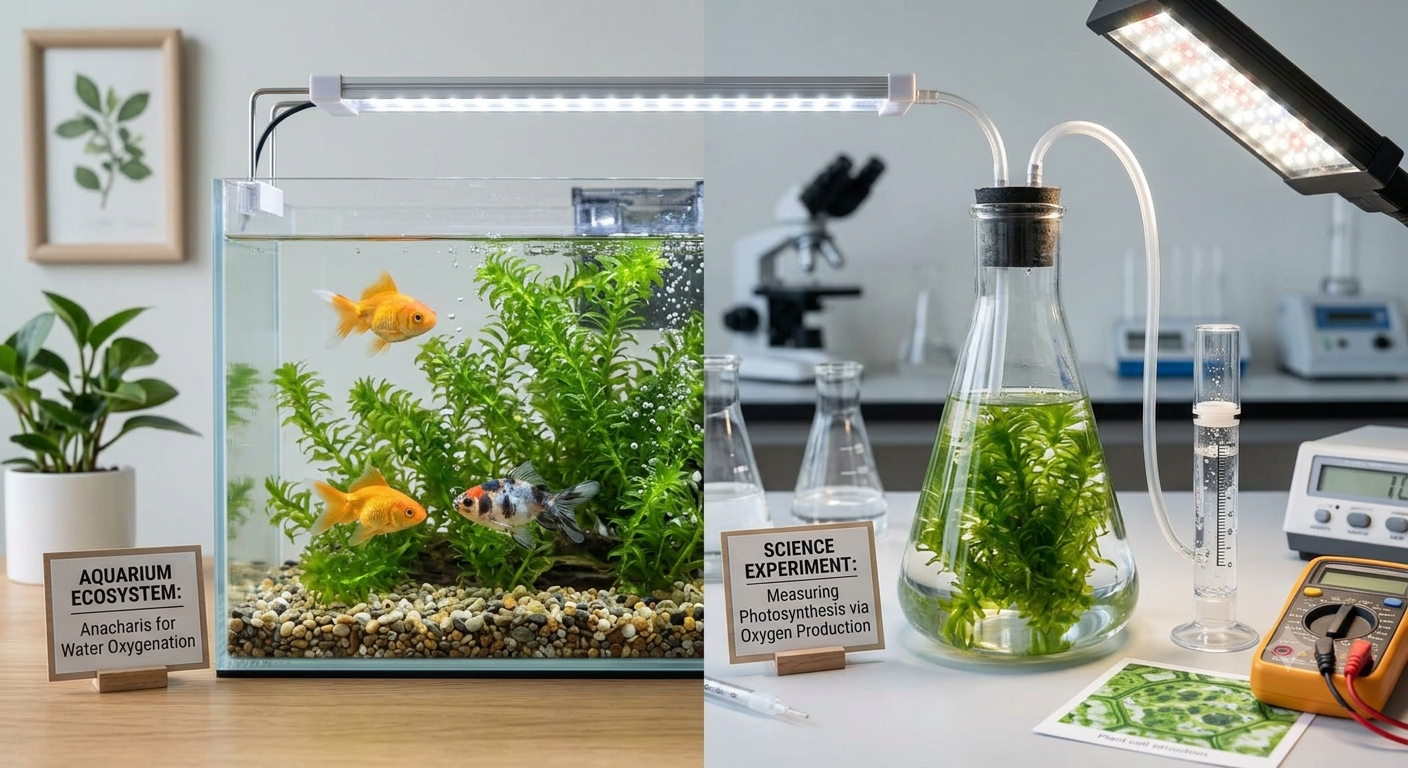
Some aquarium plants are mainly added for decoration, while others have a little more going on. Anacharis is one of those plants that can work well in a home aquarium and also make a useful example in a classroom. Its fast growth, simple appearance, and connection to photosynthesis make it an interesting plant for both fish keepers and students.
Anacharis in Goldfish Tanks
Goldfish tanks can benefit from some extra greenery, especially when the aquarium has plenty of open swimming space. An anacharis plant can add height and texture without making the setup look overly complicated. It can also be planted among gravel or allowed to grow freely in the water, giving keepers some flexibility when arranging the tank.
Goldfish may nibble on aquatic plants, which is something to keep in mind when choosing greenery. Anacharis can be a practical option because it grows quickly, although individual goldfish may still eat or pull at the stems. In some tanks, floating the stems can be easier than trying to keep them planted in place.
Why It Works for Science Experiments
Aquatic plants are often used to demonstrate photosynthesis because students can observe changes that are harder to notice with ordinary houseplants. An anacharis aquarium plant can be placed in water under a suitable light source, where oxygen bubbles may become visible as photosynthesis takes place.
That makes the lesson feel much more hands-on. Instead of only reading that plants use light and carbon dioxide and release oxygen, students can watch a living aquatic plant during an experiment. A clear container, water, light, and the plant can create a simple demonstration that connects classroom theory with something students can actually see.
Planting or Floating
One useful feature is that Anacharis doesn't always need to be firmly planted in substrate. It can be allowed to float, which can be helpful in bare-bottom aquariums or setups where fish constantly disturb the substrate. Floating stems also receive plenty of light near the surface.
For a more traditional aquarium appearance, an anacharis planted tank can have the stems grouped toward the back or sides. As they grow, trimming the longer sections can help keep the aquarium neat. Healthy cuttings can also be used to create more growth rather than throwing every trimmed piece away.
Frequently Asked Questions
1. Does Anacharis need CO₂?
No, added CO₂ is generally not required. Anacharis can grow without CO₂ injection, which is one reason it is often recommended for simpler aquarium setups.
2. Can Anacharis grow while floating?
Yes. Floating is a common way to grow it, and the stems can continue developing without being anchored in substrate.
3. Do goldfish eat Anacharis?
Goldfish may nibble on or eat Anacharis. How much they consume depends on the individual fish, so some tanks may need regular replacement or trimming.
4. Why is Anacharis used in photosynthesis experiments?
Its submerged leaves make it useful for observing oxygen bubbles during photosynthesis under suitable conditions. This gives students a visible way to connect light and plant activity during a classroom experiment.
A Plant With More Than One Purpose
From a goldfish aquarium to a simple classroom experiment, Anacharis can be used in several interesting ways. It adds greenery to a tank while also providing an easy example of how aquatic plants interact with light and their surroundings.
If you're looking for aquarium plants and supplies for a home aquarium or classroom project, Pet Supermarket offers options worth exploring. Pick something that fits your setup and give your aquarium a little more life. Visit now!