
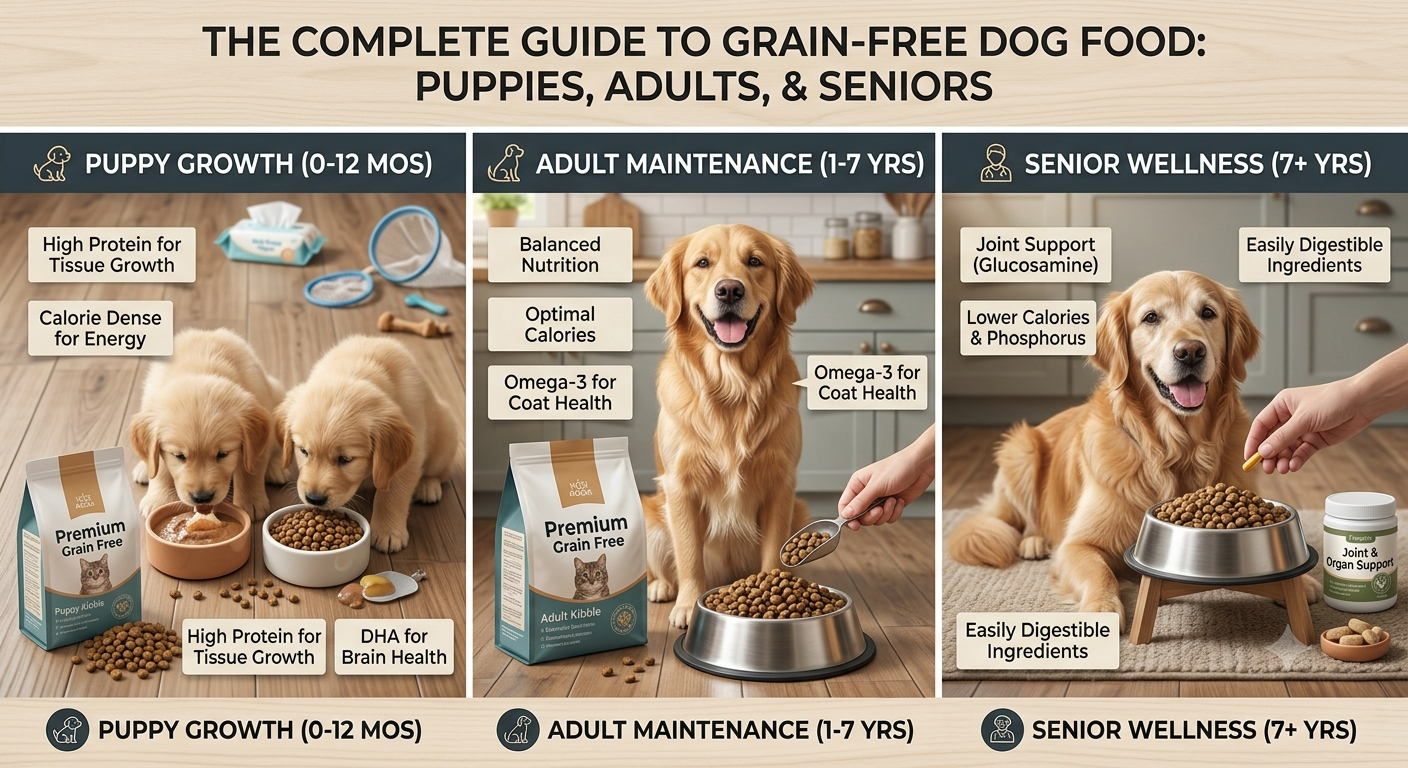
Choosing the right food for your dog can get confusing when you see so many options on the shelf. Grain-free diets are one of those choices that often raise questions — especially when you are feeding a puppy, an adult dog, or a senior. Understanding what these foods contain and when they may be appropriate can make your decision a little easier.
What Does Grain-Free Dog Food Actually Mean?
A grain-free diet does not contain grains such as wheat, corn, rice, barley, or oats. Instead, recipes may use ingredients such as potatoes, peas, or other carbohydrate sources. Grain-free dog food can be an option for some dogs, but being grain-free does not automatically mean a food is healthier. The overall ingredients and nutritional balance still matter.
Is Grain-Free Food Suitable for Puppies?
Puppies have different nutritional needs because they are growing quickly and developing bones, muscles, and other body systems. A food designed specifically for puppies should provide the nutrients and calories needed during this stage. If you are considering grain free puppy food, check that the product is formulated for your puppy’s age and size rather than choosing it simply because it has no grains.
What Should Adult Dogs Eat?
Adult dogs usually need a diet that matches their activity level, size, and overall lifestyle. A dog that spends hours running and playing may have different calorie needs from one that prefers relaxing on the sofa. Grain free dry dog food can be convenient for many households, but check the feeding instructions and adjust portions based on your dog’s individual needs.
Can Senior Dogs Eat Grain-Free Food?
Senior dogs can eat grain-free food if it meets their nutritional needs and works well for them. However, age can bring changes in activity, weight, digestion, and other dietary requirements. Instead of focusing only on whether a food contains grains, consider the complete nutritional profile and speak with your veterinarian if your older dog has specific dietary concerns.
Are Grain-Free Diets Better for Dogs With Allergies?
Food allergies and intolerances can involve different ingredients, so removing grains does not automatically solve the problem. If your dog has recurring itching, digestive problems, or other unusual reactions, avoid changing foods repeatedly without guidance. A veterinarian can help identify possible triggers and recommend an appropriate feeding approach.
How Do You Switch to a New Dog Food?
Changing food suddenly can sometimes cause digestive upset. A gradual transition is usually easier for many dogs. Start by mixing a small amount of the new food with their current food, then slowly increase the new portion over several days. Keep an eye on appetite, stool, and general behaviour during the change.
What Should You Check Before Buying Grain-Free Food?
Look beyond the “grain-free” label and read the product information carefully. Consider your dog’s life stage, size, activity level, feeding needs, and any dietary concerns. Portion guidance is also worth checking because the right amount can vary between products.
Where Can You Find Grain-Free Dog Food?
Pet Supermarket offers a variety of dog food options for different life stages and dietary preferences. You can compare products and choose an option that fits your dog’s age, routine, and individual feeding needs.
Grain-free food can be one option among many, but the best choice depends on the individual dog. A little label-checking and attention to your dog’s response can go a long way.