
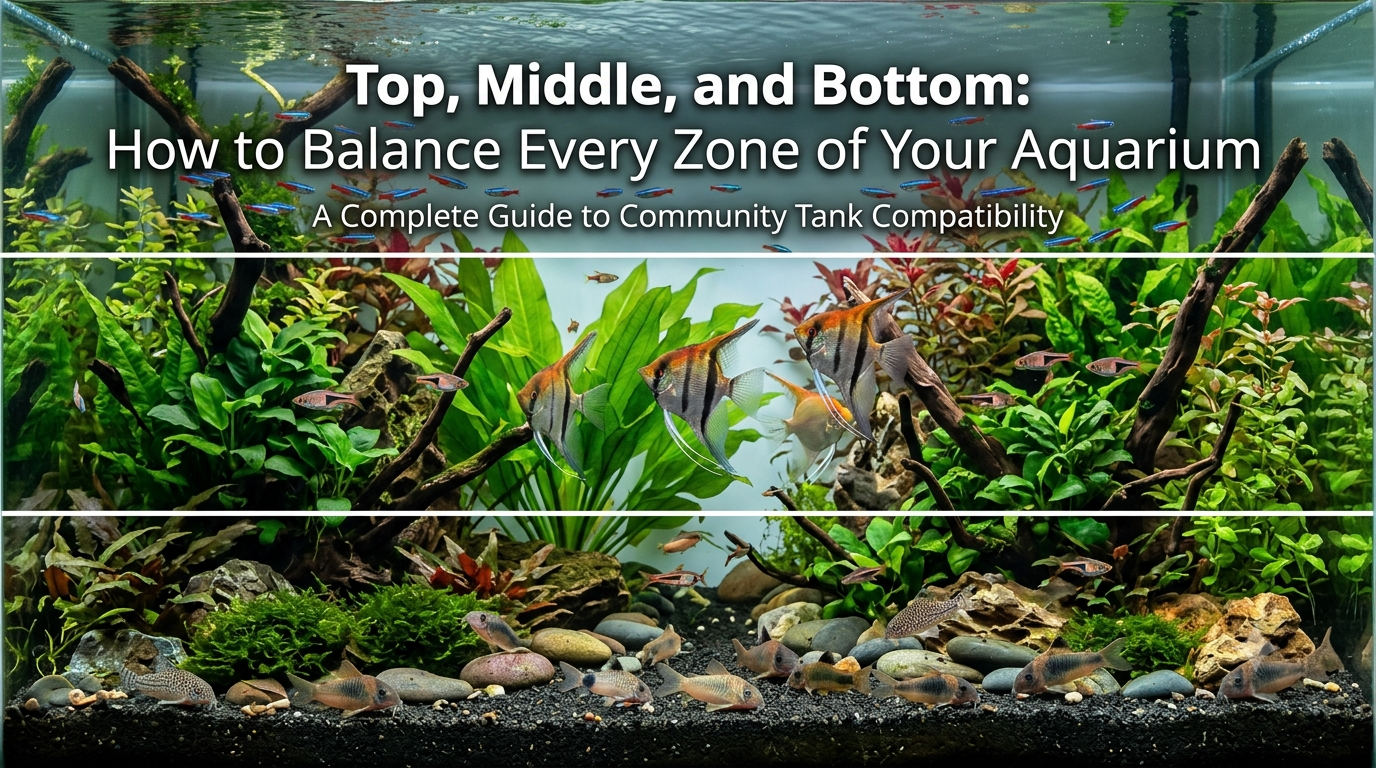
A well-planned aquarium is more than a collection of fish swimming around. It has movement at the surface, activity in the middle, and life near the bottom. When each area has something to offer, the tank feels more natural and gives fish room to behave as they normally would. The trick is choosing suitable tank mates, arranging decorations thoughtfully, and making the most of the space available.
Understand the Three Zones
The top zone is where surface-dwelling fish spend much of their time, often searching for food or swimming near floating plants. The middle zone usually has the most visible movement, while the bottom provides space for fish that prefer exploring gravel, plants, and hiding spots. Before adding new fish, observe how the current residents use these areas. This simple step can help prevent overcrowding in one section of the aquarium.
Add Activity to the Middle
Middle-zone fish often become the main attraction because they swim in open water where they are easy to see. A group of cherry barb fish can bring gentle movement and colour to a suitable community aquarium. These fish generally do best in groups, with enough swimming room and stable water conditions. Leave some open space in the centre of the tank instead of filling every inch with decorations. Plants around the edges can provide cover without blocking the view.
Give Bottom Dwellers Room to Explore
The lower zone should offer more than leftover space beneath the other fish. Rocks, driftwood, and aquarium-safe plants can create small areas to investigate and places to retreat. However, avoid piling decorations so closely together that fish cannot move freely. If considering a rainbow shark for sale, research its adult size and territorial behaviour first. Rainbow sharks often defend areas near the bottom, so they may not suit every community setup. Tank size, layout, and the temperament of existing fish all matter.
Make the Top Zone Useful
The surface area can easily be overlooked, especially when most attention goes to colourful fish and underwater decorations. Floating plants can provide shade and help fish feel more secure, but leave enough open surface for gas exchange and feeding. Keep equipment positioned so water circulation remains effective. Also, check whether fish can reach the food comfortably; some may feed near the surface while others wait for food to sink.
Create Balance Without Overcrowding
A balanced aquarium does not need fish in every zone at all times. The goal is to give different species suitable space, not to fill every available gap. For example, a peacock gudgeon may spend time near the bottom, exploring around plants and hiding places. It still needs compatible tank mates, suitable water conditions, and a peaceful environment. Always check species-specific care needs before mixing fish, and introduce new residents gradually.
Keep the Aquarium Comfortable
Good filtration, regular water testing, and consistent maintenance help every zone stay healthy. Feed appropriate amounts and remove uneaten food before it affects water quality. Watch for signs of stress, such as persistent hiding, damaged fins, or one fish repeatedly chasing another. Small changes to the layout may help, but ongoing aggression can mean the tank mates are not compatible.
A little planning goes a long way. When the top, middle, and bottom each provide suitable space, your aquarium can feel more organised and natural without becoming crowded.
Pet Supermarket can be a convenient place to explore aquarium fish, food, filters, and decorations for your setup. Having the right supplies ready makes it easier to maintain a comfortable environment as your aquarium grows. Get now - https://www.petsupermarket.com/