
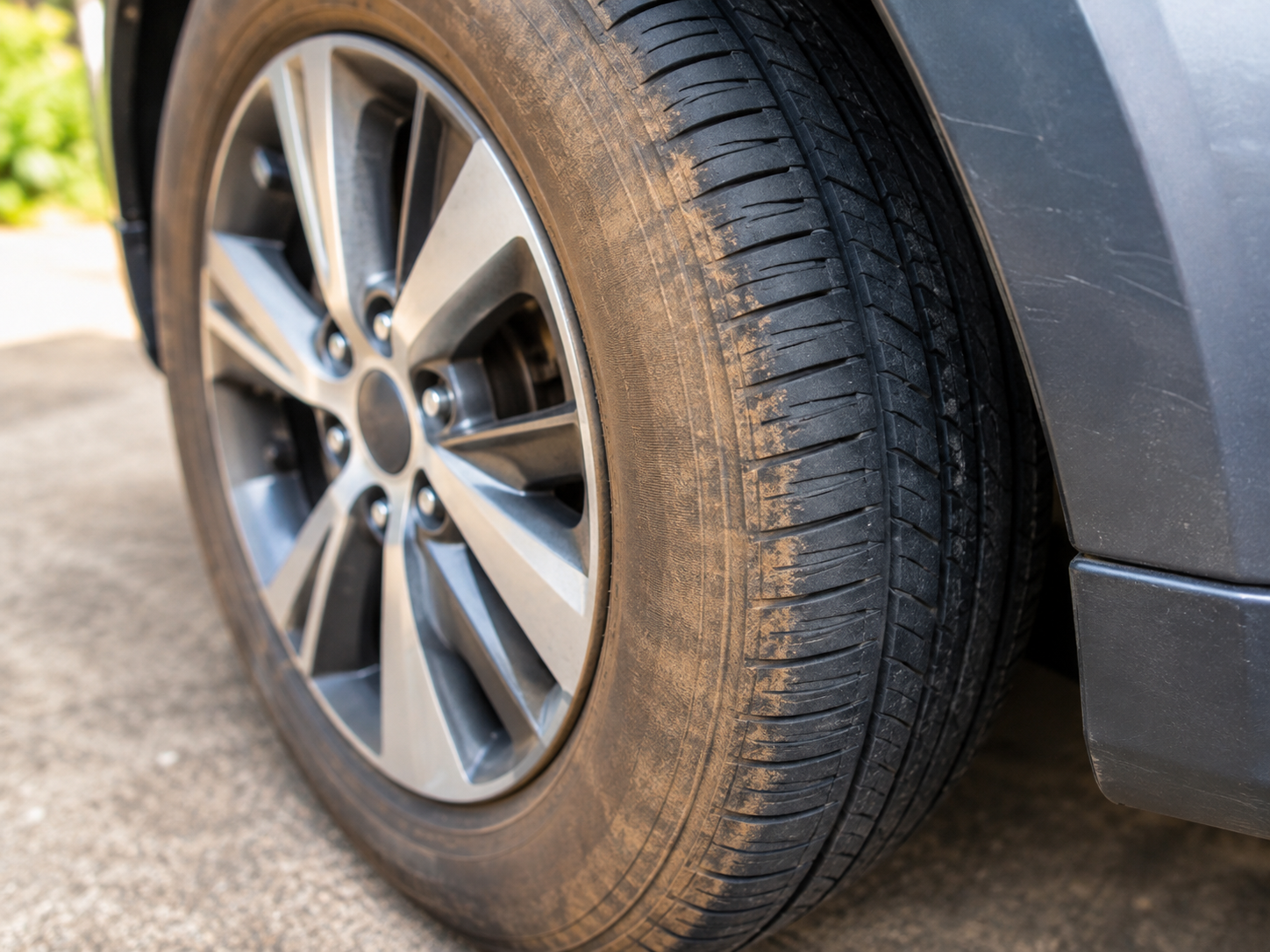
Have you noticed your car tires turning brown instead of staying deep black? This common phenomenon is called tire blooming, and it's usually not caused by dirt or mud.
Tire blooming happens when protective chemicals called antiozonants migrate to the tire's surface. Tire makers add antiozonants during manufacturing to protect the rubber from ozone, oxidation, UV exposure, and premature cracking. When exposed to air, they react and create a brownish discoloration on the tire sidewall.
What causes tire blooming?
Several factors contribute to tire blooming, including:
- Exposure to oxygen, ozone, and sunlight.
- Heat and environmental conditions.
- Natural migration of protective chemicals within the rubber.
- Infrequent tire cleaning, allowing surface residue to accumulate.
How can you prevent tire blooming?
While you cannot completely prevent this natural process, proper tire care can minimize its appearance.
- Clean your tires regularly using a dedicated tire cleaner or mild automotive soap.
- Use a soft tire brush to remove accumulated residue.
- Rinse thoroughly and allow the tires to dry.
- Avoid harsh chemicals and household cleaners that can damage rubber.
- Apply a water-based tire dressing to restore the tire's clean, dark finish.
Keep in mind that infrequent cleaning and neglect are the main causes of tire blooming. Regular cleaning and proper maintenance will help keep your tires looking their best!