
Most people don't regret the questions they asked their parents. They regret the ones they never got around to — the story behind a photograph, the name of a grandmother nobody talks about anymore, the advice a parent meant to pass on and never found the moment for.
The holidays are the moment. When family is in the same room, the conversation is already halfway started. You don't need a hundred questions, and you don't need a formal interview. You need a few good ones, asked at an ordinary time, and a way to keep the answers.
Start with something easy, not something heavy
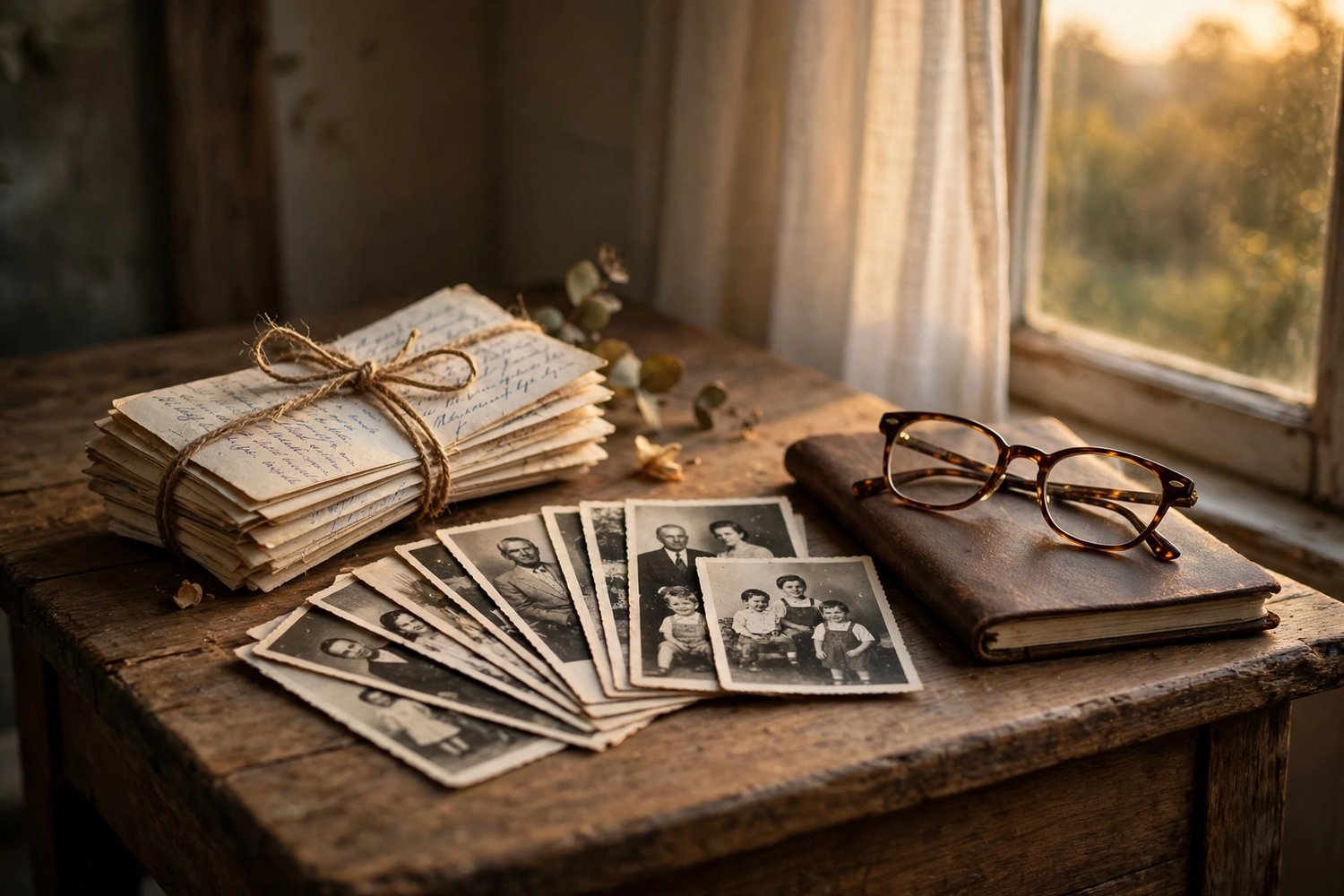
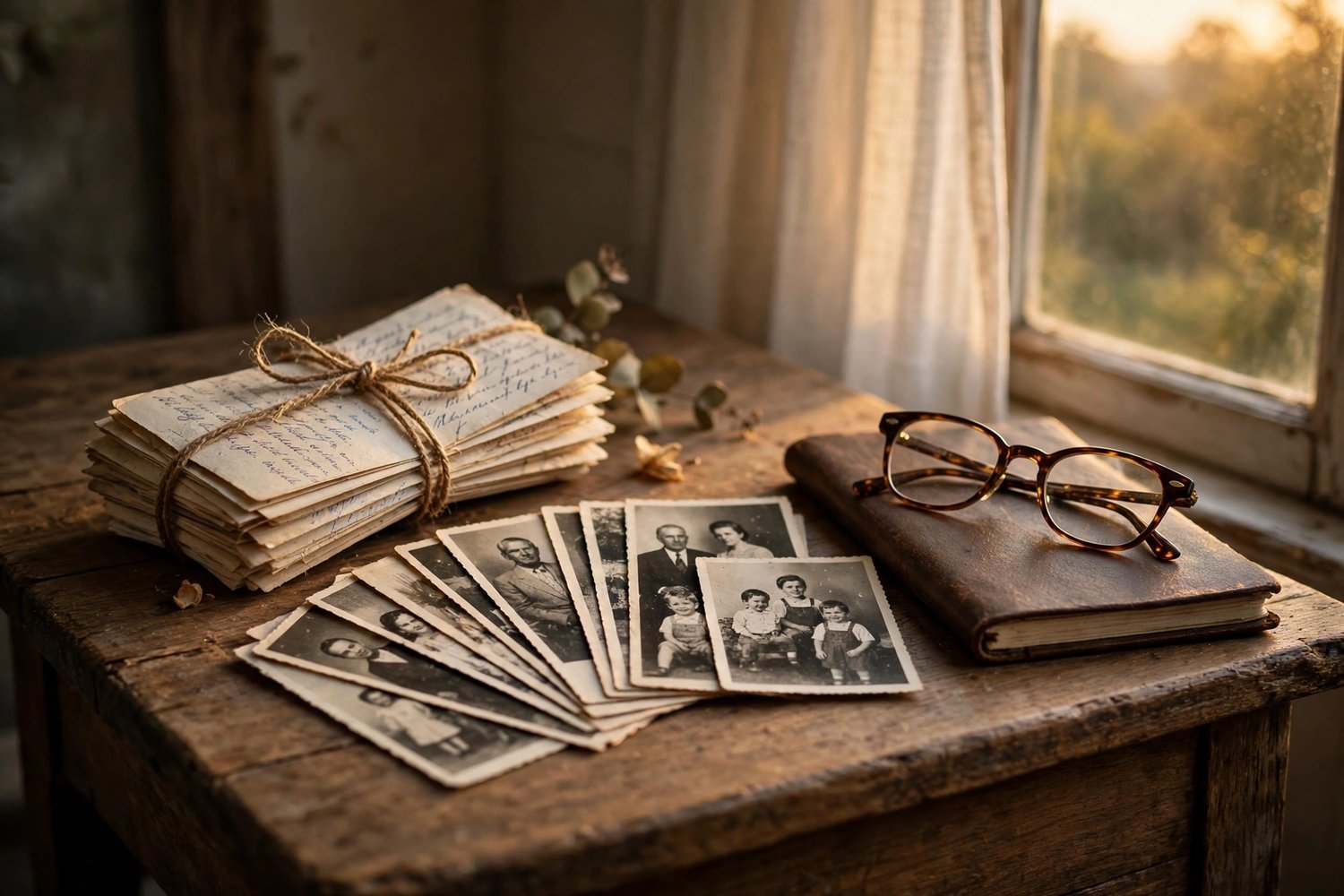
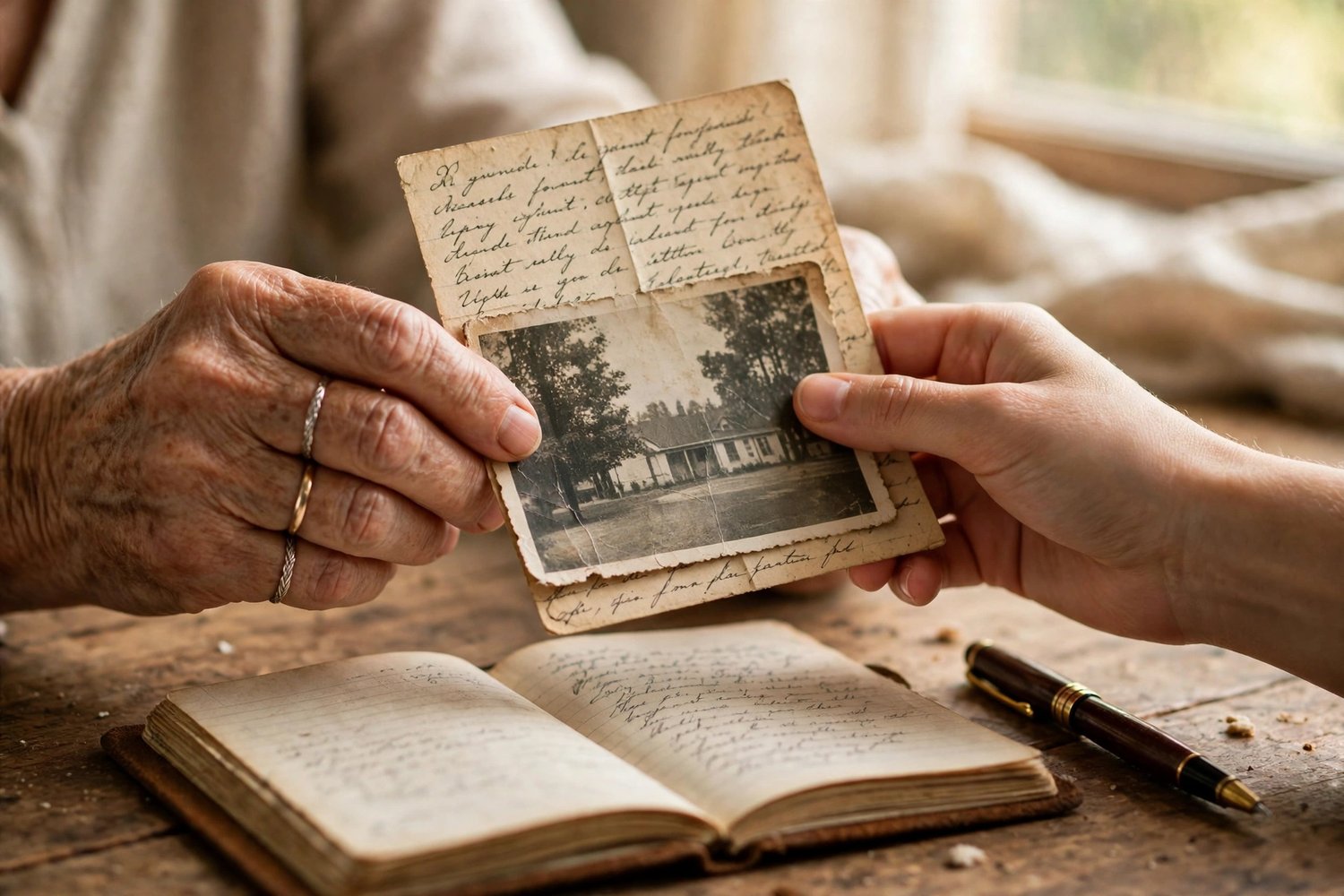
"Tell me about your childhood" can feel like homework. A photograph does the work for you. Pull out an old picture and ask, "Who is this? What was happening here?" One photo usually unlocks three stories, and the next photo unlocks three more. If your parent seems unsure where to begin, start with something light: their first car, their first job, the trouble they got into as a teenager. Easy questions build trust for the deeper ones.
The questions that matter most
You don't have to ask all of these. Pick the ones that fit your parent, and let the answers lead you to the next question.
Their childhood and family roots. What was your home like growing up? Who were you closest to in your family? What did your parents do, and what did they teach you that stuck? Ask about relatives who died before you were born — your parent may be the only person left who remembers them, and their stories are the only record your family will ever have.
Love, work, and hard times. How did you meet Mom/Dad? What was your first job, and what did you want to be when you grew up? What was the hardest time in your life, and what got you through it? These are the answers that turn a parent from a role into a person — someone who was young once, unsure once, brave once.
Advice and values. What are you proudest of? What do you wish you had done differently? What advice would you give me that you wish someone had given you? If there's one thing you want our family to remember about you, what is it? These questions sound big, but parents usually answer them gladly. Most have been waiting to be asked.
The practical ones, gently. While you're talking, ask the small practical things too: who is in the unlabeled photographs, where the family keepsakes came from, and which stories go with which objects. Writing a name on the back of a photo today saves a mystery for the next generation. Keep this part light — you're collecting memories here, not settling affairs.
How to save the answers
A story you don't write down is a story you'll lose. The simplest method still works: write down what they said, in their own words, the same day. Don't polish it into your version of the story — their wording is the keepsake. If you record audio or video, ask their permission first and keep it simple: a phone on the table, no setup, no performance.
One caution worth knowing: recording laws vary by state. In most states, one person in the conversation (you) consenting is enough, but in about a dozen states every person being recorded has to agree. The safest rule everywhere is the same: just ask. "Do you mind if I record this so I don't lose it?" works in every state, and it also tells your parent that what they're saying matters to you.
Keep it going, one question at a time
You don't need to finish in one sitting. One good question per visit beats a marathon interview that never happens. Keep a short list on your phone, add to it as questions occur to you, and bring one to every visit. Over a year, those single questions become a life story — told by the only person who lived it.
The best time to ask is while you still can, and the second-best time is the next time you're together. Thanksgiving dinner, a quiet afternoon, a drive somewhere — ordinary moments are where the real stories come out.
A kit that turns the answers into something lasting
If you want help turning those conversations into a finished keepsake, our Before the Stories Are Gone kit gives you the questions, the prompts, and a way to organize everything you collect into a record your family can keep: payhip.com/b/7PorM. It's AI-Ready, which means you can drop it into the AI assistant you already use and it will help you shape your notes and answers into an organized keepsake — no new app, no subscription.
Start with one photo and one question. That's all it takes.
Practical Guides Co kits are general information and organization tools — not legal advice. Recording consent rules vary by state; check your state's current rule or ask a licensed attorney if you're unsure.