
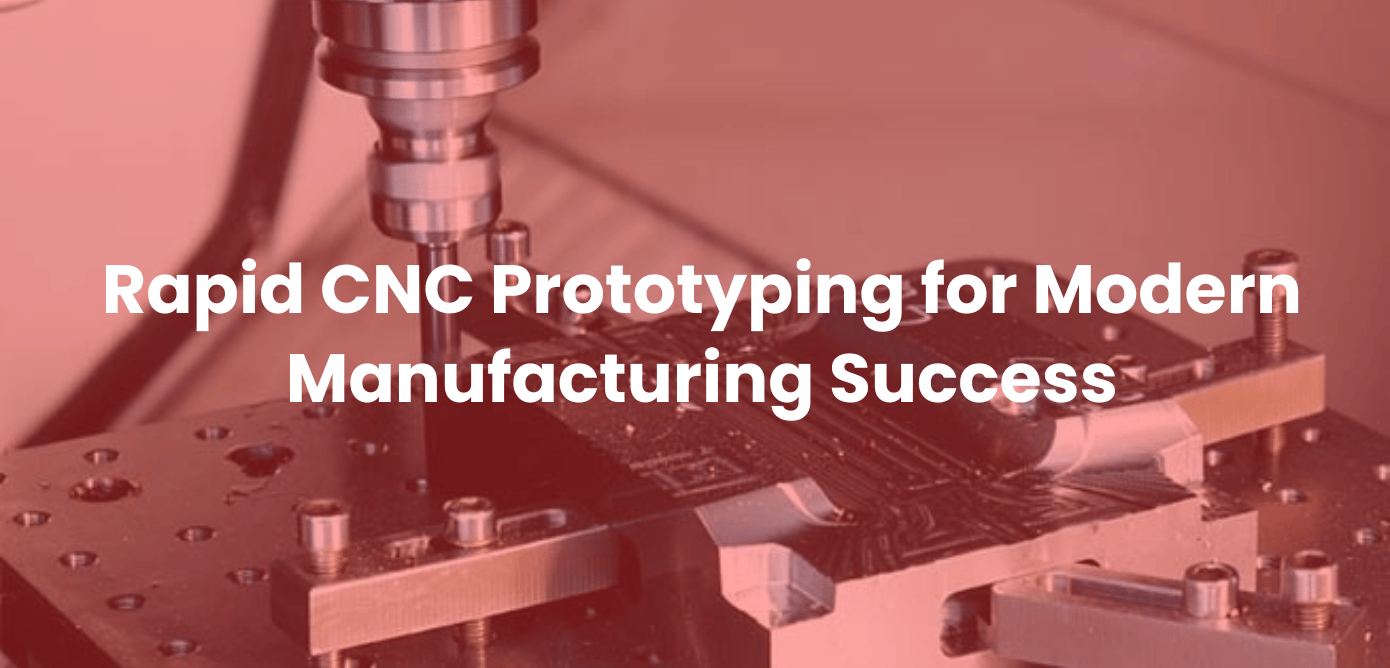
The manufacturing landscape has transformed dramatically with advanced machining technologies. Businesses now have access to sophisticated methods that turn design concepts into physical prototypes within days rather than weeks. This speed and precision have become fundamental for companies looking to stay competitive in fast-moving markets.
CNC machining prototyping has emerged as the backbone of product development across industries. From aerospace components to medical devices, the ability to quickly produce accurate prototypes helps teams validate designs, test functionality, and move confidently toward full-scale production.
Understanding Rapid CNC Prototyping
Rapid CNC prototyping uses computer-controlled machines to create physical parts from digital designs. The process removes material from solid blocks through precise cutting, drilling, and shaping operations. What makes this approach valuable is the combination of speed, accuracy, and material versatility.
Modern CNC centers can work with metals, plastics, composites, and specialty materials. This flexibility means engineers can test prototypes using the same materials intended for final production, providing realistic performance data early in the development cycle.
The technology supports complex geometries that would be difficult or impossible to achieve through traditional manufacturing methods. Internal channels, intricate surface details, and tight tolerances become achievable without extensive tooling investments.
Benefits of CNC Milling Services
Professional CNC milling services bring several advantages to product development teams:
Speed to Market Digital files translate directly to machine instructions, eliminating lengthy setup procedures. Many service providers can start production within 24 hours of receiving approved CAD files.
Cost Efficiency Low-volume production doesn't require expensive molds or dies. Companies can produce anywhere from one to several hundred units economically, making it ideal for testing and limited releases.
Design Iteration When testing reveals needed improvements, design changes can be implemented quickly. Updated prototypes can be in hand within days, allowing rapid refinement cycles.
Quality Validation Physical prototypes allow hands-on evaluation of fit, finish, and function. Teams can identify issues before committing to large production runs, saving significant time and resources.
Custom CNC Milling Applications
Custom cnc milling addresses unique manufacturing challenges across diverse sectors. Medical device manufacturers rely on this capability to produce patient-specific implants and surgical instruments. Automotive teams use it for custom brackets, housings, and testing fixtures.
Consumer electronics benefit from the ability to create precise enclosures and mounting components. Even small production runs become viable when traditional manufacturing methods would be prohibitively expensive.
The customization extends beyond part geometry. Surface finishes, material selection, and secondary operations can all be tailored to specific application requirements. Whether parts need anodizing, powder coating, or specialized treatments, the process accommodates these needs seamlessly.
Precision Standards in CNC Machining
CNC precision machining delivers tolerances that meet demanding specifications. Modern multi-axis machines routinely hold dimensions within 0.001 inches, with specialized equipment achieving even tighter tolerances when required.
This precision proves critical in assemblies where multiple components must fit together perfectly. Mating surfaces, threaded connections, and alignment features all depend on consistent accuracy across production batches.
Quality control measures verify dimensions throughout the manufacturing process. Coordinate measuring machines (CMM) and optical comparators confirm that finished parts meet blueprint specifications before shipping.
Temperature-controlled environments help maintain dimensional stability. As metals and plastics expand or contract with temperature changes, climate control ensures measurement accuracy and consistent part quality.
Material Selection Considerations
Choosing the right material impacts prototype performance and manufacturing success. Aluminum alloys offer excellent machinability with good strength-to-weight ratios. Stainless steel provides corrosion resistance for harsh environments. Engineering plastics like PEEK and Delrin work well for non-metallic applications.
Material properties affect machining parameters, tool selection, and achievable surface finishes. Experienced providers help match material characteristics to application requirements, considering factors like strength, weight, thermal properties, and chemical resistance.
From Prototype to Production
The path from initial prototype to full production often involves several iterations. Early prototypes focus on form and basic function. Subsequent versions refine details, test durability, and validate manufacturing processes.
CNC machining prototyping supports this progression naturally. The same equipment and processes used for prototypes can often scale to low or medium-volume production. This continuity reduces transition risks and maintains consistent quality standards.
Design for manufacturability reviews help optimize parts for efficient production. Small changes to radii, wall thicknesses, or feature placement can significantly reduce machining time and cost without compromising functionality.
Choosing the Right Service Provider
Selecting a machining partner involves evaluating several factors. Technical capabilities should match project requirements, including machine size, axis configuration, and available materials. Quality certifications like ISO 9001 indicate established process controls.
Communication responsiveness matters during development cycles. Providers who offer design feedback and manufacturing suggestions add value beyond basic machining services. Quick turnaround times and reliable delivery schedules keep projects on track.
Review sample work and request references from similar industries. Past performance with comparable projects provides insight into a provider's capabilities and reliability.
Frequently Asked Questions
How quickly can CNC prototypes be produced?
Simple parts often ship within 2-3 business days. Complex components with tight tolerances may require 5-7 days. Rush services can sometimes deliver critical parts within 24 hours.
What file formats do CNC services accept?
Most providers work with standard CAD formats including STEP, IGES, and Parasolid. Native files from SolidWorks, Inventor, and other major CAD platforms are typically supported.
Can CNC machining produce threaded features?
Yes, threads can be cut directly using specialized tooling or tapped after primary machining operations. Both internal and external threads are readily achievable.
What surface finishes are available?
Standard machined finishes, bead blasting, anodizing, powder coating, and polishing are common options. The ideal finish depends on application requirements and aesthetic preferences.
Is CNC prototyping suitable for plastic parts?
Absolutely. Many engineering-grade plastics machine well and provide excellent prototype performance. Material selection depends on required properties like temperature resistance, strength, and chemical compatibility.