
The FINRA Series 99, officially known as the FINRA Operations Professional Exam, is a pivotal certification designed for professionals involved in the securities industry. This credential validates an individual's expertise in the critical operational aspects and regulatory requirements governing broker-dealers. Ideal candidates are those working in or aspiring to roles in back-office operations, compliance, or risk management, where a deep understanding of securities processing, recordkeeping, and professional conduct is essential. This comprehensive article delves into what the FINRA Series 99 certification entails, its structure, key syllabus areas, career advantages, and strategic preparation insights to help you navigate your path to success.
Understanding the Operations Professional Role
The operations professional within the securities industry plays a fundamental role in ensuring the smooth and compliant functioning of a broker-dealer's back-office activities. This role bridges the gap between client-facing activities and the complex infrastructure required to execute and settle trades, maintain accurate records, and adhere to a myriad of regulatory obligations. Possessing the FINRA Series 99 certification signifies that an individual has demonstrated a comprehensive understanding of these critical responsibilities, fostering trust and operational efficiency within their organization.
The duties associated with an operations professional extend beyond mere task execution. They encompass the strategic management of risk, the meticulous oversight of data integrity, and the proactive implementation of compliance frameworks. Without a robust operations team, even the most successful front-office endeavors can falter due to settlement delays, regulatory breaches, or inefficient processes. This credential, therefore, underscores a commitment to operational excellence and regulatory adherence.
Defining Key Responsibilities
An operations professional's daily activities are diverse and impactful. They are often involved in various stages of a transaction's lifecycle, from trade execution through to settlement and recordkeeping. Their work directly impacts a firm's ability to meet its legal and ethical obligations while servicing clients effectively.
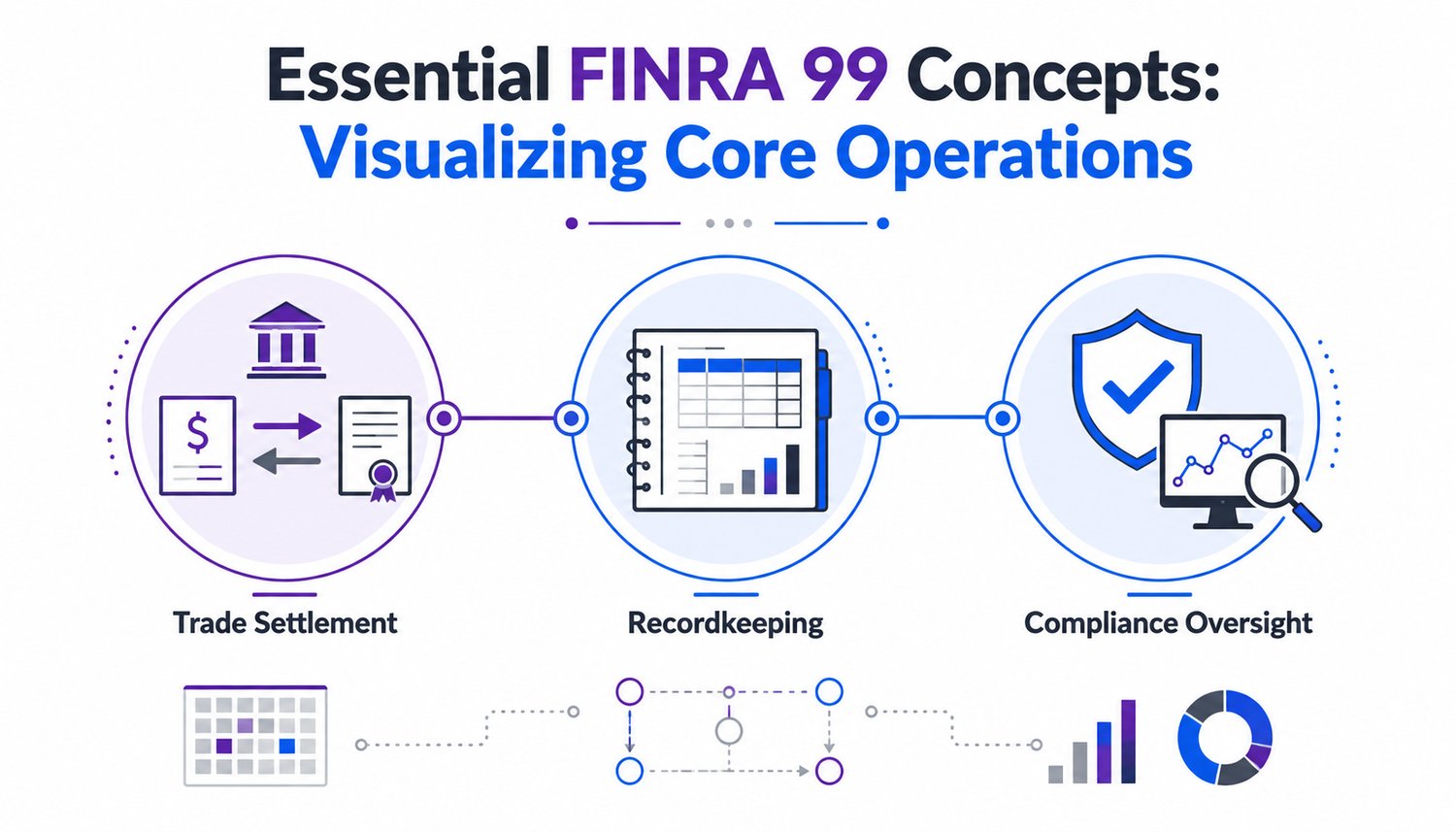
- Trade Processing and Settlement: Managing the confirmation, allocation, clearance, and settlement of securities transactions, ensuring timely and accurate completion.
- Recordkeeping and Reporting: Maintaining accurate books and records in compliance with FINRA and SEC rules, including trade blotters, ledgers, and customer account information.
- Regulatory Compliance: Implementing and monitoring policies and procedures to ensure adherence to anti-money laundering (AML), customer identification program (CIP), and other essential regulatory frameworks.
- Risk Management: Identifying, assessing, and mitigating operational risks that could impact the firm's financial stability or reputation.
Examining the FINRA Series 99 Credential
The FINRA Series 99, or Operations Professional Exam, is a specialized qualification tailored for individuals whose responsibilities primarily focus on the operational support and compliance functions of a FINRA member firm. This certification serves as an essential benchmark, affirming an individual’s proficiency in the intricate details of broker-dealer operations, including trade processing, recordkeeping, and regulatory compliance. Earning this designation not only enhances an individual's professional standing but also reinforces the firm's overall operational integrity and adherence to industry standards.
The exam's design is focused on practical knowledge, ensuring that certified professionals are well-equipped to handle the daily complexities of back-office functions. It validates the skills needed to manage various operational risks, implement effective control procedures, and maintain robust systems for data management and reporting. For those aiming to specialize in the operational backbone of the financial services sector, the Series 99 offers a clear path to demonstrating expert-level competence.
Details of the Operations Professional Exam
Understanding the structure and requirements of the FINRA Series 99 exam is the first step toward effective preparation. The exam is administered by FINRA and requires candidates to demonstrate a solid grasp of both industry knowledge and ethical conduct. Success in this exam showcases a candidate’s readiness to uphold the high standards of integrity and efficiency expected within financial operations.
The core details of the exam are as follows:
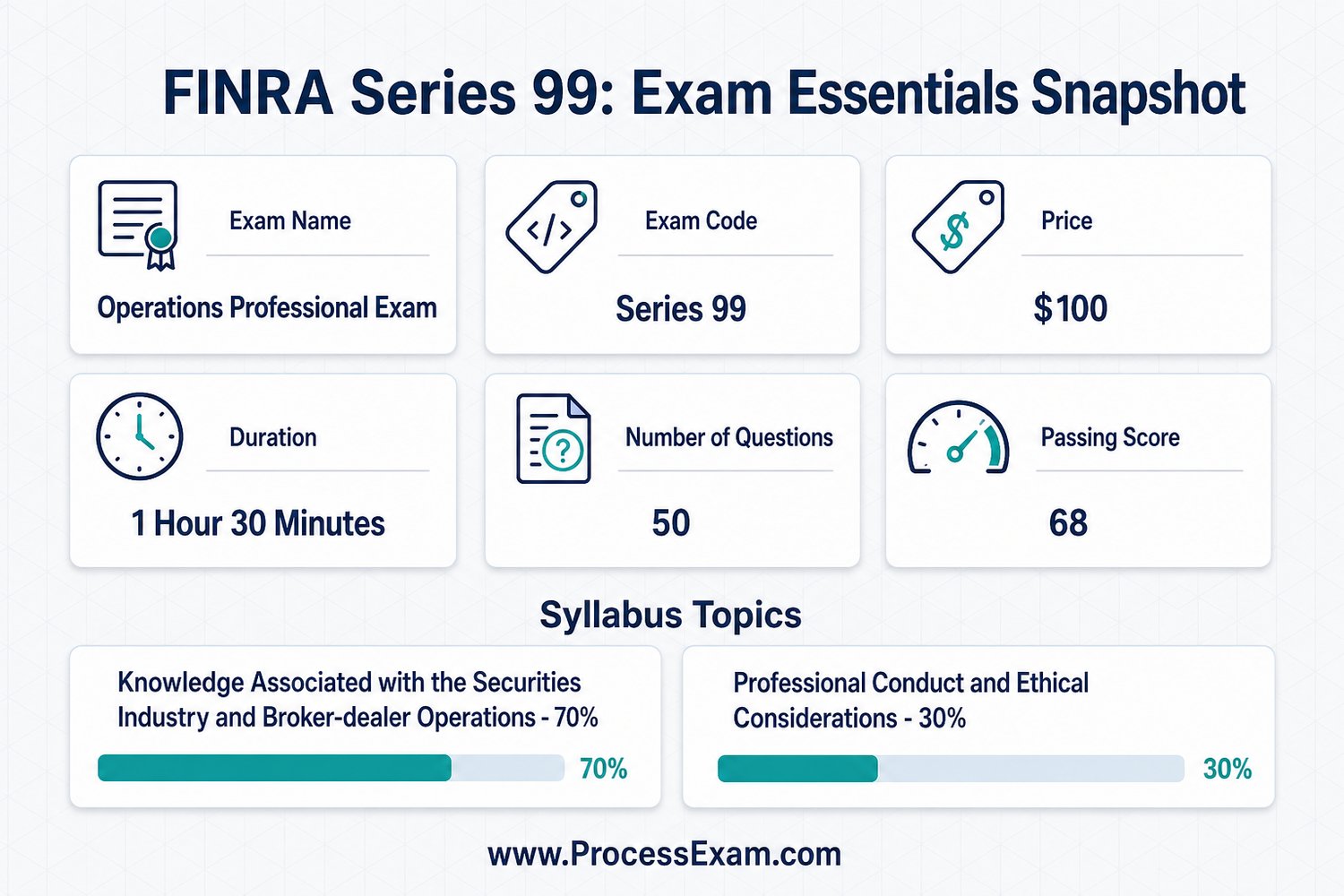
- Exam Name: FINRA Operations Professional Exam
- Exam Code: Series 99
- Exam Price: USD $100
- Duration: 90 Minutes
- Number of Questions: 50
- Passing Score: 68%
These parameters underscore the focused nature of the Series 99, emphasizing a need for precision and a thorough understanding of the subject matter within a timed environment. Candidates must be prepared to answer a significant number of questions efficiently while maintaining accuracy to meet the passing threshold. For official information and details about registration, candidates should always refer to the FINRA official page.
Charting the FINRA Series 99 Exam Content Outline
The FINRA Series 99 exam content outline is meticulously structured to cover the breadth of knowledge required for an operations professional. It ensures that candidates are tested on the most relevant and critical aspects of securities industry operations and ethical considerations. A thorough understanding of this outline is crucial for anyone planning to successfully pass the FINRA Series 99 exam.
The syllabus is divided into two primary sections, each carrying a specific weight, reflecting the importance of both technical operations knowledge and professional conduct in the field. This division ensures that candidates possess a balanced skill set, capable of both executing operational tasks and adhering to the highest ethical standards. To get the most current and detailed content outline, refer to the official FINRA Series 99 content outline document.
Core Syllabus Topics and Weightage
The exam focuses on two major functional areas, providing a clear roadmap for study. Candidates must allocate their study time proportionally to these weights to maximize their chances of success.
Knowledge Associated with the Securities Industry and Broker-dealer Operations - 70%
- This significant portion covers the mechanics of the securities industry, including trade life cycles, settlement processes, clearance, and custody.
- It also delves into the operational aspects of various securities products, corporate actions, and margin requirements.
- Candidates are expected to understand internal controls, risk management procedures, and the regulatory framework surrounding operational activities, including the critical role of the SEC and FINRA rules.
Professional Conduct and Ethical Considerations - 30%
- This section emphasizes the importance of ethical behavior, compliance with rules regarding communication with the public, and safeguarding customer information.
- It covers anti-money laundering (AML) regulations, customer identification programs (CIP), and other policies designed to prevent financial crime.
- Understanding supervisory responsibilities and the general principles of fair dealing are also central to this topic, ensuring professionals act with integrity.
Unlocking Career Benefits with FINRA Series 99
Achieving the FINRA Series 99 certification can significantly elevate a professional's career trajectory within the financial services industry. This credential signals to employers a dedicated understanding of complex operational compliance topics, setting individuals apart in a competitive landscape. For those aspiring to leadership roles or seeking to deepen their specialization, the FINRA Series 99 career benefits are both tangible and transformative. It demonstrates a proactive approach to professional development and a commitment to maintaining the highest standards of industry practice.
Beyond individual advancement, firms also benefit from employing Series 99-certified professionals. These individuals contribute to enhanced operational efficiency, reduced regulatory risk, and a stronger culture of compliance, which are all vital for sustained success in a heavily regulated environment. The certification fosters a workforce capable of navigating the intricacies of financial operations with confidence and expertise.
Advancing Professional Opportunities
The Series 99 opens doors to a variety of roles and responsibilities, offering flexibility and growth within the operations and compliance sectors. It positions professionals as valuable assets capable of contributing to the strategic objectives of their firms.
- Enhanced Credibility: The certification provides formal recognition of expertise in operations, boosting professional standing and employer confidence.
- Expanded Job Roles: Qualified individuals may access positions such as Operations Manager, Compliance Officer, Middle Office Analyst, or Back Office Supervisor.
- Increased Earning Potential: Specialized knowledge often correlates with higher salary potential and greater opportunities for advancement.
- Regulatory Understanding: A deep grasp of FINRA Series 99 regulatory requirements is crucial for ensuring firm compliance, making certified individuals indispensable.
- Cross-Functional Value: Professionals with this certification can effectively liaise between different departments, translating operational complexities for various stakeholders.
Crafting a Winning FINRA Series 99 Study Guide
Effective preparation is the cornerstone of success for any challenging professional examination, and the FINRA Series 99 is no exception. Developing a comprehensive FINRA Series 99 study guide is essential to systematically cover the extensive content outline and ensure readiness for the exam. This involves more than just reading; it requires a strategic approach that combines structured learning with consistent practice.
Candidates should focus on understanding the underlying concepts rather than rote memorization, as the exam tests application of knowledge in real-world scenarios. A well-designed study plan will break down the syllabus into manageable segments, allowing for deep dives into critical areas like broker-dealer operations and professional conduct. Leveraging a variety of resources, from textbooks to online courses, can significantly enhance the learning experience.
Strategic Preparation Approaches
To maximize your chances of success, consider a multi-faceted approach that addresses different learning styles and reinforces understanding through repetition and application. The right blend of resources and techniques can make a significant difference in how to pass FINRA Series 99 exam.
- Understand the Content Outline: Begin by thoroughly reviewing the official FINRA Series 99 content outline. This serves as your roadmap, highlighting all the topics and their respective weightings.
- Gather Quality Study Materials: Invest in the best FINRA Series 99 study materials, which typically include textbooks, video lectures, and online question banks. Resources like a dedicated FINRA Series 99 online course can provide structured learning paths and expert instruction. For detailed preparation, consider exploring comprehensive resources like those found on Series 99 exam mastery resources.
- Create a Detailed Study Schedule: Develop a realistic study plan, allocating specific time slots for each topic. Factor in review periods and mock exams to track progress and identify weak areas.
- Engage with Practice Questions: Regularly tackle FINRA Series 99 practice questions. This helps in familiarizing yourself with the exam format, question types, and time constraints. Focus on understanding the rationale behind both correct and incorrect answers.
- Focus on Operations Compliance Topics: Given that 70% of the exam covers "Knowledge Associated with the Securities Industry and Broker-dealer Operations," dedicate substantial time to mastering FINRA Series 99 operations compliance topics. This includes trade processing, recordkeeping, and regulatory reporting.
- Review Ethical Considerations: While 30% of the exam, "Professional Conduct and Ethical Considerations" is critical. These topics often require careful thought and application of principles.
Mastering the FINRA Operations Professional Exam Prep
Successful preparation for the FINRA Operations Professional Exam prep demands more than just casual study; it requires a focused, disciplined, and strategic approach. Candidates must immerse themselves in the material, ensuring a deep understanding of the regulatory landscape and operational mechanics. This phase of preparation is crucial for transforming raw information into actionable knowledge, which is then applied under exam conditions.
It is during this intensive preparation period that individuals solidify their grasp of complex concepts, refine their problem-solving skills, and build the confidence necessary to face the exam. Leveraging all available resources, from study guides to mock tests, becomes paramount. A well-executed prep strategy not only aims for a passing score but also for a comprehensive understanding that benefits a professional's long-term career.
Leveraging Diverse Study Resources
To truly master the FINRA Series 99, a diverse set of study resources can provide varied perspectives and reinforce learning. Each resource type offers unique advantages that collectively contribute to a robust preparation strategy.
- Comprehensive Textbooks: These provide in-depth explanations of all syllabus topics, serving as the foundational knowledge base.
- Video Lectures: Engaging video content can simplify complex topics and offer visual aids for better retention, often part of a quality FINRA Operations Professional Exam syllabus coverage.
- Flashcards: Ideal for memorizing key terms, definitions, and regulatory acronyms, which are frequent components of the exam.
- Online Question Banks: Critical for practice, allowing candidates to test their knowledge, identify weak areas, and become accustomed to the exam's format and timing. ProcessExam provides resources that can help solidify your understanding.
- Study Groups: Collaborating with peers can offer new insights, foster discussions, and help clarify challenging concepts.
In addition to these, platforms like LinkedIn often feature discussions and insights from professionals who have recently passed the Series 99, providing real-world context and tips. Exploring such community-driven insights, like FINRA Series 99 questions answered, can be invaluable.
Navigating the FINRA Series 99 Exam Difficulty and Pass Rate
Candidates often wonder about the FINRA Series 99 exam difficulty and the typical FINRA Operations Professional Exam pass rate. While FINRA does not publicly disclose specific pass rates for individual exams, it is generally understood that qualification exams require diligent preparation and a thorough understanding of the material. The Series 99, like other FINRA exams, is designed to test a candidate's readiness to perform critical operational functions within a highly regulated industry.
The challenge lies not only in the volume of information but also in the need to apply concepts to real-world scenarios. Success hinges on a robust study plan, consistent effort, and the ability to critically analyze questions. While there's no official pass rate to provide specific expectations, anecdotal evidence and industry feedback suggest that candidates who commit to a structured study regimen have a significantly higher chance of success.
Understanding Exam Registration and Logistics
Beyond the intellectual challenge, the logistical process of FINRA Series 99 exam registration requires careful attention. Understanding these steps ensures a smooth path to sitting for the examination.
The registration process typically involves:
- Sponsorship: Candidates must be sponsored by a FINRA member firm. This firm will handle the formal registration process through the FINRA Gateway.
- Form U4 Submission: The sponsoring firm files a Uniform Application for Securities Industry Registration or Transfer (Form U4) on behalf of the candidate. This form includes personal background information and requests for specific examinations.
- Scheduling the Exam: Once registered, candidates will receive instructions on how to schedule their exam appointment through a testing vendor like Prometric. It is crucial to schedule well in advance to secure a preferred date and time.
- Exam Fees: The exam fee (currently USD $100) must be paid at the time of registration.
- Careful adherence to these steps and deadlines is crucial to avoid any last-minute complications.
Ensuring all prerequisites are met simplifies the process and allows candidates to focus on their studies.
Cultivating a Proactive Approach to Compliance
The FINRA Series 99 certification is not merely a testament to operational knowledge; it also underscores a professional’s ability to cultivate a proactive approach to compliance. In an industry characterized by evolving regulations and heightened scrutiny, an operations professional who understands and anticipates compliance needs is invaluable. This certification equips individuals with the framework to implement robust internal controls, identify potential risks, and foster an organizational culture of integrity.
Beyond simply meeting minimum requirements, a proactive compliance mindset involves continuous learning and adaptation. Professionals certified in Series 99 are better positioned to drive best practices within their firms, translating complex regulatory texts into actionable operational policies. This forward-thinking approach is critical for mitigating reputational damage, avoiding costly penalties, and ultimately protecting client assets and trust.
Integrating Regulatory Requirements into Operations
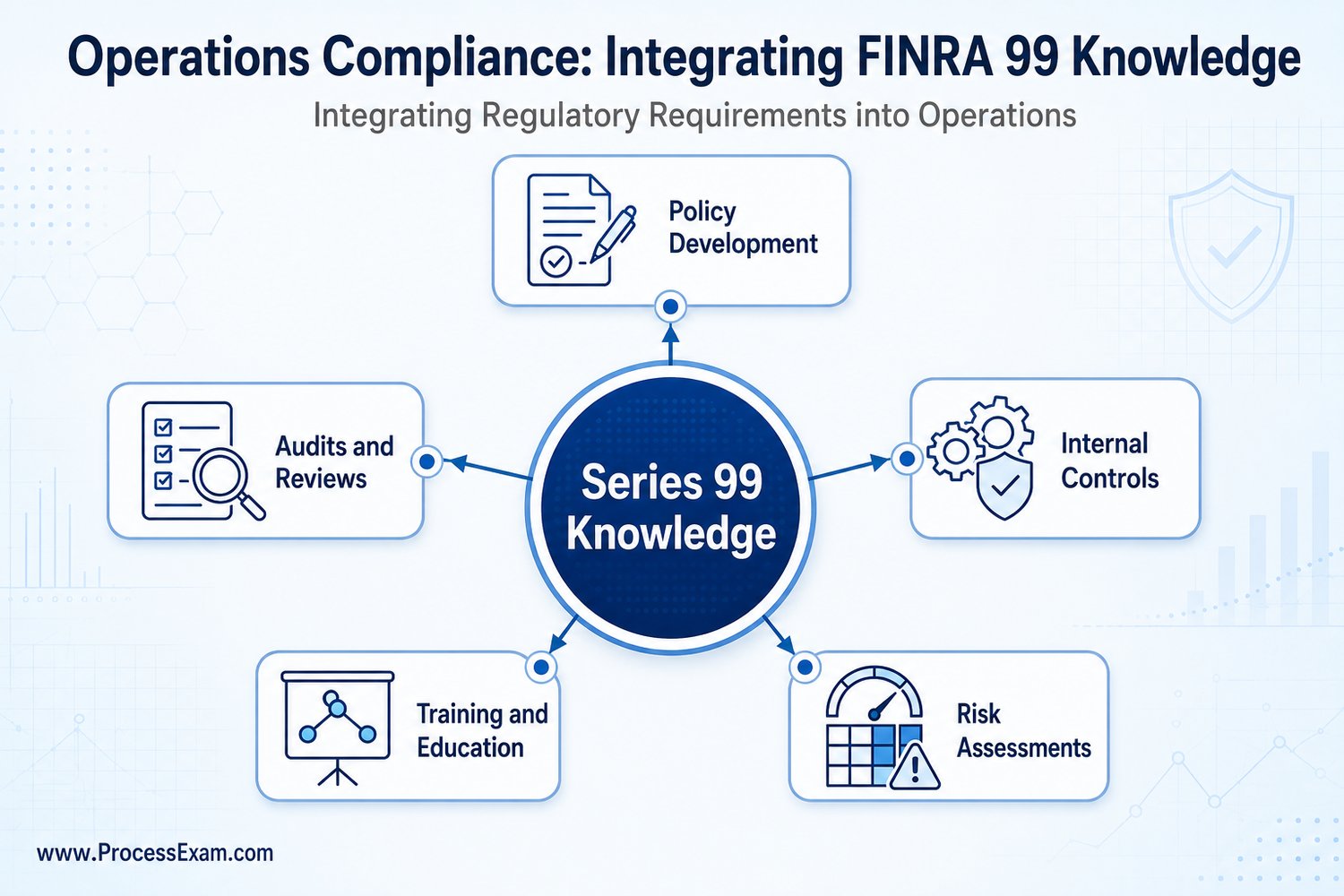
A core competency validated by the Series 99 is the ability to seamlessly integrate regulatory requirements into the daily operational fabric of a broker-dealer. This ensures that compliance is not an afterthought but an intrinsic part of every process.
- Policy Development: Assisting in the creation and refinement of firm policies and procedures that align with FINRA and SEC rules.
- Internal Controls: Designing and implementing controls to prevent, detect, and correct violations of securities laws and firm policies.
- Risk Assessments: Regularly conducting operational risk assessments to identify vulnerabilities in processes, systems, or data handling.
- Training and Education: Participating in or leading training initiatives to ensure all relevant personnel understand their compliance obligations.
- Audits and Reviews: Supporting internal and external audits by providing accurate documentation and explanations of operational processes.
Sustaining Your Edge: Continuous Learning and the Series 99
Earning the FINRA Series 99 is a significant accomplishment, yet it represents the beginning, not the end, of a commitment to professional growth. The financial services industry is dynamic, with regulations, technologies, and market practices constantly evolving. Sustaining your edge as an operations professional requires continuous learning and a proactive stance toward staying informed and adaptable. The knowledge gained from preparing for and passing the Series 99 forms a strong foundation, but it must be regularly built upon.
Ongoing education ensures that professionals remain current with new FINRA Series 99 regulatory requirements, emerging operational challenges, and best practices in risk management. This commitment not only benefits individual career development but also reinforces the resilience and compliance posture of the firms they serve.
Strategies for Ongoing Professional Development
Maintaining expertise post-certification involves several key strategies, fostering a mindset of lifelong learning within the demanding financial sector.
- Industry Publications: Regularly read industry news, whitepapers, and regulatory updates from FINRA, SEC, and other relevant bodies.
- Continuing Education Programs: Participate in FINRA’s Continuing Education (CE) program and other relevant professional development courses to stay compliant and informed.
- Professional Networks: Engage with peers and experts through industry associations, conferences, and online forums to share insights and learn about new trends.
- Internal Firm Training: Actively participate in internal training sessions and workshops offered by your firm on new products, systems, or compliance procedures.
- Specialized Courses: Consider pursuing advanced certifications or specialized courses in areas like cybersecurity, data analytics, or specific financial instruments to broaden your skill set.
The FINRA Series 99 certification is more than just an exam; it is a gateway to a rewarding and impactful career in financial operations. It equips you with the essential knowledge to navigate complex regulatory landscapes, manage critical operational functions, and contribute significantly to the integrity and efficiency of your firm. By investing in this credential, you not only enhance your personal capabilities but also secure your position as a valued asset in the dynamic world of finance.
Embark on your journey to becoming a certified operations professional with confidence. Leverage comprehensive study materials and dedicated preparation resources to ensure you are fully equipped for success. For robust preparation tools and guidance, explore resources like those for effective exam preparation.
Frequently Asked Questions
1. What is the FINRA Series 99 certification for?
- The FINRA Series 99, or Operations Professional Exam, is a qualification for professionals working in the securities industry to demonstrate competence in operational and compliance functions within a broker-dealer, covering areas like trade processing, recordkeeping, and regulatory adherence.
2. Who needs to take the FINRA Series 99 exam?
- Individuals whose job responsibilities involve critical operational aspects of a broker-dealer, such as managing trade processing, maintaining books and records, or ensuring compliance with securities regulations, typically need to take the FINRA Series 99 exam.
3. How difficult is the FINRA Series 99 exam?
- The FINRA Series 99 exam is considered challenging, requiring a thorough understanding of securities industry operations and regulatory compliance. Success generally depends on diligent preparation, consistent study, and the ability to apply complex concepts to practical scenarios.
4. What topics are covered in the FINRA Series 99 exam?
- The FINRA Series 99 exam primarily covers two main areas: Knowledge Associated with the Securities Industry and Broker-dealer Operations (70% weight) and Professional Conduct and Ethical Considerations (30% weight).
5. What are the career benefits of obtaining the FINRA Series 99?
- Obtaining the FINRA Series 99 certification enhances credibility, expands job opportunities in operations and compliance roles, and can lead to increased earning potential and career advancement within the financial services industry.