

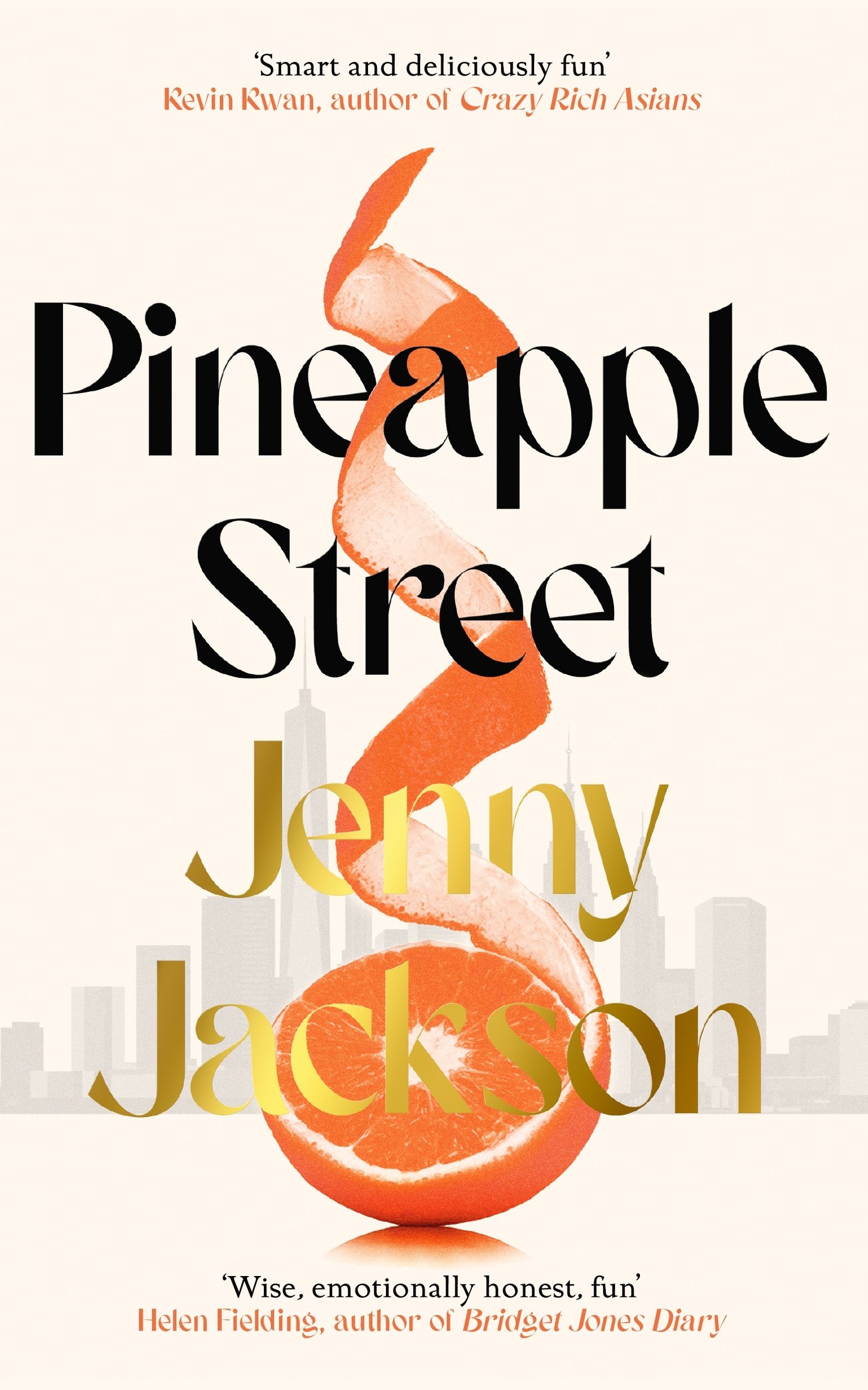
Pineapple Street is the debut novel by Jenny Jackson, which follows three women in an old Brooklyn Heights clan: one who was born with money, one who married into it, and one who wants to give it all away. The novel explores the themes of class, elitism, power and privilege. The folly with the novel is it relies heavily on didacticism to the point where it gets preachy – especially in the last third act. To succinctly elaborate why these themes could have been executed better, we have to explore a TV series that executes the same themes without pontificating – Gossip Girl.
Gossip Girl follows the scandalous lives of privileged teenagers on Manhattan's Upper East Side, whose every move is documented by an anonymous, omniscient blogger. The series focuses on the friendships, betrayals, and romances of elite students, primarily Serena van der Woodsen and Blair Waldorf, as they navigate high school and college, while the elusive "Gossip Girl" fuels drama with insider tips. The show's premise hinges on the power, privilege and influence of the Upper East Side elite, allowing characters to rarely suffer permanent repercussions.
Pineapple Street by Jenny Jackson attempts to give the reader a perspective of class, elitism, power and privilege from the perspective of “the haves” and not “the have nots” in a similar respect as Gossip Girl. However, Gossip Girl does not make excuses for the terrible behaviour that those with privilege and those with proximity to privilege enact on one another as well as innocent bystanders.
The character of Sasha in Pineapple Street, a middle-class woman who marries into wealth, can be seen similarly to the character of Jenny Humphrey in the show Gossip Girl. Sasha and Jenny are both surrounded by wealthy people who have known each other their whole lives and feel like outsiders. They both have a strong desire to fit in and attempt to make the elites like them.
Jenny Humphrey tries and fails to become a member of Blair Waldorf’s high school clique, while Sasha’s means of assimilating is to befriend Darley and Georgiana through their troubled times. These attempts to be part of the clique end in further cruelty for both of them, with Georgiana being extremely rude to Sasha and referring to her as the gold digger on a consistent basis. While Jenny is subjected to multiple cruelties through Blair Waldorf that mostly involve Jenny’s middle-class status and her not having the amount of money, power and privilege that the other girls in Constance Billard School for Girls have.
There is nuance in the way in which Gossip Girl handles not being part of the elite upper class in New York; it does not create a false narrative whereby not having money, power and privilege is seen as a moral and ethical virtue, as opposed to Jenny Jackson’s Pineapple Street.
“I’m worried that my kids will look back and see a country that completely abandoned morality, that let people die of hunger while the wealthy took tax breaks.”
― Jenny Jackson, Pineapple Street
Gossip Girl understands that money, power and privilege have a tendency to bring out a sycophantic nature in those who do not have it, illustrated by Jenny Humphrey wanting to fit in, but it also tends to corrupt those who desire access to it (Jenny stealing a designer dress from one of her friends, Jenny selling drugs to Upper East Side students and sending information to Gossip Girl to ensure that romantic and platonic relationships among the characters become strained). There is no inherent moral virtue in not having money.
Darley is a character who is described as extra cautious about whom she surrounds herself with and has always been cautious about whom she surrounds herself with due to her family having amassed large amounts of wealth. She has no friends of a different social and economic class and only starts to lean upon Sasha when her husband, Malcolm, loses his job. While her worries about exploring platonic relationships with those of a different class than her are valid, they have made her insular.
The way in which Darley also addresses her financial issues is pivotal; she longs to have the financial security of her trust fund (which she let go of when she decided to marry Malcolm without a prenup), and she longs to not have to live in her fully paid-off lavish childhood home with her family. Darley understands that money and privilege protect; it is well and dandy to have sentiments of not hoarding wealth, but it is the possession of that wealth which upholds her station in life.
“The other thing, the thing that sucked to talk about, was the secret lurking worry that other people were using them. Using them for their weekend homes, their good alcohol, their big apartments, their parties, their internships, their closets, their, well, their money. Darley saw it all the time to varying degrees—guys who bought their girlfriends jewelry and laptops and paid for expensive vacations, only for them to realize the guys were essentially bribing their way into a relationship; guys who amassed crowds of hangers-on when they paid for bottle service or houses in the Hamptons. There was a difference between sharing your good fortune and being taken advantage of, and sometimes discerning the difference could break your heart.”
― Jenny Jackson, Pineapple Street
Similarly, in Gossip Girl, Blair Waldorf experiences financial troubles and leans on Dan Humphrey. Just like Darley, Blair finds it easier to talk about her financial strife with someone not born or raised in the elite social club. It is Blair’s access to her social capital which gets her out of her financial woes. In a pivotal storyline, Blair struggles to pay a massive dowry to exit her marriage with Prince Louis. She is forced to accept help, discovering later that Chuck Bass paid the dowry to secure her freedom.
Malcolm is able to acquire a new job through a personal connection after losing his position in the Aviation Group at Deutsche Bank. Darley and Malcolm meet a wealthy man named Cy Habib, who has significant, high-level connections within the aviation industry.
The best thing about Gossip Girl is the way it shows the viewer all the ways in which money, power and privilege protect; in multiple instances the characters in the show are able to get away with the most vile actions, frequently escaping serious legal, social, or personal consequences for actions that range from bullying to felonies. The show's premise hinges on the privilege and influence of the Upper East Side elite, allowing characters to rarely suffer permanent repercussions.
In the series, it is revealed that Serena gave cocaine to a man named Pete Fairman, who subsequently overdosed and died. Instead of facing criminal charges, she was allowed to escape to boarding school to let the scandal blow over and later returned to high society. Serena also had an affair (grooming) with a teacher, which resulted in him going to jail, and experienced no backlash from the misogynistic system or world, allowing her to continue her image as an "It Girl". This is not the case for those who are not The show does not make excuses for these things.
Jenny Jackson uses the character of Georgiana to pontificate about wealth and class while excusing her behaviour of entering a taboo relationship with her work superior, who also happens to be married. However, in the last third act of the novel, her actions are excused because of the power dynamics in the relationship without acknowledging that Georgiana did not care about his marital status or their taboo relationship. It blurs the line between victim and perpetrator.
“Georgiana didn’t need to be his girlfriend; she didn’t need to stake that claim, because she knew, completely and positively, that everything she felt for Brady was reciprocated, that they could call it friendship and he would still look at her in a way that made her insides go hot and electric. They were friends with benefits, and for Georgiana that benefit was that she was sleeping with someone she loved completely.”
― Jenny Jackson, Pineapple Street
“But you know foundations shouldn't have to be the answer. The real problems are tax laws, anti-labor policies, and the slow expansion of the welfare state," Chip said. Everyone turned and looked at him as though the dog had begun speaking Dutch.”
― Jenny Jackson, Pineapple Street
Is the hoarding of wealth while the average person in the world suffers from hunger, homelessness and life-ending health issues a good thing? No. Is preaching about it through your characters a good thing? No. The act of trusting your readers is to not have to feed them the themes like a mama bird feeds its chicks. Just write the story.
Comments ()