
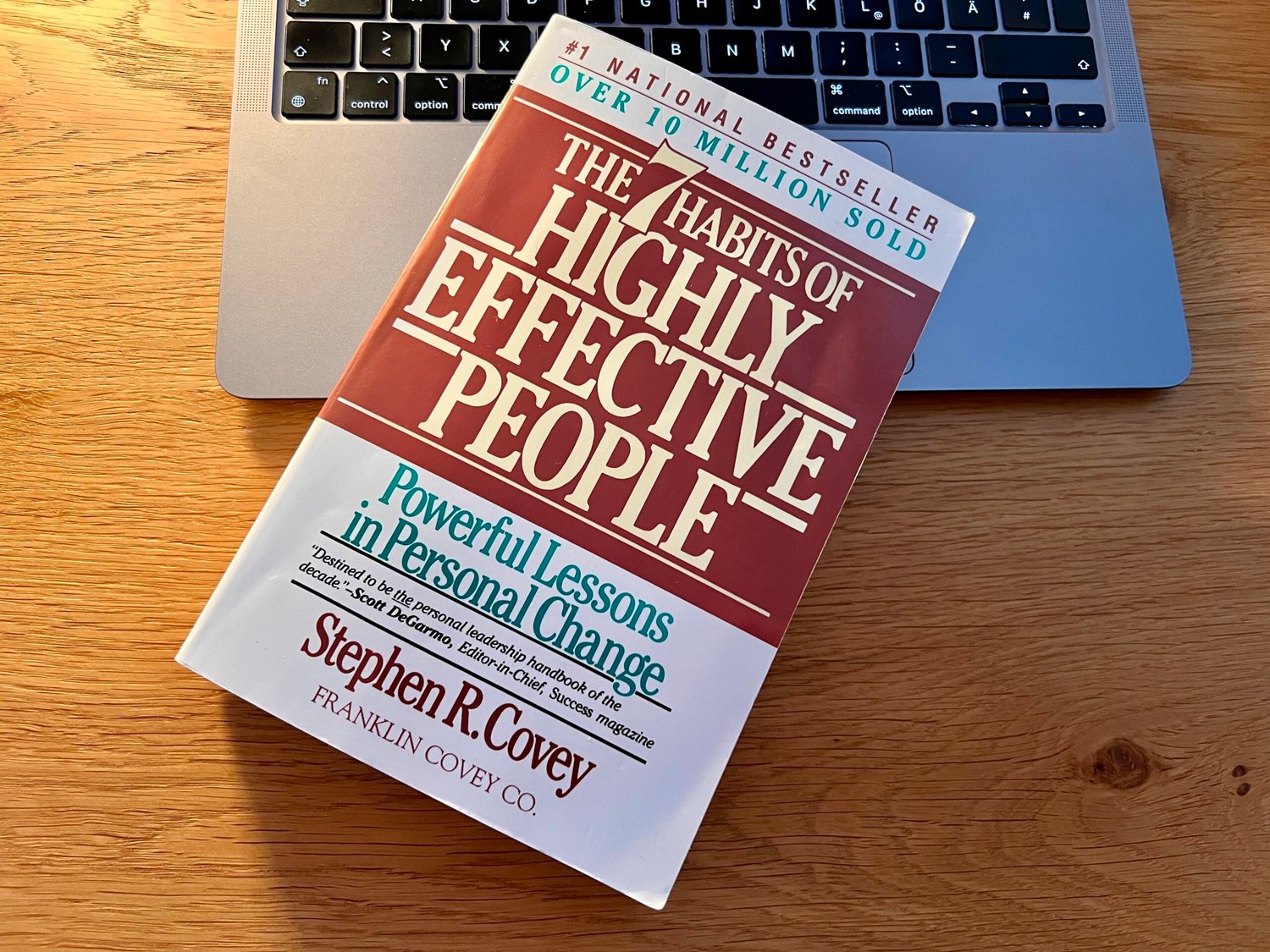
The 7 Habits of Highly Effective People by Stephen R. Covey is one of the most influential self-help and leadership books ever written. Covey reviewed 200 years of success literature and distilled them into seven timeless habits that help individuals transform their lives from the inside out. The book teaches you how to move from dependence to independence, then to interdependence, creating lasting effectiveness in every area of life.
Covey emphasizes the Inside-Out approach which means real change begins with your paradigms, character and motives. When you change the lens through which you see the world, your behaviors and outcomes transform naturally.
1. Habit 1: Be Proactive
This habit teaches you to take complete responsibility for your actions and your responses. Being proactive means choosing how you react to situations instead of letting circumstances control you. It includes using empowering language like “I can” and focusing on your Circle of Influence.
Proactive people recognize that while they cannot control everything, they always control who they choose to be.
2. Habit 2: Begin with the End in Mind
This habit is about clarity. Everything is created twice: first mentally and then physically. Covey encourages crafting a personal mission statement that defines who you want to be, what you want to achieve and the values that guide your life. This statement becomes the compass for all decisions.
It is the foundation of personal leadership.
3. Habit 3: Put First Things First
Once you know your priorities, this habit helps you execute them. Covey introduces the Time Management Matrix that prioritizes Quadrant II activities which are important but not urgent. These include planning, learning, relationship building and growth.
The goal is not to prioritize your schedule but to schedule your priorities. Weekly planning with roles, goals and flexibility is key to long term effectiveness.
4. Habit 4: Think Win-Win
This habit is a philosophy of human interaction. Win-win is not a technique but a mindset where you seek mutual benefit in all interactions. Covey outlines three essential character traits for win-win: integrity, maturity and an abundance mindset.
Healthy relationships are built on trust and emotional bank accounts. Keeping commitments, understanding others and showing courtesy are ways to build positive deposits.
5. Habit 5: Seek First to Understand, Then to Be Understood
Most people listen with the intent to reply. Covey teaches empathic listening which means listening with your eyes, ears and heart to truly understand the other person. Only after understanding should you communicate your viewpoint.
This habit strengthens trust, opens the door to creative solutions and supports collaboration.
6. Habit 6: Synergize
Synergy means the whole is greater than the sum of its parts. When people value differences and collaborate creatively, they produce third alternatives. These are solutions better than what either person originally proposed.
Synergy requires openness, courage and a willingness to explore new possibilities.
7. Habit 7: Sharpen the Saw
This habit is about continuous self-renewal. Covey outlines four dimensions that must be regularly strengthened:
- Physical
- Mental
- Spiritual
- Social and emotional
Renewal in one dimension supports growth in the others and keeps you in an upward spiral of improvement.
Why This Book Still Matters Today
Covey’s seven habits are simple yet powerful because they address the root of personal effectiveness. They go beyond productivity hacks and focus on character development, clarity of purpose, meaningful relationships and lifelong growth.
In a world filled with distractions and pressure, these timeless principles help you live intentionally, lead effectively and build deeper human connections.