Your Cart
Loading
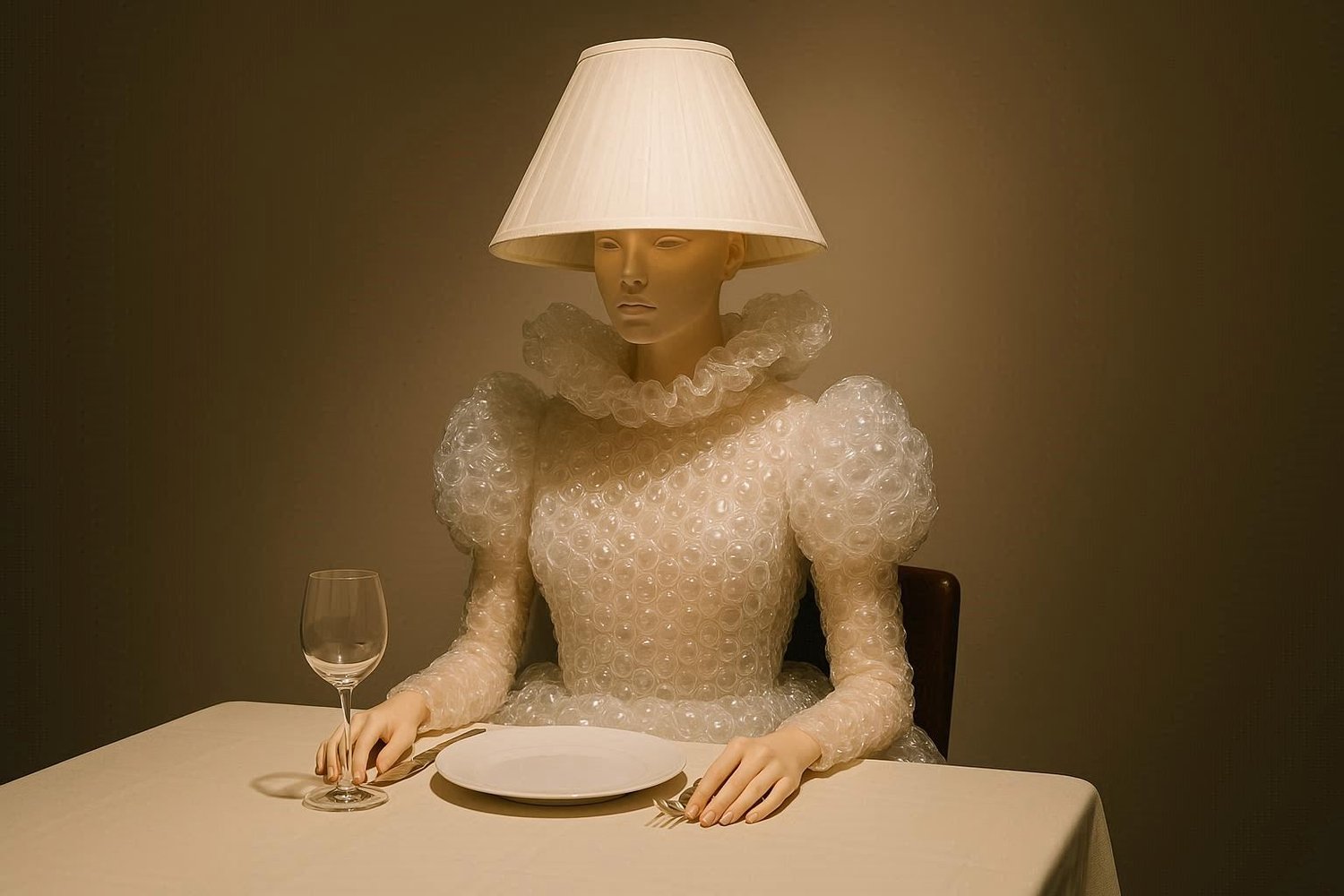
Conceptual art photograph of a mannequin seated alone at a minimalist dining table under warm gallery lighting, wearing a sculptural bubble-textured dress and a lampshade hat. The surreal scene symbolizes exclusion, consumption, and fashion as art—reflect

Not Every Table Is Serving Food

Let's talk about the seats we demand and the tables we don't understand.

We've become so focused on inclusion that we've forgotten to ask what we're being included in. We scream for representation without considering whether the thing we want to be represented in was ever meant to represent us at all. We've confused access with relevance, presence with purpose, and in doing so, we've turned every closed door into a personal attack.


Not every table is serving food. Some tables are serving art. And art doesn't owe you a mirror.


The Confession I Didn't Want to Make


I can't believe I'm saying this—because it feels like betraying some unspoken pact we've all made to call everything problematic—but I finally understand why they call the modeling industry toxic.


Not for the reasons you think. Not for the reasons we've been trained to cite. But because we made it about us when it was never supposed to be.


Fashion was never about the model. It was about the garment. The story sewn in silk. The fantasy shaped in thread. The model was just the canvas—the moving hanger, the walking silhouette that let the fabric speak first. The architecture that held the art.


They wanted someone slender not to shame the rest of us, but so the clothing could hang uninterrupted. Like gallery glass. Like a clean line. Like the white wall behind a painting that exists not to be beautiful itself, but to let beauty be seen.


The Women Who Were Born for It


Here's what we don't want to admit: there are women in this world who are born into that shape. Tall, angular, effortless. Bone structure that creates lines instead of curves. Bodies that function as frames rather than subjects.


They should model. That is what the art demands.


This is not a moral statement. This is not about worthiness or value or which bodies are "better." This is about function. About purpose. About the difference between being the canvas and being the painting, and understanding that sometimes you're neither—sometimes you're the person standing in the gallery, looking at the art, and that's your role in this particular story.


But we couldn't accept that. We couldn't let fashion be fashion. We had to make it about the women. We had to make it about us.


The Demand That Missed the Point


We demanded curves, softness, "representation." We wanted to see ourselves in haute couture like seeing ourselves there would validate something essential about our existence. We looked at $7,000 gowns on runways and cried foul when we didn't see our bodies in them.


But we were never going to wear that gown. We don't even like that gown. Most of us look at high fashion and think it's weird, unwearable, absurd. We mock the designs. We laugh at the impracticality. We roll our eyes at the excess.


We just want to feel like we could have been the one wearing it.


That's what this is really about. Not the clothes. Not the art. Not even representation in any meaningful sense. It's about the possibility. The fantasy that in some alternate universe, we could be the ones walking that runway, holding that shape, inhabiting that space that's been coded as special, as chosen, as worthy of being looked at.


We want the validation without the vocation. The visibility without the purpose. The seat at the table even though we're not hungry for what's being served.


The Starvation That Tells the Truth


Here's the line that matters: if you have to starve to stay in the room, you were never invited by the art—only by the ache.


The women who are naturally that tall, that slender, that angular? They're not starving to be there. They're just there. Their bodies are the bodies that the art was designed around, the forms that the fabric was cut to drape across. They are the intended canvas.


Everyone else—everyone who has to shrink themselves, punish themselves, hollow themselves out to fit into that space—is trying to force themselves into a role they weren't cast for. And the industry became toxic not because it required certain bodies, but because it couldn't say no to the bodies it didn't require. Because it let the ache masquerade as invitation. Because it confused desperation with suitability.


We made models sick by demanding they be something other than what the art needed. And then we blamed the art for being exclusive when the real problem was that we couldn't accept exclusion.


The Mirror We Forgot Fashion Was Supposed to Break


We forgot—or maybe we never knew—that high fashion was never supposed to mirror our mirrors. It was supposed to break them.


It was supposed to be the exception, the fantasy, the impossible thing. It was supposed to make you look at fabric differently, at form differently, at the relationship between body and cloth in ways that everyday life doesn't allow you to see. It was supposed to be art, and art is not a democracy.


Art doesn't care about your feelings. Art doesn't care if you see yourself in it. Art doesn't owe you relatability or accessibility or the comfort of recognition. Art exists to do something else entirely—to challenge, to elevate, to transform the ordinary into something that transcends it.


But we took that transcendence personally. We looked at bodies that existed as frames for experimental design and decided they were statements about our own worth. We looked at exclusivity and called it oppression. We looked at specialization and called it discrimination.


We demanded that art accommodate us when we should have been asking whether we wanted to be accommodated by art at all.


The Table That Actually Owes You Something


Now, if you're selling me jeans? If you're trying to get me to buy bras, or a summer dress, or anything I'm actually going to put on my actual body and wear in my actual life? Yes. Show me a body that breathes like mine.


Show me a body that fights and folds and fills out fabric the way I do. Show me hips and stomachs and thighs that move like mine move, that strain against seams like mine strain, that need the same accommodations and adjustments. Show me how the thing you're selling will look on the thing I'm living in.


That's not art. That's commerce. That's practicality. That's the table that actually owes me a seat because I'm the customer it's trying to serve.


But art and accessibility are not the same conversation. The runway and the rack are not the same space. The gallery and the mall are not operating under the same principles. And we've done ourselves a profound disservice by pretending they are.


The Exclusion That Isn't an Attack


Not everything that excludes you is an attack.


Read that again. Sit with it. Let it make you uncomfortable. Let it challenge the narrative you've been building about every space that doesn't center you, every industry that doesn't reflect you, every art form that doesn't prioritize your recognition in it.


Not everything that excludes you is an attack. Sometimes it's just specificity. Sometimes it's just function. Sometimes it's just art being art, which means it gets to be selective, particular, demanding of things you might not have or be or want to become.


And that's allowed. That's necessary. Because without exclusion, without specificity, without some things being for some purposes and not others, everything becomes generic. Everything becomes flattened. Everything becomes about making sure no one feels left out instead of about making something exceptional.


The Humility We Keep Avoiding


Sometimes it's just not about you.


This might be the hardest truth we face in an era that's told us everything should include us, reflect us, consider us, make space for us. We've been taught that our feelings matter more than function, that our comfort matters more than craft, that our desire to be seen should override the artist's vision or the industry's purpose.


But what if we're wrong? What if the most mature thing we could do is recognize when something isn't for us—not because we're being rejected, but because we're simply not the intended audience, the right fit, the necessary component?


What if we could look at high fashion and say, "That's not for me, and that's okay"? What if we could see bodies different from ours doing things our bodies weren't meant to do and feel neither threatened nor excluded, but simply... uninvolved?


What if we could stop demanding seats at tables where we don't actually want to eat?


The Liberation in Letting Go


Because here's what we gain when we stop demanding access to everything: we get to actually enjoy the things that are meant for us. We get to stop performing outrage over industries we were never going to participate in anyway. We get to stop taking everything personally, stop seeing every specialized space as a referendum on our worth.


We get to understand that not being the model doesn't mean we're not beautiful. Not being on the runway doesn't mean we're not seen. Not being the canvas doesn't mean we're not the painting in some other gallery, on some other wall, being appreciated by people who actually came to see us.


We get to stop confusing visibility with value, representation with relevance, access with art.


The Seat You Actually Want


Maybe the real question isn't "Why aren't we at that table?" but "Why do we keep demanding seats at tables we don't even want to sit at?"


Because if we're honest—brutally, uncomfortably honest—most of us don't actually want to be high fashion models. We don't want to starve. We don't want to be six feet tall. We don't want to spend our lives as hangers for other people's visions. We don't even like most of what we see on runways.


We just want the validation of being wanted for it. We want the option we'd never take. We want the theoretical possibility even though we'd refuse the actual reality.


And maybe that's the real toxicity—not the industry's requirements, but our inability to accept that some things aren't meant for us, and that's not an insult, it's just a fact.


The Truth That Doesn't Care About Your Feelings


Fashion was never about you. It was about the garment. And that's not an attack. That's just what it was always supposed to be.


Some tables are serving art. Some bodies are canvases. Some spaces are specific by design, exclusive by necessity, inaccessible by nature.


And you can rage against that, demand representation in spaces that don't exist to represent you, insist that everything accommodate you or be labeled toxic.


Or you can accept that not every closed door is discrimination. Not every specialized space is oppression. Not every table is serving food.


Some tables are serving art. And sometimes, you're just not the canvas it requires.


That doesn't make you less. It just makes you something else. Something that belongs at a different table, in a different space, serving a different purpose.


And there's freedom in that—if you're brave enough to take it.


If this landed, you're welcome to leave a coffee.


For the search bar warriors:

If you searched “fashion industry inclusivity debate”, “representation vs tokenism in fashion”, “body diversity runway models”, “why are high fashion models so thin”, “tokenism in advertising and fashion brands”, “inclusive sizing runway vs retail” or “is exclusion always discrimination in art and fashion”, you’ve found the right conversation. This essay isn't just about demanding inclusion—it’s about understanding which spaces are built for whom. It explores the difference between access and relevance, why high fashion body standards have become controversial, and why not every seat at the table means you belong. Because sometimes the table is meant to serve art—not you; and that’s okay.

Only -1 left
Example product name
$19.99
The product description area is where you can provide details about what this product is all about. Share the full story with your customers and help them understand what they can expect to receive if they purchase.
Only -1 left
Example product name
$19.99
The product description area is where you can provide details about what this product is all about. Share the full story with your customers and help them understand what they can expect to receive if they purchase.

If this one found you, maybe these will too...

A silhouette of a man walking across a stone bridge made of rubble over a deep chasm toward a golden sunrise, representing overcoming obstacles and embracing unexpected life changes for personal growth. What looks like a dead end is often just a forced re
Disruption
Bridging the chasm: When forced redirection and unexpected life changes turn obstacles into paths for personal growth.  They never ask permission. That is the first thing to understand about disruption — it does not knock. It does not consider your...
Read More
What are you afraid of?
Other than dogs and cats, children are the only beings that simply require you to be a decent human being. So those that strongly dislike them, what exactly are they afraid of? It is a question worth sitting with. Not the polite version of it, not t...
Read More
Co-Authored
we tolerate their whims. we buy the tickets and line the streets and press our faces to the glass of their lives like children outside a bakery. we argue about them at dinner tables. we vote for them, pray for them, forgive them things we would not ...
Read More
Close-up of matte athletic fabric with a stitched seam, highlighting the texture and construction of women’s sports uniforms.
Skin.
Women’s sports were never meant to be enough on their own. Not the speed. Not the strength. Not the discipline carved into muscle and breath. From the beginning, there was a quiet addendum stitched into every uniform: Be impressive, but also be plea...
Read More
A single figure walking away from camera on an empty road/path that stretches to the horizon. The person should be small in the frame, dwarfed by the landscape. This captures
Spent
I have lost so much in my life and kept walking. Not because I'm strong. Not because I'm resilient. Not because I have some special capacity for endurance that other people lack. But because stopping—really stopping, the way grief is supposed to mak...
Read More
Close-up of glowing orange embers rising against a dark night background, symbolizing fire, burning traditions, and the haunting atmosphere of Bonfire Night and Guy Fawkes effigy rituals.
November: How I learned that humans can make cruelty feel like community.
I was seven, maybe eight, when I understood that people will do anything if you call it tradition. At the end of each year, they would come with their old clothes and their straw. They would stuff the sleeves until arms emerged. They would shape a h...
Read More
Misty path through forest in muted earth tones representing healing journey trauma recovery and finding clarity after emotional abuse
When Healing Stopped Performing
Healing learned how to pose for the camera. The kind with sage bundles and journal spreads, affirmations written in perfect script, morning routines that start at 5 AM with gratitude and green smoothies. It's healing as aesthetic. Healing as brand. ...
Read More
Back view of person in silhouette standing at bridge railing looking toward suspension bridge in misty golden light at dawn - contemplative morning scene representing mental health awareness and suicide prevention
The Mathematics of Maybe: What We Owe Each Other at the Edge
The mathematics of staying alive gets harder in fog. I've learned this from bridges, from gray mornings, from the way certain people stand at railings—adding up pain, adding up reasons to stay, subtracting reasons it hurts to exist, subtracting hope...
Read More
A woman standing in heavy rain with soaked hair and a tired, solemn expression. She appears calm but emotionally exhausted as water streams down her face. Dark storm clouds and blurred trees create a moody, somber atmosphere.
I Don't Want To Be A Woman: A blunt, unfiltered confession about the unbearable weight of expectations—and the self you lose beneath them
I don’t know when it happened—when I stopped thinking of myself as a “woman” and started thinking of myself as just me. A person. A self. A soul trying to hold its edges against a world that keeps reaching for them. Maybe the truth is this: I never ...
Read More
A dimly lit room with a single wooden door slightly open, warm light spilling through the crack into the darkness — symbolizing healing, self-discovery, and opening the door within yourself.
I Will Carry You: Learning to mother the self no one else knew how to hold.
There is a quiet kind of waiting that children learn when love arrives conditionally. You stand at doors—not knocking, because that would be demanding, but present enough to be noticed if anyone cared to look. You learn to make yourself into a praye...
Read More
Silhouette of father and daughter, sunlight casting long shadows across a floor, symbolizing broken promises and the weight of unspoken love.
For You, He Said
My father's biggest lie was never spoken with malice. It arrived soft, wrapped in the kind of sentiment that makes grown men's eyes glisten. I'm doing all of this for you. At twelve, I swallowed it whole—pupils blooming into cartoon hearts, my smile...
Read More
Conceptual digital artwork showing two facing human silhouettes against a neutral background—one male figure filled with black mathematical symbols and equations, the other female figure painted with vivid brushstrokes in orange, red, and yellow—symbolizi
The Mathematics of Marriage
Marriage has a definition. You can look it up. Partnership, they say. Union. The legal and spiritual binding of two lives into one shared enterprise. Not much guesswork required. And yet. The Equation That Never Balances Here is the man at his desk,...
Read More
A lone wolf standing at the forest’s edge as morning light filters through the mist, symbolizing independence and trusting your instincts.
Don’t Take Advice From Sheep When You’re a Wolf: On Recognizing Your Own Nature
There's a moment that comes to everyone who dares to live differently—a moment when you realize that the guidance you've been following was never meant for someone like you. You've been sitting in circles, nodding along, absorbing the wisdom of peop...
Read More
Conceptual art photograph of a mannequin seated alone at a minimalist dining table under warm gallery lighting, wearing a sculptural bubble-textured dress and a lampshade hat. The surreal scene symbolizes exclusion, consumption, and fashion as art—reflect
Not Every Table Is Serving Food
Let's talk about the seats we demand and the tables we don't understand. We've become so focused on inclusion that we've forgotten to ask what we're being included in. We scream for representation without considering whether the thing we want to be ...
Read More
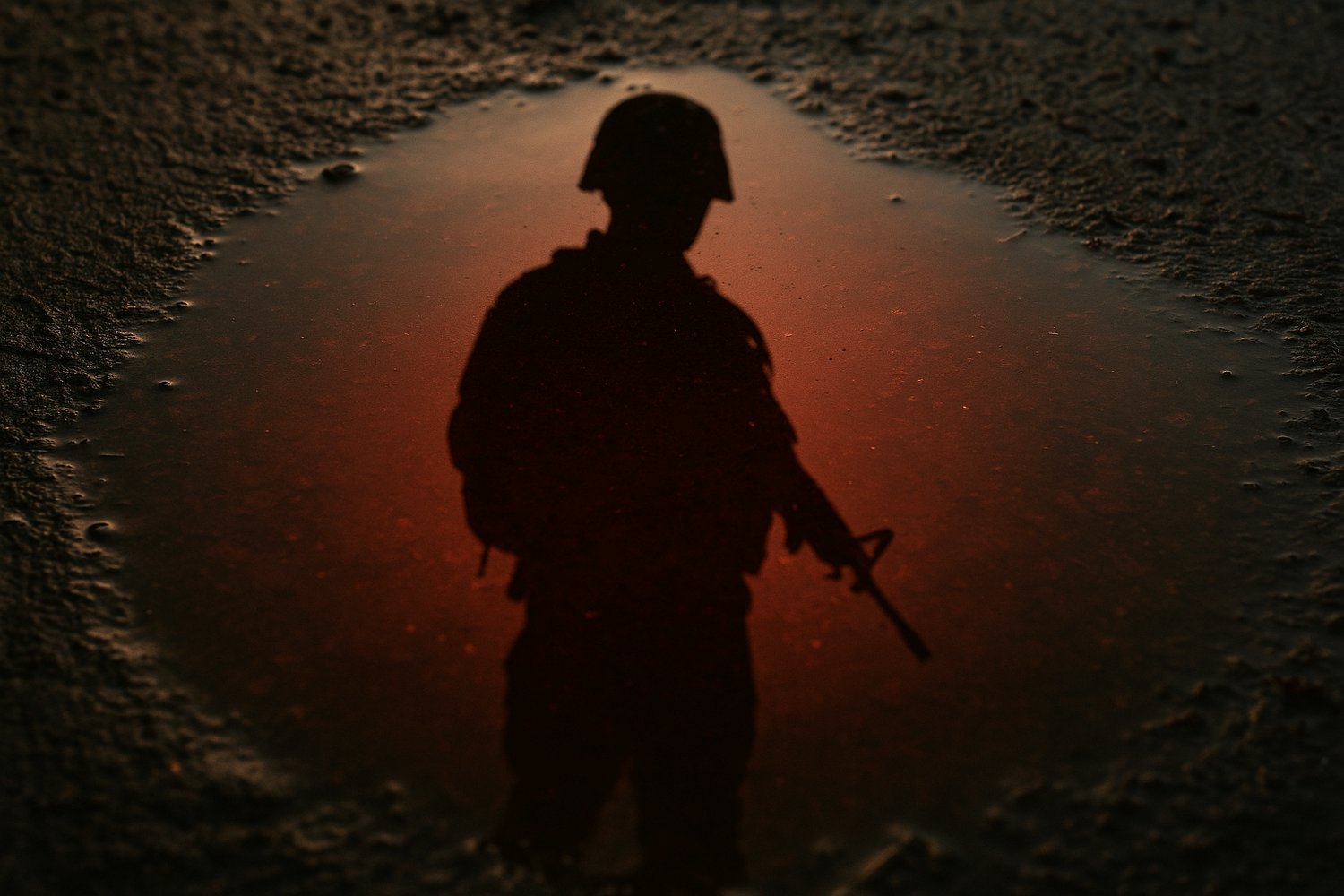
Moody, cinematic photo showing a soldier’s silhouette reflected in a rain puddle, with the reflection tinted red to symbolize the unseen blood, trauma, and ghosts of war beneath the surface.
"Thank You For Your Service" is Not Enough
Stop Crying at the Airport Stop turning reunions into propaganda. Stop framing war as a love story with a happy ending—flags waving, babies lifted high, orchestral music swelling in the background like this is a movie and not the aftermath of organi...
Read More
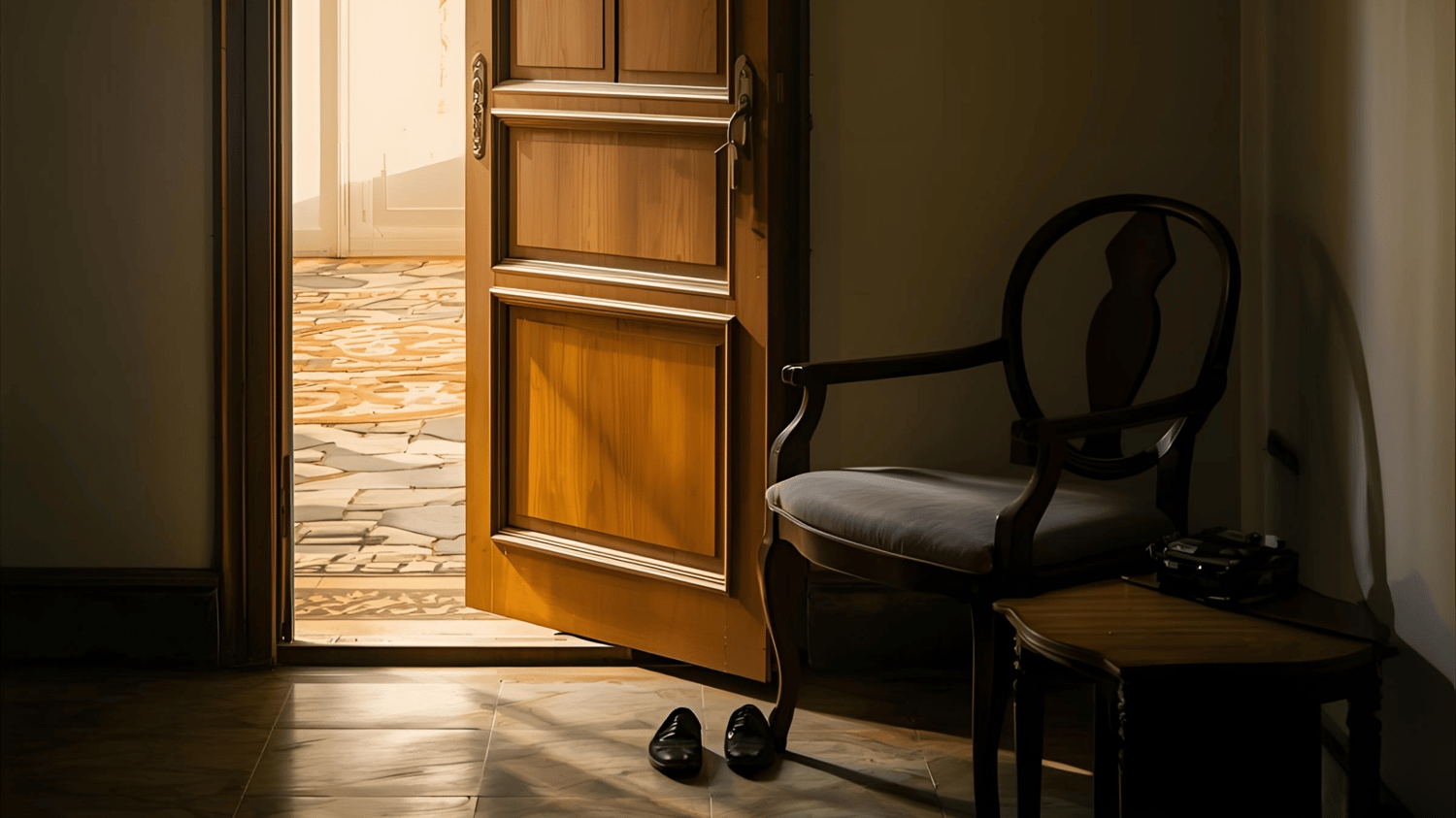
Doors That Close Before We Reach Them. A half-open wooden door with sunlight spilling through and an empty chair and a pair of shoes near a window.
Doors That Close Before We Reach Them
Sometimes grief isn’t about what we lost, but what was never ours to begin with. It begins innocently enough: a father weeping, a daughter luminous in white, the camera catching that universal fracture of joy and sorrow that comes with letting go. ...
Read More
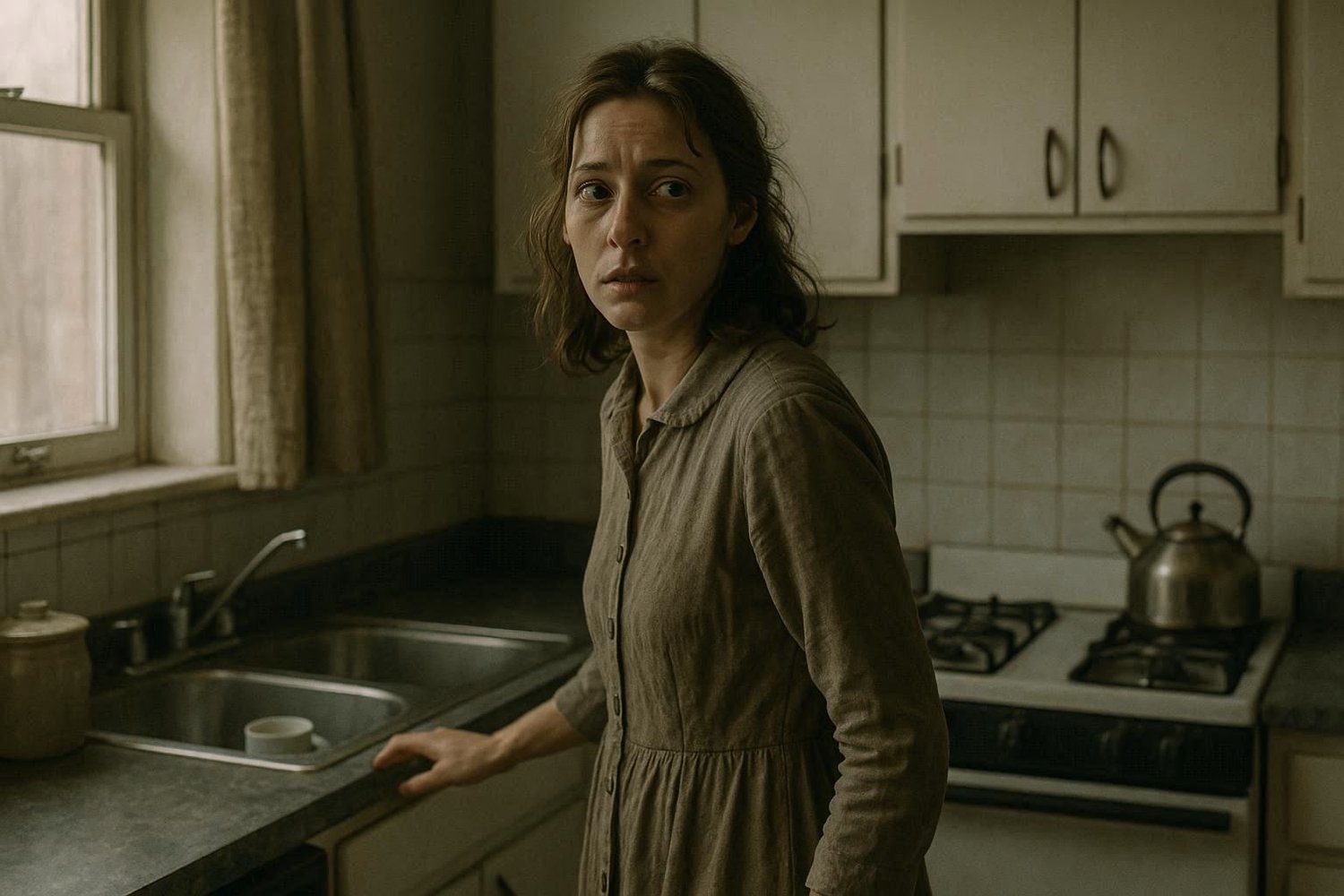
A woman stands in a dimly lit kitchen beside a sink, turning toward the light with a wary, distant expression. Her face shows quiet unease rather than fear, mirroring the emotional distance and loneliness explored in “The Quiet Violence of Living Beside a
The Quiet Violence of Living Beside a Stranger
A haunting reflection on love, safety, and the silent violence of living beside someone your body never learned to call home. --- There's a phenomenon making its rounds on social media, presented as comedy, packaged as relatable content: women who s...
Read More
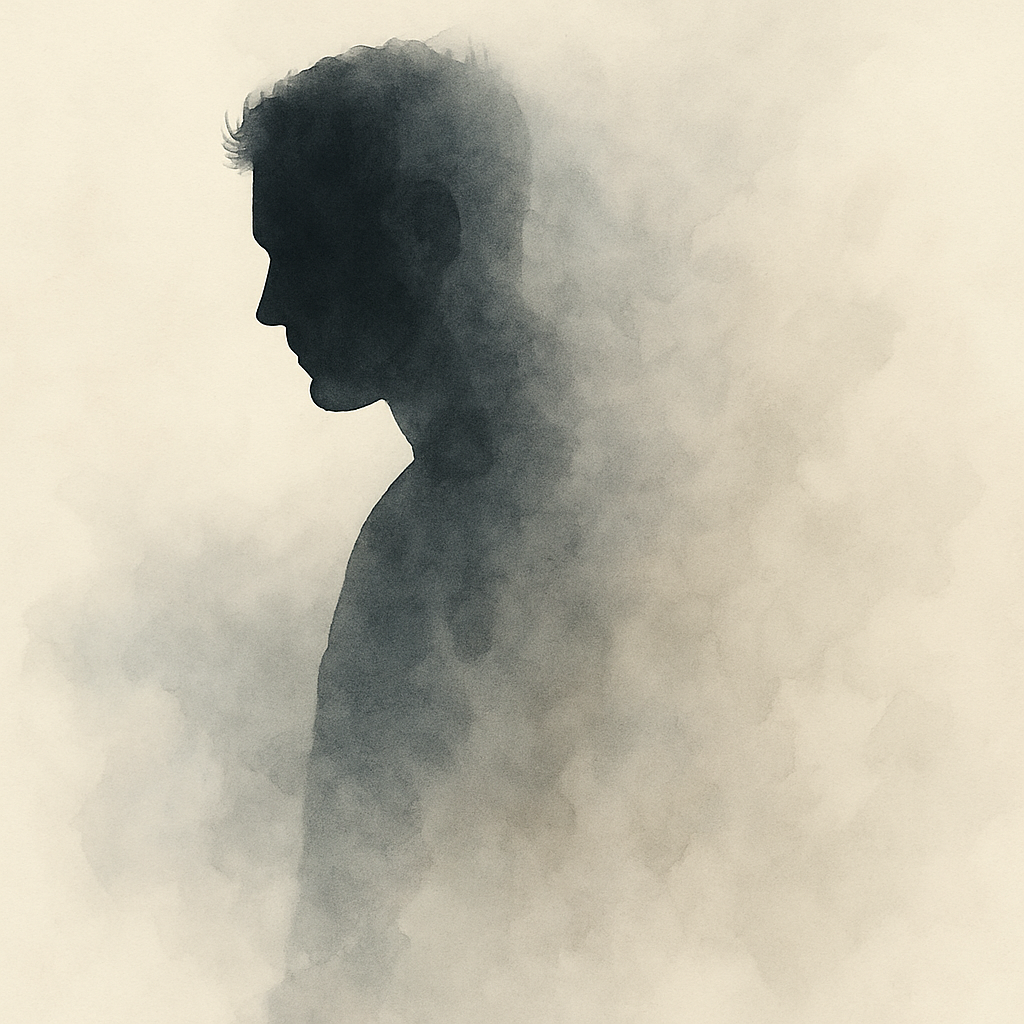
Watercolor-style digital painting of a man’s silhouette fading into soft mist, symbolizing quiet male grief and emotional disappearance. The image uses muted gray, beige, and cream tones to convey introspection, vulnerability, and the theme of men silentl
Men Don’t Always Shatter Loudly
You can only see this heartbreak if you’ve ever loved a man who went quiet before he went missing — not from your life, but from himself. I’ve learned that some disappearances happen in plain sight. And when they do, they don’t sound like breaking g...
Read More
Let there be cotton: put it back on sir funny yellow and blue T-shirt quote blog post. A humorous yet honest poetic essay exploring why not every man should be shirtless on camera. We unpack visual modesty, fabric as mercy, and the silent art of cheering
Let There Be Cotton: Put It Back On, Sir
Some truths come tender. Others arrive shirtless and aggressive. This one needed both a poetic lens and a public service announcement. You’ll know which one by the end. There is a sacredness to fabric. A reverence in threads. A ministry in even the...
Read More
Who did the loved children become? I just wonder who I might've been quote. What happens to the children who were loved well? And who might we be, if we had been one of them? A soft ache of wondering, without resolution. The Eccentric Vox Serenite Hope
Who Did The Loved Children Become?
Did they grow up soft because the world never asked them to harden? Did they walk into rooms without first shrinking? Did they take risks without calculating the cost of disappointing someone who only loved them on condition? Did they believe in the...
Read More
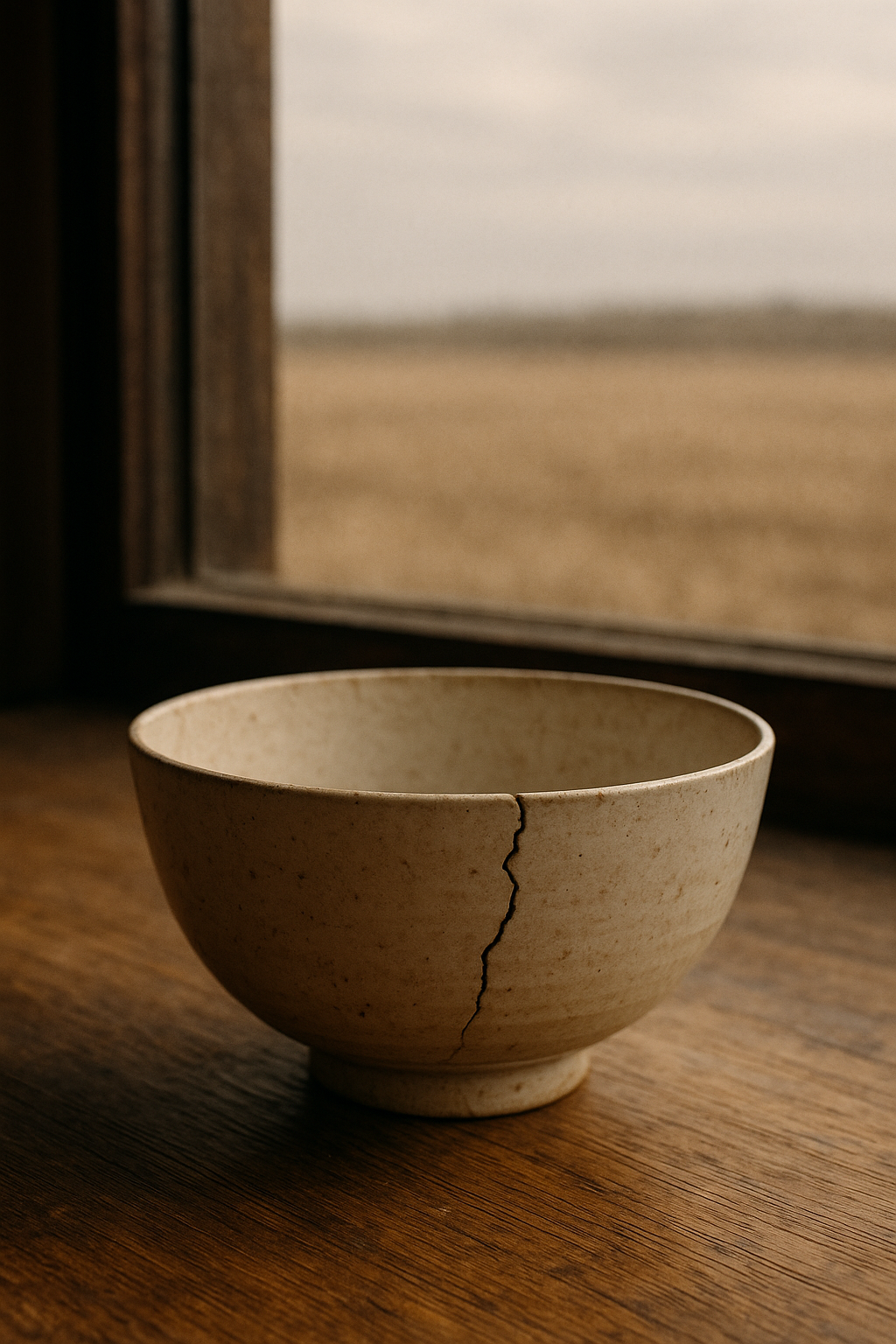
Cracked porcelain rice bowl resting on weathered wood, representing hunger and broken promises. Empty field under a pale gray sky, symbolizing silence after man-made famine.
From Laughter to the Great Hunger 无火之饥
Last night I was laughing again—the kind of laughter that sneaks up on you in the middle of a Chinese drama, the kind that shakes loose something small and bright in the chest. Children being clever, grown men losing arguments to mischief. I was sni...
Read More
Still think blood proves something? Red blood spatter quote poetic essay on virginity
The Body is Not a Receipt.
The first time someone told me I should be "tight," I was sixteen and had never been touched by anyone but myself. I was sitting in the back of health class—the kind of health class that teaches you about STDs but not orgasms, that shows you diagram...
Read More
They want Jesus without the stake. The God They Already Have poetic essay
The God They Already Have
They say they already know Him. Already love Him. Already believe. And maybe they do. But when you ask about obedience, about surrender, about what it means to lay down a life, they look confused. Offended, even. Because what they have is the God wh...
Read More
Closeup of woman wearing red lipstick with gold dress and gold earrings smiling with a drink in her hand
But, at What Cost?
I used to see them— girls my age, fresh in their twenties, spending money they didn’t earn like water with some to spare. Hair, nails, and outfits on point. Driving cars with tanks they never filled. Free as birds, fluttering from tree to tree, catc...
Read More
A young woman reads a book by the warm glow of a single candle in a dark room. Her face is softly illuminated, highlighting her deep focus and quiet determination. Shadows surround her, creating an intimate, contemplative atmosphere that evokes secret lea
Someone Had to Know How to Spell “Eviction”
They used to stop us. Said it was dangerous for a girl to know too much. Said softness and silence were enough. That the pen didn’t suit our hands and the book would spoil our minds. We weren’t allowed to read. Not out loud. Not alone. Not in front...
Read More