
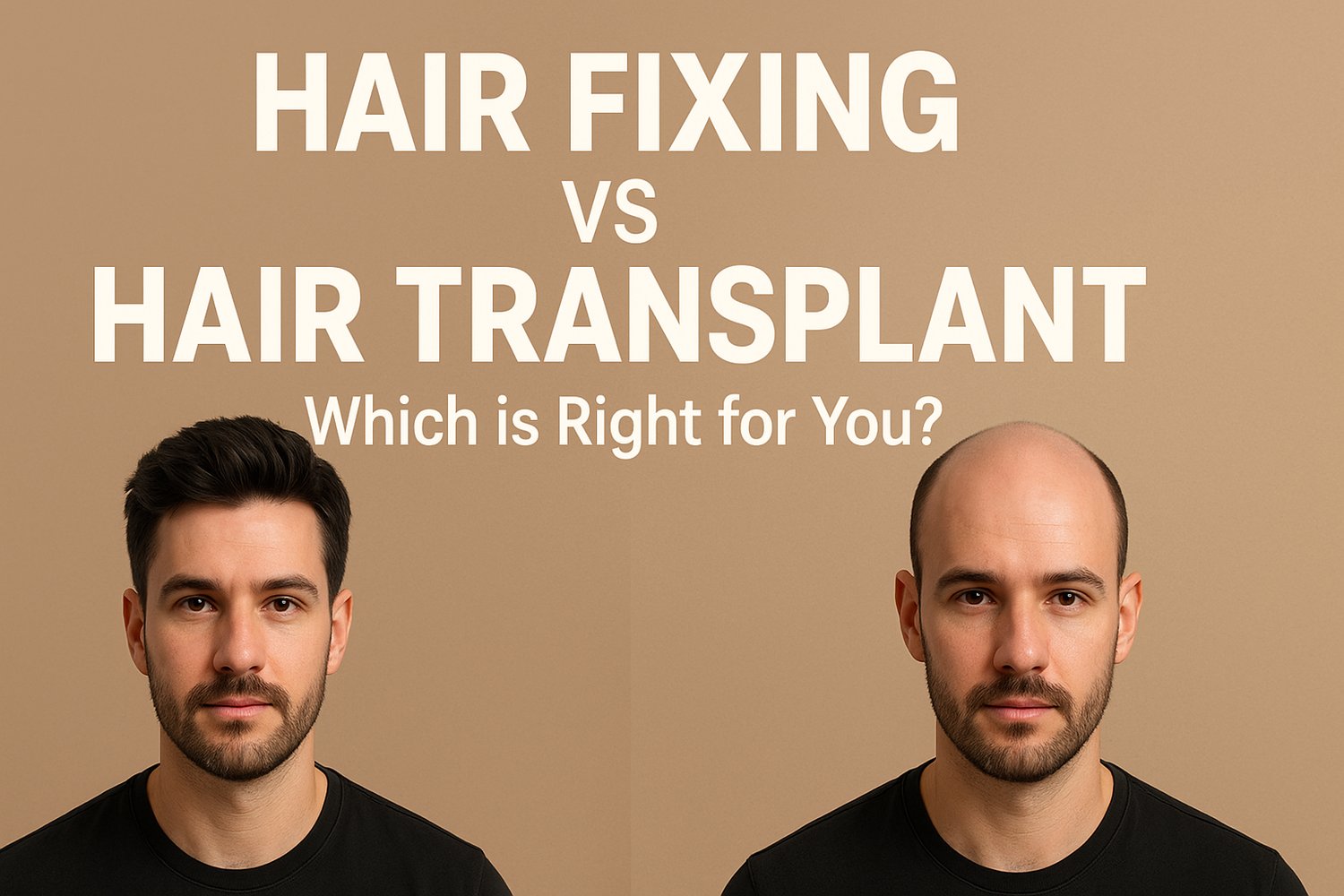
Hair loss can be a major confidence killer, affecting not just appearance but also how you feel about yourself. Whether you’re in your 20s or 50s, the desire to regain natural, healthy-looking hair is universal. Today, two popular solutions dominate the conversation — hair fixing and hair transplant.
But which one is right for you? Let’s break down both options to help you make an informed decision.
What Is Hair Fixing?
Hair fixing for men is a non-surgical method of hair restoration that instantly covers bald patches using a customized hair system. The hairpiece—made of 100% human or high-quality synthetic hair—is securely attached to the scalp using special adhesives or clips.
At Radiance Hair & Skin Clinic, each system is personalized based on your hair color, texture, and style preferences, creating a flawless, undetectable look.
Key Benefits:
- 100% non-surgical and pain-free
- Instant visible results
- Affordable compared to surgical treatments
- Customizable and reversible
- Easy maintenance and styling flexibility
If you’re looking for a quick transformation without going under the knife, hair fixing offers a realistic, safe, and cost-effective solution.
What Is a Hair Transplant?
A hair transplant is a surgical procedure where healthy hair follicles are taken from the donor area (usually the back of the scalp) and implanted into bald areas.
There are two main techniques:
- FUE (Follicular Unit Extraction): Individual hair follicles are transplanted one by one.
- FUT (Follicular Unit Transplantation): A strip of scalp containing multiple hair follicles is transplanted.
Key Benefits:
- Permanent, natural hair growth
- No need for external hair systems once healed
- Good long-term investment for suitable candidates
However, it requires surgery, healing time, and post-care, making it more suitable for those ready for a long-term commitment.
Hair Fixing vs Hair Transplant: Key Differences
When comparing hair fixing vs hair transplant, several key differences stand out. Hair fixing is a non-surgical and painless procedure, while a hair transplant involves surgery under local anesthesia. The results with hair fixing are instant, whereas a transplant typically takes 6 to 12 months to show full growth. In terms of cost, hair fixing is more affordable and flexible, while transplants are costlier but usually a one-time investment.
Maintenance also differs — hair fixing requires regular servicing and care, whereas transplants need minimal upkeep once healing is complete. There’s no recovery time with hair fixing, making it ideal for busy individuals, while transplants may require 1–2 weeks of downtime. Customization is another advantage of hair fixing, as it’s fully personalized to your style and preferences, while hair transplants are limited by available donor hair. Lastly, hair fixing is reversible and changeable, whereas a hair transplant offers a permanent solution.
Pros & Cons at a Glance
Hair Fixing Pros:
- Instant transformation
- Non-invasive and reversible
- Perfect for any stage of hair loss
Hair Fixing Cons:
- Requires regular maintenance
- System replacement every few months
Hair Transplant Pros:
- Permanent natural hair growth
- Low long-term maintenance
Hair Transplant Cons:
- Involves surgery and downtime
- Higher cost and slower results
Which One Should You Choose?
Your choice depends on your lifestyle, expectations, and comfort level.
- Choose hair fixing if you want instant results, affordability, and no medical procedures.
- Choose hair transplant if you seek permanent results and are prepared for the surgical process.
Many men even start with non-surgical hair fixing before deciding on a long-term surgical solution later.
Why Choose Radiance Hair & Skin Clinic
At Radiance Hair & Skin Clinic, we specialize in both non-surgical and advanced surgical hair restoration methods. Our experts analyze your scalp condition, hair density, and preferences to recommend the best solution tailored to you.
With years of experience, top-quality materials, and natural-looking results, Radiance ensures you walk out with renewed confidence and style — whether through hair fixing or hair transplant.
Conclusion
Both hair fixing and hair transplants offer effective ways to combat hair loss — the right one depends on your personal needs.
If you’re looking for instant, natural results without surgery, non-surgical hair fixing might be your best choice.
If you prefer permanent growth and are open to a medical procedure, a hair transplant could be ideal.
Whatever your decision, consult professionals like Radiance Hair & Skin Clinic to achieve a natural, confident, and lasting transformation.