

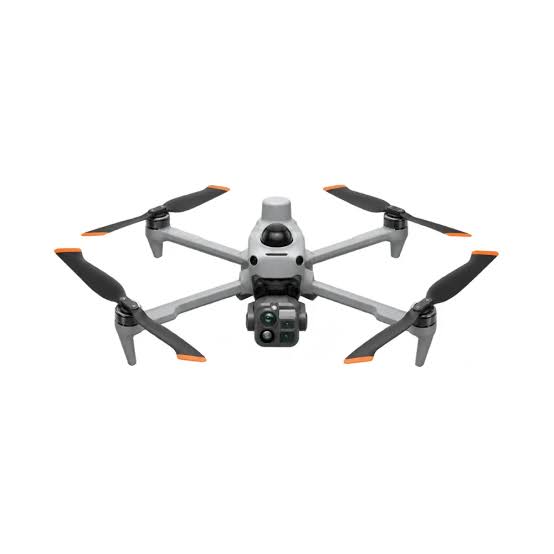
DJI Matrice 5T: Should Real Estate Photographers and Drone Operators Buy It?
Summary
On November 5, 2026, DJI introduced the Matrice 5T, a new enterprise drone designed for demanding inspection, surveying, and aerial operations.
The aircraft combines several notable capabilities:
Native 1280 × 1024 thermal imaging.
A high-resolution visible-light camera system.
LiDAR, radar, and visual obstacle sensing.
Improved low-light and night-vision capabilities.
Up to 59 minutes of advertised flight time under specified test conditions.
An IP55 dust- and water-resistance rating.
Advanced mapping, inspection, and onboard AI functions.
For photographers working in ordinary residential real estate marketing, most of these features are unnecessary.
For companies serving commercial buildings, construction projects, infrastructure operators, solar installations, and specialized inspection clients, the technology deserves closer attention.
There is also a significant complication for U.S. buyers.
The Matrice 5T's U.S. equipment-authorization and retail availability status has not been established by the official product information reviewed as of November 8.
DJI's published specifications list transmitter ratings for several international regulatory regions but do not list an FCC rating.
The company also instructs buyers to verify which countries and regions the aircraft supports before purchasing.
That uncertainty matters because U.S. regulations restrict new equipment authorizations for certain foreign-produced drones.
My recommendation: Do not purchase or build a U.S. commercial service around the Matrice 5T until its applicable FCC authorization, regional compatibility, and lawful availability have been verified. Photographers primarily delivering listing photographs and aerial video should continue using equipment that already meets their needs.
Specialized inspection operators should evaluate the new capabilities, but they should also examine the training, insurance, software, and professional responsibilities associated with those services.
Primary announcement: DJI — Matrice 5T Launch Announcement, November 5, 2026
1. What DJI Actually Announced
The Matrice 5T is part of DJI's enterprise aircraft lineup.
That distinction is important.
DJI makes several types of drones for different purposes.
A camera drone used for residential marketing may prioritize portability, image quality, flight stability, and convenient operation.
An enterprise drone used for infrastructure inspections may need additional sensors, specialized software, thermal imaging, surveying capabilities, and reliable operation in more demanding environments.
The Matrice 5T belongs primarily to the second category.
DJI introduced it on November 5 as a compact enterprise platform intended for inspections, surveying, emergency response, and other specialized applications.
The company emphasizes three major developments.
First, the aircraft has a substantially higher-resolution thermal camera than many previous enterprise systems.
Second, DJI has combined several obstacle-sensing technologies to improve situational awareness.
Third, the aircraft introduces additional onboard processing, AI, and automated inspection capabilities.
These developments may make particular commercial assignments more efficient.
However, a real estate photographer should evaluate the capabilities according to the work being performed.
A drone designed to inspect electrical infrastructure may be technically impressive without providing a meaningful improvement to ordinary listing photographs.
2. The Matrice 5T Specifications That Matter
DJI's official product information provides the following specifications.
FeatureDJI Matrice 5T
Product announcementNovember 5, 2026
Primary purposeEnterprise inspection, surveying, and specialized aerial operations
Native thermal resolution1280 × 1024
Enhanced thermal output2560 × 2048 in UHR mode
Thermal videoUp to 30 fps
Medium telephoto camera50 MP, 3× optical zoom
Telephoto capabilityUp to 176× hybrid zoom
Obstacle sensingLiDAR, millimeter-wave radar, and visual sensors
Advertised maximum flight timeUp to 59 minutes under specified conditions
Environmental protectionIP55
Operating temperature-20°C to 50°C
Transmission systemDJI O4 Enterprise Enhanced
Regional operationCountry-specific compatibility and restrictions apply
Source: DJI — Matrice 5T Official Specifications
Several of these specifications require context.
The advertised flight time is a manufacturer test result. Actual endurance depends on operating conditions, flight speed, wind, temperature, battery condition, and equipment configuration.
The IP55 rating indicates resistance to specified dust and water exposure under controlled testing. It does not make the aircraft immune to weather hazards.
The enhanced thermal output is also different from the native thermal sensor resolution.
The underlying sensor captures 1280 × 1024 thermal pixels. The higher-resolution UHR output is produced through additional processing.
That distinction matters when comparing actual sensor performance.
Why Thermal Resolution Matters
Thermal cameras measure infrared radiation rather than producing an ordinary visible-light photograph.
The resulting imagery represents temperature-related information.
Higher native resolution can help an operator distinguish smaller features and examine more detail at a given distance, subject to the camera's optics and operating conditions.
For example, a thermal survey of a large commercial roof may benefit from additional detail when identifying areas that deserve closer examination.
An electrical inspection may involve examining equipment for unusual temperature patterns.
A solar installation may require comparing the thermal behavior of individual components.
These applications can benefit from stronger thermal imaging capabilities.
However, the camera's specifications alone do not establish that an operator can make reliable diagnostic conclusions.
That requires additional training and appropriate inspection methods.
3. What Does This Mean for Residential Real Estate Photography?
For most residential listing assignments, very little changes.
A professional real estate photographer generally needs a drone capable of producing clear, accurate images of the property.
The important photographs may include:
A front three-quarter aerial composition.
A rear elevation showing the yard and outdoor amenities.
An overview of a larger lot.
A view showing the relationship between the home and surrounding landscape.
Additional coverage of important property features.
These images help potential buyers understand the property.
The Matrice 5T's thermal camera, specialized sensing systems, and inspection software do not automatically improve those compositions.
The Standard Listing Workflow
Consider a typical suburban home.
The photographer arrives, completes the ground-level images, and launches a drone for several aerial compositions.
The assignment may require ten or fifteen minutes of aerial capture.
The photographer is primarily concerned with:
Composition.
Exposure.
Image sharpness.
Color accuracy.
Weather.
Airspace compliance.
Safe operation.
A smaller professional camera drone can often handle those requirements efficiently.
The Matrice 5T would add considerable technical complexity to a workflow that may not benefit from it.
Luxury Homes and Large Properties
A larger property may justify more substantial aerial coverage.
However, the important question remains what the client needs to communicate.
A luxury residence may benefit from carefully planned aerial video, stronger composition, and more complete coverage of the grounds.
Those are primarily production decisions.
Thermal imaging and advanced industrial inspection sensors may still provide little practical value.
The REPT Drone Photography for Real Estate: Settings, Composition, Safety, and Workflow guide explains how to plan the aerial coverage that supports a normal property-marketing assignment.
I would develop those skills before considering specialized enterprise hardware.
REPT PROFESSIONAL TIP
Evaluate drone purchases according to the specific deliverables your clients are buying. A more expensive aircraft may provide additional capabilities without improving the service that generates most of your revenue.
4. Where the Matrice 5T Could Become Valuable
The strongest opportunities involve specialized commercial work.
A media company serving builders, property managers, and commercial clients may eventually encounter assignments that require more than marketing photographs.
For example, a commercial property owner may want aerial documentation of a large roof.
A solar company may need thermal imagery.
An industrial client may require repeated inspections of elevated equipment.
A construction company may need organized aerial records of project progress.
These services can involve different capture requirements, reporting standards, and professional responsibilities.
Commercial Roof Inspections
Large commercial roofs are difficult to inspect entirely from the ground.
A drone can provide a useful elevated perspective.
Thermal imagery may help trained professionals identify temperature patterns associated with possible moisture intrusion, insulation differences, or other conditions.
However, interpretation requires care.
A thermal camera detects temperature-related information.
Different temperatures can result from several causes.
Sun exposure, surface materials, reflections, environmental conditions, and building operation can all influence what appears in the image.
A temperature anomaly is evidence that may deserve further investigation.
It does not automatically establish the presence of a leak or structural defect.
FLIR's published guidance emphasizes the importance of understanding these limitations and using appropriate verification methods.
FLIR — Thermal Camera Tips to Avoid Common Home Inspection Mistakes
Solar Installation Inspections
Solar installations are another potential application.
A thermal camera can reveal differences in thermal behavior across components.
A specialist may use that information to identify areas requiring further examination.
The larger sensor resolution could be useful when inspecting substantial installations.
But a photographer entering this field needs to understand the technical requirements.
Aerial image capture is only one part of the service.
The client may expect meaningful inspection records, consistent measurement conditions, and competent interpretation.
Construction Documentation
Builders may need recurring photographs throughout a project.
These can include:
Site progress.
Roof installation.
Exterior completion.
Mechanical equipment placement.
Site conditions.
Landscaping.
Large-scale development progress.
A professional camera drone may already perform much of this work.
The Matrice 5T becomes more interesting when the project specifically requires thermal information, advanced mapping, specialized sensing, or other enterprise capabilities.
Commercial Property Management
Property managers may oversee several buildings.
They may need consistent documentation across locations.
A specialized drone program could potentially help support certain inspection and maintenance workflows.
However, the business should establish exactly which information it is qualified to collect and deliver.
The company's agreement should distinguish ordinary visual documentation from professional inspection findings.
5. Thermal Imaging Requires More Than a Thermal Camera
This is one of the most important considerations for photographers thinking about expanding into inspection work.
A drone operator may be highly competent at aerial photography while having limited experience interpreting thermal imagery.
Those are different skills.
A photographer understands composition, exposure, sharpness, and the visual presentation of a subject.
A thermography professional also needs to understand thermal physics, measurement limitations, material behavior, environmental influences, and the relevant inspection methodology.
For example, a dark area on a roof may appear cooler than the surrounding material.
That does not automatically mean the roof contains moisture.
The result may be influenced by shading, surface conditions, or material differences.
The operator needs to know when the observation is meaningful.
Training and Professional Standards
The American Society for Nondestructive Testing, commonly known as ASNT, provides education and certification pathways relevant to infrared testing.
In July 2026, ASNT announced additional infrared thermography training opportunities through a collaboration with IRISS.
The courses cover multiple training levels and emphasize practical interpretation and inspection methods.
ASNT — Infrared Thermography Training Announcement, July 10, 2026
A photographer considering thermal inspection services should investigate appropriate education before marketing diagnostic capabilities.
Understand the Scope of the Service
There is an important difference between providing thermal imagery and providing an inspection conclusion.
For example:
Thermal Image Capture
The operator records imagery according to an agreed capture procedure.
Thermal Documentation
The operator organizes observations, locations, and supporting records.
Professional Inspection
A qualified professional evaluates the imagery and other evidence according to the relevant standards and requirements.
These services carry different responsibilities.
Depending on the jurisdiction and type of inspection, additional licensing or professional qualifications may apply.
I would avoid promising to identify electrical faults, moisture intrusion, structural deficiencies, or building defects without the qualifications and procedures needed to support those conclusions.
REPT COMMON MISTAKE
A drone company purchases a thermal camera and immediately advertises professional building inspections. The ability to capture a temperature image does not establish the training or authority needed to interpret the results reliably.
6. The Biggest Question for U.S. Buyers: FCC Authorization
There is a significant issue surrounding the new aircraft.
DJI announced that the Matrice 5T is available through authorized enterprise dealers.
However, its product announcement does not establish that the drone is approved for sale or operation in every country.
The official specifications list radio transmission ratings under several regulatory frameworks, including Canadian, European, Chinese, and Japanese standards.
They do not list an FCC transmission rating.
DJI's official FAQ also states that the Matrice 5T cannot necessarily be used across different countries and regions, directing customers to confirm regional compatibility with their dealer before purchasing.
Source: DJI — Matrice 5T Official FAQ
Why This Matters
In December 2025, the Federal Communications Commission added foreign-produced uncrewed aircraft systems and certain critical components to its Covered List.
That action generally restricts new equipment authorizations for covered products, subject to applicable exclusions and approval pathways.
The FCC has subsequently modified the framework and established certain exemptions and conditional approvals.
These developments affect which new drone models can receive the authorizations required for lawful marketing and importation into the United States.
Importantly, those restrictions do not automatically prohibit continued use of previously authorized drones.
The relevant questions concern the specific aircraft model, its authorization status, and the applicable rules.
Official reference: FCC — Covered List of Equipment and Services
What Is Verified About the Matrice 5T?
As of November 8, the available official product information establishes that:
DJI has announced the aircraft.
The company is advertising the drone through its enterprise dealer network.
Its published radio specifications do not include an FCC rating.
DJI instructs buyers to confirm country-specific compatibility.
The official material reviewed does not establish a U.S. equipment authorization for this model.
Independent drone-industry reporting also identifies U.S. availability as unresolved.
DRONELIFE — DJI Matrice 5T Launches With Advanced Thermal Imaging and AI, November 5, 2026
What Is Still Uncertain?
Whether the Matrice 5T has or will receive an applicable U.S. equipment authorization.
Whether any exception or conditional approval applies to this particular model.
Whether authorized U.S. dealers will offer the aircraft.
Whether future regulatory developments will change its availability.
These details should be verified directly before making a purchasing commitment.
What I Would Do Before Buying
For a U.S. business, I would request written confirmation of the aircraft's applicable FCC authorization and authorized operating region.
I would verify the FCC ID and corresponding equipment authorization through official FCC records.
I would also confirm that the dealer is authorized to supply the model for use in the United States.
Finally, I would clarify warranty coverage, available accessories, and support.
Until those questions are answered satisfactorily, I would delay the purchase.
7. Advanced Obstacle Sensing Does Not Remove Flight Restrictions
DJI emphasizes the Matrice 5T's combination of LiDAR, radar, and visual sensing.
These systems are intended to improve obstacle detection and situational awareness.
For inspection operators working near complex structures, that can be valuable.
However, the aircraft remains subject to applicable aviation rules.
Visual Line of Sight
DJI advertises a maximum transmission distance of up to 40 kilometers under its Canadian IC specification and stated testing conditions.
That number describes a communications-system capability.
It is not permission to conduct an ordinary commercial flight at that distance.
Under standard U.S. Part 107 operations, the pilot must maintain the required visual line of sight unless operating under an applicable authorization or waiver.
A stronger transmission system does not independently authorize beyond-visual-line-of-sight operations.
Night Operations
The Matrice 5T includes advanced low-light capabilities.
That does not independently authorize nighttime flights.
The FAA permits qualifying Part 107 nighttime operations when the applicable conditions are met.
These include the required pilot training, appropriate anti-collision lighting, and airspace authorization when necessary.
The FAA states that the aircraft's anti-collision lighting must be visible for at least three statute miles.
FAA — Part 107 Airspace Authorizations and Night Operations
Weather Protection
The IP55 rating may provide useful environmental protection.
However, a drone operator should continue evaluating precipitation, visibility, wind, temperature, and the complete operating environment.
A camera's ability to produce a thermal image in low light does not guarantee that the aircraft can be operated safely in every low-visibility condition.
Obstacle Avoidance
Obstacle detection should be treated as an additional safety capability.
Sensors can have limitations involving surface characteristics, lighting, weather, object size, and flight speed.
The remote pilot remains responsible for safe operation.
This is particularly important around construction sites, power lines, cranes, and other complex environments.
8. The Matrice 5T Is Better Evaluated as an Inspection Investment
A company considering the Matrice 5T should begin with its customers.
What work requires the equipment?
How often does that work occur?
What deliverables will the client purchase?
Does the company have the personnel required to perform the service?
Is appropriate insurance available?
What software will be required?
How will the company review and deliver the results?
These questions should be answered before comparing camera specifications.
A Hypothetical Investment Example
Suppose a company estimates that launching a specialized inspection service would require $10,000 in total initial investment.
That estimate is purely illustrative and is not a verified U.S. Matrice 5T price.
The investment may include:
Aircraft and accessories.
Batteries.
Software.
Training.
Insurance changes.
Operational preparation.
Now suppose the company expects to retain an average contribution of $250 per completed inspection assignment after direct job costs.
Under those assumptions, the company would need forty assignments to recover the initial $10,000 investment.
That calculation excludes financing, taxes, future repairs, recurring overhead, and other business costs.
The actual economics could be substantially different.
The important step is to estimate demand and contribution margin before purchasing.
Verify the Client Demand
I would begin by speaking with existing commercial clients.
Does the property manager already purchase thermal roof surveys?
Does the builder require inspection documentation?
Does the solar contractor have recurring thermal-imaging needs?
Does the client require a particular certification or reporting standard?
If there is no established demand, the aircraft may become an expensive piece of equipment that rarely leaves its case.
Consider Partnerships
A real estate media company may discover an opportunity to provide aerial capture while partnering with a qualified inspection professional.
That can be worth evaluating before attempting to build every specialized capability internally.
The agreement should establish responsibility for the capture, analysis, reporting, licensing, and final client deliverables.
9. Should You Buy the Matrice 5T?
My recommendation depends on the work being performed.
Type of BusinessRecommendationReason
Beginner real estate photographerDo not buyThe equipment exceeds normal listing requirements
Established residential photography companyContinue with existing suitable equipmentThermal and industrial sensing provide limited value for routine marketing
Luxury property videographerDelayAdvanced cinematography needs should drive equipment selection
Builder photography providerEvaluate specific requirementsSome construction services may benefit, but ordinary progress photography may not
Commercial roof-inspection operatorEvaluate after authorization and training checksThermal capabilities may provide useful inspection information
Solar inspection companyEvaluateHigher-resolution thermal capture may support specialized workflows
U.S. inspection company considering an immediate purchaseDelay pending FCC verificationU.S. authorization and regional availability remain unresolved
Existing drone operator with a reliable aircraftMonitorNo general replacement requirement has been established
I would avoid making a purchase based primarily on the advertised 59-minute flight time, thermal resolution, or long-range transmission system.
The specifications are useful when they solve an actual production problem.
The business should also be capable of using the resulting information responsibly.
10. What Should U.S. Drone Operators Do Now?
There are several practical steps worth taking.
Verify the Equipment You Already Own
Review the condition and maintenance requirements of your current aircraft.
Confirm that the equipment remains appropriate for the services you provide.
Maintain the required registration and operational compliance.
An existing drone that reliably completes paid assignments may remain the better business decision.
Review Your Commercial Service Categories
Separate ordinary aerial photography from specialized inspection work.
For example, a builder may purchase aerial progress photographs without requiring thermal analysis.
A commercial property owner may need a qualified roof inspection.
These should be treated as different services.
Learn About Thermal Imaging Before Buying
If thermal work interests you, begin by studying the inspection methods and training requirements.
Evaluate whether the client demand justifies the investment.
Confirm U.S. Authorization
For the Matrice 5T specifically, obtain reliable confirmation of the applicable FCC status and regional compatibility before ordering.
Do not assume an international product launch establishes lawful availability in the United States.
Monitor the Product's Real-World Performance
Manufacturer specifications are useful.
Independent testing under actual inspection conditions will help establish how the aircraft performs.
Important questions include:
How accurately can it record temperature information?
How does the thermal image perform in different environmental conditions?
How reliable is the obstacle sensing?
What are the actual flight times during typical work?
How efficient is the data-processing workflow?
What software and accessories are required?
Those observations will provide a better foundation for a buying decision.
11. Frequently Asked Questions
When was the DJI Matrice 5T announced?
DJI officially announced the Matrice 5T on November 5, 2026.
Is the Matrice 5T available in the United States?
DJI's announcement describes availability through authorized enterprise dealers, but the official product information reviewed does not establish U.S. equipment authorization or confirmed U.S. retail availability.
U.S. buyers should verify those details before purchasing.
Does the Matrice 5T have an FCC ID?
An applicable FCC authorization for the Matrice 5T was not established by the official materials reviewed as of November 8.
Buyers should request the relevant identification and verify it through FCC records.
What is the Matrice 5T's thermal resolution?
The aircraft uses a native 1280 × 1024 thermal sensor.
DJI also offers a processed UHR mode with 2560 × 2048 output.
Does the Matrice 5T take normal photographs?
Yes. It includes visible-light cameras as well as its thermal system.
However, it is designed primarily for specialized enterprise applications.
Is it better than a normal camera drone for real estate photography?
For typical listing photographs, its specialized capabilities may provide little additional value.
The better choice depends on image requirements, portability, operating conditions, and the business's actual services.
Can it inspect roofs?
Its thermal and visible-light systems may support roof-inspection workflows.
However, reliable interpretation requires appropriate training and inspection methods.
Can thermal imaging detect water leaks?
Thermal imagery can reveal temperature patterns that may be consistent with moisture-related conditions.
Those patterns require verification and should not automatically be treated as proof of a leak.
Can the Matrice 5T fly at night?
It has low-light capabilities, but nighttime operations remain subject to applicable aviation requirements.
Can it fly 40 kilometers away from the pilot?
DJI advertises a maximum transmission specification of up to 40 kilometers under specified conditions.
That does not override visual-line-of-sight requirements or other operating restrictions.
Does IP55 mean the drone can fly in any rain?
No. The rating describes resistance under defined conditions.
Safe operation still depends on the weather and manufacturer operating limitations.
How much does the Matrice 5T cost?
DJI's launch announcement does not establish a single verified U.S. retail price.
Prices may vary by region, dealer, and package.
For a U.S. buyer, authorization and availability should be established before evaluating purchase quotes.
Should a beginner buy a thermal drone?
I would begin with the equipment and skills needed to perform ordinary professional aerial photography safely.
Specialized thermal equipment becomes relevant when there is a clear commercial application and appropriate training.
12. Recommended REPT Training & Resources
The fundamentals of good aerial photography remain valuable regardless of which drone is being used.
Photographers need to understand composition, exposure, flight planning, property coverage, and professional delivery.
Start With Professional Real Estate Photography
For beginners preparing for an early listing assignment, the Free REPT First Listing Starter Kit is the best starting point.
The free kit includes an eight-page field guide and a two-sided quick-reference card covering equipment preparation, exterior and interior photography, bracketing, editing, and delivery.
These skills establish the foundation for a dependable property-media workflow.
Continue With Complete Training
The Real Estate Photography Training course and products provide the deeper training path through professional property photography, lighting, exposure bracketing, flambient capture, Photoshop editing, and final delivery.
For photographers interested in aerial work, the same principles of composition, accuracy, and consistent production remain important.
Explore the REPT Knowledge Base
The REPT Knowledge Base contains additional guides covering drone photography, commercial assignments, architectural composition, equipment, video, editing, and photography-business operations.
Additional resources are available at the main Real Estate Photography Training website.
For photography, editing examples, property-media production, and practical observations from the field, follow Malachi Gobart on Instagram.
Related REPT Articles
Drone Photography for Real Estate: Settings, Composition, Safety, and Workflow
Learn the fundamental aerial photography process, including equipment preparation, flight planning, camera settings, architectural composition, and professional delivery.
Read the Drone Photography Guide
Commercial Real Estate Photography: Complete Photographer Guide
Understand how commercial assignments differ from ordinary residential listings, including planning, client requirements, specialized coverage, and production expectations.
Read the Commercial Photography Guide
Insurance for Real Estate Photographers: Complete Business Risk Guide
Explore the insurance considerations associated with property photography, aerial work, equipment, employees, and commercial assignments.
Data Security and Client Privacy for Real Estate Media Companies
Learn how to protect property information, client records, media files, and other sensitive information throughout production and delivery.
13. What to Watch Next
The Matrice 5T introduces several developments worth monitoring.
1. U.S. FCC Equipment Authorization
The most important immediate question for American buyers is whether the aircraft can receive the necessary authorization and become lawfully available for the U.S. market.
2. Independent Thermal Performance Tests
Real-world testing will help establish how much the higher-resolution thermal camera improves practical inspection work.
3. Inspection Software and Data Workflows
DJI's integration with mapping, inspection, and onboard processing tools may become particularly important for specialized commercial operators.
4. The Development of Professional Thermal Drone Services
Photographers interested in inspection work should monitor client demand, training opportunities, professional standards, and insurance requirements.
5. Future Enterprise Drone Availability
Regulatory developments may influence which advanced drone platforms U.S. operators can purchase and support.
These developments should be evaluated as additional official information and independent testing become available.
Editorial Note
When a new drone is announced, it is easy to begin comparing specifications.
The sensor is larger.
The flight time is longer.
The transmission system is stronger.
The aircraft has another camera or a new stabilization system.
Those improvements can be genuinely useful.
But I think the most important question comes earlier.
What work are you trying to accomplish?
For real estate photography, I usually begin with the property.
What does the agent or builder need to show?
What information would an aerial photograph communicate better than a ground-level image?
Does the property have meaningful acreage?
Is there a relationship between the architecture and surrounding landscape that needs to be explained?
Once those questions are answered, the equipment requirements become easier to understand.
A typical residential listing may need only a few carefully planned aerial photographs.
A large custom home may justify more extensive coverage.
A commercial development may require organized documentation over several months.
Those are different assignments.
The Matrice 5T is interesting because it expands the capabilities available for specialized work.
Higher-resolution thermal imaging could be valuable for certain inspection applications.
Advanced sensing may help operators working around complicated structures.
The mapping and processing tools could support more demanding commercial workflows.
Those are legitimate developments.
However, the new capabilities introduce additional responsibilities.
A photographer who begins offering thermal inspections needs to understand the information being captured.
Temperature differences can have several explanations.
The conditions surrounding the inspection matter.
The operator needs to understand the limitations of the equipment.
And the client needs to know what conclusions the service is qualified to provide.
I would also be particularly careful with the current U.S. availability questions.
DJI's international announcement does not establish that American buyers can immediately purchase and operate the new model.
The FCC equipment-authorization issue deserves direct verification before making an investment.
For a photographer already producing good aerial work with an existing drone, there is no reason to rush.
Continue using equipment that reliably completes the assignments.
Maintain it properly.
Keep the necessary certifications and operating requirements current.
Improve the quality of the photographs and videos.
If a commercial opportunity emerges that requires specialized sensors, investigate the equipment at that point.
I would prefer to purchase a new aircraft because a particular client requirement makes the investment worthwhile.
That is a much stronger position than purchasing an expensive drone and then searching for a service to justify it.
For photographers who want to expand into inspection work, I think the opportunity deserves study.
There are real applications for thermal imaging and advanced aerial documentation.
The work may require more technical knowledge, different insurance, specialized reporting, and closer collaboration with other professionals.
A media company can evaluate those opportunities deliberately.
The Matrice 5T may eventually become an important tool for certain operators.
For most residential photographers, the more immediate priority remains producing strong imagery with dependable equipment.
The best drone investment is the one that supports the work your clients actually need.
Sources
1. DJI — “DJI Matrice 5T Uplevels Intelligent Aerial Operations, Day or Night for Challenging Missions”
Published: November 5, 2026.
Official product announcement describing the Matrice 5T's thermal camera, visible-light cameras, obstacle sensing, flight endurance, mapping, software integration, and dealer availability.
DJI — Official Matrice 5T Announcement
2. DJI Enterprise — “DJI Matrice 5T: Specifications”
Publication / last-updated date: Not specified.
Official technical specifications covering the aircraft's sensors, imaging systems, transmission frequencies, regional regulatory ratings, environmental protection, and operating limitations.
DJI Enterprise — Matrice 5T Specifications
3. DJI Enterprise — “DJI Matrice 5T: Frequently Asked Questions”
Publication / last-updated date: Not specified.
Official product guidance covering regional compatibility, accessories, operating restrictions, and other technical considerations.
DJI Enterprise — Matrice 5T FAQ
4. Federal Communications Commission — “Covered List of Equipment and Services”
Publication / last-updated date: Continuously maintained regulatory resource.
Official FCC resource identifying equipment subject to restrictions under the Secure and Trusted Communications Networks Act, including relevant foreign-produced drone categories and applicable exemptions.
FCC — Covered List
5. DRONELIFE — “DJI Matrice 5T Launches with Advanced Thermal Imaging and AI”
Published: November 5, 2026.
Industry reporting examining the new aircraft and unresolved U.S. availability considerations.
DRONELIFE — DJI Matrice 5T Launch Coverage
6. Federal Aviation Administration — “Part 107 Airspace Authorizations”
Publication / last-updated date: Not specified.
Official FAA guidance covering commercial drone authorization, nighttime operations, anti-collision lighting, and controlled-airspace requirements.
FAA — Part 107 Airspace Authorizations
7. FLIR — “Thermal Camera Tips to Avoid Common Home Inspection Mistakes”
Published: May 15, 2024.
Thermal-imaging guidance discussing interpretation errors, equipment limitations, environmental effects, and appropriate training.
FLIR — Thermal Imaging Inspection Guidance
8. American Society for Nondestructive Testing — “ASNT and IRISS Announce Collaboration to Deliver Industry-Leading Infrared Thermography Training”
Published: July 10, 2026.
Official ASNT announcement concerning infrared thermography education and professional training pathways.
ASNT — Infrared Thermography Training