
Most people only think about indoor air quality when something goes wrong. A musty smell drifts out of a vent, a cough lingers all winter, or a dark patch shows up near a bathroom ceiling. By then, mold spores and bacteria have usually been multiplying quietly for weeks or even months. The air inside a home is rarely as clean as it feels, and the heating and cooling system is often where the trouble begins.
UV air purification has become one of the most practical tools for dealing with that hidden problem. Instead of trapping particles and hoping for the best, ultraviolet light attacks microorganisms directly, damaging their genetic material so they cannot grow or reproduce. Hospitals and laboratories have relied on the same basic science for decades, and it has now been scaled down for houses, apartments, and small commercial buildings.
In this guide, you will learn why mold and bacteria love HVAC systems, how UV light neutralizes them, where these purifiers work best, and what they cannot do on their own. If you want cleaner air without the guesswork, this is a good place to start.
Why Mold and Bacteria Thrive Inside Your HVAC System
To understand why UV purification matters, it helps to look at what your HVAC system actually offers a microorganism. Mold and bacteria need only three things: moisture, a food source, and a stable temperature. Your system provides all three, often in abundance.
The evaporator coil is the classic trouble spot. When warm indoor air passes over the cold coil during cooling season, condensation forms on its surface. That damp, dark environment is ideal for mold colonies. Add the fine layer of dust, pollen, pet dander, and skin cells that collects on the coil, and you have a buffet. Drain pans, humidifier components, and the first few feet of ductwork after the air handler can become similar breeding grounds.
Once a colony takes hold, your fan does the rest of the work. Every time the system cycles on, it pushes spores and bacterial fragments through the ducts and into living spaces. Bedrooms, nurseries, and home offices all receive a steady, invisible dose. For most healthy adults this may cause nothing more than a stuffy nose. For children, older adults, and anyone with asthma, allergies, or a weakened immune system, the effects can be much more noticeable.
The signs are easy to miss at first. A faint earthy odor when the air conditioner starts, more dust than usual despite regular cleaning, allergy symptoms that improve when you leave the house, or visible spotting around supply vents can all point to microbial growth inside the system. Standard filters help catch larger particles, but they do not stop organisms that are already living on the coil. That gap is exactly where UV technology earns its place.
How UV Light Neutralizes Mold and Bacteria
UV air purifiers use a specific wavelength of ultraviolet light called UV-C, which sits in the range of roughly 200 to 280 nanometers. This is not the same light that tans or burns your skin at the beach. UV-C is far more energetic and is almost entirely absorbed by the atmosphere before it reaches the ground, which is why it has to be produced artificially inside a sealed lamp.
When a microorganism is exposed to UV-C, the light penetrates the cell and is absorbed by its DNA or RNA. That energy causes neighboring molecules in the genetic strand to bond together in abnormal ways, a type of damage known as thymine dimers. The organism can no longer copy its genetic material properly. A cell that cannot replicate cannot grow, spread, or cause an infection, and in many cases it simply dies.
This process is called ultraviolet germicidal irradiation, and it has a long track record. Hospitals use it to disinfect operating rooms, laboratories use it in biological safety cabinets, and municipal water plants use it to treat drinking water. Its effectiveness against a wide range of bacteria, viruses, and mold spores is well documented, although the dose required varies from one organism to the next. Mold spores, for example, are generally tougher than most bacteria and need longer or more intense exposure.
That is why placement and design matter so much in a residential system. Two main approaches are common:
- Coil-sterilizing lamps are mounted near the evaporator coil and shine continuously on its surface. They keep the coil and drain pan free of mold and biofilm, which also helps the system run more efficiently.
- In-duct air purifiers treat the air as it moves through the ductwork, exposing airborne microbes to UV light for a brief moment as they pass by.
Many homeowners choose to install both, since each one tackles a different part of the problem. The coil lamp stops growth at the source, while the in-duct unit reduces whatever is still floating in the airstream.
Where UV Purifiers Fit Inside a Home System
A UV purifier is not a standalone appliance you plug in and forget. It works best as part of a well-maintained HVAC system, and the installation location has a big influence on results. Technicians usually mount the lamp inside the air handler or plenum, close to the coil, where it can shine directly on the surfaces that stay wet the longest. The lamp is protected from the airflow by a housing, and a safety switch cuts power whenever the access panel is opened, so there is no risk of stray exposure to people in the home.
Sizing and lamp selection matter just as much. A lamp that is too weak for the airflow and coil size will not deliver enough energy to reach the needed dose. A lamp that is poorly positioned can leave shadowed areas where mold continues to grow. This is one reason professional installation is worth the investment, since an experienced technician will look at coil dimensions, air velocity, and system layout before recommending a model.
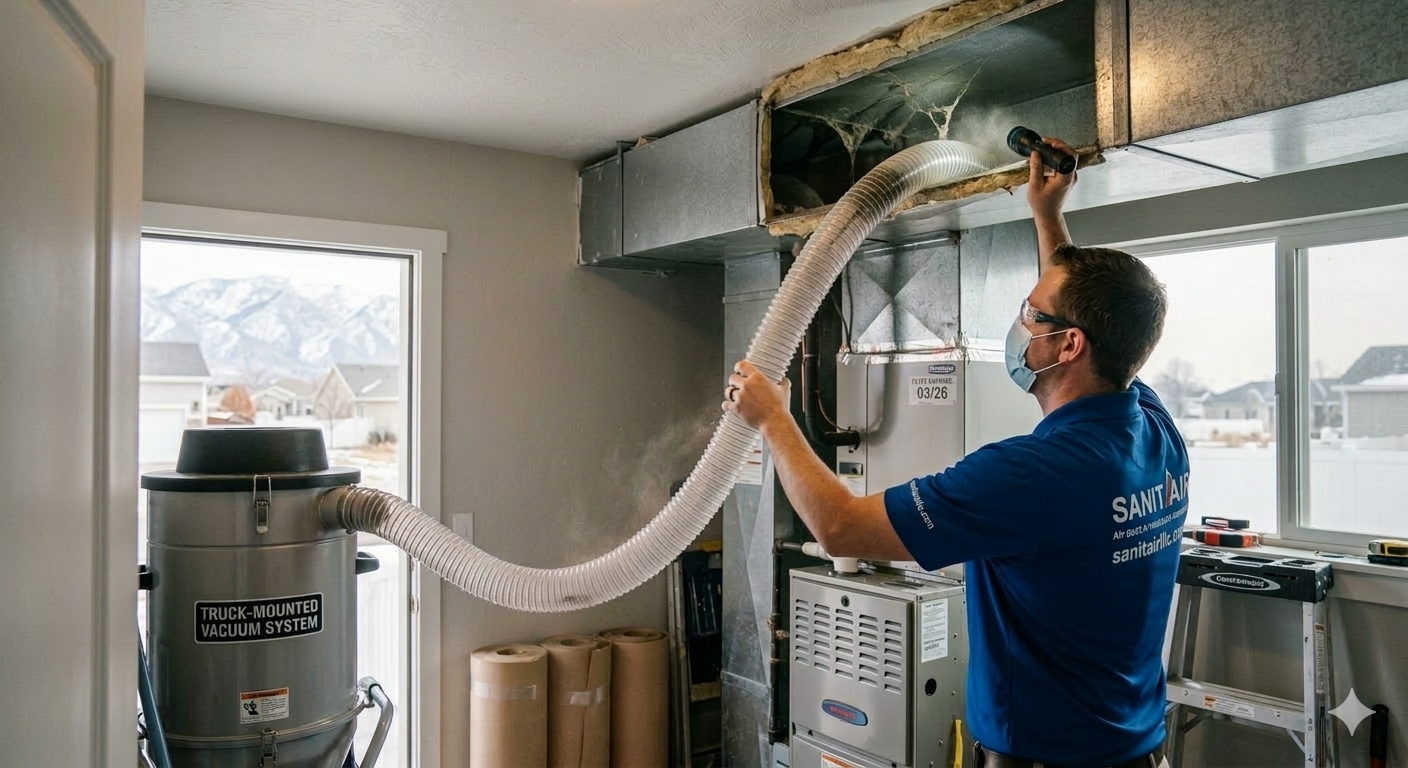
Homeowners who work with Park city’s trusted air duct cleaners or Provo's trusted air duct cleaners often find that the best results come from combining a UV system with a thorough inspection and cleaning of the existing ductwork. Installing a lamp over a coil already caked with debris is like turning on a flashlight behind a closed curtain; the light simply cannot reach what it needs to treat.
Maintenance is simple but not optional. UV-C lamps gradually lose output even while they still appear to glow, so most manufacturers recommend replacing them about once a year. Dust on the bulb can also reduce its effectiveness, so the lamp should be wiped or checked during routine service visits. Pairing lamp replacement with your regular HVAC tune-up keeps the cost and effort low.
It also helps to choose equipment carefully. Look for UV products that do not generate ozone, since some older or lower-quality air cleaners release it as a byproduct, and ozone is a lung irritant. Reputable manufacturers publish their testing results, and independent certifications can give you added confidence in what you are buying.
What UV Can and Cannot Do for Your Indoor Air
UV air purification is powerful, but it is not magic, and honest expectations lead to better decisions. The first thing to understand is that UV light only affects what it can reach. It does not clean dust out of your ducts, remove existing mold stains, or filter out particles like pollen, smoke, and pet dander. A microbe sitting in a shadowed corner of the ductwork may be untouched, and a cluster of cells buried under debris may be shielded from the light.
The second point is contact time. Air moves quickly through a duct, so a microorganism may be exposed to the lamp for only a fraction of a second. For that reason, in-duct UV works best at reducing microbial load over time rather than sterilizing the air in a single pass. Coil-mounted lamps avoid this limitation because they shine on a stationary surface around the clock, giving mold no chance to establish itself.
That is why the strongest approach is layered. A good indoor air strategy usually includes:
- A quality filter with an appropriate MERV rating, changed on schedule, to capture dust and larger allergens.
- Professional duct and coil cleaning to remove built-up debris and any existing growth.
- Humidity control, ideally keeping indoor levels between 30 and 50 percent, to make the home less friendly to mold.
- UV purification to keep the system clean and reduce airborne microbes between cleanings.
- Prompt moisture repairs, such as fixing leaks and clogged condensate drains, so water never lingers.
If your home already has a serious mold problem, UV alone will not solve it. Visible growth on walls, ceilings, or inside ductwork needs to be physically removed by a qualified professional, and the source of moisture has to be fixed. Think of UV as the guardian that keeps a clean system clean, not a replacement for remediation.
When used this way, the benefits are real. Homeowners commonly report fewer musty odors, less dust settling on furniture, and noticeable relief from allergy symptoms. A cleaner coil also transfers heat more effectively, which can reduce strain on the equipment and trim energy costs over the long run.
Breathe Easier With a Cleaner, Safer System
Mold and bacteria are persistent, and the warm, damp corners of an HVAC system give them every advantage. UV air purification turns the tables by using light to disrupt their DNA at the source, stopping growth on coils and reducing the microbes that travel through your ducts. When it is properly sized, professionally installed, and paired with good filtration, regular cleaning, and sensible humidity control, it becomes one of the most dependable upgrades you can make for your home's air.
Your next step does not have to be complicated. Start by having your system inspected so you know what is happening inside the coil, drain pan, and ductwork. From there, a qualified technician can recommend the right UV solution for your equipment and your family's needs.