

Imagine turning simple items into a special, personalized memory book. That's what junk journaling is all about. It lets you use everyday things and show off your creativity. Whether you're good at crafting or just starting, junk journaling is all about having fun and making something amazing.
In this guide, we'll show you how to start your own handmade memory book. You'll learn how to pick materials, build the journal, and add cool decorations. You'll see how to make something truly special from everyday items.
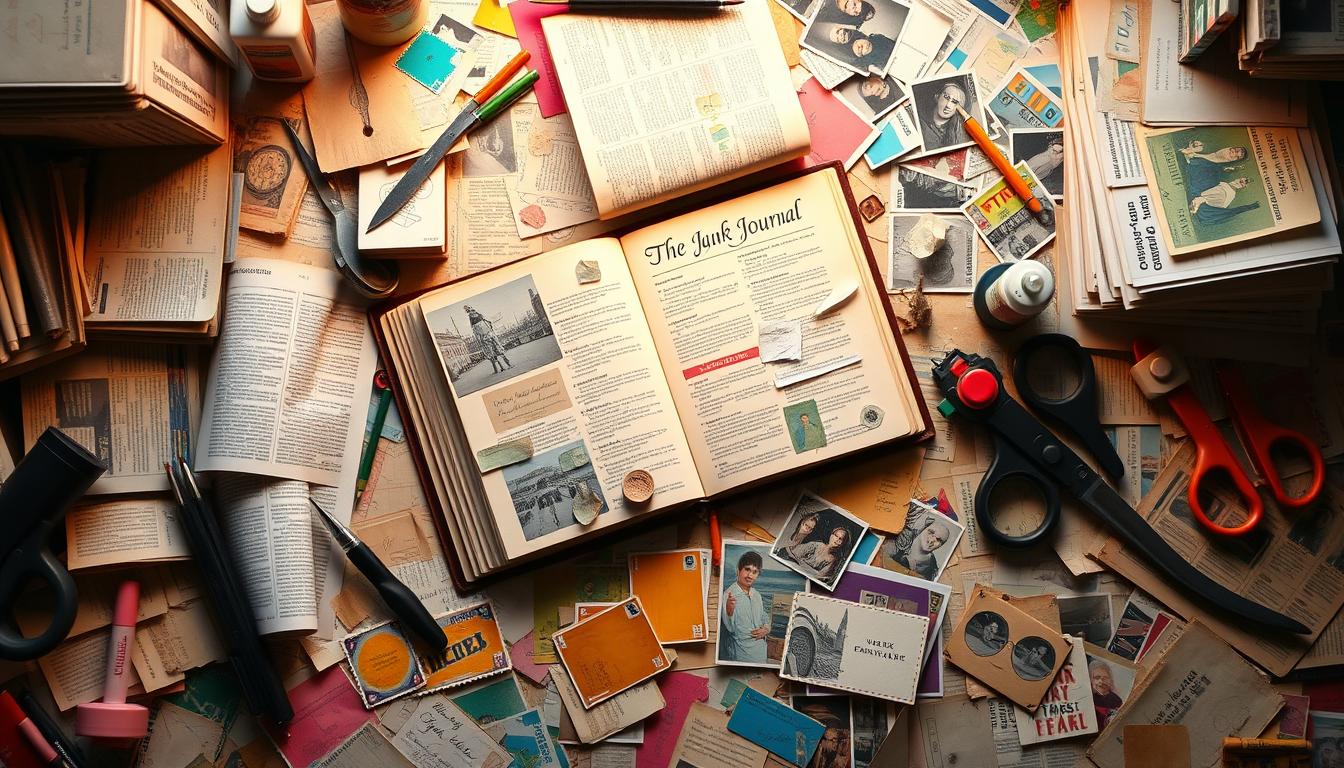
Key Takeaways
- Junk journaling lets you make unique, personalized memory books from common items.
- It's fun for both experienced crafters and beginners, encouraging creativity.
- This guide will help you from start to finish, covering material selection, assembly, and decoration.
- Use your creativity to turn ordinary items into a vintage-inspired journal.
- Enjoy the freedom to express your style and make a truly personal memory book.
Getting Started with Junk Journaling: Essential Materials and Tools
Starting your junk journaling journey is exciting. It lets you give new life to recycled paper, found objects, and ephemera. You'll need some key materials and tools to begin your creative journey.
Common Household Items for Your Journal Base
Junk journaling is all about turning everyday items into art. Look for old books, cereal boxes, or discarded envelopes to start. These items make great bases for your journal pages.
Basic Tools Every Journal Creator Needs
While specialized supplies can help, some basic tools are essential. You'll need scissors, glue sticks, adhesive tape, and pens and markers. These tools help you cut, collage, and decorate your pages easily.
Creative Material Alternatives for Beginners
If you're new, don't worry about not having many supplies. Look around your home for alternatives. Old newspapers, magazine clippings, fabric scraps, and even tea bags can be used. Junk journaling is all about experimenting and making the ordinary special.
Junk Journaling Essentials
- Scissors (Alternatives: Utility knife, Craft scissors)
- Glue sticks (Alternatives: White glue, Mod podge, Double-sided tape)
- Pens and markers (Alternatives: Colored pencils, Crayons, Watercolor paints)
- Ephemera (Alternatives: Newspaper clippings, Old letters, Tea bags)
- Journal base (Alternatives: Old books, cereal boxes, envelopes)
With these essential materials and tools, you're ready to create a unique junk journal. Use recycled paper, found objects, and ephemera to make a journal that shows your style and creativity.
Preparing and Assembling Your Journal Structure
Making a junk journal from scratch is more than just picking materials. It's about planning and putting together the journal's structure. This step is key to your creative journey, turning your items into a beautiful, organized piece.
Signature sewing is a vital bookbinding technique for junk journals. It involves folding pages into small booklets and sewing them together. This method makes your journal strong and visually appealing.
For the journal cover design, you have endless choices. You can use cardboard, fabric, or old book covers to make a unique cover. Try different textures and patterns to make it yours.
Paper aging methods are also crucial. Techniques like tea staining or coffee soaking can give your pages a vintage look. This adds to your journal's charm, making it feel special and well-loved.

The success of a junk journal depends on the materials and how you put them together. By learning bookbinding, cover design, and paper aging, you'll create a unique journal. It will show off your style and creativity.
Creative Techniques for Decorating and Embellishing Your Pages
Let your creativity shine and turn your junk journal pages into stunning art. Try different techniques to get that vintage look. Use tea staining for soft colors and fabric embellishments for texture.
Vintage Paper Aging Methods
Make your paper look vintage with natural dyes and stains. Use strong black tea for a weathered look. Coffee grounds can add warm tones. Acrylic paint washes can mimic aged surfaces.
Natural Dye and Staining Techniques
Use nature's colors to make your journal pages unique. Try dyes from plants, flowers, and spices like turmeric and beets. These can be the base of your pages or added accents.
Adding Texture and Dimension
Make your journal pages pop with different materials. Washtape is great for patterns and details. Add fabric, lace, and found objects for a three-dimensional feel. This makes your journal truly special.
FAQ
What is a junk journal?
A junk journal is a creative memory book made from recycled materials. It's a way to express your artistic side and keep memories in a unique way.
What kinds of materials can I use to create a junk journal?
You can use many recycled materials to make a junk journal. Old books, cereal boxes, and wrapping paper are good choices. You can also use fabric scraps and items like tickets and vintage postcards.
What basic tools do I need to get started with junk journaling?
You'll need scissors, glue, a hole punch, and basic art supplies like pens and markers. You might also want washi tape, fabric, and staples for extra embellishments.
Can I use techniques like bookbinding and paper aging to create my junk journal?
Yes, you can! Bookbinding techniques like signature sewing make your journal look professional. Paper aging methods, like tea staining, add a vintage feel to your pages.
How can I add texture and dimension to my junk journal pages?
There are many ways to add texture and dimension. Try collage, add fabric or lace, or use gesso to create raised elements. You can even embed small objects like buttons or charms.
Comments ()